
Living Root Bridges in Meghalaya An Ultimate Guide 2025
Last Updated on
06 July 2026
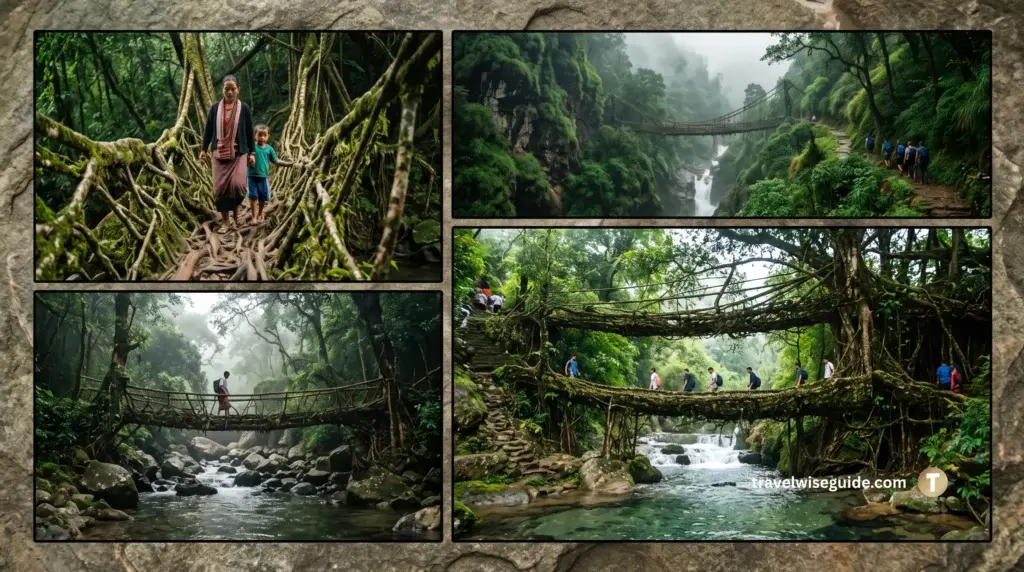
The Living Root Bridges in Meghalaya are one of India’s most magical wonders – bridges that are not built but grown . In the “Abode of Clouds”, these bridges made from the aerial roots of the Ficus elastica tree showcase how humans and nature can work together in perfect harmony.
For centuries, the Khasi and Jaintia tribes have trained the roots to grow across rivers and streams, creating living structures that last over 500 years. Today, the Living Root Bridges in Meghalaya are not only vital for local communities but also one of the state’s most iconic tourist attractions.By travelling responsibly, every visitor plays a role in protecting these bridges for future generations.
- What Are Living Root Bridges in Meghalaya?
- Historical & Cultural Importance of Living Root Bridges
- Famous Living Root Bridges in Meghalaya
- Fuel-efficient3-Day Living Root Bridges Itinerary
- Reaching to Living Root Bridges in Meghalaya
- Best Time to Visit Living Root Bridges in Meghalaya
- Travel Tips for Exploring Living Root Bridges in Meghalaya
- Practical Visitor Information: Fees, Fitness & Food
- Conservation & Challenges of Living Root Bridges in Meghalaya
- FAQs about Living Root Bridges in Meghalaya
- Final Thoughts to visit to Living Root Bridges in Meghalaya
What Are Living Root Bridges in Meghalaya?
The Living Root Bridges in Meghalaya are natural bridges made by guiding the aerial roots of rubber fig trees across rivers until they intertwine and strengthen.
- Age: Some are more than 100–500 years old.
- Builders: Traditionally created by the Khasi and Jaintia tribes.
- Purpose: Provide safe crossings during heavy monsoons when bamboo bridges would wash away.
- Sustainability: Unlike bamboo bridges that wash away during heavy monsoons, these grow stronger with age and can support the weight of over 50 people at a time.
👉 Did you know? Because these structures are made of living organisms, they absorb carbon and naturally adapt to the surrounding ecosystem. These spectacular bio-engineered wonders are officially included in the UNESCO Tentative World Heritage Site List.
Historical & Cultural Importance of Living Root Bridges
these living root bridges are pride of the peoples of Meghalaya cause is
- Symbols of patience and cooperation – taking 15–30 years to form.
- Cultural icons – deeply tied to Khasi and Jaintia traditions.
- Globally recognised – UNESCO’s tentative list adds heritage value.
- Tourist magnets – the most photographed eco-tourism attractions in Meghalaya.
These living root bridges are just one of the many unique cultural marvels waiting for you in Northeast India. For a complete regional roadmap, read our master guide on the East India Travel Guide: 7-State Rare & Living Wonders.
Famous Living Root Bridges in Meghalaya
1. Umshiang Double-Decker Root Bridge (Nongriat Village)
- Type: World’s only double-decker living root bridge.
- Length: ~50 metres
- Age: ~200 years
- Trek: ~It requires descending around 3,500 steps (one way) from Tyrna village. It is a physically demanding but deeply rewarding trek through lush forests and suspension bridges.
- Special: The crown jewel of eco-tourism in Meghalaya.
- Location: East Khasi Hills district.Visit the Official East Khasi Hills District Administration website for the latest travel advisories, road conditions, emergency contacts, and local updates before exploring Nongriat and nearby attractions.Official East Khasi Hills District Administration
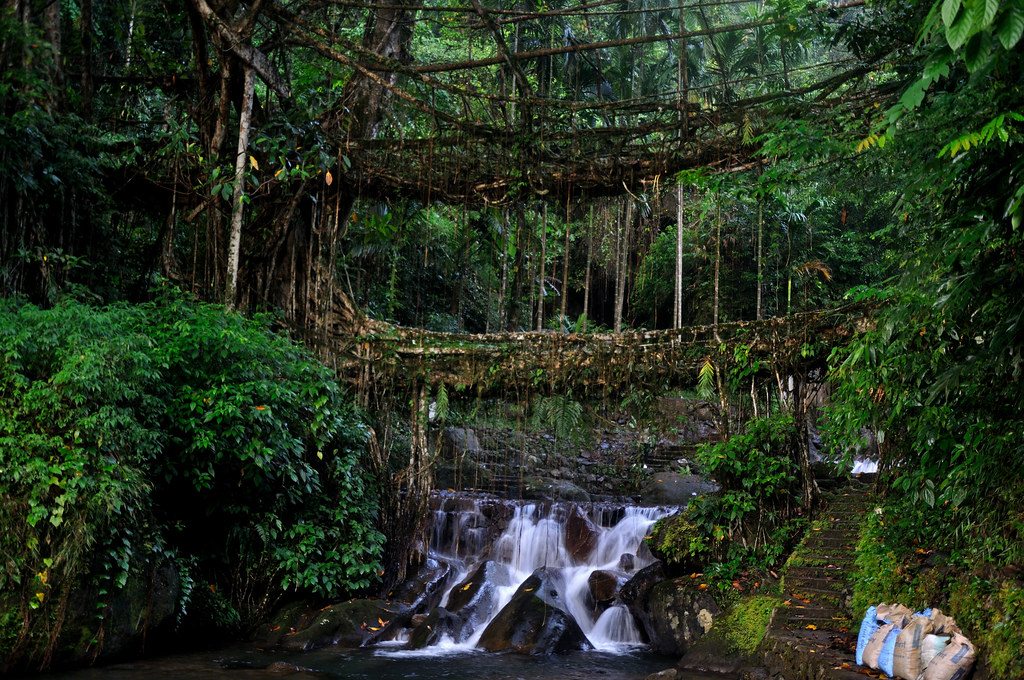
2. Riwai Root Bridge (Near Mawlynnong)
- The Highlight: Easy to access, only 15–20 minutes from Mawlynnong (Asia’s Cleanest Village).
- Location: Near Mawlynnong (famed as Asia’s Cleanest Village), making it perfect for families and beginners. If you want to plan your complete day trip here, check out our comprehensive guide to exploring Mawlynnong Village, Meghalaya – Cleanest Village Asia.
- The Trek: a short, flat 15-minute walk from the parking area.
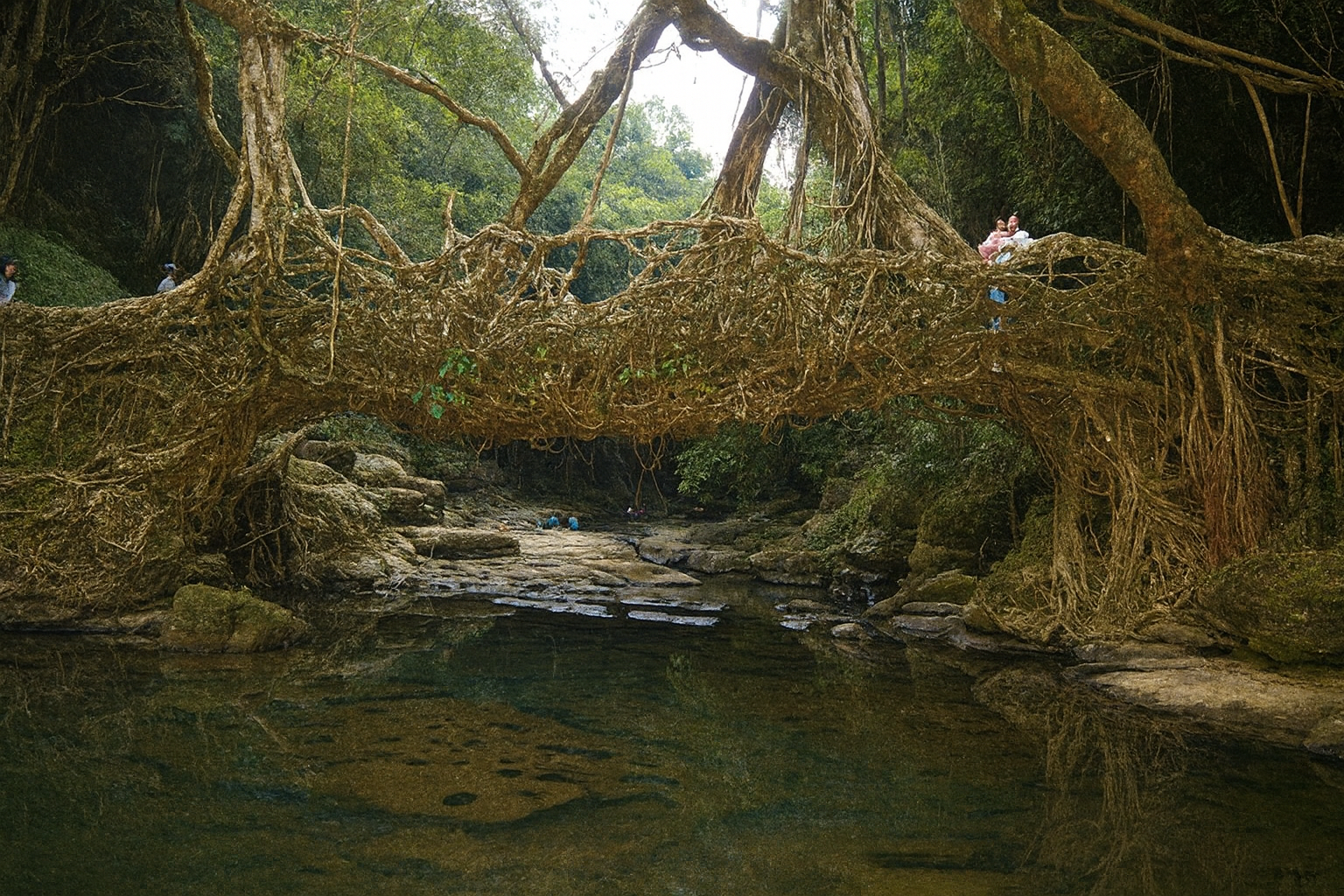
3. Rangthylliang Root Bridge (Pynursla Region)
- The Highlight: This is one of the longest, highest, and most magnificent living root bridges in Meghalaya, spanning an incredible length of over 50 metres.
- The Trek: It involves a moderate jungle trek through deep gorges and valleys. The trail is surrounded by beautiful waterfalls, making it an absolute delight for serious trekkers.
- The Vibe: Located away from the main tourist highway in the Pynursla area, it offers a raw, wild, and untouched adventure into Meghalaya’s deep forests.
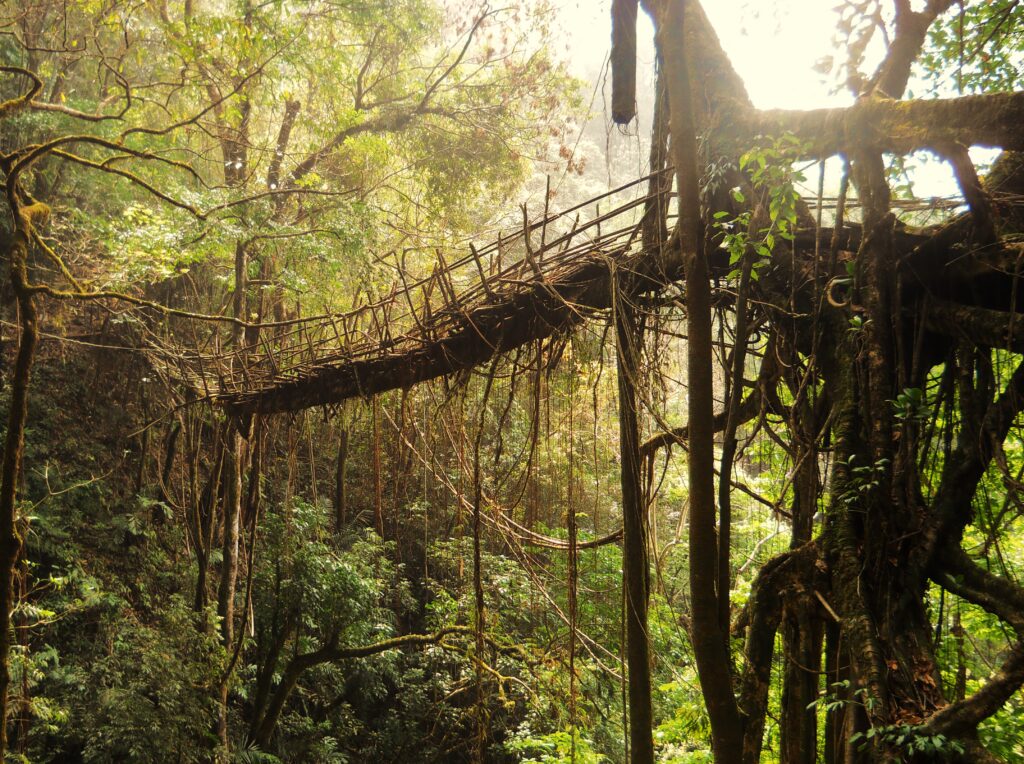
4. Padu Root Bridge (West Jaintia Hills)
- The Highlight: A spectacular and rare double-span root bridge built side-by-side over a rushing jungle stream.
- Local Life: Free from heavy tourist crowds, this structure is still actively used daily by local villagers to reach their betel nut plantations and nearby farmlands.
- Traveler Tip: Located close to the Dawki region, it is the perfect short detour for offbeat travelers looking for complete peace and quiet.Planning to visit Padu, Nongbareh, or nearby attractions? Check the Official West Jaintia Hills District Administration website for the latest travel advisories, road conditions, emergency contacts, and local updates.
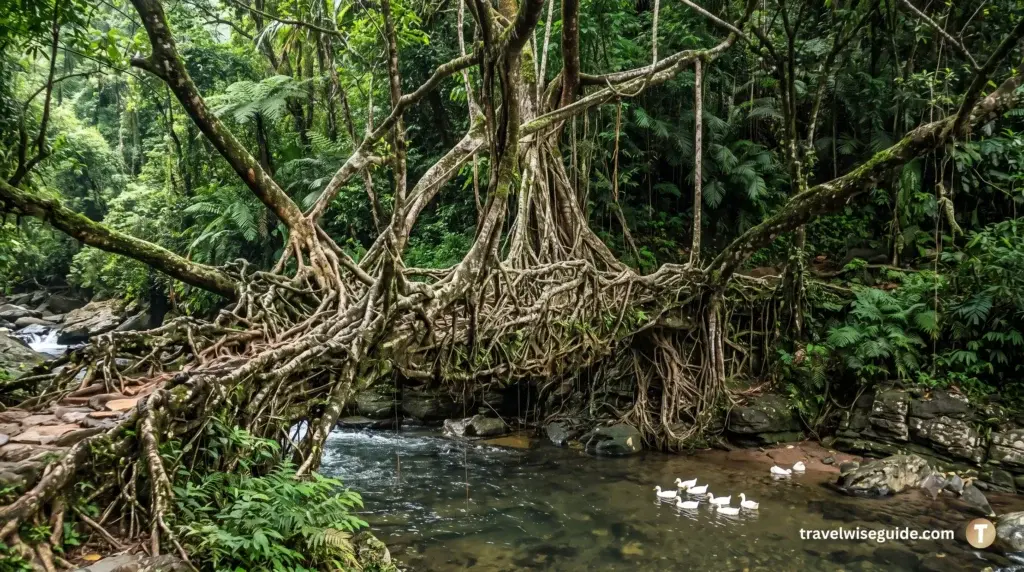
5. Nongbareh Root Bridge (West Jaintia Hills)
- The Highlight: A true hidden gem tucked deep inside dense, tropical forests, famous for its magnificent and complex root network over the river.
- The Experience: It offers a highly authentic and untouched eco-tourism experience with crystal-clear waters underneath, making it a paradise for nature photographers.
- Trek Note: Reaching this bridge requires a moderate 30-to-45-minute trek through village paths, rewarding you with zero crowds and pristine nature.
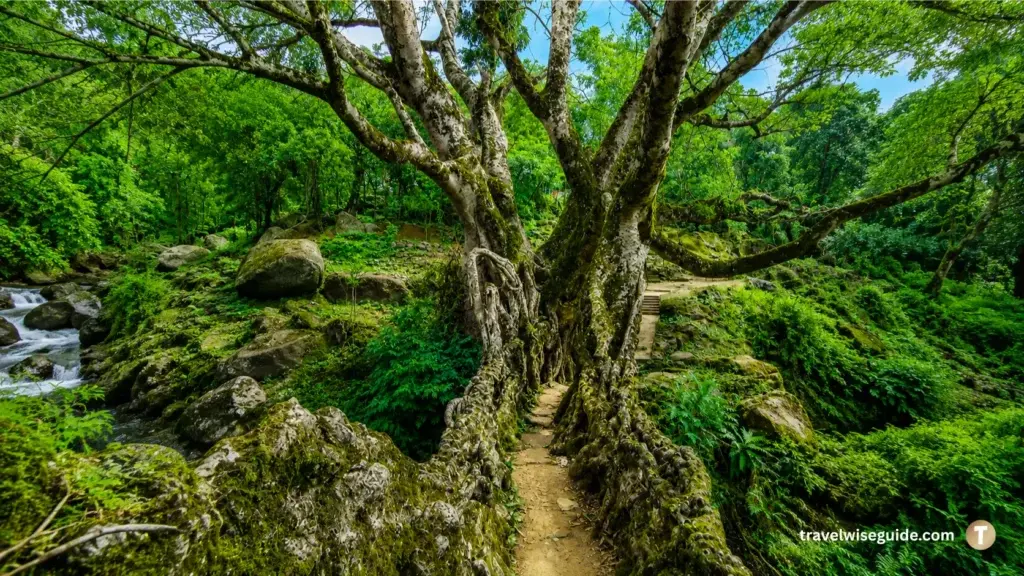
6. Laitkynsew Root Bridge (East Khasi Hills)
- The Highlight: Locally known as Jingkieng Deingjri, this historic bridge is well over 100 years old and beautifully connects local farmlands.
- Accessibility: Unlike the Nongriat trek, this bridge is highly accessible with very few stairs, making it a perfect and relaxed alternative for families, elderly travellers, or beginners.
- The Location: It is situated near Laitkynsew village on a high ridge near Cherrapunji, offering stunning panoramic views of the surrounding deep valleys and the plains of Bangladesh nearby.
Fuel-efficient3-Day Living Root Bridges Itinerary
Reaching to Living Root Bridges in Meghalaya
- By Air: The nearest domestic airport is Umroi Airport near Shillong. You can check schedules directly on the official AAI Shillong Airport Portal. Alternatively, you can fly into Lokpriya Gopinath Bordoloi International Airport in Guwahati (120 km away), which offers much better flight connectivity across India.
- By Rail: The nearest railway station is Guwahati. You can plan your train journey and book tickets via the official IRCTC Booking Platform or check live train statuses using the Indian Railways National Train Enquiry System.
- By Road: You can check local transport availability, approved taxi rates, and curated packages on the official Meghalaya Tourism Portal. Private and shared cabs run regularly from Guwahati to Shillong, and onwards to Cherrapunji or Mawlynnong.
Best Time to Visit Living Root Bridges in Meghalaya
- Winter (Nov–Feb): Best season – cool and pleasant (10–20°C).
- Summer (Mar–May): Warm, but trekking is comfortable.
- Monsoon (Jun–Sep): Bridges look lush and green, but paths are slippery.
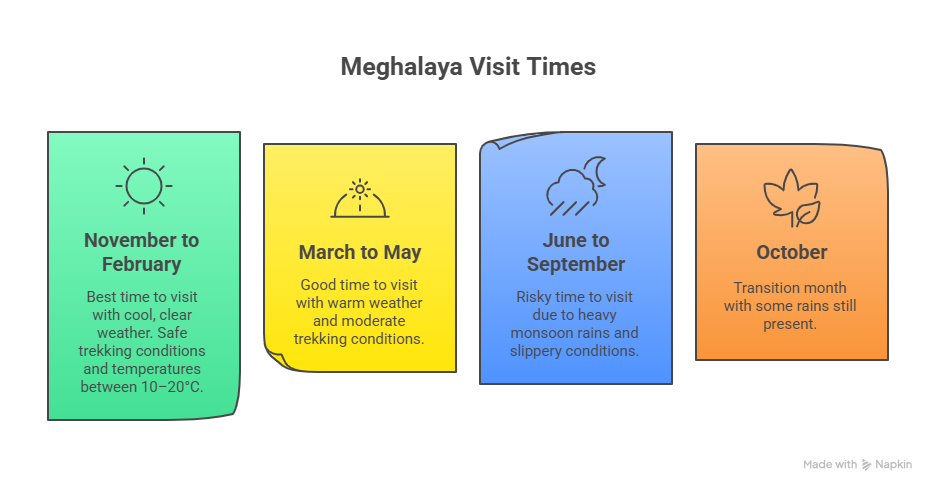
👉 Recommended: November to February
Travel Tips for Exploring Living Root Bridges in Meghalaya
✅ Keep snacks water raincoat last but not the least trekking shoes
✅ Hire a local guide for safety and cultural insights.
✅ Respect nature – take back your waste.
❌ Don’t damage or cut the roots.
❌ Avoid overcrowding or loud music.
Practical Visitor Information: Fees, Fitness & Food
Before setting out to explore the breathtaking Living Root Bridges in Meghalaya, understanding the local ground realities is essential for a smooth journey. This practical guide covers vital details on costs, fitness requirements, and valley rules to help you plan your trek responsibly.
### 1. Local Entry Fees & Timings
- Entry Fee: Local village communities maintain the Living Root Bridges in Meghalaya. Expect a nominal charge of ₹30 to ₹50 per person.
- Camera Fee: If you are carrying a DSLR or a professional video camera, an additional ticket of ₹20 to ₹50 applies.
- Timings: The entry gates are open from 6:00 AM to 5:00 PM. Trekking inside the deep valleys at night is strictly unsafe.
### 2. Night Stay Options in Nongriat Village
- The Reality: Climbing 3,500 steps down and back up on the same day to see the main Living Root Bridges in Meghalaya is extremely tiring.
- Homestays: Nongriat village offers basic eco-homestays and community guest houses. There is no Wi-Fi or luxury, but they are perfectly clean and serve fresh, local Khasi meals. Staying overnight allows you to enjoy the scenery and climb back up comfortably the next morning.
### 3. Guide Charges & Hiking Sticks
- Local Guides: You can hire local Khasi guides at Tyrna village (the base point) for ₹600 to ₹1,000. While the concrete path is well-marked and easy to follow, hiring a guide is a great way to support the local community and learn the history of these living structures.
- Bamboo Sticks: You can buy a bamboo hiking stick at the start of the trail for just ₹20 to ₹30. This simple tool is essential as it removes half the pressure from your knees during the steep descent.
### 4. Fitness & Age Suitability Warning
- Nongriat Trek Warning: Reaching the deep-valley Living Root Bridges in Meghalaya is physically demanding. Individuals with severe knee pain, asthma, or heart conditions must avoid the Nongriat Double-Decker route entirely.
- The Easier Alternative: Families travelling with elderly members or toddlers should visit the Riwai Root Bridge near Mawlynnong instead. It offers an easy, flat 15-minute walk so everyone can experience the Living Root Bridges in Meghalaya safely.
### 5. Food & Mobile Connectivity
- Food Availability: Small stalls along the path from Tyrna to Nongriat sell tea, lime water, biscuits, and instant noodles. There is no need to carry heavy lunch boxes with you on the trail.
- Mobile Network: Cellular network signals (especially Jio and Airtel) drop significantly or disappear completely inside the valleys. Make sure to download your offline Google Maps before starting your journey to the Living Root Bridges in Meghalaya.
Conservation & Challenges of Living Root Bridges in Meghalaya
The Living Root Bridges in Meghalaya face both opportunities and threats:
- Efforts: Maintained by villagers, supported by eco-tourism groups, and recognised by UNESCO.
- Challenges: Over-tourism, climate change, and lack of awareness.
By travelling responsibly, every visitor plays a role in protecting these bridges for future generations.
FAQs about Living Root Bridges in Meghalaya
Where are the living root bridges located in India?
The living root bridges are located in the northeastern state of Meghalaya, India, primarily scattered across the dense tropical valleys of the East Khasi Hills and the West Jaintia Hills.
How many living root bridges are there in Meghalaya?
There are over 100 known living root bridges hidden across the state. The most famous and accessible ones are found near Cherrapunji (Sohra), Nongriat village, and Mawlynnong village.
Which is the most famous living root bridge in Meghalaya?
The Umshiang Double-Decker Root Bridge in Nongriat village is the most famous living root bridge in Meghalaya. It is globally unique for having two tiers of living pathways grown stacked over each other.
Are the living root bridges in Meghalaya natural or man-made?
They are bio-engineered structures, meaning they are neither purely natural nor purely man-made. The indigenous Khasi and Jaintia tribes deliberately guide the living aerial roots of Ficus elastica trees across rivers using hollowed trunks until they take root on the opposite side.
How difficult is the Nongriat Double-Decker Root Bridge trek?
The trek to the Nongriat Double-Decker bridge is moderately difficult to strenuous. It requires descending and climbing back up approximately 3,500 concrete steps each way, taking about 4 to 6 hours for a round trip depending on your fitness level.
What is the best time to visit the living root bridges in Meghalaya?
The best time to visit is during the winter season, from November to February. The weather stays pleasant between 10°C and 20°C, the forest trails are dry and non-slippery, and the river water remains crystal clear.
Can we visit the living root bridges during the monsoon?
Yes, you can visit, but it is highly challenging. While the surrounding rain forests look incredibly lush, green, and beautiful from June to September, the trekking steps become extremely slippery, and heavy downpours can cause sudden stream flooding.
Are the living root bridges safe to walk on?
Yes, the living root bridges are completely safe and exceptionally strong. Unlike wooden or bamboo structures that rot, these living root systems grow stronger with time and can support the weight of more than 50 people simultaneously.
Final Thoughts to visit to Living Root Bridges in Meghalaya
The Living Root Bridges in Meghalaya are not just crossings – they are living monuments of sustainability, patience, and harmony with nature. Whether you trek to the legendary Nongriat Double-Decker or wander through hidden bridges in Jaintia Hills, each one tells a story of resilience and eco-wisdom.
Visiting them in 2025 is more than a trip – it’s a reminder that the best architecture is sometimes the one that grows.
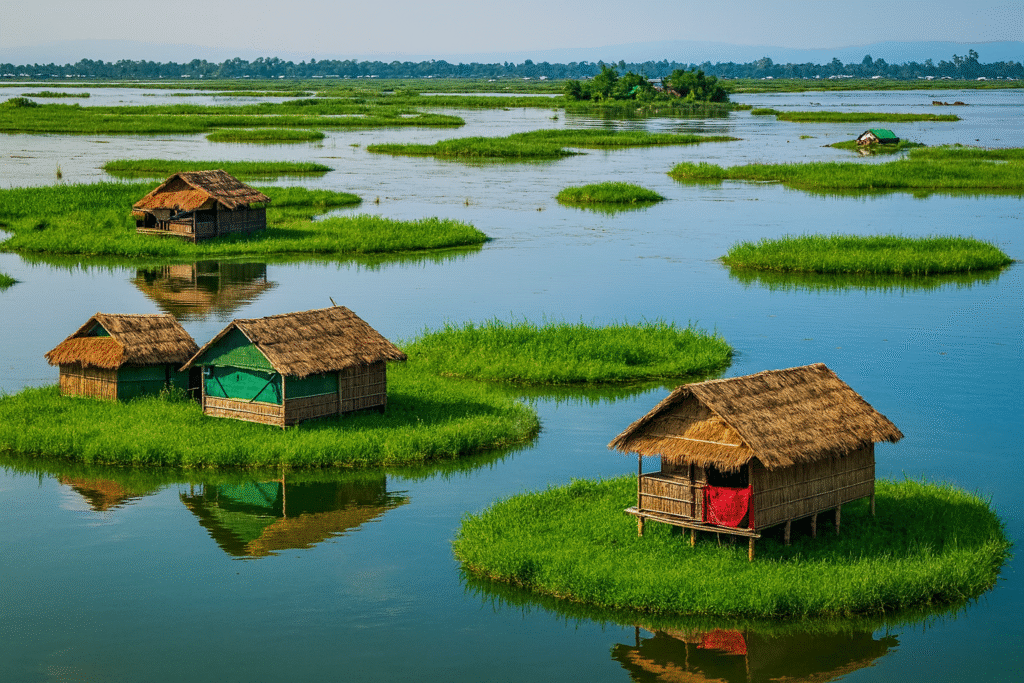
If you are inspired by Meghalaya’s bio-engineering and love discovering offbeat, nature-grown destinations in the North East, you must also read about the incredible floating islands in our guide to Loktak Lake, Manipur – The Floating World of Phumdis.







Very nice blog written I was planning to there. My all queries are resolved now