Don’t Visit India Without Reading This: The Ultimate India Travel Guide (2026)
Last Updated on
27 AUG 2026
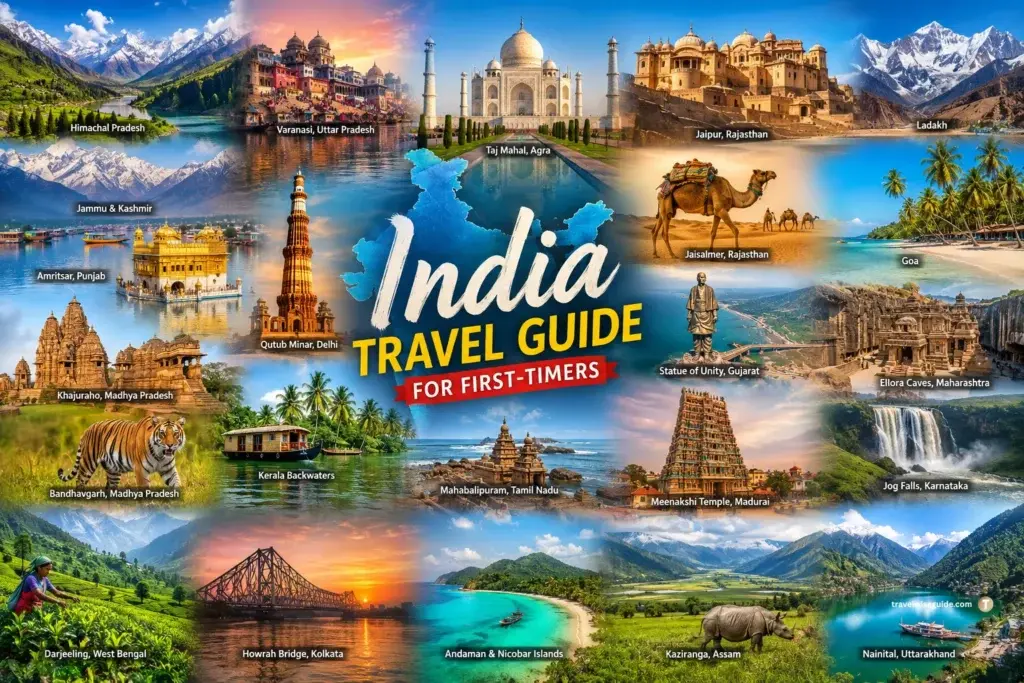
- Why India is the Journey of a Lifetime? – The Ultimate India Travel Guide
- India Travel Guide 2026: A Comprehensive Regional Overview
- Discover Unique Tourism Themes in India for Every Type of Traveller
- 🕉️Spiritual Tourism: The Soul of Indian Travel
- Nature & Adventure Tourism: Exploring India's Wild Side
- Heritage & Architecture: India's Living History
- 🌿Eco & Village Tourism: Sustainable Journeys Through India
- Only in India: Unique Wonders for Your India Travel Guide
- India Travel Guide 2026: Best Time to Visit Each Region
- Best Time to Visit Each Region
- Quick Advice for First-Time Travellers
- Must-See UNESCO World Heritage Sites for an India Travel Guide
- Festivals & Cultural Highlights: Celebrating the Spirit of India
- Local Etiquette & Travel Tips for India
- Health, Safety, and India e-Visa Requirements for Tourists
- India Travel Costs 2026: Your Detailed India Travel Cost Per Day Breakdown
- Top 10 Mistakes First-Time Travellers Should Avoid in India
- Conclusion – Discover, Learn, Transform
- FAQs About India Travel Guide for First-Timers
Why India is the Journey of a Lifetime? – The Ultimate India Travel Guide
There are few places on earth that awaken the senses quite like India. It is a land where time seems to move in many directions at once—ancient and modern, chaotic yet peaceful, familiar yet endlessly surprising. From the snow-covered Himalayas and Rajasthan’s desert forts to the sacred ghats of Varanasi and Kerala’s tranquil backwaters, every journey reveals a different side of this extraordinary country. Whether you come seeking spirituality, adventure, cuisine, culture or history, India offers experiences that stay with you long after the journey ends.
For first-time travellers, however, planning a trip across such a vast and diverse country can feel overwhelming. Choosing where to go, deciding how long to stay and building an itinerary without spending too much time travelling requires smart planning. This ultimate India travel guide is designed to make that process easier, helping you understand what to expect and plan a smoother, more rewarding journey.
From exploring the different regions of India and choosing the right destinations to planning practical India itineraries for first-time travellers, this comprehensive India travel guide 2026 covers the essentials you need to know. You will find guidance on the best seasons to visit, travel costs, accommodation, transport, India e-Visa requirements, suggested routes, safety and other practical travel tips—giving you a clear roadmap for planning your trip with greater confidence.
India Travel Guide 2026: A Comprehensive Regional Overview
India is too vast and diverse to be explored in just one way, so understanding its different regions can make planning your journey much easier. Each region offers its own landscapes, culture, food, seasons and travel experiences, helping you choose the places that best match your interests.
North India: Mountains, Heritage, and Spiritual Journeys
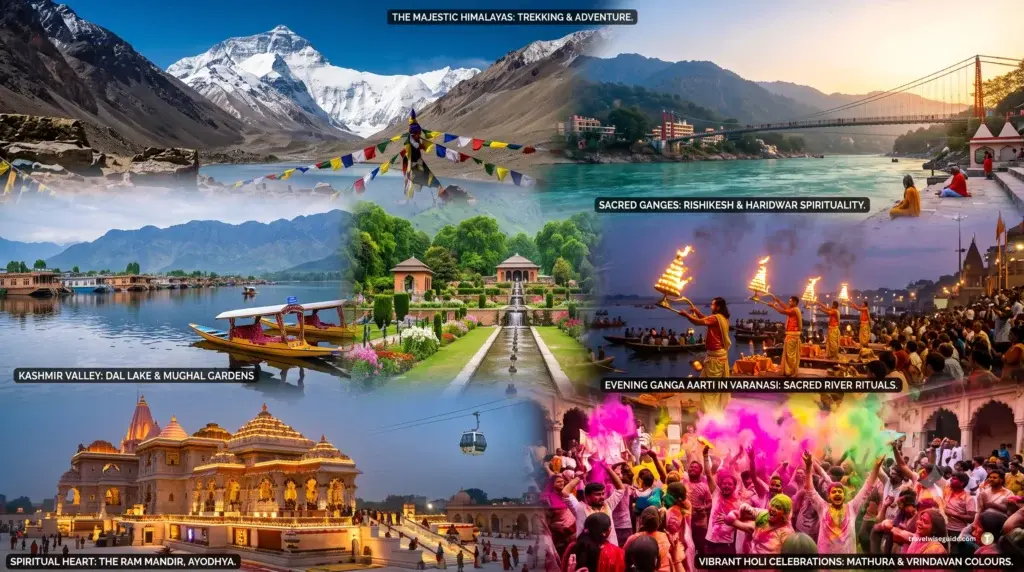
North India is home to some of India’s most iconic travel experiences, For official destination information, attractions, experiences and tourism resources, you can also explore the official Incredible India tourism portal by the Ministry of Tourism, Government of India.from the snow-capped Himalayas and royal forts to sacred rivers and ancient spiritual cities. This diverse region blends history, culture, religion, adventure, and natural beauty, making it one of the most rewarding parts of the country to explore.
First-time visitors often begin with the famous Golden Triangle circuit, connecting Delhi, Agra, and Jaipur, where Mughal monuments, bustling bazaars, and royal palaces showcase India’s rich heritage. Spiritual travellers can experience centuries-old traditions in Varanasi, Ayodhya, Mathura, Vrindavan, Rishikesh, and Haridwar, while nature lovers can escape to the mountains of Himachal Pradesh, Uttarakhand, Kashmir, and Ladakh.
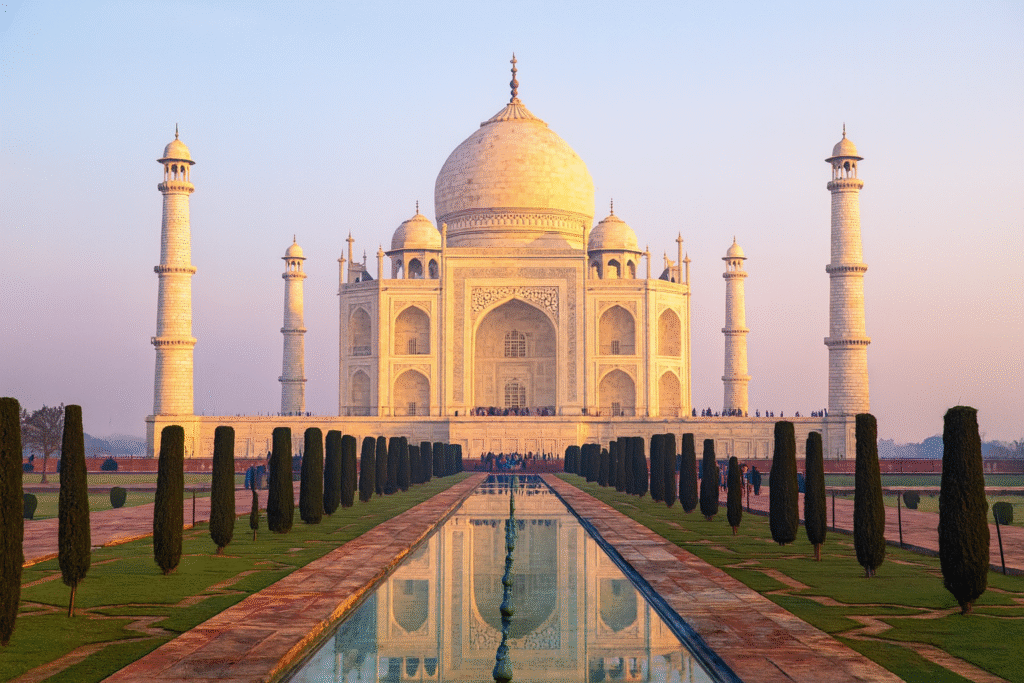
Whether you want to watch the sunrise over the Taj Mahal, witness the mesmerizing Ganga Aarti in Varanasi, celebrate Holi in Mathura, or trek through breathtaking Himalayan landscapes, North India offers unforgettable experiences for every type of traveller.
Popular North India Travel Experiences
- Explore the Golden Triangle (Delhi, Agra & Jaipur)
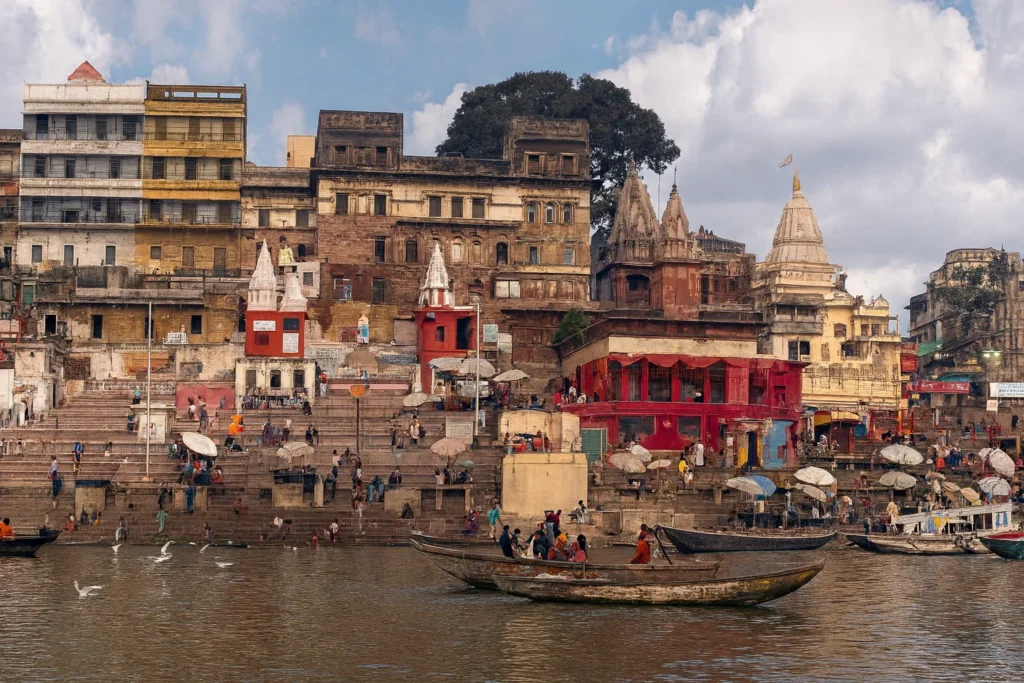
- Attend the Ganga Aarti in Varanasi
- Visit the Ram Mandir in Ayodhya
- Experience Holi in Mathura & Vrindavan
- Discover Rishikesh and Haridwar on the banks of the Ganges
- Trek, camp, and explore the Himalayas in Himachal, Uttarakhand, Kashmir, and Ladakh
👉 Want to explore the North region in detail?
Discover destinations, best time to visit, itineraries, transport and practical travel tips in our Complete North India Travel Guide.
South India: Temples, Backwaters, Hill Stations & Coastal Beauty
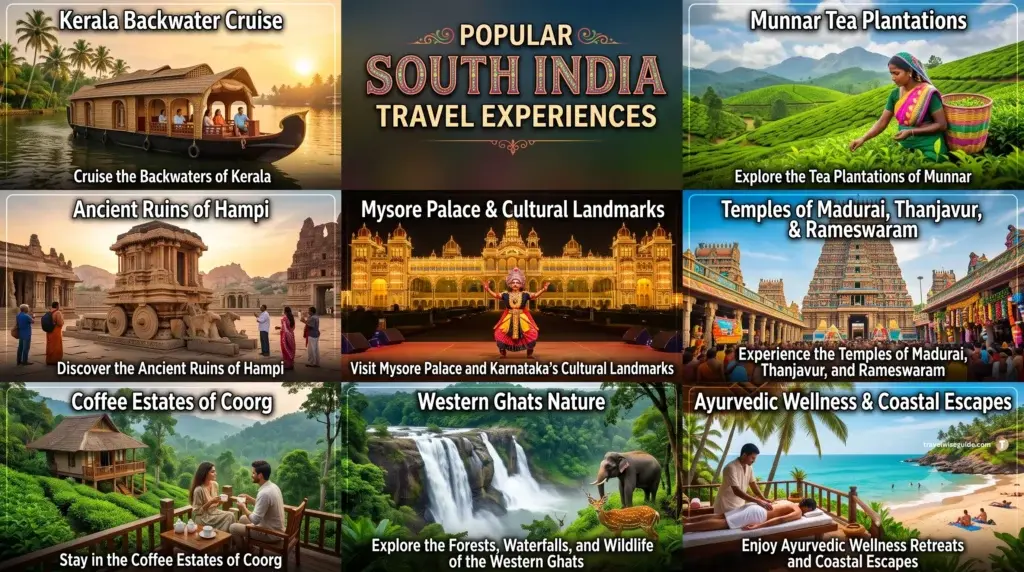
South India offers a completely different side of India, where ancient temples, peaceful backwaters, misty hill stations, tropical beaches, and rich cultural traditions create a slower and more immersive travel experience. Known for its lush landscapes, spiritual heritage, and diverse cuisine, the region is ideal for travellers seeking both relaxation and discovery.
Kerala attracts visitors with its famous backwaters, houseboats, tea-covered hills, and Ayurvedic wellness retreats. Karnataka combines magnificent heritage sites such as Hampi and Mysore with the coffee plantations and misty valleys of Coorg. Tamil Nadu showcases some of India’s most spectacular temple architecture, with iconic destinations including Madurai, Thanjavur, and Rameswaram. Nature lovers can also explore the biodiversity-rich Western Ghats, one of the world’s most important ecological regions.
Whether you want to cruise through Kerala’s tranquil canals, walk among the ancient ruins of Hampi, admire the towering temple gopurams of Tamil Nadu, or escape into the spice-scented hills of the Western Ghats, South India offers unforgettable experiences throughout the year.
Popular South India Travel Experiences
- Cruise the backwaters of Kerala
- Explore the tea plantations of Munnar
- Discover the ancient ruins of Hampi
- Visit Mysore Palace and Karnataka’s cultural landmarks
- Experience the temples of Madurai, Thanjavur, and Rameswaram
- Stay in the coffee estates of Coorg
- Explore the forests, waterfalls, and wildlife of the Western Ghats
- Enjoy Ayurvedic wellness retreats and coastal escapes
👉 Want to explore the Complete South region in detail?
Discover its temples, backwaters, hill stations, festivals, cuisine, transport options and must-visit destinations in our Complete South India Travel Guide
East India: Monasteries, Living Traditions & Untouched Landscapes
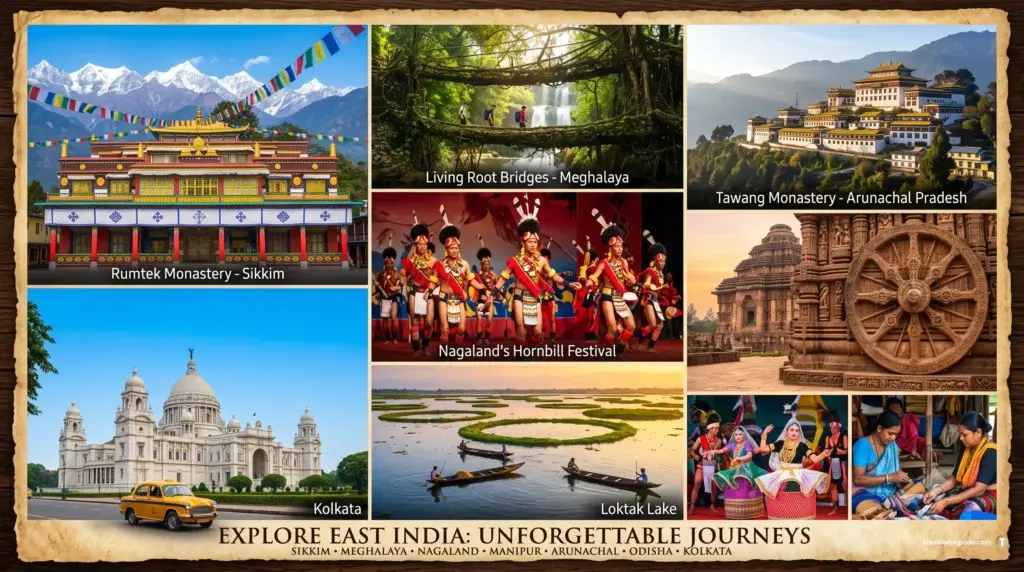
East India is one of the country’s most peaceful and culturally diverse regions, where mist-covered mountains, ancient temples, sacred rivers, tribal traditions, and lush forests create unforgettable travel experiences. Often overlooked by first-time visitors, the region rewards travellers with authentic culture, natural beauty, and a slower pace of life.
The Himalayan states of Sikkim and Arunachal Pradesh offer breathtaking mountain scenery, Buddhist monasteries, and spiritual retreats. Meghalaya captivates visitors with its living root bridges, waterfalls, and eco-friendly villages, while Nagaland and Manipur showcase unique tribal cultures, festivals, and traditions found nowhere else in India. Odisha combines magnificent temple architecture, coastal landscapes, and centuries-old religious traditions, while Kolkata remains the cultural heart of eastern India with its literature, art, colonial heritage, and vibrant festivals.
Whether you want to witness sunrise over the Himalayas, explore living root bridges in Meghalaya, experience tribal festivals in Nagaland, visit the sacred temples of Odisha, or discover the artistic soul of Kolkata, East India offers some of the most authentic and rewarding journeys in the country.
Popular East India Travel Experiences
- Visit monasteries and mountain viewpoints in Sikkim
- Explore Meghalaya’s Living Root Bridges and waterfalls
- Discover Loktak Lake and the cultural heritage of Manipur
- Experience the tribal traditions and Hornbill Festival of Nagaland
- Visit Tawang and the monasteries of Arunachal Pradesh
- Explore Konark, Puri, and the temple heritage of Odisha
- Experience Kolkata’s art, literature, food, and colonial landmarks
- Discover some of India’s least-explored natural and cultural treasures
Learn about the most beautiful destinations in East India, including Sikkim, Meghalaya, Arunachal Pradesh, Nagaland, Manipur, Odisha, and Kolkata. Find detailed insights on attractions, cultural experiences, transportation, accommodation, and itinerary planning.
👉Wish to know every aspect for East India to travel
Discover its Himalayan landscapes, monasteries, tribal cultures, wildlife, eco-tourism experiences and hidden gems in our East India Travel Guide: Sikkim, Meghalaya, Odisha & Beyond
West India: Royal Heritage, Desert Landscapes & Coastal Escapes
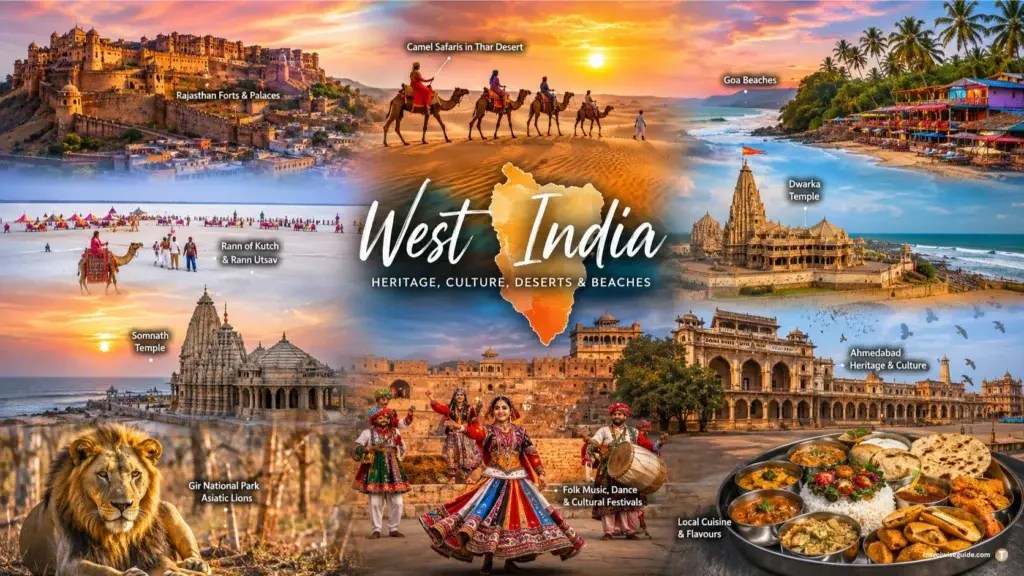
West India is a region of striking contrasts, where golden deserts, vibrant cities, pristine beaches, historic forts, and sacred pilgrimage sites come together to create some of India’s most memorable travel experiences. Rich in culture, architecture, cuisine, and natural beauty, the region offers something for every kind of traveller.
Rajasthan is famous for its magnificent forts, royal palaces, colourful traditions, and desert landscapes that reflect centuries of Rajput history. Goa attracts visitors with its beautiful beaches, Portuguese heritage, vibrant nightlife, and laid-back coastal lifestyle. Gujarat showcases a unique blend of spirituality, wildlife, craftsmanship, and history through destinations such as the Rann of Kutch, Dwarka, Somnath, Gir National Park, and Ahmedabad.
Whether you want to explore the grand palaces of Rajasthan, relax on Goa’s sun-kissed beaches, witness the white salt desert of the Rann of Kutch, or discover ancient temples and cultural treasures, West India offers unforgettable journeys filled with colour, heritage, and adventure.
Popular West India Travel Experiences
- Explore the forts, palaces, and desert cities of Rajasthan
- Experience camel safaris and cultural performances in the Thar Desert
- Relax on the beaches of Goa and discover Portuguese heritage
- Visit the Rann of Kutch and experience the famous Rann Utsav
- Explore the sacred temples of Dwarka and Somnath
- Discover Ahmedabad’s rich history, architecture, and local cuisine
- Spot Asiatic lions in Gir National Park
- Experience traditional crafts, folk music, and regional festivals
👉 Want to explore the Complete west region in detail?
Explore the unique west India Forts ,heritage, culture, beaches, hidden gems, wildlife Complete West India Travel Guide
Central India: Wildlife, Heritage & Spiritual Traditions

Central India is the country’s hidden heartland, where ancient temples, sacred cities, dense forests, and remarkable wildlife reserves come together to create unforgettable travel experiences. Less crowded than many other regions, Central India offers a unique blend of history, spirituality, culture, and nature.
The region is home to some of India’s most important heritage sites, including the UNESCO-listed temples of Khajuraho, the Buddhist monuments of Sanchi, and the historic forts and palaces of Gwalior and Orchha. Spiritual travellers can experience centuries-old traditions in Ujjain, one of Hinduism’s most sacred pilgrimage cities and home to the revered Mahakaleshwar Jyotirlinga.
Nature lovers and wildlife enthusiasts are drawn to the famous national parks of Central India, including Kanha and Bandhavgarh, where visitors can explore India’s rich biodiversity and experience some of the country’s finest jungle safaris. The lakes, museums, and prehistoric rock shelters around Bhopal further showcase the region’s fascinating cultural and historical legacy.
Whether you want to discover ancient temple architecture, witness wildlife in its natural habitat, explore UNESCO World Heritage Sites, or experience the spiritual energy of India’s sacred cities, Central India offers authentic journeys that connect travellers with the country’s rich heritage and natural beauty.
Popular Central India Travel Experiences
- Explore the UNESCO-listed temples of Khajuraho
- Experience tiger safaris in Kanha and Bandhavgarh National Parks
- Visit the ancient Buddhist monuments of Sanchi
- Attend rituals and aartis at Mahakaleshwar Temple in Ujjain
- Discover the forts and palaces of Gwalior
- Explore the riverside heritage town of Orchha
- Visit Bhopal’s lakes, museums, and nearby Bhimbetka Rock Shelters
- Experience wildlife, spirituality, and history in a single journey
👉 Discover its temples, UNESCO sites, wildlife parks, spiritual destinations and fascinating heritage in our Complete Central India Travel Guide
Discover Unique Tourism Themes in India for Every Type of Traveller
India’s tourism weaves faith, nature, art, and sustainability into journeys that transform both traveller and land.
Travelling in India isn’t just about geography — it’s about experience. Every traveller finds a theme that mirrors their spirit
🕉️Spiritual Tourism: The Soul of Indian Travel
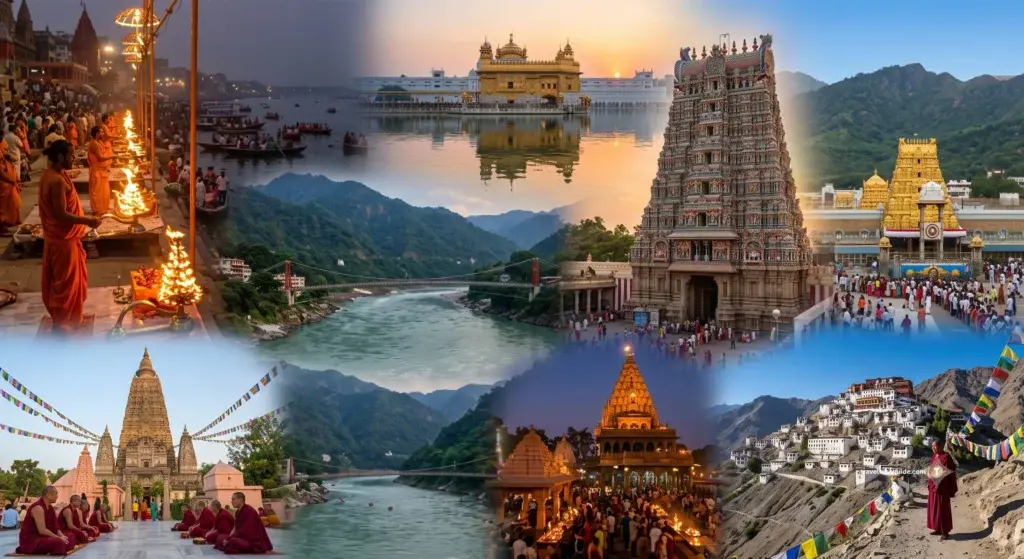
India has been a centre of spiritual journeys for thousands of years. Across the country, travellers encounter sacred rivers, ancient temples, Buddhist monasteries, Sikh shrines, meditation centres, and pilgrimage routes that continue to shape daily life.
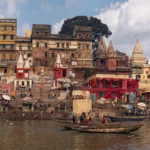
From the ghats of Varanasi and the Ram Mandir of Ayodhya to the monasteries of Ladakh, the temples of Tamil Nadu, the Golden Temple of Amritsar, and the Bodhi Tree of Bodh Gaya, spiritual traditions are woven into every region of India.
Whether seeking faith, culture, meditation, or personal reflection, spiritual tourism remains one of the most meaningful ways to experience India.
Popular Spiritual Destinations
- Varanasi & Ayodhya
- Rishikesh & Haridwar
- Bodh Gaya
- Amritsar
- Madurai & Rameswaram
- Tirupati
- Ladakh Monasteries
- Ujjain
Nature & Adventure Tourism: Exploring India’s Wild Side
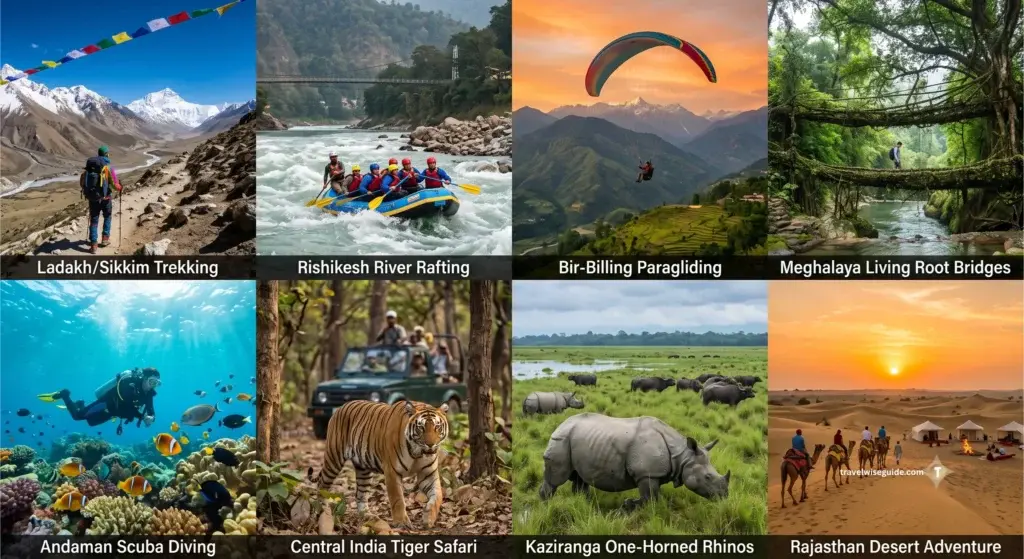
India offers an extraordinary range of nature and adventure experiences, from the snow-covered Himalayas and dense forests to tropical islands, rivers, deserts, and coastal landscapes. Whether you are seeking adrenaline-filled activities or peaceful encounters with nature, the country provides countless opportunities to explore the outdoors.
Adventure travellers can trek through the high-altitude landscapes of Ladakh, go paragliding over the mountains of Himachal Pradesh, raft along the Ganges in Rishikesh, or dive into the coral-rich waters of the Andaman Islands. Nature lovers can discover alpine valleys in Sikkim, waterfalls in Meghalaya, wildlife reserves in Central India, and unique ecosystems ranging from deserts to rainforests.
India is also home to some of Asia’s most remarkable wildlife experiences, including tiger safaris, rhino habitats, bird sanctuaries, and marine ecosystems that support incredible biodiversity.
Whether you dream of mountain adventures, jungle safaris, water sports, or immersive nature experiences, India offers year-round opportunities for exploration and discovery.
Popular Nature & Adventure Experiences
- Trek through the Himalayan landscapes of Ladakh and Sikkim
- Experience river rafting in Rishikesh
- Go paragliding in Bir-Billing
- Explore the Living Root Bridges and caves of Meghalaya
- Dive in the Andaman Islands
- Experience tiger safaris in Central India
- Visit Kaziranga National Park and its famous one-horned rhinos
- Enjoy desert adventures and camping in Rajasthan
Heritage & Architecture: India’s Living History
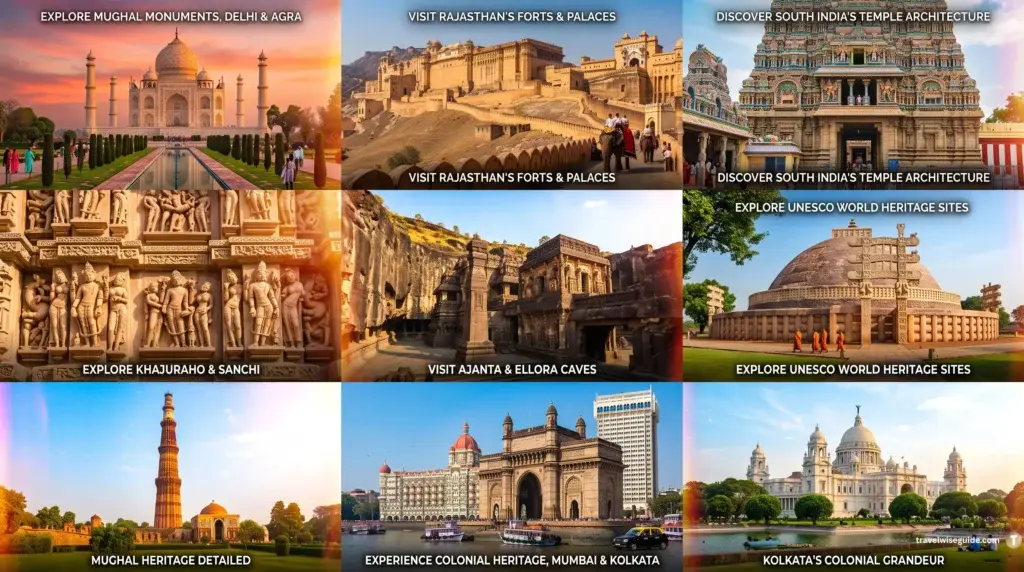
India’s heritage reflects thousands of years of artistic, cultural, and architectural evolution. Across the country, travellers can explore ancient temples, royal forts, Mughal monuments, colonial landmarks, cave complexes, and UNESCO World Heritage Sites that showcase the remarkable diversity of Indian civilisation.
From the marble elegance of the Taj Mahal and the desert forts of Rajasthan to the grand temples of South India and the historic monuments of Central India, every region preserves a unique chapter of India’s story. These architectural treasures reveal the influence of empires, kingdoms, religions, and artistic traditions that shaped the nation over centuries.
Whether you are interested in ancient history, royal palaces, temple architecture, archaeological sites, or UNESCO landmarks, India’s heritage tourism offers some of the world’s most rewarding cultural experiences.
Popular Heritage Experiences
- Explore Mughal monuments in Delhi and Agra
- Visit Rajasthan’s forts and palaces
- Discover South India’s temple architecture
- Explore Khajuraho and Sanchi
- Visit Ajanta and Ellora Caves
- Experience colonial heritage in Mumbai and Kolkata
- Explore UNESCO World Heritage Sites across India
🌿Eco & Village Tourism: Sustainable Journeys Through India
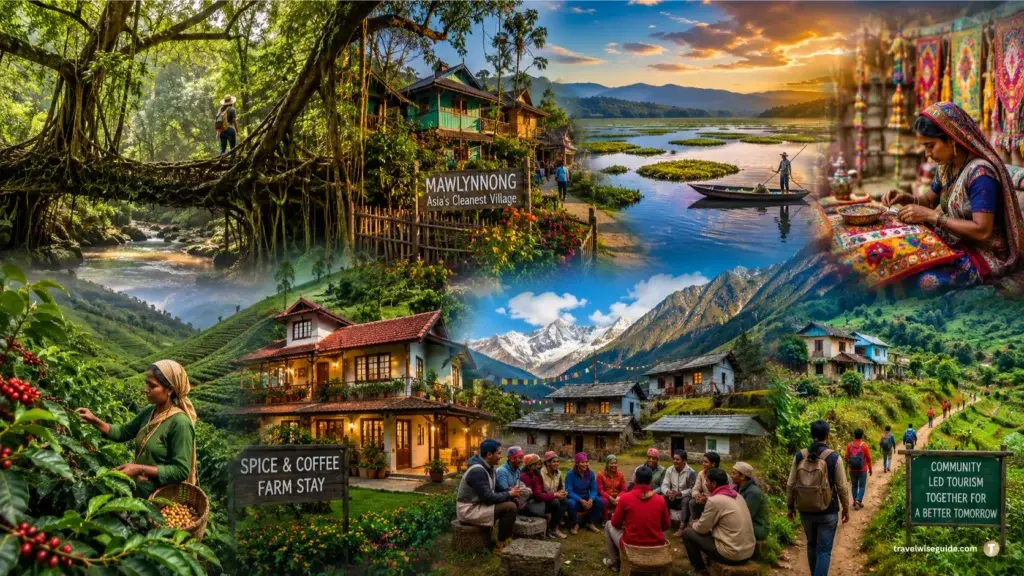
India’s eco-tourism and village tourism experiences offer travellers an opportunity to connect with nature, local communities, and traditional ways of life. Beyond popular cities and landmarks, rural India reveals sustainable practices, indigenous knowledge, unique ecosystems, and cultural traditions that have evolved over centuries.
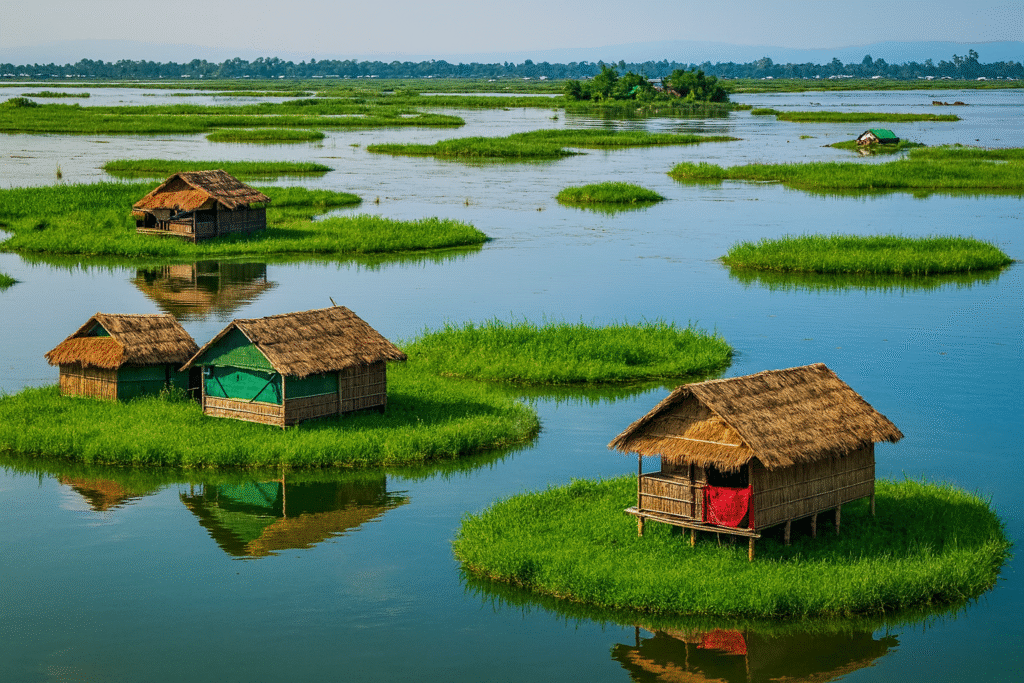
From the Living Root Bridges of Meghalaya and the floating landscapes of Loktak Lake to the craft villages of Kutch and the farm stays of Kerala, eco-tourism experiences showcase how communities live in harmony with their environment. These destinations promote responsible travel while helping preserve local cultures, biodiversity, and traditional livelihoods.
Whether exploring mountain villages, staying on working farms, learning traditional crafts, or experiencing community-led tourism initiatives, eco-tourism allows visitors to experience a slower, more meaningful side of India.
Popular Eco & Village Tourism Experiences
- Explore the Living Root Bridges of Meghalaya
- Visit Mawlynnong, one of Asia’s most famous eco-villages
- Experience the floating landscapes of Loktak Lake
- Discover traditional craft villages in Kutch
- Stay at spice and coffee farms in Kerala
- Experience homestays in Himalayan villages
- Explore community-led tourism initiatives across rural India
Only in India: Unique Wonders for Your India Travel Guide
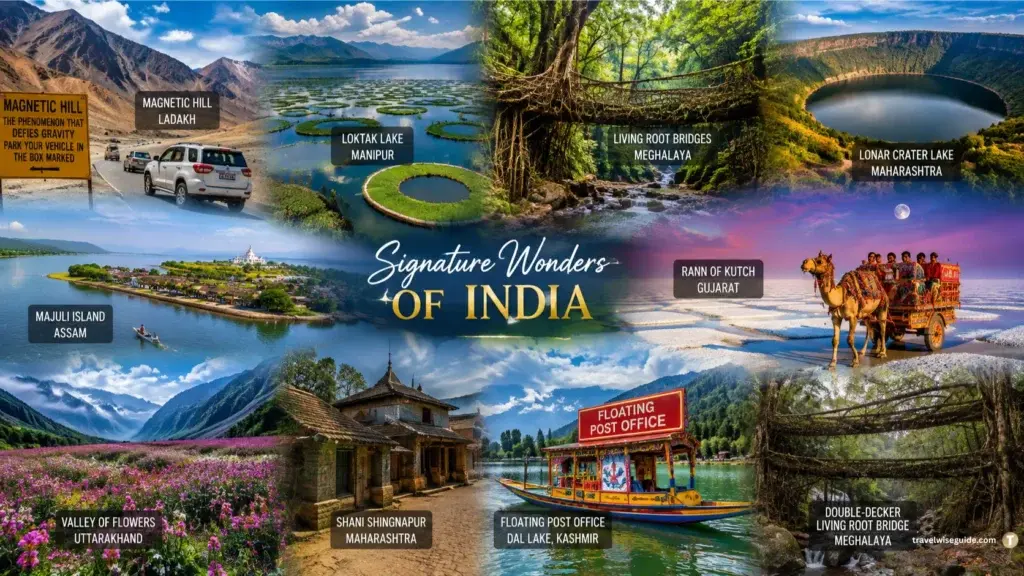
India is a land where logic often pauses for wonder. Mountains seem to pull vehicles uphill, lakes carry floating villages, and bridges grow from living trees. Across the country, natural phenomena, cultural traditions, and remarkable landscapes create experiences that exist nowhere else on Earth.
Signature Wonders of India
- Magnetic Hill, Ladakh – A famous optical illusion where vehicles appear to move uphill against gravity.
- Loktak Lake, Manipur – Famous for its floating phumdis and often described as the world’s only floating lake.known for its circular phumdis and floating settlements.
- Living Root Bridges, Meghalaya – Hand-grown by Khasi communities, these living bridges become stronger with age.
- Lonar Crater Lake, Maharashtra – A rare meteor-impact lake formed by a meteorite impact roughly 50,000 years ago
- Majuli, Assam – A Guinness-recognised world’s largest river island.and a centre of Assamese art, culture, and monastic traditions.
- Rann of Kutch, Gujarat – A vast white salt desert that transforms into a glowing landscape under the full moon.
- Valley of Flowers, Uttarakhand – A UNESCO-listed alpine meadow that bursts into colour during the monsoon season.
- Shani Shingnapur, Maharashtra – Traditionally known for homes and shops with few or no conventional doors and locks.
- Floating Post Office, Dal Lake – A unique postal service operating on the waters of Kashmir’s iconic lake.
- Double-Decker Living Root Bridge, Meghalaya – One of the world’s most remarkable examples of nature and engineering working together.
Why These Places Matter
These attractions are more than tourist destinations. They showcase India’s extraordinary diversity of landscapes, cultures, traditions, and natural phenomena—offering experiences that cannot be replicated anywhere else in the world.
India Travel Guide 2026: Best Time to Visit Each Region
India experiences diverse climates, from Himalayan snowfields and desert landscapes to tropical beaches and monsoon forests. As a result, the best time to visit depends largely on the region you plan to explore.
India Travel Seasons at a Glance
| Season | Months | Weather | Best Regions | Major Festivals |
|---|---|---|---|---|
| Winter | October – March | Pleasant days and cool nights | North, West, East India | Diwali, Dev Deepawali, Holi |
| Summer | April – June | Hot plains, cooler mountains | Himalayas, Sikkim, Coorg | Baisakhi, Thrissur Pooram |
| Monsoon | July – September | Lush landscapes and fewer crowds | Kerala, Meghalaya, Western Ghats | Onam, Teej |
Tip: For many first-time visitors, October to March is the most comfortable period for popular North, West and Central India destinations, although the ideal season varies by region.
Best Time to Visit Each Region
| Region | Best Months | Crowd Level | Quick Advice |
|---|---|---|---|
| North India | October – March | Peak | Ideal for Delhi, Agra, Jaipur, Varanasi, and cultural sightseeing. |
| Himalayan Region | April – June, September – November | Moderate | Best for trekking, mountain views, and hill stations. |
| West India | October – March | Peak | Perfect for Rajasthan forts, desert landscapes, and Gujarat heritage sites. |
| South India | October – March | Peak | Great for beaches, backwaters, temples, and coastal experiences. |
| East India | October – February | Moderate | Pleasant weather for culture, heritage, and city exploration. |
| Northeast India | October – April | Moderate to Low | Best for waterfalls, mountain scenery, tribal culture, and nature. |
| Central India | October – March | Moderate | Excellent season for tiger safaris, wildlife parks, and heritage sites. |
Quick Advice for First-Time Travellers
- October to March offers the most comfortable weather across most of India.
- December and January are peak travel months, so book flights and hotels early.
- April to June is best for mountain destinations and Himalayan escapes.
- July to September brings fewer crowds, lower prices, and spectacular greenery, especially in Kerala and Meghalaya.
- Wildlife enthusiasts should plan safaris between October and March for the best overall experience.
👉 Complete India Weather Guide & Month-by-Month Travel Planner
Must-See UNESCO World Heritage Sites for an India Travel Guide
India’s UNESCO World Heritage Sites showcase the country’s extraordinary blend of history, architecture, culture, and natural beauty. As of 2026, India has 45 properties inscribed on the UNESCO World Heritage List, including 37 cultural properties and 8 natural properties. The list includes iconic landmarks such as the Taj Mahal and Hampi, as well as newer additions such as the Maratha Military Landscapes of India (2025) and the Ancient Buddhist Site of Sarnath (2026)
UNESCO Highlights at a Glance
| Site | State | Category |
|---|---|---|
| Taj Mahal | Uttar Pradesh | Cultural |
| Hampi | Karnataka | Cultural |
| Kaziranga National Park | Assam | Natural |
| Jaipur City | Rajasthan | Cultural |
| Sundarbans National Park | West Bengal | Natural |
| Ajanta & Ellora Caves | Maharashtra | Cultural |
| Khajuraho Temples | Madhya Pradesh | Cultural |
| Great Living Chola Temples | Tamil Nadu | Cultural |
UNESCO by Region
- North India: Taj Mahal, Jaipur, Rajasthan Hill Forts
- South India: Hampi, Chola Temples, Pattadakal
- Central India: Khajuraho, Sanchi, Bhimbetka
- East & Northeast India: Kaziranga, Manas, Sundarbans
Did You Know?
- India is home to dozens of UNESCO World Heritage Sites.
- Kaziranga protects most of the world’s one-horned rhinos.
- The Great Living Chola Temples remain active places of worship today.
👉 Complete UNESCO World Heritage Sites in India Guide
Festivals & Cultural Highlights: Celebrating the Spirit of India
India is one of the world’s most vibrant cultural destinations, where festivals, traditions, music, dance, food, and community celebrations form an essential part of everyday life. Throughout the year, travellers can experience colourful festivals that reflect the country’s diverse religions, regional identities, and centuries-old traditions.
From the lights of Diwali and the colours of Holi to the artistic grandeur of Durga Puja, the harvest celebrations of Onam and Pongal, and the spiritual gatherings of Eid, Christmas, Guru Nanak Jayanti, and Navratri, every season offers a unique cultural experience.
Many visitors plan their journeys around these celebrations to experience local traditions, regional cuisine, folk performances, religious ceremonies, and community festivities that showcase India’s remarkable cultural diversity.
Popular Festivals & Cultural Experiences
- Celebrate Diwali across India
- Experience Holi in Mathura and Vrindavan
- Visit Kolkata during Durga Puja
- Enjoy Onam festivities in Kerala
- Experience Navratri and Garba in Gujarat
- Visit Amritsar during Guru Nanak Jayanti
- Celebrate Christmas in Goa and Kerala
- Discover regional fairs, folk traditions, and cultural festivals
👉 Explore the Complete Festivals & Cultural Tourism Guide

The Perfect 20-Day India Itinerary for First-Time Travellers
This itinerary is ambitious and involves several long-distance journeys. Travellers with more time may wish to slow down and spend additional nights in fewer destinations.
Phase 1: Delhi – History and Modernity (Day 1 – 4)
| Day | Destination | Key Places to Visit | Local Food Recommendations | Transport & Essential Tips |
| 1 | Arrival in New Delhi | Arrive at Indira Gandhi International Airport (DEL). Check into your accommodation. | Dinner at Connaught Place (CP). Try a mid-range Indian thali. | Use a pre-paid taxi or the Metro (Airport Express Line). Tip: Get your local SIM card at the airport. |
| 2 | Old Delhi | Red Fort, Jama Masjid, stroll through Chandni Chowk Market, Gurudwara Sis Ganj Sahib. | Local Food: Parathas from Parathe Wali Gali, Chaat (street snacks) from Chandni Chowk, Jalebi. | Use the Delhi Metro or Auto-rickshaws for transport. Be prepared for crowds! |
| 3 | New Delhi | India Gate, Lotus Temple, Qutub Minar, Humayun’s Tomb. | Try a local Delhi restaurant or café in Connaught Place. | Use Uber/Ola or the Delhi Metro (Yellow Line). |
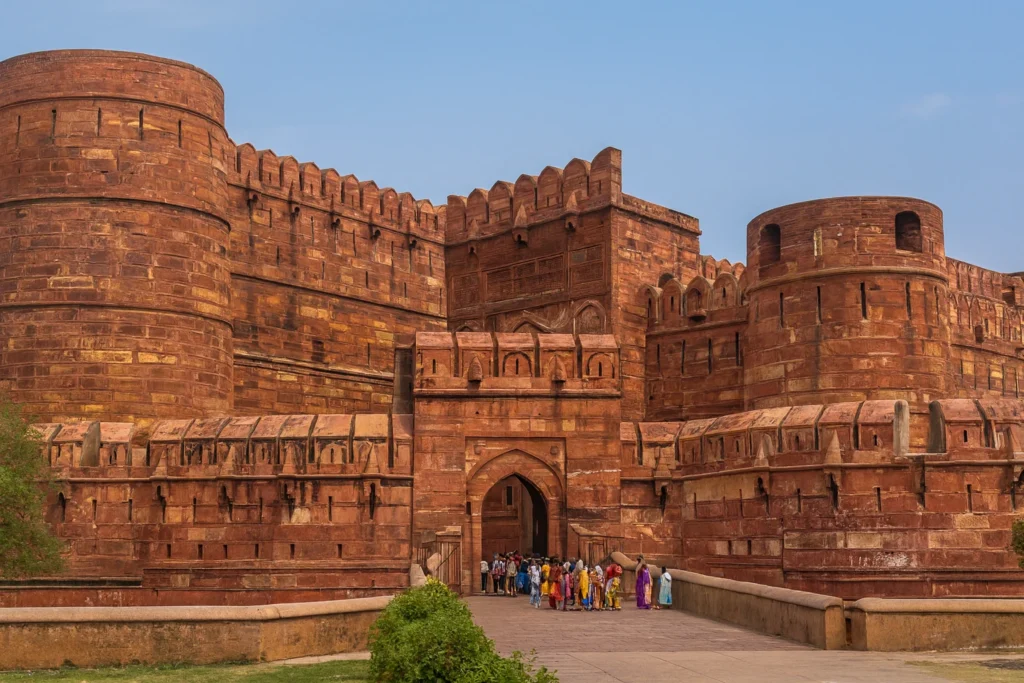
| 4 | Travel to Agra | Take an early morning train/taxi to Agra. In the afternoon, visit Agra Fort. | Agra’s Petha (sweet) and try local Mughlai cuisine in the Tajganj area. | Recommended Transport: Train (Shatabdi Express – NDLS to AGC) is fast and comfortable. |
Phase 2: Agra and Jaipur – Mughal and Rajputana Grandeur (Day 5 – 8)
| Day | Destination | Key Places to Visit | Local Food Recommendations | Transport & Essential Tips |
| 5 | Agra | Taj Mahal (ideally at sunrise), sunset view from Mehtab Bagh across the river. | Dinner in Sadar Bazaar. | Tip: The Taj Mahal is closed on Fridays. Book your tickets online in advance. |
| 6 | Travel to Jaipur | Morning travel from Agra to Jaipur. Check in and visit the City Palace in the afternoon. | Local Food: The classic Rajasthani meal: Dal Baati Churma. | Recommended Transport: Pre-booked taxi/driver—you can stop at Fatehpur Sikri on the way. |
| 7 | Jaipur | Amber Fort Amber Fort and its hilltop architecture Jal Mahal, and the iconic facade of Hawa Mahal. | Lassi from Lassi Wala (MI Road), Pyaaz Kachori from Rawat Mishthan Bhandar. | Use auto-rickshaws or taxis. |
| 8 | Jaipur | View the city from Nahargarh Fort, visit Jantar Mantar, and Albert Hall Museum. | Tip: Explore the local bazaars (Johari Bazar, Bapu Bazar) for handicrafts and textiles. | You can watch the Sound and Light Show at Amber Fort in the evening. |
Phase 3: Udaipur and Varanasi – Lakes and Spirituality (Day 9 – 14)
| Day | Destination | Key Places to Visit | Local Food Recommendations | Transport & Essential Tips |
| 9 | Travel to Udaipur | Morning flight or overnight train from Jaipur to Udaipur. Check into a hotel near Lake Pichola. | Local Food: Try Laal Maas (if non-vegetarian) or a local Thali. | Recommended Transport: An Overnight Train or a Flight is best for this long distance. |
| 10 | Udaipur | Boat ride on Lake Pichola, visit Jag Mandir, the main City Palace complex, and Jagdish Temple. | Dinner at a Rooftop Cafe with a view of the Lake Palace at sunset. | The main sights are close—explore the area on foot. |
| 11 | Udaipur | Saheliyon Ki Bari, watch the sunset from Monsoon Palace (Sajjangarh Fort). | Tip: Hire a taxi/auto-rickshaw to reach Sajjangarh Fort. | |
| 12 | Travel to Varanasi | Morning flight from Udaipur to Varanasi (usually a connecting flight). Evening Ganga Aarti at Dashashwamedh Ghat. | Local Food: Tamanna Chat Bhandar (for Chaat), Malaiyo (a sweet, seasonal dish). | Recommended Transport: Flight is necessary for this major distance change. |
| 13 | Varanasi | Sunrise boat ride on the Ganges River, visit Kashi Vishwanath Temple. | Local Food: Kachori-Sabzi for breakfast and a famous Banarasi Paan. | Tip: Be respectful at the ghats and arrive early to get a good spot for the Ganga Aarti. |
| 14 | Varanasi | Day trip to Sarnath (where Buddha gave his first sermon). |
Phase 4: Kerala – Tranquil Backwaters and Hills (Day 15 – 20)
| Day | Destination | Key Places to Visit | Local Food Recommendations | Transport & Essential Tips |
| 15 | Travel to Kochi | Flight from Varanasi to Kochi (Cochin/COK). Check into your hotel in Fort Kochi. | Local Food: Sea Food, Kerala’s Appam and Stew. | Recommended Transport: Flight—this crosses from North to South India. |
| 16 | Fort Kochi | Chinese Fishing Nets, Mattancherry Palace, St. Francis Church, Jewish Synagogue. | Tip: Watch a Kathakali Dance Performance in the evening. | Explore Fort Kochi best on foot or by a rented bicycle. |
| 17 | Alleppey (Alappuzha) | Take a cab from Kochi to Alleppey. Check into a Houseboat in the backwaters. | Local Food: Enjoy freshly prepared Kerala-style Fish Curry on the houseboat. | Cab/Taxi: Kochi to Alleppey (approx. 1.5 – 2 hours). |
| 18 | Munnar | Check out of the houseboat. Take a cab from Alleppey to the hill station of Munnar. | Munnar Tea. | Cab/Taxi: Alleppey to Munnar (hilly route, approx. 5 hours). |
| 19 | Munnar | Explore the Tea Plantations, Eravikulam National Park, Mattupetty Dam. | Tip: Pack warm clothes as the climate is cool here. | |
| 20 | Departure | Take a taxi from Munnar to Kochi Airport (COK) for your onward journey. | Allow ample time (4-5 hours) for the travel to the airport. |
Local Etiquette & Travel Tips for India
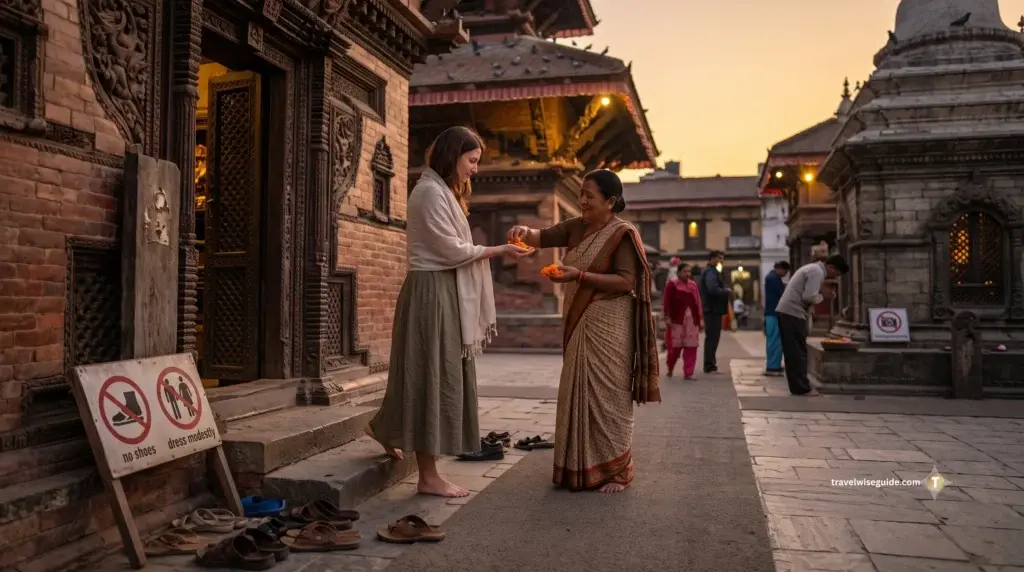
India is a diverse country with deep-rooted cultural traditions. A little awareness of local customs can make your journey smoother, more respectful, and more rewarding.
Quick Etiquette Guide
✅ Remove shoes before entering temples and many religious sites.
✅ Dress modestly when visiting places of worship (cover shoulders and knees).
✅ Accept offerings (prasad) and hand over items using your right hand whenever possible.
✅ Ask permission before photographing people, religious ceremonies, or local communities.
✅ Follow signs regarding photography, mobile phones, and restricted areas at monuments and temples.
✅ Avoid loud behaviour in religious and heritage sites.
✅ Respect local customs, dress codes, and security instructions.
Photography & Drones
- Photography is generally allowed at most tourist attractions, but some monuments and religious sites have restrictions.
- Professional filming, tripods, and drones may require special permission.
- Always check local regulations before flying a drone.
Golden Rule
When in doubt, observe local behaviour, greet people with a simple “Namaste”, and show respect for local traditions.
👉 Complete India Travel Tips, Safety & Cultural Etiquette Guide
India e-Visa Guide & Essential Travel Planning Tips
A few smart preparations make your journey smoother:
Visa & Entry: Most nationalities can apply online through India’s official e-Visa portal
Currency:Cards and digital payments are widely accepted in cities, while cash is still useful in smaller towns and rural areas. Eligible international visitors may also use approved UPI options.
Transport: Domestic flights, trains (book via IRCTC), and app cabs in major cities.
Health: Stick to bottled water; carry basic medication; consult your doctor for vaccinations.
Safety: India can be a safe and rewarding destination when travellers follow sensible precautions and stay aware of their surroundings
Dress & Etiquette: Modest clothing near temples; shoes off before entering.
Connectivity: Local SIM (Airtel/Jio) with data plans is cheap and reliable
Health, Safety, and India e-Visa Requirements for Tourists
India is generally a rewarding and safe destination for travellers who follow basic precautions and stay informed. A little preparation before your trip can help ensure a smooth and enjoyable travel experience.
Before travelling, consider purchasing comprehensive travel insurance that covers medical emergencies, hospitalisation, and emergency evacuation. Make sure routine vaccinations are up to date and consult your doctor if you plan to visit remote, forested, or high-altitude regions.
While travelling, drink bottled or purified water, choose food from hygienic and reputable vendors, and carry basic medications for common travel-related illnesses. In warmer regions, stay hydrated and protect yourself from excessive heat, while travellers visiting the Himalayas should allow time for proper altitude acclimatisation.
For transportation, use registered taxis, trusted ride-hailing services, or hotel-arranged transfers whenever possible. Keep digital and physical copies of important documents, including your passport, visa, travel insurance, and emergency contacts.For the latest immigration, entry and arrival-related information, travellers should check the Bureau of Immigration, Government of India before travelling.
Important Emergency Numbers in India
- Emergency Services (Police, Fire, Ambulance): 112
- Tourist Helpline (24×7): 1363
- Women’s Helpline: 112
Solo Traveller Safety
India welcomes millions of solo travellers every year. Solo travellers, including women, can enhance their safety by staying in well-reviewed accommodations, using trusted transportation options, sharing travel plans with family or friends, and avoiding isolated areas late at night.
Quick Travel Checklist
- Purchase travel insurance
- Save emergency numbers in your phone
- Carry a basic first-aid kit
- Keep copies of important documents
- Stay hydrated and use sun protection
- Follow local advice in remote or high-altitude regions
👉 Read the Complete India Travel Safety Guide
India Travel Costs 2026: Your Detailed India Travel Cost Per Day Breakdown
Below is a practical daily cost range for travelling in India in 2026. Amounts are shown in INR, with approximate GBP conversions for easy planning. These are indicative daily estimates per person and generally include accommodation, food, local transport and a few basic activities, but exclude international flights, visa fees and travel insurance. Actual costs can vary considerably depending on the destination, travel style, season, accommodation type and activities you choose.
Exchange rate used: £1 ≈ ₹130 (approximate August 2026 rate). Exchange rates fluctuate, so travellers should check the current rate before booking or finalising their travel budget.
| Traveller Type | INR / Day (Typical) | Approx. GBP / Day | What This Usually Covers |
|---|---|---|---|
| Shoestring / Backpacker | ₹1,500 – ₹3,000 | £12 – £23 | Hostel dorms or basic guesthouses, local food, public transport, shared travel and mostly low-cost or free attractions. |
| Budget / Value | ₹3,000 – ₹5,000 | £23 – £38 | Basic private room or budget hotel, a mix of local restaurants and street food, public transport or occasional taxis, and selected paid attractions. |
| Mid-range | ₹5,000 – ₹10,000 | £38 – £77 | Comfortable 3–4★ accommodation, restaurant meals, taxis or occasional domestic travel, entrance fees and guided experiences. |
| Premium / Luxury | ₹10,000 – ₹25,000+ | £77 – £192+ | 4–5★ hotels or luxury resorts, quality restaurants, private drivers or domestic flights, premium experiences and private excursions. |
Quick Notes
If you want a simple rule: budget accommodation + local food + trains/public transport can keep costs low, while domestic flights, private cars, luxury hotels and premium experiences can significantly increase your daily spending.
Daily travel costs also vary considerably between destinations. Major cities and popular tourist destinations such as Delhi, Mumbai, Goa, Rajasthan and Kerala can be more expensive than smaller towns and less-visited destinations.
Peak seasons and major festivals such as Diwali, Christmas, New Year and Holi can also increase accommodation and transport prices, so booking early is recommended during busy periods.
Note: GBP figures are approximate and provided only as a planning guide. Exchange rates change regularly, so the actual GBP equivalent may be different when you travel.
Top 10 Mistakes First-Time Travellers Should Avoid in India
- Ignoring visa requirements – Check passport validity and visa rules before booking flights.
- Not saving important documents – Keep digital and printed copies of your passport, visa, and bookings.
- Travelling without insurance – Always carry travel insurance with medical coverage.
- Skipping health precautions – Check vaccinations and carry essential medicines.
- Underestimating travel distances – India is vast; avoid cramming too many destinations into one trip.
- Drinking unsafe water – Use bottled or purified water whenever possible.
- Ignoring local customs – Dress respectfully at religious sites and ask before taking photos.
- Depending only on cash or cards – Carry both cash and digital payment options.
- Flying drones without permission – Check local drone regulations before use.
- Not considering weather and festivals – Plan around seasons, holidays, and peak travel periods.
Conclusion – Discover, Learn, Transform
Travelling across India is less about distance and more about discovery. You arrive expecting sights; you leave with stories.
In the hum of a temple bell, in the laughter of children chasing kites, in the fragrance of jasmine and spice — India reveals itself slowly, like a raga unfolding note by note.
Whether you seek enlightenment on the ghats of Varanasi, adrenaline in the Himalayas, serenity in Kerala’s lagoons, or history in Rajasthan’s forts — each journey will change the way you see the world, and yourself.
So pack curiosity, patience, and an open heart. Because in India, the journey never ends — it simply deepens.
FAQs About India Travel Guide for First-Timers
What is the best time to visit India?
The best time to visit India is generally October to March, when most parts of the country have pleasant weather. However, the ideal time depends on the region, as the Himalayas, Rajasthan, Kerala and Northeast India have different climates.
How many days are enough to travel around India?
10 to 20 days is a good amount of time for a first trip to India. With 10 days, focus on one region or a short circuit, while 20 days allows you to combine destinations such as Delhi, Agra, Jaipur, Varanasi and Kerala.
Is India a good destination for first-time travellers?
Yes, India is an excellent destination for first-time travellers who plan their journey carefully. Choosing fewer destinations, booking reliable accommodation and transport, respecting local customs, and following a practical India travel guide can make the trip smoother and more enjoyable.
Which places should I visit on my first trip to India?
For a first trip, popular destinations include Delhi, Agra, Jaipur, Varanasi, Udaipur, Rishikesh and Kerala. The best choice depends on your interests, available time and travel style.
How much does it cost to travel in India per day?
India offers options for different budgets. A budget traveller may spend around ₹1,000–₹3,000 per day, while mid-range and luxury travel can cost considerably more depending on accommodation, transport, food and activities.
Do foreign tourists need a visa to visit India?
Most foreign tourists need a valid visa to enter India. Eligible travellers can apply for an India e-Visa online, but requirements vary by nationality, passport and purpose of travel. Always check the latest official requirements before travelling.
Which region of India should I visit first?
North India is a popular choice for first-time visitors because it combines the Golden Triangle, Himalayan destinations and famous spiritual cities. South India is ideal for temples and backwaters, West India for Rajasthan and Goa, East India for culture and nature, and Central India for wildlife and heritage.
What is the best way to travel around India?
The best way depends on the distance and your budget. Domestic flights are useful for long journeys, trains are affordable for many routes, and taxis, metro systems and local transport are convenient within cities and nearby destinations.
Is India safe for foreign tourists?
India is generally a rewarding destination for foreign tourists who follow basic safety precautions. Stay aware in crowded places, use trusted transport and accommodation, protect important documents, and follow local advice when travelling alone or visiting remote areas.
What should first-time travellers avoid doing in India?
First-time travellers should avoid planning too many destinations into a short trip, drinking unsafe water, ignoring local customs, travelling without insurance and using unreliable transport or booking services. A realistic itinerary can make your India trip much more comfortable.
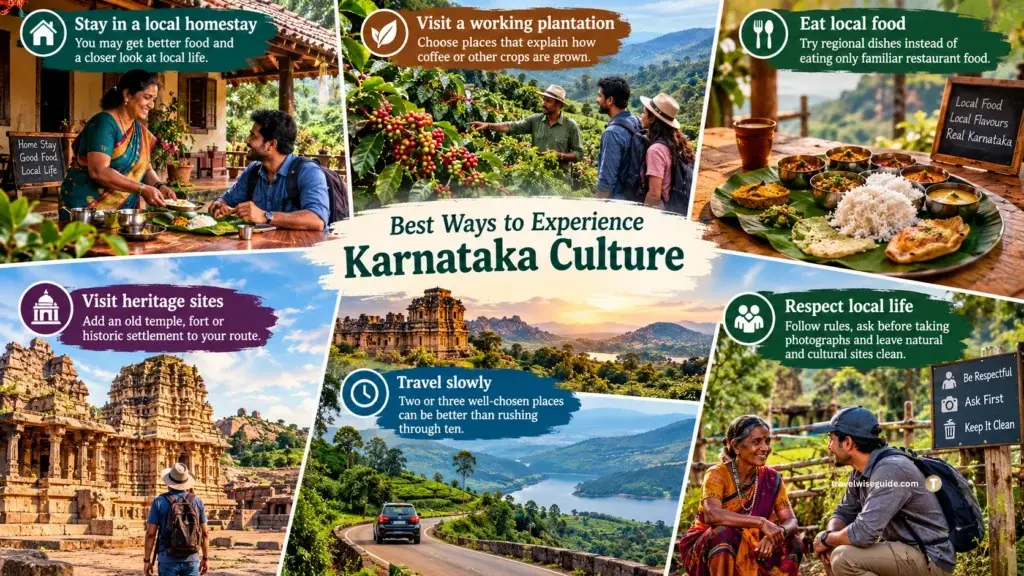
Karnataka Culture: Coffee, Food & Heritage Guide 2026
Karnataka Culture: Coffee, Food, Heritage and Western Ghats Life Last Updated on 5 Oct.2026 Karnataka’s…
Trekking in Karnataka: 14 Best Trails & Peaks for 2026
Trekking in Karnataka: Best Trails, Peaks and Hill Treks Last Updated on 3 Oct.2026 Karnataka…
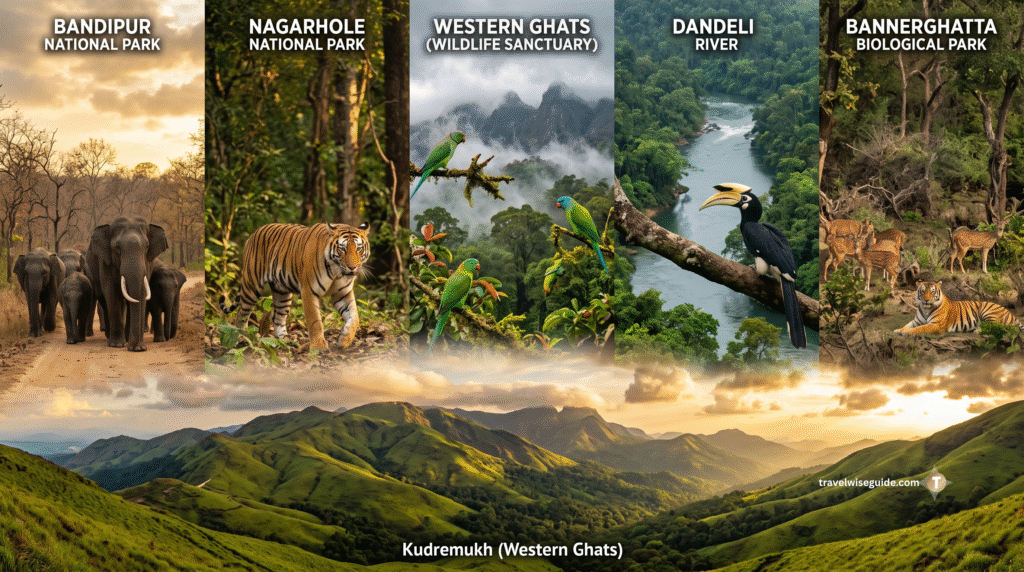
Wildlife in Karnataka: 12 Best Places to See in 2026
Wildlife in Karnataka: National Parks, Safaris and More Last Updated on 30 sept.2026 Karnataka is…
Hill Stations in Karnataka: 10 Best Places to Visit in 2026
Hill Stations in Karnataka: Best Places to Visit in the Western Ghats Last Updated on…
Karnataka Western Ghats Travel Guide 2026: 7 Must-See Regions
Karnataka Western Ghats Travel Guide 2026 Last Updated on 23 sept.2026 . The Karnataka Western…
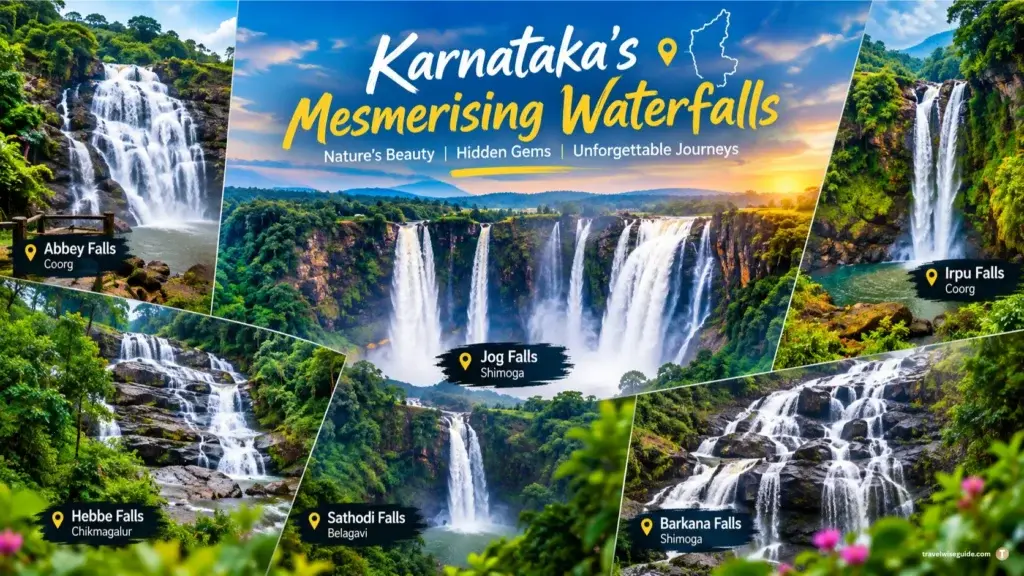
Waterfalls in Karnataka 2026: [7 Insider Secret Paths]
Waterfalls in Karnataka: A Complete Travel Guide to Western Ghats & Hidden Trails Last Updated…