Golden Triangle India Itinerary: 7-Day Delhi, Agra & Jaipur Plan
Last Updated on
5 May 2026
The most sought-after travel circuit in India is so iconic that many call it the cinematic postcard of the country. A golden triangle india itinerary perfectly captures India’s grand monuments, royal architecture, and the timeless artistry created by emperors and dynasties. For many travellers, exploring this delhi agra jaipur itinerary feels nothing short of a dream fulfilled.Our specially crafted guide brings together everything you could possibly need. This golden triangle itinerary 7 days ensures your trip becomes effortless, organized, and genuinely unforgettable. Whether you are looking for the perfect delhi agra jaipur itinerary or a complete cultural deep-dive, your journey begins right here.
What is the Golden Triangle India itinerary?
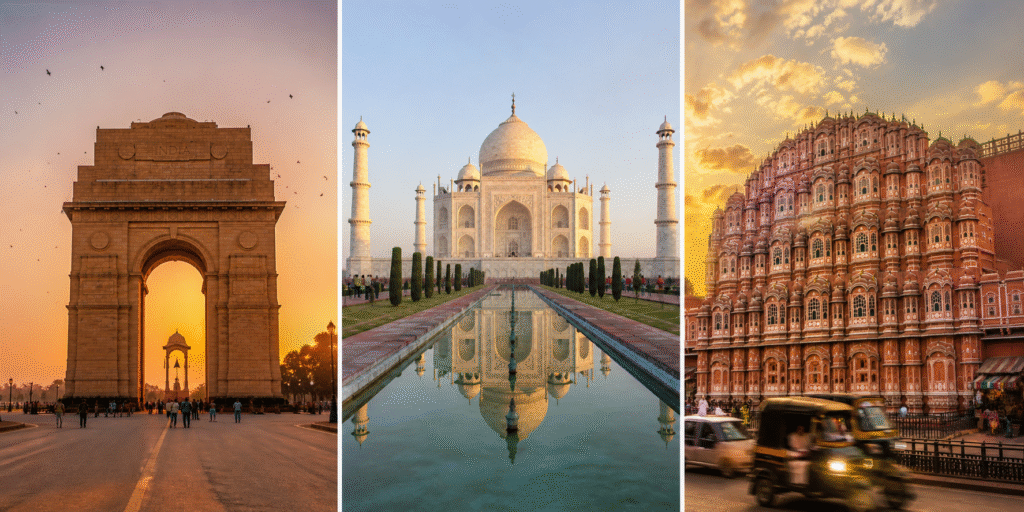
This legendary route has earned its fame because it links three of India’s most remarkable cities—Delhi, Agra, and Jaipur. When you trace them on a map, the path between these destinations forms a perfect triangle. Our golden triangle india itinerary is designed to show you the best of these locations. Many travelers choose a golden triangle itinerary 7 days to ensure they don’t miss the hidden gems in each city. This delhi agra jaipur itinerary remains the most accessible and rewarding introduction to North India.
If you’re confused between train, bus, or flight, read this detailed comparison guide
- What is the Golden Triangle India itinerary?
- Golden Triangle India Itinerary: Pre-Trip Planning Guide
- 📆 Golden Triangle India Itinerary for 7 Days (Day-by-Day Plan)
- The Best Season for Your Golden Triangle India Itinerary
- DAY 1 – Delhi Sightseeing (Golden Triangle Itinerary)
- DAY 2 – Old Delhi Exploration (7-Day Golden Triangle Itinerary)
- DAY 3 – Delhi to Agra Travel Plan (Golden Triangle Route)
- DAY 4 – Agra to Jaipur via Fatehpur Sikri (Golden Triangle Route)
- DAY 5 – Jaipur Sightseeing – Forts & Palaces
- DAY 6 – Jaipur Hidden Gems & Shopping Guide
- DAY 7 – Jaipur to Delhi Return (End of 7-Day Itinerary)
- How to Travel and Manage Your Delhi Agra Jaipur Itinerary Logistics
- Golden Triangle Travel Tips for First-Time Visitors (2026)
- 🚆 How to Travel the Golden Triangle by Train (Booking Guide)
- Why this is the best Golden Triangle India Itinerary:
- 🧑⚕️Health & Safety Tips for Golden Triangle Travel
- 📱 Essential Travel Apps for Golden Triangle India
- 💰 Golden Triangle India Itinerary Cost & Budget Breakdown
- Useful Hindi Phrases for Golden Triangle Travellers
- 🏁 Final Thoughts on the Golden Triangle India Itinerary
- FAQs About Golden Triangle India Itinerary
Golden Triangle India Itinerary: Pre-Trip Planning Guide
Travelling in India becomes much easier when you prepare a few things in advance. A little planning before arrival can save time, money, and stress, especially if it is your first visit.
Arrival at Delhi Airport (First-Time Experience)
Before you even step out of the aircraft at Delhi Airport, there’s one simple thing every smart traveller understands — knowing how immigration, customs, and airport taxis work can save you a lot of trouble.
Imagine this: you have just landed after a long flight. The doors open, and suddenly you are inside one of the busiest airports in India. This is where many first-time visitors feel confused — long queues, fast announcements, and people outside calling “Taxi! Taxi!” all at once.
Airport Tips & Survival Guide
But here’s the good part.
If you understand the process in advance, everything becomes simple.
In my detailed airport survival guide, you can learn how to clear immigration smoothly, how to avoid common scams, and how to choose the right taxi without paying extra. This preparation helps you start your journey in a calm and confident way. If this is your first time travelling in India, understanding a few travel terms and money-saving tricks can help you avoid confusion and extra costs.
Golden Triangle Route Map (Offline Travel Tip)
Before your flight lands, try one small trick that helps a lot.
Download the Golden Triangle route map on Google Maps and save it offline. Even without internet, the Delhi–Agra–Jaipur route will stay visible and guide you easily like a map in your pocket.
Best Time & Travel Documents
Planning your trip at the right time makes a big difference. The best time to follow a Golden Triangle India itinerary is from 15 October to 15 March, when the weather is cool and comfortable for sightseeing.
For official travel updates and festival details, you can check the Incredible India portal.
And don’t forget the most important step — apply for a 30-day e-Visa and carry two printed copies. One is useful during hotel check-in, and the other may be required at the airport. This small step can save you from delays and repeated questions later.
📆 Golden Triangle India Itinerary for 7 Days (Day-by-Day Plan)
This Golden Triangle journey weaves together Delhi’s layered history, Agra’s timeless Mughal love story, and Jaipur’s royal elegance into one seamless adventure. Train fares vary dynamically, so checking IRCTC helps find the best deals. You can book trains easily through the official IRCTC website
| Day | Morning City | Theme | Night Stay |
| 1 | Delhi | First Breath of India | Delhi |
| 2 | Delhi | Old Delhi’s Heartbeat | Delhi |
| 3 | Delhi → Agra | Train Journey & Taj Preview | Agra |
| 4 | Agra → Jaipur | Taj Sunrise + Ghost City | Jaipur |
| 5 | Jaipur | Royal Pink-City Day | Jaipur |
| 6 | Jaipur | Hidden Gems & Shopping | Jaipur |
| 7 | Jaipur → Delhi | Last Lassi & Good-Bye | Fly Home |
The Best Season for Your Golden Triangle India Itinerary
“When planning your golden triangle india itinerary, timing is everything. The most comfortable weather for a delhi agra jaipur itinerary is between October and March. During these months, the cool breeze makes exploring the massive forts in this golden triangle itinerary 7 days much more enjoyable. If you are following a golden triangle india itinerary during the summer, we recommend early morning starts to beat the heat.”
DAY 1 – Delhi Sightseeing (Golden Triangle Itinerary)
Delhi greets you with its grand boulevards and age-old wonders—a gentle beginning for any first-time traveller starting their golden triangle india itinerary.
07:30 – Arrive at IGI Airport (T3)
Just follow the signs marked “Tourist Taxi” and head to the official pre-paid counter, where you can even pay by card. A ride to South Delhi usually costs around ₹600 — a peaceful, green part of the city that feels especially comforting for first-time visitors stepping into India.
10:00 – Check-in: Joey’s Hostel, Green Park
Pastel rooms, rooftop chai for ₹30, board-game evenings with travellers.
Humayun’s Tomb – 11:30
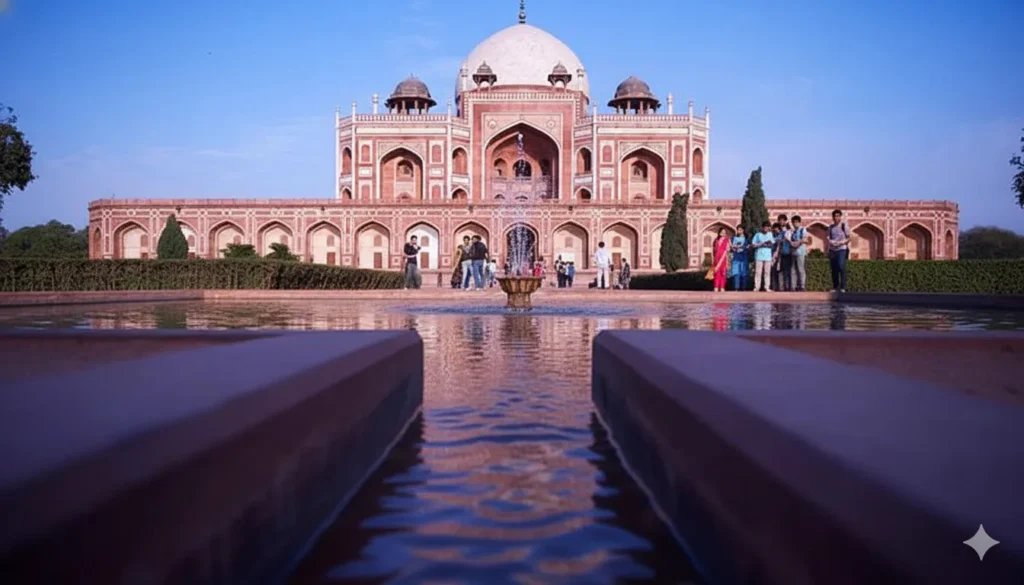
As your journey continues, you step into the quiet, timeless world of Humayun’s Tomb — the very monument that set the foundation for Mughal architecture in India. Built under the devoted patronage of his chief consort, Empress Bega Begum, this grand garden-tomb was completed in 1570 and became the prototype for every Mughal masterpiece that followed, even inspiring the creation of the Taj Mahal.
The moment you enter, the Persian influence becomes unmistakable — wide, geometric gardens, mirror-like water channels, and that magnificent double dome rising in soft red sandstone. By noon, the monument seems to glow, earning its rightful place as a UNESCO World Heritage treasure.
For visitors, tickets are simple:
- Foreigners: ₹600 at the counter, or ₹550 if booked online.
- Indians: ₹35 only.
- Children under 15: Free entry.
Entry fees and monument details are managed by the Archaeological Survey of India
Photo tip: crouch low near the water channel and shoot across the reflecting pool — that’s where the symmetry reveals its magic.
14:00 – Lunch at Khan Market
Auto ₹100. Clean, foreigner-friendly, boutique cafés everywhere.
If you’re unsure what to eat during your trip, check this detailed Indian cuisine guide for first-time travelers to explore safe and must-try dishes.
Eat at Khan Chacha:
Mutton seekh roll ₹250. Ask for “half” if appetite is small.
Lodhi Gardens – 16:00
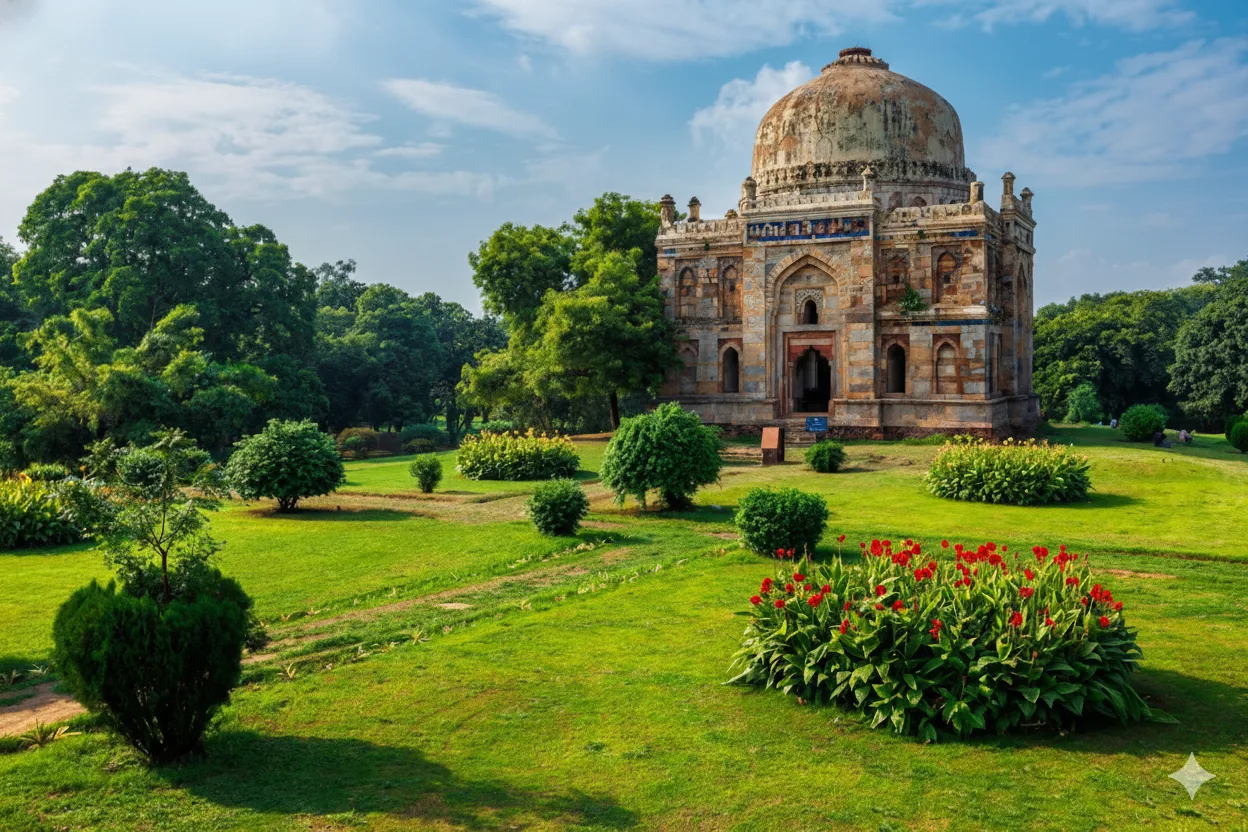
What makes this place truly special is that there’s no entry ticket at all — you simply walk into a vast 90-acre carpet of greenery right in the middle of the city. Scattered across the lawns are quiet 15th-century tombs, including those of Sikandar Lodi and Muhammad Shah, standing gracefully among banyan trees, colourful flowers, and flocks of parrots. Morning joggers pass by softly, blending into the calm of the garden.
If you wander a little deeper and sit behind Sikandar Lodi’s tomb, a strange and beautiful feeling settles in — the city disappears, the noise fades, and you’re wrapped in complete silence. It’s one of those rare corners of Delhi where, even in the heart of the metropolis, you can actually hear peace.
18:30 – Early Sleep
Early to bed early to rise to feel india’s best food points and iconic monuments good night .
DAY 2 – Old Delhi Exploration (7-Day Golden Triangle Itinerary)
Today your journey takes a dramatic turn as you step into Old Delhi — a world where India’s heartbeat grows louder. Here, the streets buzz with life, the air is thick with aromas of spices and street food, and every corner carries a slice of history. It’s chaotic, colourful, and endlessly alive… the kind of place that overwhelms you at first, but leaves you with memories you’ll never forget.
08:00 – Metro to Chandni Chowk (₹20)
Exit Gate 3. Smell of ghee, incense, and old streets hits instantly. Delhi Metro is the fastest way to travel across the city
Paranthe Wali Gali – Breakfast 08:30
As you wander deeper into Old Delhi, a narrow lane suddenly comes alive with the smell of ghee and sizzling dough — you’ve arrived at Paranthe Wali Gali, a name known across India. Travellers on the Golden Triangle route often treat this place like a small pilgrimage of flavour. Some of the shops here have been run by the same families for nearly 130 years, and every parantha carries a bit of that legacy.
For around ₹80, you get a mixed parantha served with unlimited sabzi, and the fillings range from familiar favourites to combinations you’d never imagine. Even reading the menu feels like opening a treasure box of quirky, unforgettable options.
And remember, this is Old Delhi —
put the cutlery aside and eat with your hands.
It’s messy, joyful, and somehow makes the flavours burst louder, awakening all your senses as you sit in the heart of this historic bazaar.
Jama Masjid – 09:30
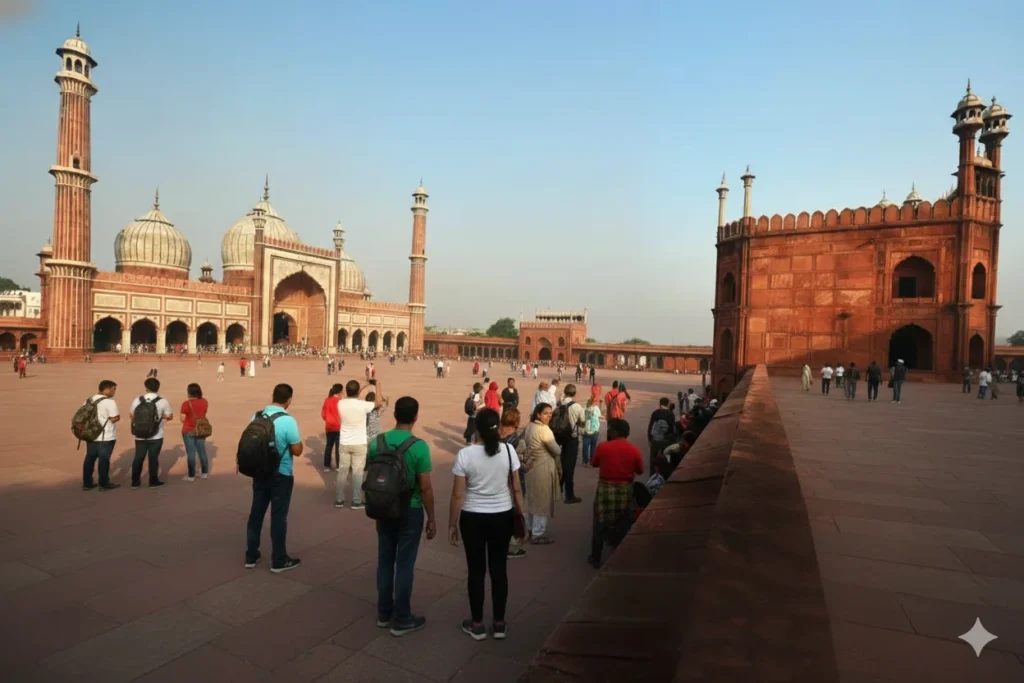
Built by Emperor Shah Jahan between 1650–56, India’s largest mosque stands nearly 30 steps above street level, giving it a powerful view over Old Delhi. Inside, the marble stays warm under the sun, pigeons whirl overhead, and the sound under the domes echoes softly.
Entry for Indians is mostly free (sometimes ₹50).
Photography charges: ₹300–₹400.
Minaret climb: ₹100, with beautifully hazy views of the city.
Cycle-Rickshaw to Red Fort – 11:00 (₹100)
Hop onto a cycle-rickshaw and glide through the spice bazaars and fabric lanes — the air rich with aromas, colours brushing past, and a full 360-degree view of Old Delhi’s lively streets.
UNESCO World Heritage Site Red Fort – 11:15
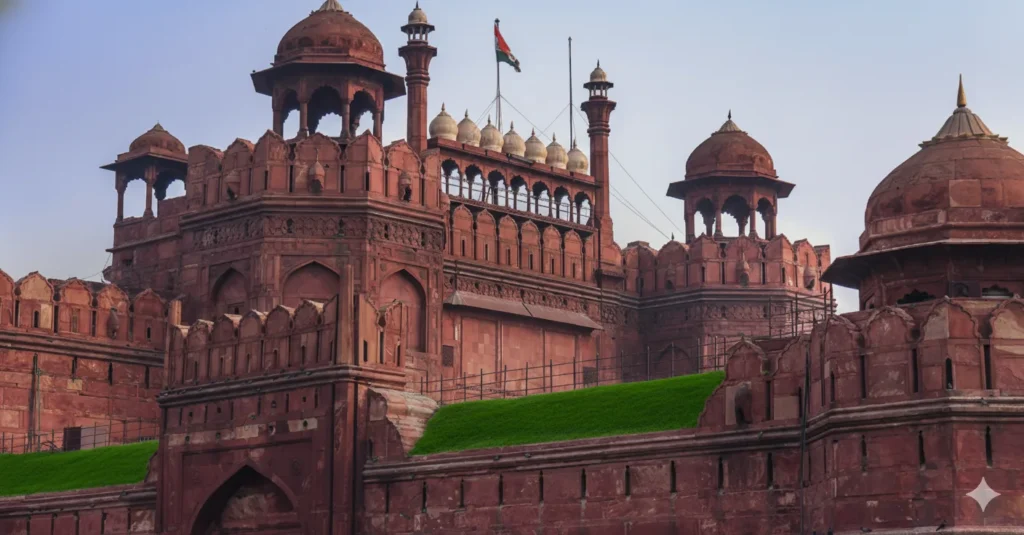
Once again you stand before a UNESCO World Heritage wonder — the Red Fort, the mighty Mughal citadel built by Emperor Shah Jahan between 1639 and 1648. Nearly two centuries tak yeh emperors ka main residence raha, aur aaj bhi Independence Day par Prime Minister yahin se desh ko sambodhit karte hain.
Inside, the Diwan-i-Aam, Diwan-i-Khas, and the delicate Moti Masjid still seem to whisper royal moments of the past.
Entry fees: Indians ₹35, Foreigners ₹500, SAARC/BIMSTEC ₹35, and children under 15 enter free.
Videography ₹25, Light-and-Sound show available, and the audio guide costs ₹200.
Karim’s – Lunch 13:30
A 1913 Mughlai classic near Jama Masjid.
Mutton korma ₹450, rumali roti ₹40.
Hand-washing bowl served — tradition.
Qutub Minar visit – 15:00
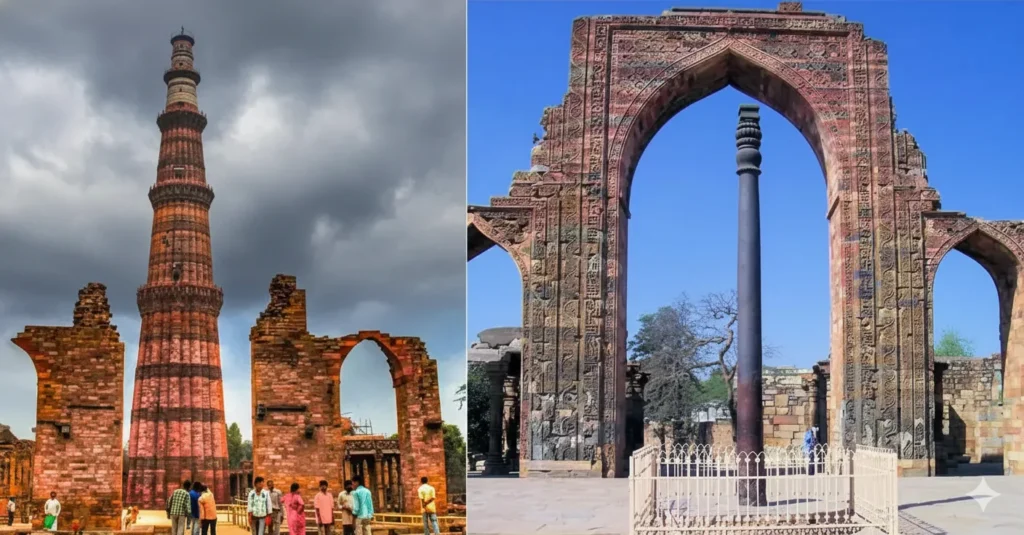
Here you meet Delhi’s iconic 12th-century Qutub Minar, its walls wrapped in graceful Arabic carvings. Within the complex stands the legendary Iron Pillar, a 1,600-year-old marvel known for remaining rust-free through the centuries.
Tickets: Indians ₹35 online / ₹40 cash, Foreigners ₹550, and children under 15 enter free.
Photo tip: Gently touch the back of your hand to the pillar — a tiny moment of history.
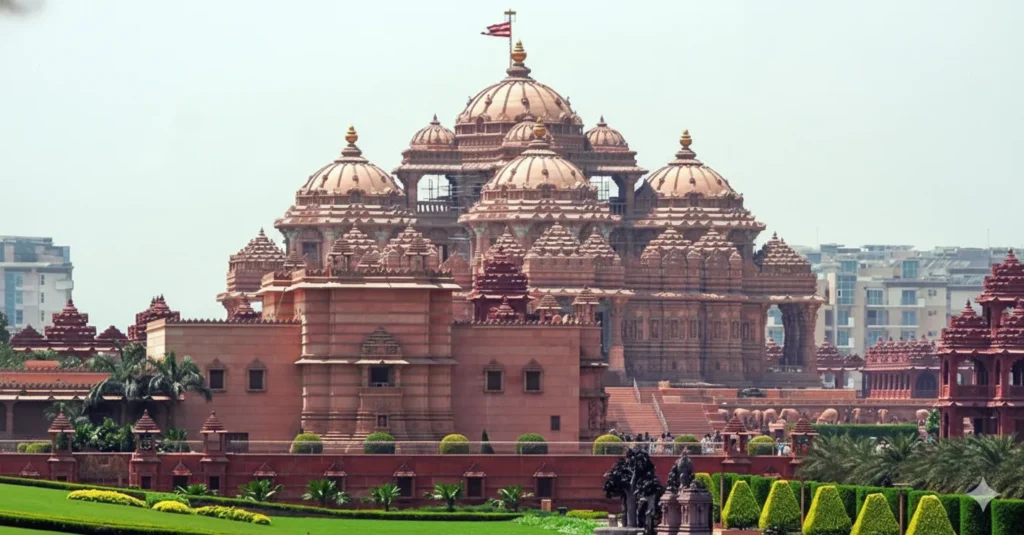
Akshardham Temple – 17:30
Phones are not permitted inside, so you experience everything fully with your own eyes.
The 17:45 boat ride takes you through 10,000 years of India’s creativity and inventions in a beautiful moving story.
At 18:30, the fountain show begins — try to sit around row 7, centre for the best view.
20:00 – Pack small bag for Agra
DAY 3 – Delhi to Agra Travel Plan (Golden Triangle Route)
07:00 – Board Gatimaan Express (New Delhi Station)
Fastest and cleanest train for the Delhi–Agra route.
Breakfast served onboard.
09:50 – Arrive Agra Cantt – Taxi ₹250
10:30 – Check-in: Sunita Homestay
Taj dome visible from rooftop. Free henna if you ask nicely.
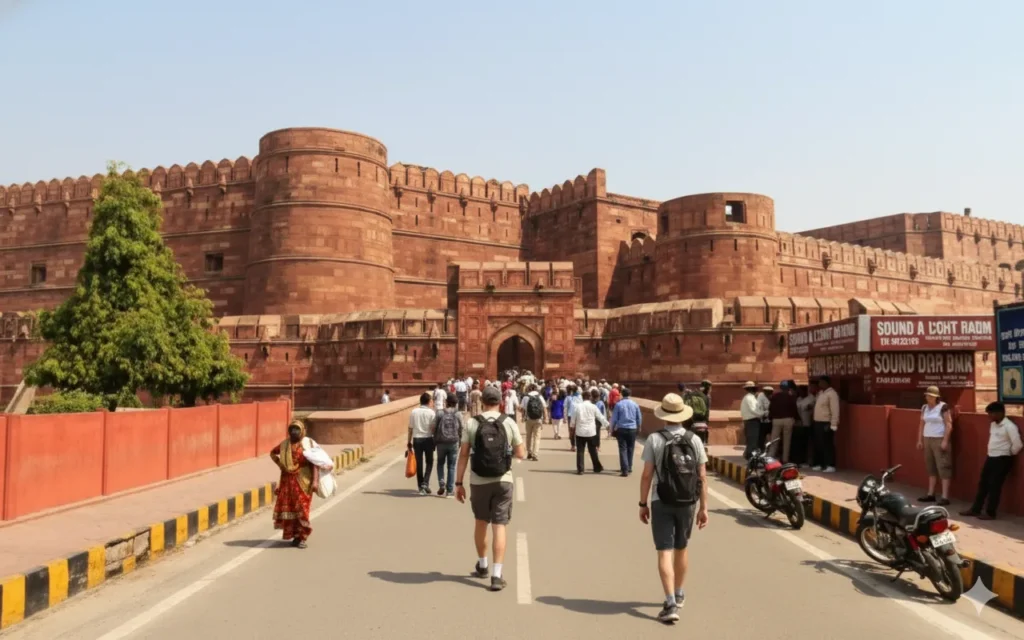
Agra Fort – 11:30
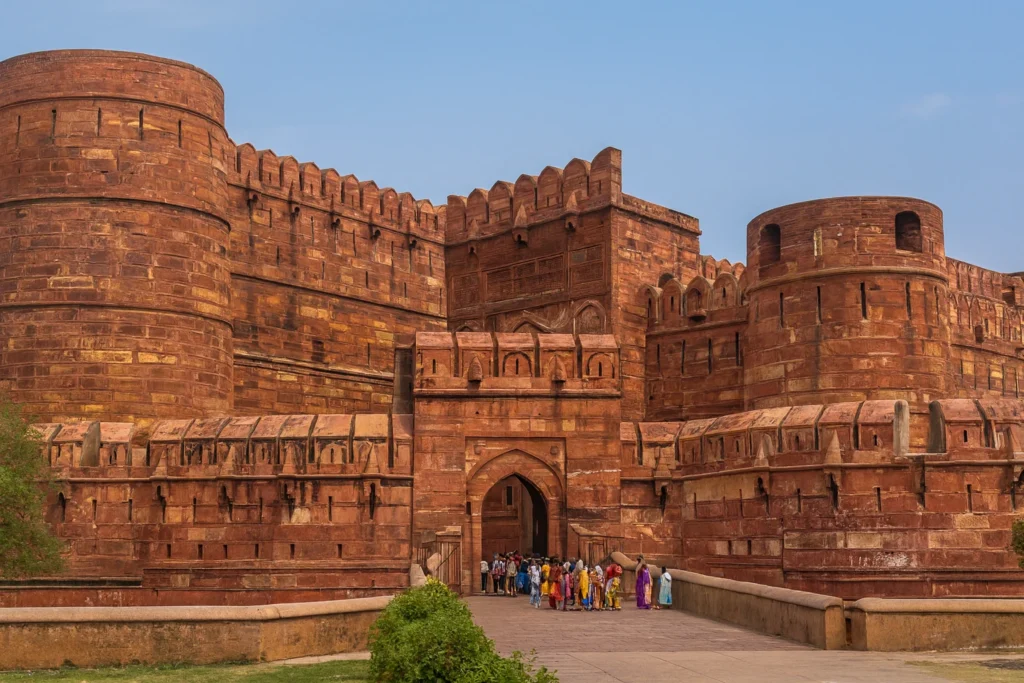
A grand red-sandstone fortress layered with marble halls, airy balconies, and calm views of the Yamuna — this is where Shah Jahan spent his final years, confined by his son Aurangzeb.
We’ve created a fresh way to explore it in our blog “Agra Fort: The Canvas of the Mughal Empire”, where every corner, angle, timing, and ticket detail is explained so travellers understand the fort like a living story.
Best photo spot: the perfectly aligned fountains of Anguri Bagh.
13:30 – Lunch: Pinch of Spice
Butter chicken ₹450, garlic naan ₹90.
Ask “no cashew”.
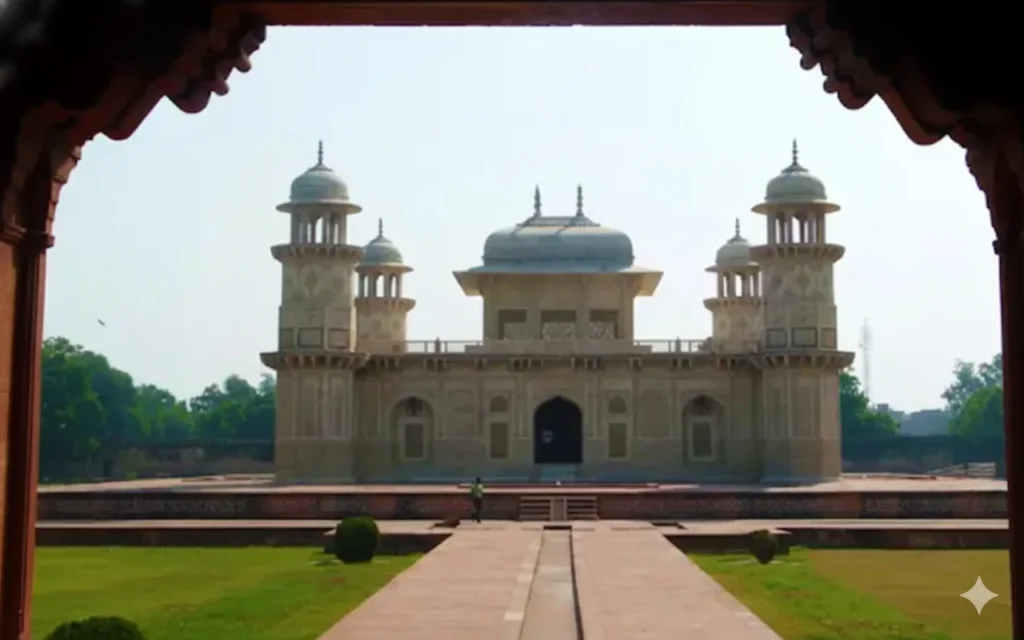
Itimad-ud–Daulah 15:00
Built by Noor Jahan between 1622–1628 in memory of her father Mirza Ghiyas Beg, this delicate white-marble tomb glows like a jewel. Its fine pietra dura inlay makes it the elegant forerunner of the Taj Mahal.
Timings: 8 am to 12 midnight
Entry: Indians ₹30, Foreigners ₹310, and children under 15 enter free.
Mehtab Bagh – 16:30 Sunset
A peaceful riverside garden set directly in line with the Taj, offering beautiful golden-hour silhouettes. Monkeys often roam the paths here — so keep your bag zipped while you enjoy the view.
19:00 – Early Dinner & Sleep
DAY 4 – Agra to Jaipur via Fatehpur Sikri (Golden Triangle Route)
As we move across the delhi agra jaipur itinerary, today we transition from the white marble of the Taj to the pink sands of Rajasthan.
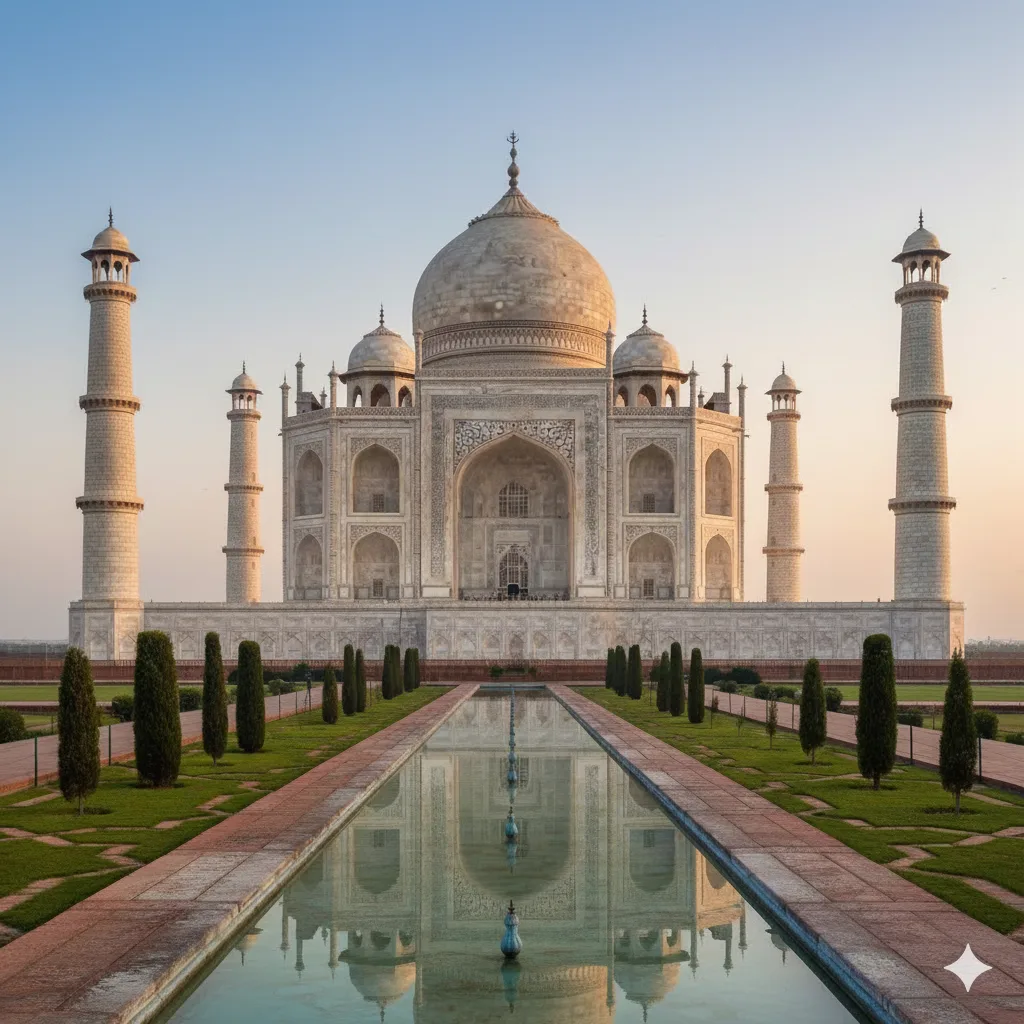
Taj Mahal – 05:45 Sunrise
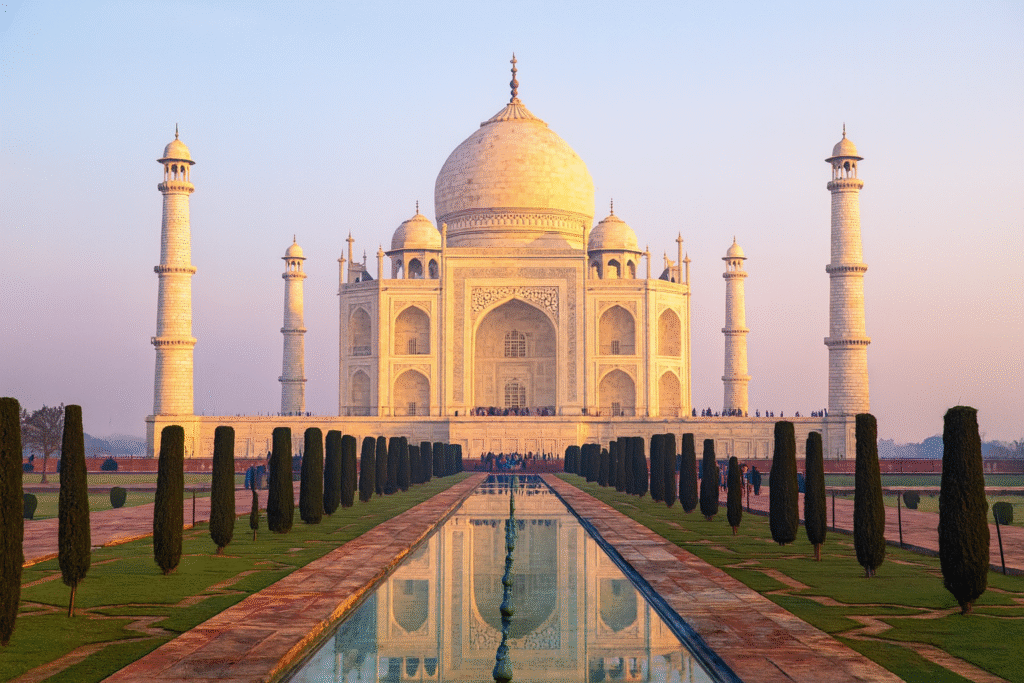
At sunrise the Colours of Taj Mahal shift from pearl to honey to ivory in minutes.this is the Calmest, most sacred time to experience the Taj. you must know the secrets , myths and interesting facts about the identity of India The Taj Mahal in our blog Taj Mahal Architecture – Secrets of monuments Taj Mahal opens from 30 minutes before sunrise to 6.30 pm last entry about 45 minutes before sunset closed on Fridays PrincessAt sunrise, the Taj Mahal shifts from pearl to honey to soft ivory within minutes — the quietest and most spiritual moment to see it.
For the hidden stories, myths, and identity secrets of this monument, explore our blog “Taj Mahal Architecture – Secrets of the Monument.”
Timings: opens 30 minutes before sunrise and closes at 6:30 pm; last entry about 45 minutes before sunset; closed on Fridays.
Princess Diana bench photo — tip the guard ₹100.
Here is the updated ticket information in table format:
| Visitor Category | Entry Fee (Taj Mahal Complex) | Extra Fee for Main Mausoleum* | Total (agar mausoleum jaana ho) |
|---|---|---|---|
| Indian / Indian Citizens / OCI Cardholders | ₹ 50 | ₹ 200 | ₹ 250 |
| Foreign Nationals | ₹ 1,100 | ₹ 200 | ₹ 1,300 |
| Citizens of SAARC / BIMSTEC Countries | ₹ 540 | ₹ 200 | ₹ 740 |
08:00 – Breakfast & Shower
Fatehpur Sikri – 09:30 En-Route to Jaipur
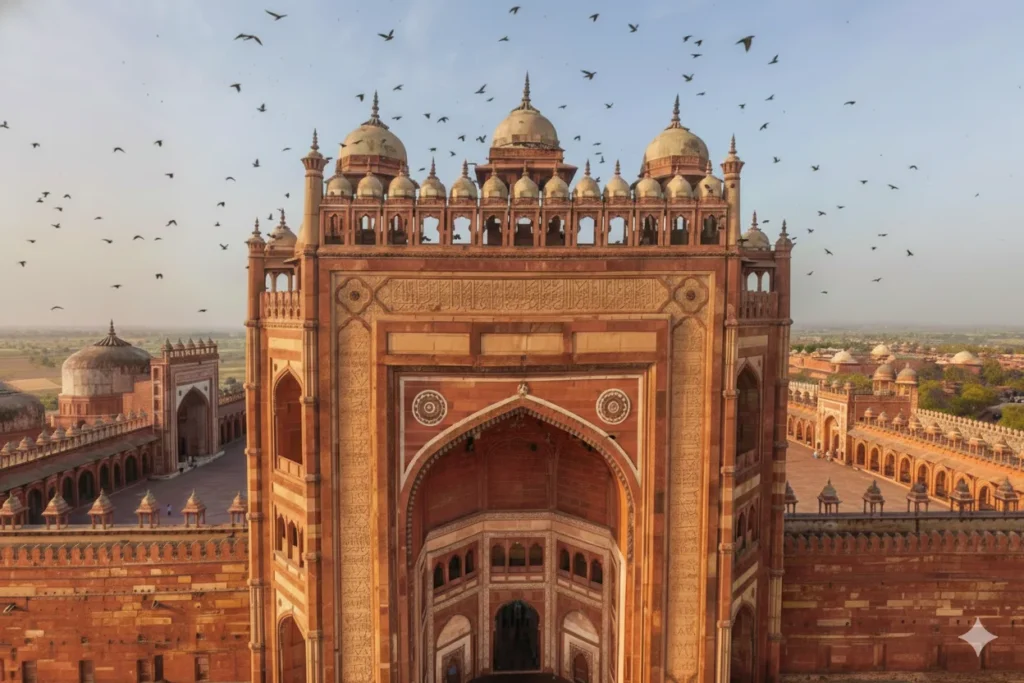
By Emperor Akbar in the 16th century, Fatehpur Sikri rises like a perfectly frozen moment in time, blending Indian, Persian, and Islamic styles into a majestic former capital. The towering Buland Darwaza, standing 54 metres high, marks your arrival, while Salim Chishti’s Dargah remains a cherished shrine where visitors come to make wishes.
Though grand, the city was eventually abandoned due to water shortage — and today it stands as a UNESCO World Heritage Site.
Timings: sunrise to sunset
Tickets: Indians ₹40, Foreigners ₹550, and children under 15 enter free.
13:30 – Lunch at Goverdhan Dhaba
₹200 thali, fresh rotis, steel-jug hand wash.
Abhaneri Stepwell ( Chand Baori)– 15:30
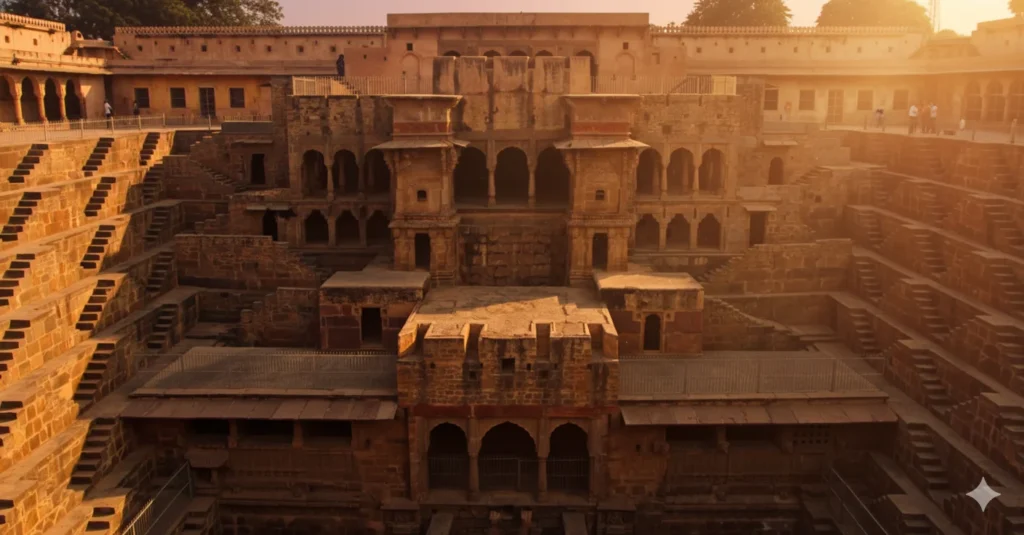
The Abhaneri Stepwell, a 1,000-year-old geometric wonder, drops down in 3,500 perfectly carved steps that create striking optical illusions — a dream spot for photographers. Hollywood even filmed scenes of The Dark Knight Rises here.
Timings: 8 am–6 pm
Tickets: Indians ₹25, Foreigners ₹300.
17:00 – Arrive Jaipur
Check-in: Anuraag Villa (peacocks in garden).
18:30 – Hawa Mahal Viewpoint
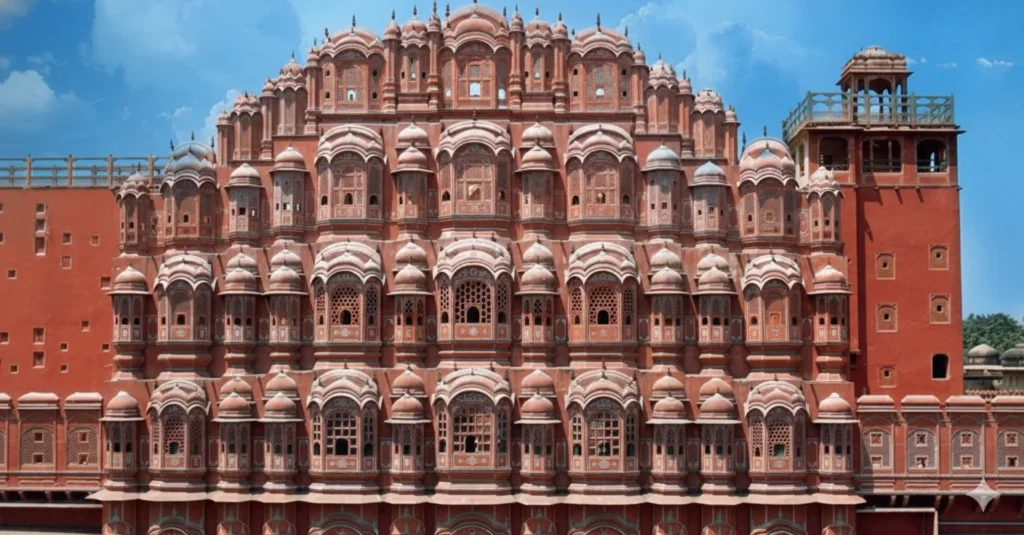
Built in 1799 by Maharaja Sawai Pratap Singh, the Hawa Mahal rises like a pink honeycomb with 953 tiny windows, crafted not from cement but traditional lime, jaggery and old-world materials. From Café Wind View, sip a masala lassi (₹120) and watch the façade glow — the lights come on around 7 pm.
Timings: 9 am–7 pm
Tickets: Indians ₹50, Foreigners ₹200, Indian students ₹10, foreign students ₹100.
20:00 – Dinner at Chokhi Dhani
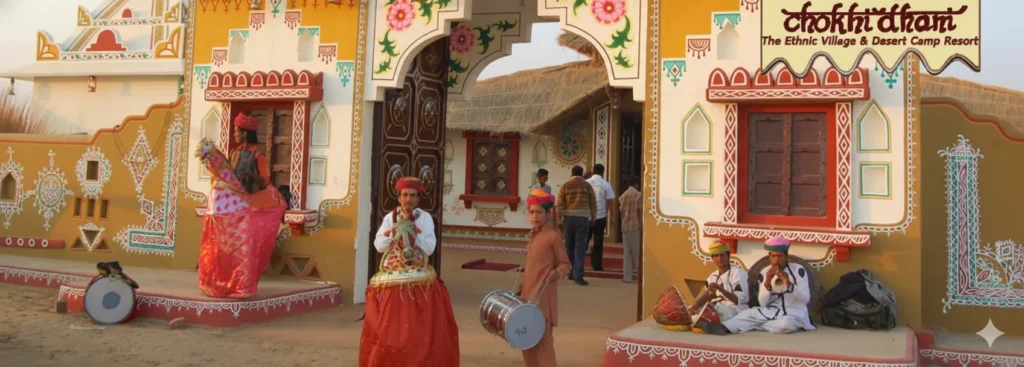
Cultural Rajasthani village.
All-you-can-eat thali ₹1,200, folk dances, live music.
DAY 5 – Jaipur Sightseeing – Forts & Palaces
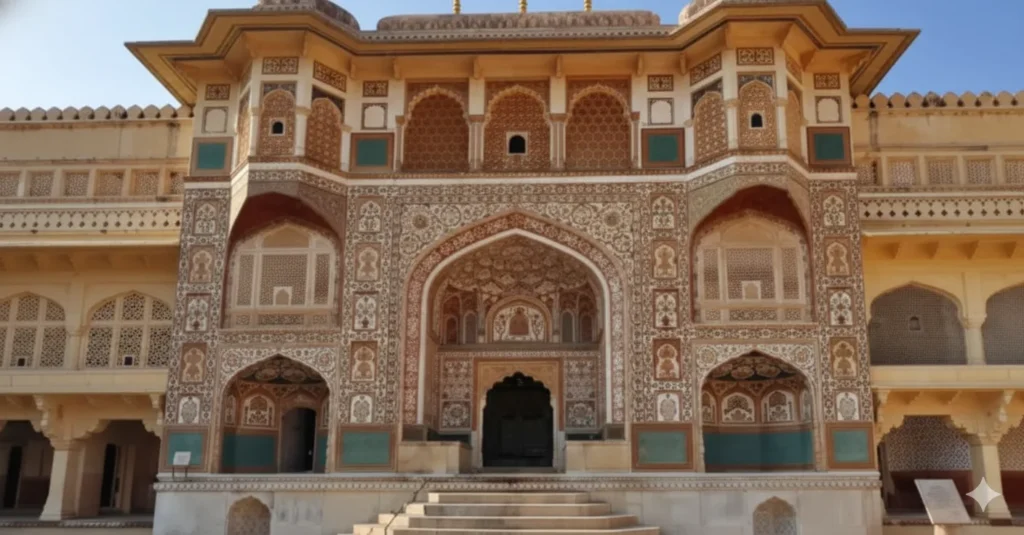
07:00 – Amer Fort
Commissioned by Raja Man Singh in 1592, this majestic fort earned its UNESCO World Heritage status in 2013. Inside, the Sheesh Mahal scatters light like a sky full of stars, and a hidden tunnel quietly connects it to Jaigarh Fort.
Timings: 8 am–5:30 pm
Tickets: Indians ₹100, Indian students ₹50, Foreigners ₹550, foreign students ₹100.
The Light-and-Sound show has separate ticket charges.

10:00 – Jaigarh Fort
Military fortress with Jaivana Cannon.Best hilltop views of Amer.
11:30 – City Palace
Home to Jaipur’s royal family, this palace complex displays the world’s largest silver urns, elegant courtyards, and beautiful textile galleries.
Opens daily 9:30 am–5 pm
Tickets: Indians ₹200, Foreigners ₹700.
13:00 – Lunch at LMB
Kachori ₹50, ghewar ₹400/kg.
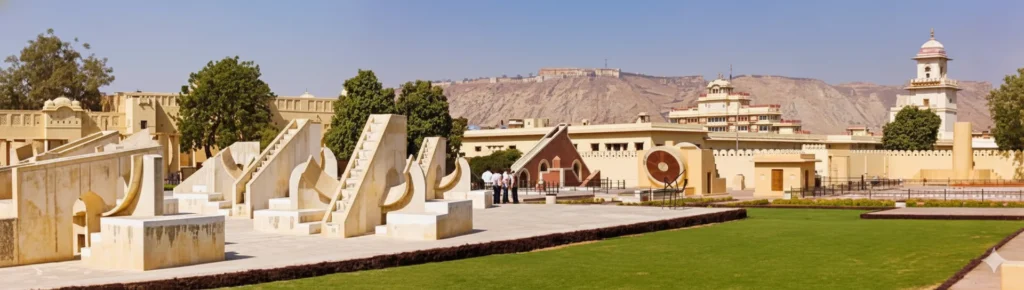
Jantar Mantar – 14:30
A UNESCO-recognised observatory, this site houses the world’s largest sundial, able to measure time with astonishing 2-second accuracy.
Timings: 9 am–7 pm (last ticket at 6:30 pm)
Tickets: Indians ₹50, Foreigners ₹200.
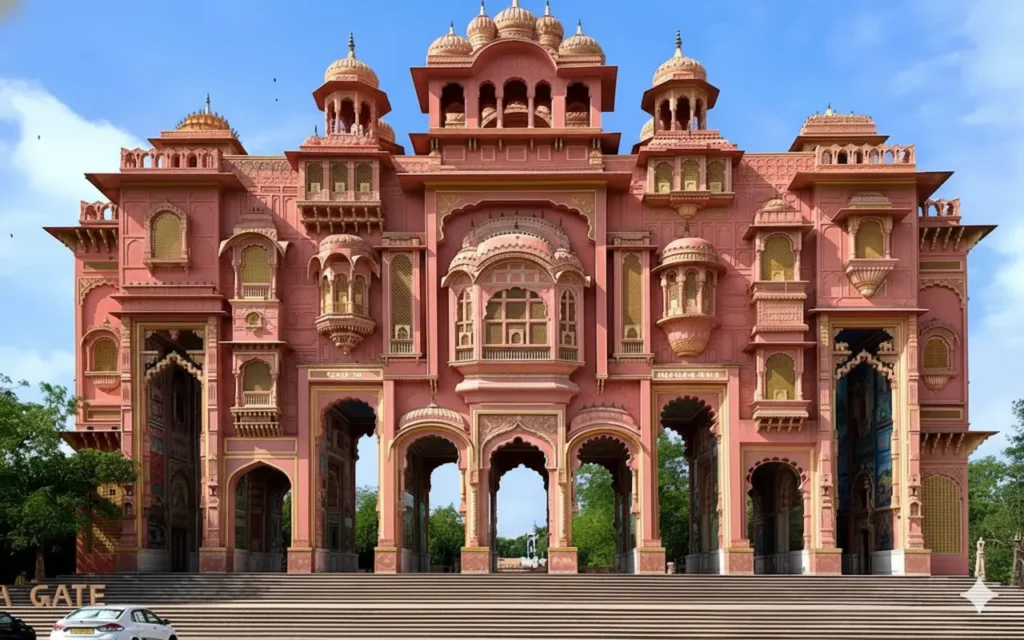
Patrika Gate – 15:30
Hand-painted arches showing Rajasthan’s culture.opens 24×7 Free to everybody, colourful, excellent for photos.
Johari Bazaar – 17:00
Blue pottery, block-print fabrics, gems.
Start bargaining at 40%.
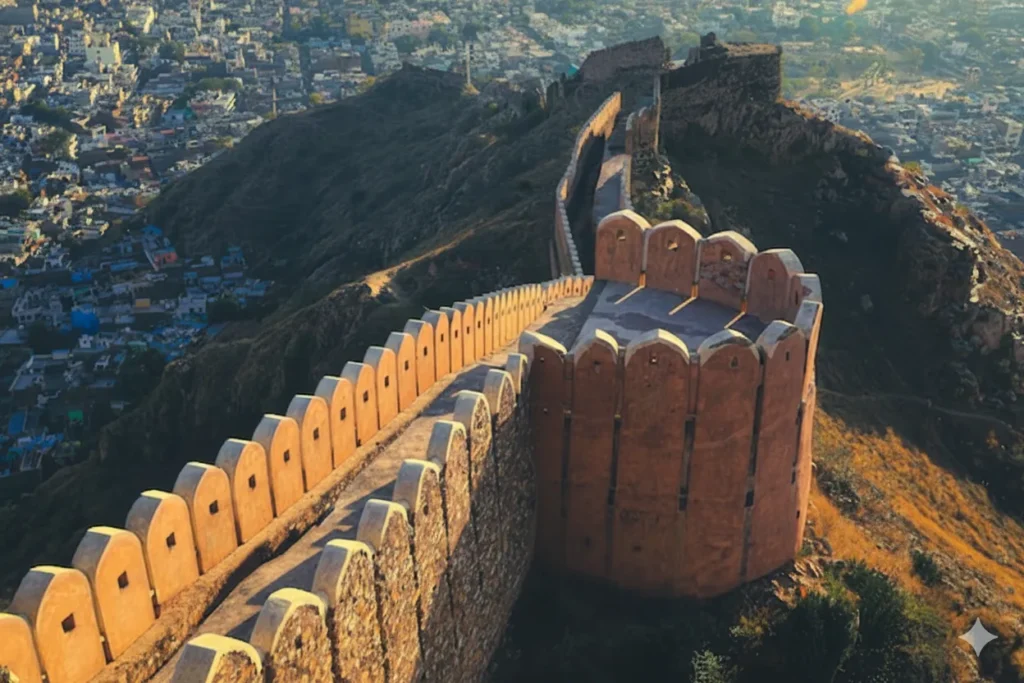
Nahargarh Fort – 19:00 Sunset
Built in 1734 by Maharaja Sawai Jai Singh, Nahargarh Fort opens its gates from 10 am to 5:30 pm. Entry is ₹50 for Indians and ₹200 for foreign tourists. As evening falls, Jaipur’s city lights spread out below like glowing golden rivers — the perfect way to end a royal day.
DAY 6 – Jaipur Hidden Gems & Shopping Guide
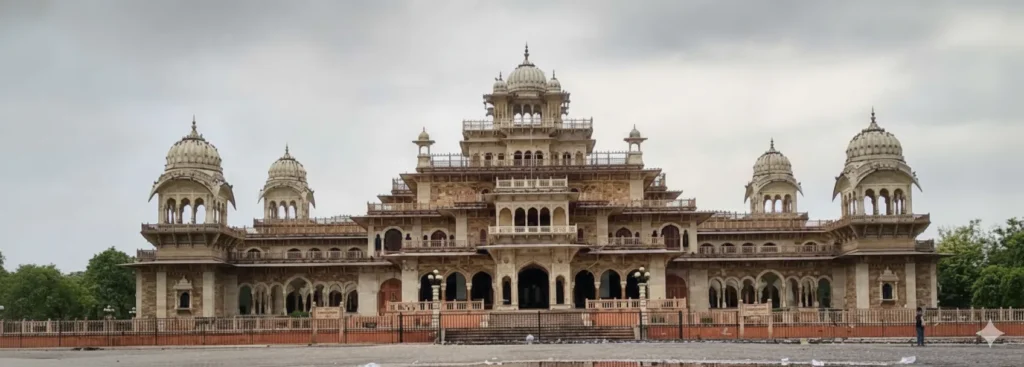
09:00 – Albert Hall Museum
vThis Indo-Saracenic museum houses centuries-old artefacts, royal collections, and even an Egyptian mummy waiting in its quiet gallery.
Timings: 9 am–5 pm and 7 pm–10 pm
Tickets: Indians ₹50, Indian students ₹20, Foreigners ₹300.
Night entry: Indians ₹100, Foreigners ₹200.
11:00 – Choice: Sambhar Lake OR Elephant Joy Sanctuary
Option A – Sambhar Lake
India’s largest salt lake, flamingos in winter, surreal white landscape.
Option B – Elephant Joy Sanctuary
A fully ethical experience where you gently feed the elephants, paint them with natural colours, and help wash them in calm surroundings.
Timings: 12:30 pm–6 pm (weekends 12 pm–6 pm)
Cost: ₹6,000 per person for both Indians and foreigners.

13:30 – Lunch at Tapri Central
Quinoa bhelpuri ₹250, chai ₹40, rooftop views.
15:00 – Anokhi Museum Block Printing Workshop
Try traditional stamping, take home a hand-made coaster.
17:00 – Gem Palace Tour
Famous Jaipur gemstone house.
Free demo: real vs fake emeralds.
19:00 – Dinner at Baradari
City Palace café, laal maans ₹800, live tabla.
DAY 7 – Jaipur to Delhi Return (End of 7-Day Itinerary)
08:00 – Yoga at Barkat Nagar Park
Gentle stretches before the journey.
10:00 – Lassiwala on MI Road
Since 1944, thick lassi in clay cup, ₹60.
11:00 – Volvo Bus to Delhi
Scenic mustard fields — like a DDLJ moment.
16:00 – Connaught Place Shopping
Central Cottage Emporium — fixed prices, Pashmina from ₹3,000.
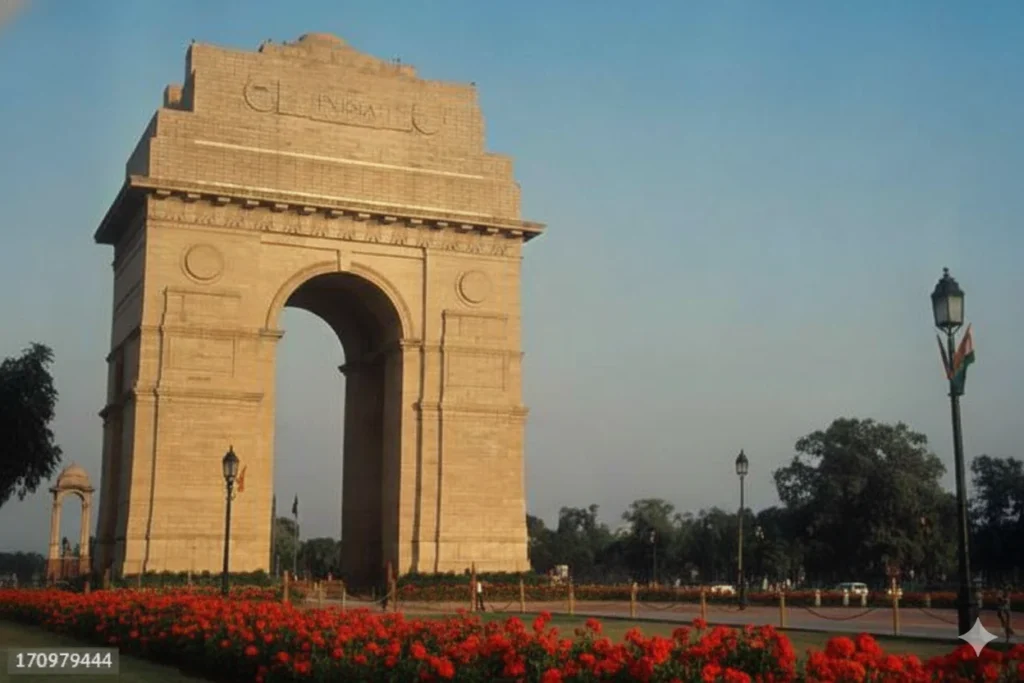
18:00 – India Gate
vStanding 42 metres (138 ft) tall, this memorial was first laid in 1921 by the Duke of Connaught and later unveiled in 1931. The names of 13,313 servicemen are carved across its stone arches. It’s open 24 hours, with no entry ticket — a quiet, dignified stop in the heart of the city.
20:00 – Airport Metro
To reach the Terminal 3. metro is the best way.
Buy Taj Mahal fridge magnet ₹350.
How to Travel and Manage Your Delhi Agra Jaipur Itinerary Logistics
Navigating a delhi agra jaipur itinerary is quite simple thanks to the well-connected Yamuna Expressway and the Shatabdi Express trains. For a seamless golden triangle itinerary 7 days, we suggest hiring a private driver for the Agra to Jaipur leg. This allows you to stop at Fatehpur Sikri, which is a highlight of any comprehensive golden triangle india itinerary. Whether you travel by train or car, your delhi agra jaipur itinerary will be filled with scenic landscapes.”
Golden Triangle Travel Tips for First-Time Visitors (2026)
Laundry:
South Delhi & Jaipur hostels offer ₹200/kg same-day wash – pack 3 days clothes only.
Power bank:
Trains have plug points but Indians charge 3 phones at once – carry dual-USB cable.
Toilet paper:
rarely in public toilets – buy travel roll ₹30 at airport pharmacy.
Tipping:
restaurants 10 %, rickshaws round up ₹10, guides ₹200 half-day.
Free Wi-Fi:
Delhi & Jaipur railway stations give 30 min free – scan passport page.
Reusable bottle:
RO water stations at every monument – save ₹500 on plastic.
Female safety:
Pink auto-rickshaws in Jaipur (women drivers) – phone 181 women helpline, works in English.
🚆 How to Travel the Golden Triangle by Train (Booking Guide)
Visit 12go.asia (accepts foreign cards) or IRCTC (needs Indian mobile)
Search “NDLS” (New Delhi) → “AGC” (Agra Cantt).
Pick Gatimaan Express 12050 – fastest & cleanest
Print ticket + carry passport – ticket checker scans QR.
Seat preference: Window Chair Car (CC) for Taj Mahal first glimpse
Why this is the best Golden Triangle India Itinerary:
- Efficiency: This delhi agra jaipur itinerary covers over 15 UNESCO sites without feeling rushed.
- Perfect Timing: A golden triangle itinerary 7 days is the ideal duration to balance sightseeing with relaxation.
- Expert Curation: Unlike a standard delhi agra jaipur itinerary, we include local food spots and “insider” entry tips.
- Logistics: Our golden triangle india itinerary focuses on the most efficient train and road routes to save you hours of travel time.
🧑⚕️Health & Safety Tips for Golden Triangle Travel
Tap water =
NO. Use RO filters or Aquafina/Bisleri sealed bottles.
Street food rule:
eat hot, eat crowded – if locals queue, it’s safe.
Delhi belly kit:
ORS sachets ₹10, Imodium, probiotic yoghurt daily.
📱 Essential Travel Apps for Golden Triangle India
Uber / Ola – rides cheaper than tuk-tuk for 3 km+
Railyatri – live train status & platform number
Maps.me – offline map with footpaths inside forts
Zomato – menus with photos & ₹100 first-user discount
WhatsApp – every hotel, driver, guide uses it
💰 Golden Triangle India Itinerary Cost & Budget Breakdown
For a detailed daily budget breakdown, check our complete India travel budget guide
| Item | ₹ | USD |
| Hotels | 21,000 | 255 |
| Meals | 4,900 | 60 |
| Transport | 6,500 | 80 |
| Activities | 5,500 | 67 |
| Shopping | 4,000 | 50 |
| Total | 41,900 | ≈ $512 |
Useful Hindi Phrases for Golden Triangle Travellers
Making an effort to speak even a few words of Hindi will earn you respect and smiles from locals, improving your overall Golden Triangle travel guide experience.
• Taj Mahal is closed on Mondays
• Airport SBI ATM allows ₹20,000
• RailYatri app helps with live platforms
• A small chocolate from your country makes a good gift
🏁 Final Thoughts on the Golden Triangle India Itinerary
xIndia’s history is best told through its architecture and people. By following this golden triangle india itinerary, you are stepping into a story that spans centuries. We hope this golden triangle itinerary 7 days helps you plan the trip of a lifetime. Remember, a delhi agra jaipur itinerary is more than just a vacation; it’s a soul-stirring experience that will stay with you forever.
FAQs About Golden Triangle India Itinerary
What is the Golden Triangle in India?
The Golden Triangle is a popular tourist circuit covering Delhi, Agra, and Jaipur. It forms a triangular route on the map and offers a mix of history, culture, and iconic landmarks like the Taj Mahal, Amber Fort, and India Gate.
How many days are enough for the Golden Triangle India itinerary?
A 5 to 7-day itinerary is ideal to explore the Golden Triangle comfortably. It allows 2 days in Delhi, 1–2 days in Agra, and 2–3 days in Jaipur, covering major attractions without rushing.
What is the best time to visit the Golden Triangle India?
The best time to visit is October to March when the weather is pleasant. Summers (April–June) are very hot, while monsoon (July–September) brings humidity but fewer crowds and lower prices.
What is the approximate cost of a Golden Triangle trip?
A Golden Triangle trip can cost around ₹2,000 to ₹6,000 per day per person, depending on travel style. Budget travelers can spend less using trains and budget hotels, while luxury trips cost significantly more
How can I travel between Delhi, Agra, and Jaipur?
You can travel by train, car, or flight. Trains like Gatimaan Express and Shatabdi are fast and affordable, while private taxis offer flexibility. Flights are limited but available between major cities.
Is the Golden Triangle India safe for tourists?
The Golden Triangle is India’s most popular travel circuit inking Delhi ,Agra ,and Jaipur . it forms a triangular shape on the map- hencethe name.
Which city is best in the Golden Triangle?
Each city offers something unique: Delhi for culture and food, Agra for the Taj Mahal, and Jaipur for royal palaces. Jaipur is often considered the most visually appealing, while Agra is the most iconic.
what are the must – see attractions?
Delhi : Red Fort,India Gate , qutub Minar Agra : Taj Mahal,Agra FortJaipur : AmerFort, Hawa Mahal, City palace.