🌍How to Travel Between Cities in India: 7 Proven Tips for Flights, Trains, and Buses
Last Updated on
17 April 2026
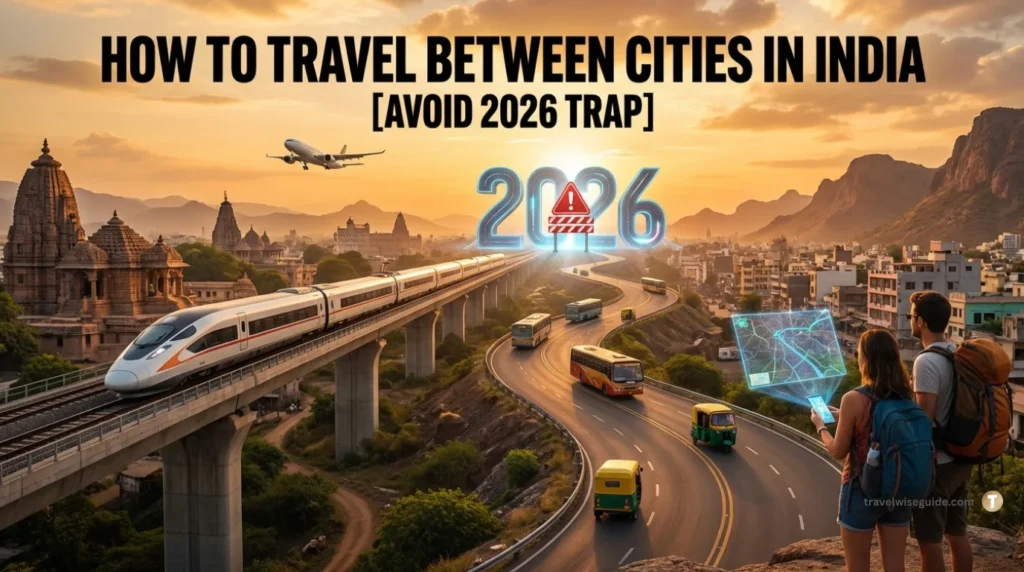
India is a country of immense distances, diverse landscapes, and fast-growing cities, so understanding how to travel between cities in India becomes one of the most important parts of planning your trip. For first-time travellers, the transport choices can feel overwhelming, but once you see how the system works, you realise that the country is far more connected and easier to navigate than it appears. After all, when figuring out how to travel between cities in India, how do you decide the best way to move across such a huge and diverse country?
From high-speed trains and modern domestic flights to comfortable long-distance buses, India offers several reliable ways to travel between major cities, each with its own strengths. The key is choosing the option that suits your time, comfort level, and budget.
And isn’t it reassuring to know that you can choose the travel style that matches your pace?
This guide breaks down all the major inter-city travel options, compares them clearly, and shares practical tips to help foreign visitors plan their journeys with confidence and without confusion.
- ⭐ What is the Best Way to Travel in India?
- 🚆 How to Travel Between Cities in India by Train
- ✈️ Domestic Flights in India: The Fastest Intercity Transport
- 🚌AC Sleeper Buses: Flexible Intercity Travel in India
- 🚌 AC Sleeper Buses: Flexible Intercity Travel in India
- 🔍 Time vs. Budget: Comparing How to Travel Between Cities in India
- 🔑 Your Complete India Transportation Guide & Safety Tips
- 🏆 Final Summary: Crafting Your Perfect India Itinerary
- 🗺️ Where to Go Next? Start Planning Your Trip!
- FAQs about How to Travel Between Cities in India
⭐ What is the Best Way to Travel in India?
India is a vast country, and understanding how to move from one region to another can make your journey smoother and far more enjoyable. Distances between major cities can be long, but the country offers multiple transport systems that are reliable, economical, and surprisingly modern in many corridors.
If you are visiting India for the first time, the key is to choose your mode of travel according to distance, comfort level, and how quickly you want to reach the next destination. India’s transport ecosystem is diverse, ranging from high-speed trains to budget buses and a rapidly growing network of domestic flights.
In this guide, you’ll learn the strengths and weaknesses of each mode, realistic expectations, and practical tips that help foreign travellers plan without confusion.
🚆 How to Travel Between Cities in India by Train
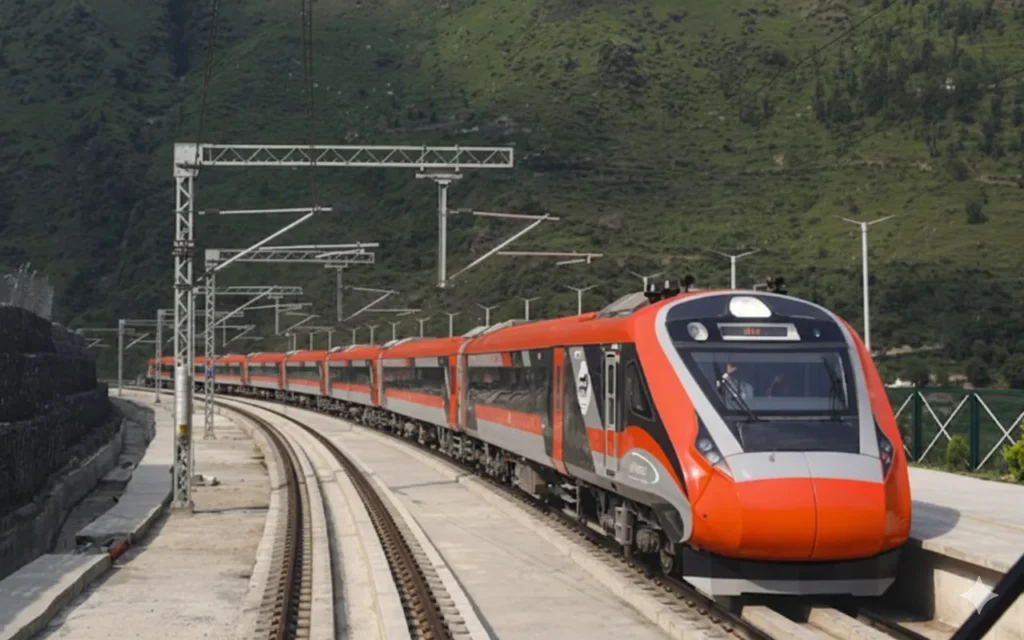
Figuring out how to travel between cities in India by train is an essential part of the true Indian experience. The Indian Railways network is one of the largest and most complex in the world, connecting almost every major city, small town, and coastal region. For medium to long distances, trains offer an unbeatable mix of comfort, scenery, and local culture.
Why choose the train?
- Cost-Effective: Train travel is highly affordable compared to flights.
- Save on Hotels: Overnight journeys help you save money on accommodation while covering large distances while you sleep.
- Breathtaking Scenery: Enjoy unmatched views of the Indian countryside, mountains, and coastal routes right from your window.
The Best Indian Railway Classes for Foreigners
When booking train tickets in India, the class you choose dictates your comfort level. For a stress-free journey, foreign tourists should stick to the Air-Conditioned (AC) classes:
- AC First Class (1A): Offers “hotel-level” comfort with private 2-berth or 4-berth lockable cabins, bedding, and the cleanest Western-style toilets.
- AC 2-Tier (2A): The most popular choice for comfortable overnight travel. It features open bays with reading lights, charging plugs, and privacy curtains.
- AC Chair Car (CC / EC): Perfect for daytime journeys, offering comfortable airline-style reserved seating.
Vande Bharat Express vs. Overnight Trains
India’s rail network is rapidly modernizing. If you are travelling during the day between key cities (like Delhi to Varanasi or Mumbai to Ahmedabad), the Vande Bharat Express is your best option. These are premium, high-speed, fully air-conditioned day trains featuring automatic doors, Wi-Fi, and excellent onboard catering. For journeys taking longer than 8–10 hours, traditional overnight express trains remain the classic and practical choice.
Cracking the IRCTC Tourist Quota for Last-Minute Seats
Indian trains often sell out weeks in advance. However, the system holds a special lifeline for international visitors: the IRCTC tourist quota. This special quota sets aside a limited number of seats specifically for foreign passport holders. If general tickets are sold out, you can often secure a confirmed seat 24 to 48 hours before departure by registering and booking directly through the official IRCTC e-ticketing portal, which now allows foreign tourists to create an account using an international mobile number for verification.
✈️ Domestic Flights in India: The Fastest Intercity Transport

Domestic flights in India are the fastest way to cover large distances. With a network of more than 20 major airports and dozens of regional ones connecting remote corners, you can fly between most cities within 1 to 2 hours. If your travel itinerary is tight and distances stretch over 700 kilometres, flying is undeniably the smartest way to save a significant amount of time.
Why choose to fly?
- Time Efficiency: Perfect for long-haul routes like Delhi to Kerala or Mumbai to Northeast India.
- Modern Infrastructure & Facilities: Major Indian airports offer international-style amenities, comfortable transit lounges, and clear English signage. If your itinerary takes you to smaller regional hubs, you can always verify specific terminal facilities, passenger guidelines, and accessibility options directly through the official Airports Authority of India (AAI) website before your departure.
- Remote Connectivity: Highly useful for quickly reaching the nearest airports for hill stations and remote regions.
Top Airlines and Baggage Allowance Rules
India has a highly competitive aviation market with multiple reliable carriers. The most popular airlines include IndiGo, Air India, Vistara, and Akasa Air. These airlines offer easy online booking portals and are generally very accommodating to international credit cards for foreign tourists.
When booking your tickets, it is crucial to understand the standard baggage allowance rules, as they often differ from international flight limits:
- Check-in Baggage: The standard limit for domestic economy flights in India is strictly 15 kg per passenger.
- Cabin Baggage: You are typically allowed one piece of hand luggage weighing up to 7 kg, plus a small personal item like a laptop bag.
- Pro Tip: If you are travelling with heavier luggage, always pre-book extra baggage weight online while buying your ticket. It is significantly cheaper than paying surge excess baggage fees directly at the airport counter.
- Timing: Always aim to arrive at least 2 hours before your departure time at major city airports, as security queues can get long during peak hours.
🚌AC Sleeper Buses: Flexible Intercity Travel in India
🚌 AC Sleeper Buses: Flexible Intercity Travel in India
When direct trains are fully booked or you need to reach hill stations that don’t have railway access, buses are the ultimate problem-solvers. The highway infrastructure has improved massively, making road transport a highly reliable option for intercity travel in India.
Why choose intercity buses?
- High Frequency: Buses depart frequently throughout the day and night.
- Last-Minute Flexibility: Unlike trains, you can often book bus tickets just a day or two before your journey.
- Direct Hill Connectivity: The only way to reach popular destinations like Manali, Dharamshala, or Munnar is by road.
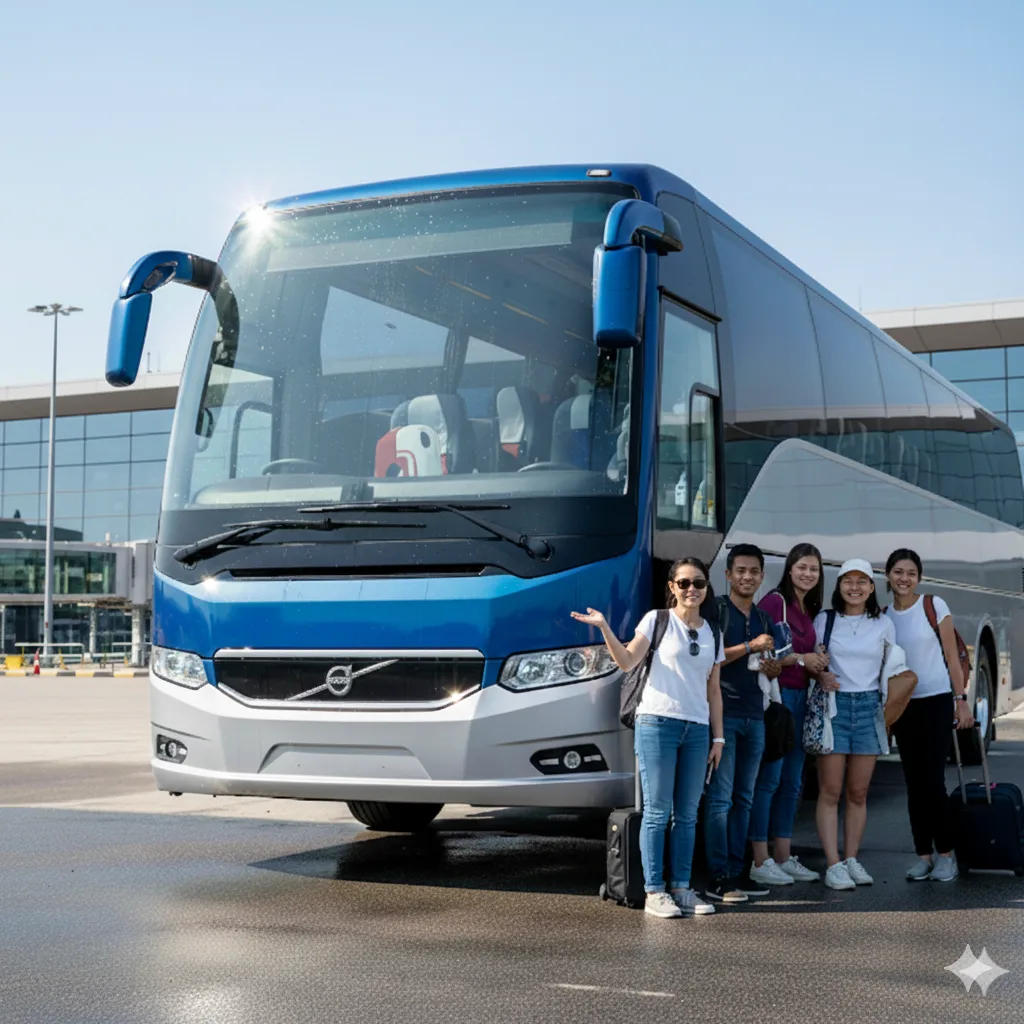
Modern private operators run premium fleets, and the AC sleeper bus has revolutionized long-distance road travel. These Volvo or Scania coaches feature private, lie-flat berths with air-conditioning, charging ports, and sometimes personal entertainment screens. They are ideal for overnight routes like Delhi to Jaipur or Bangalore to Goa, allowing you to wake up fresh at your destination. Always book through verified aggregators to ensure safety and quality.
🔍 Time vs. Budget: Comparing How to Travel Between Cities in India
Choosing the right transport mode ultimately comes down to balancing your itinerary timeline, comfort preferences, and budget. If you are still unsure about the best way to travel in India for a specific leg of your journey, use this quick comparison matrix to make an instant decision:
| Mode of Transport | Best For | Price Range | Ideal Distance | Key Advantage |
| ✈️ Domestic Flights | Maximizing time on short itineraries | Highest | Long-Haul (700+ km) | Fastest transit; excellent for cross-country jumps. |
| 🚆 Indian Railways (AC) | Cultural immersion & budget travel | Medium | Medium-Haul (300 – 700 km) | Hotel-level overnight comfort; saves daylight hours. |
| 🚌 AC Sleeper Buses | Last-minute plans & hill stations | Lowest | Short to Medium (Under 500 km) | High frequency; direct connectivity to remote areas. |
The Quick Decision Framework
To make planning completely stress-free, follow this simple distance rule used by seasoned travellers:
- Under 300 km (e.g., Delhi to Agra): Opt for an AC Bus or a daytime train like the Vande Bharat Express. The journey will take a few hours, and airport security wait times would make flying impractical.
- 300 km – 700 km (e.g., Mumbai to Goa): Book an overnight AC 2-Tier train. You save daylight hours for sightseeing, avoid paying for a night’s hotel stay, and wake up refreshed at your destination.
- Above 700 km (e.g., Jaipur to Varanasi): Book a domestic flight. The time saved far outweighs the extra cost, allowing you to maximize your actual vacation days.
🔑 Your Complete India Transportation Guide & Safety Tips
Navigating intercity travel in India becomes incredibly smooth once you understand the local systems. To ensure your journey is stress-free from departure to arrival, keep these insider survival tips in mind:
- Beware of Station Touts (The Tourist Trap): Never buy tickets from individuals approaching you at railway stations or bus stands claiming the ticket office is “closed or moved.” Always use the official IRCTC portal, airline websites, or verified aggregators like MakeMyTrip and 12Go Asia.
- Secure Your Luggage on Trains: While AC classes are generally very safe, it is a standard practice and a smart safety measure to bring a small cable lock to secure your backpack to the berth during overnight train journeys.
- Download Offline Maps and Ride Apps: Transit hubs can be chaotic. Download offline Google Maps for your destinations. Instead of negotiating with unmetered local taxis outside the station, pre-download apps like Uber, Ola, or BluSmart for safe, trackable rides to your hotel.
- Hydration and Transit Health: While moving between cities, strictly consume sealed bottled water (look for trusted brands like Bisleri or Kinley) and avoid raw ice in drinks at stations or roadside bus stops.
- Keep Digital & Physical Backups: Station security and train ticket examiners (TTE) will ask for your ID. Always carry a physical copy of your passport and Indian e-Visa, along with digital copies saved offline on your phone.
- Arrive Early, But Expect Delays: Indian airports require you to arrive at least 2 hours early. For trains and buses, reach 45 minutes early to locate your correct platform or boarding point, as these can sometimes change at the last minute.
🏆 Final Summary: Crafting Your Perfect India Itinerary
Navigating the vast distances of this incredible country doesn’t have to be overwhelming. By mixing domestic flights for swift cross-country jumps, AC trains for comfortable overnight cultural experiences, and sleeper buses for flexible hill-station routes, you can build a seamless and stress-free journey.
The true secret to mastering how to travel between cities in India lies in planning ahead, utilizing insider hacks like the tourist quota, and matching your transport choice to your distance and budget. With these tips in your arsenal, you are officially ready to avoid the common tourist traps and travel like a seasoned local.
💡Pro Tip: Verify Your Route with Official Tourism Data
A Final Word on Planning Your Route: Before finalizing your city-to-city itinerary, it is always a smart idea to cross-check regional festivals, state-specific travel advisories, and deep cultural heritage details on the official Incredible India tourism portal. Backed by the Ministry of Tourism, this resource helps you discover authentic local experiences that perfectly complement your transit plans.
🗺️ Where to Go Next? Start Planning Your Trip!
1️⃣Golden Triangle India: Perfect 7-Day Itinerary
To explore step -by-step route for Delhi–Agra–Jaipur, timings & entry fees.
👉 Read Guide → https://travelwiseguide.com/golden-triangle-india-7-day-itinerary/
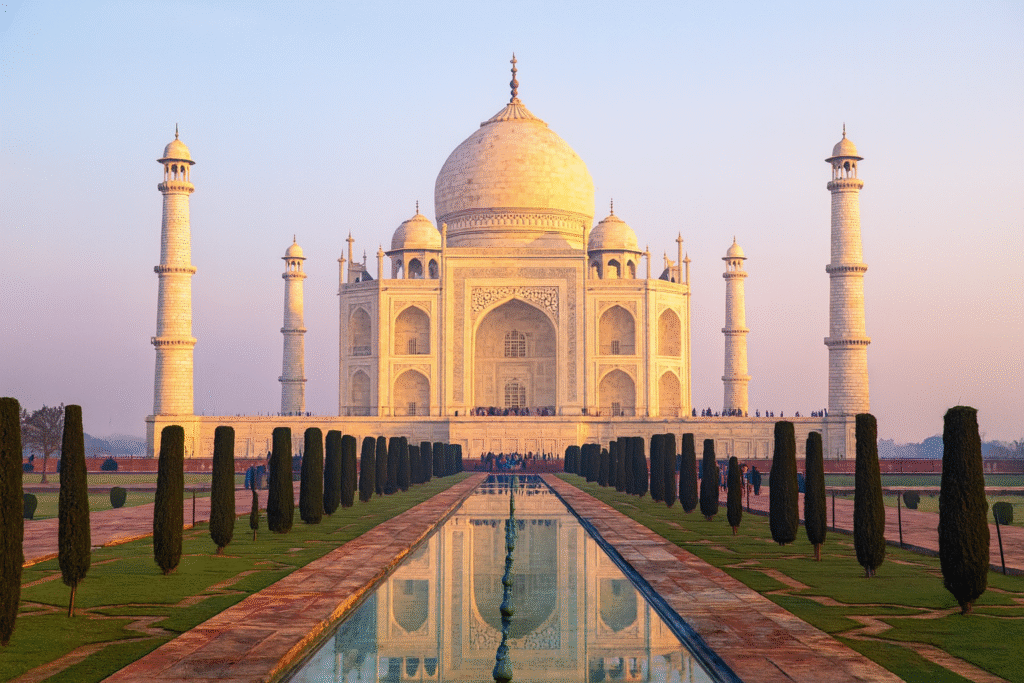
2️⃣ Taj Mahal Architecture -Secrets of The Monument of Love, Complete Guide
Know everything – Hidden facts, architectural dimentions , myths which are still hidden .
👉 Read Guide →https://travelwiseguide.com/taj-mahal-architecture-history-design/
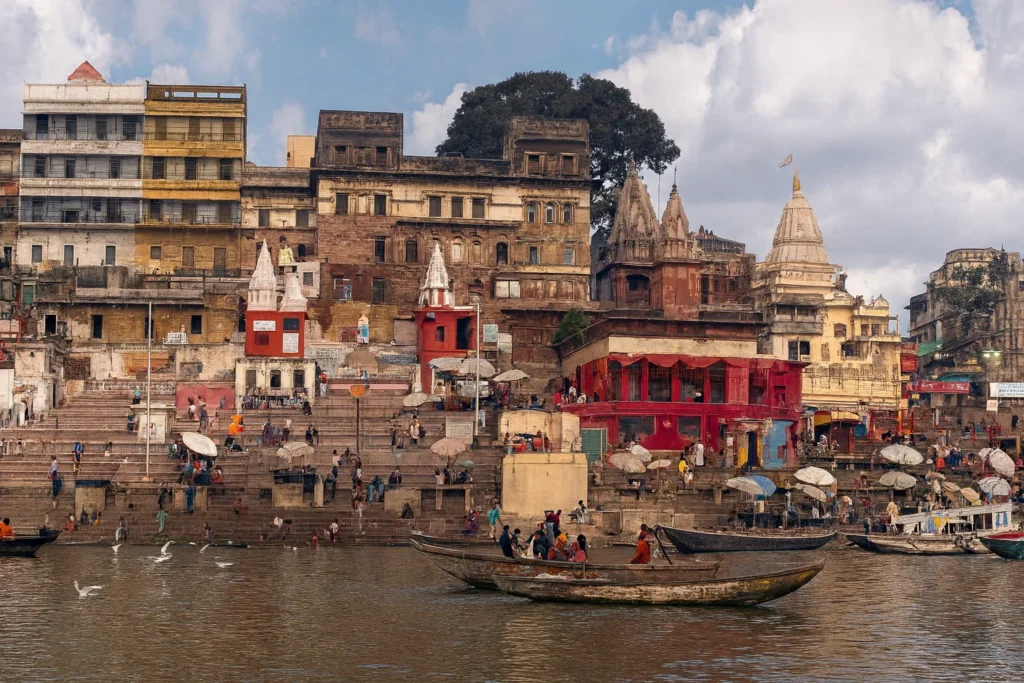
3️⃣Varanasi Travel Guide 2025 — Ghats, Ganga Aarti & 3-Day Itinerary
Real ancient importance of varanasi ,arti timings, place of best view of arti , what to eat , all important numbers.
👉 Read Guide →https://travelwiseguide.com/varanasi-travel-guide-2025/
FAQs about How to Travel Between Cities in India
What is the absolute best way to figure out how to travel between cities in India?
The best way to travel depends entirely on the distance. For short journeys under 300 kilometres, air-conditioned buses are best. For medium distances up to 700 kilometres, overnight trains are highly recommended. For anything longer, domestic flights save valuable holiday time.
Distance
Best Transport Mode
Example Route
Under 300 km
Premium AC Bus / Day Train
Delhi to Agra
300 – 700 km
AC Overnight Train (1A / 2A)
Mumbai to Goa
Over 700 km
Domestic Flight
Jaipur to Varanasi
How to travel between cities in India on a tight schedule?
To travel efficiently on a tight schedule, you should exclusively book domestic flights. Major airlines like IndiGo and Air India connect almost all key tourist destinations in under two hours, bypassing the lengthy transit times associated with road or rail travel.
Delhi to Varanasi: 1.5 hours by flight (vs. 12 hours by train).
Mumbai to Udaipur: 1.5 hours by flight (vs. 16 hours by train).
Bangalore to Kochi: 1 hour by flight (vs. 10 hours by bus).
Can foreign travellers book Indian trains without a local mobile number?
Yes, foreign travellers can easily register on the official IRCTC portal using their international mobile number. A small registration fee is charged, and verification is done via email and SMS, allowing you to book tickets directly using an international credit card.
💡 Pro-Tip: The Foreign Tourist Quota > If you are booking late and standard tickets are waitlisted, select the “Foreign Tourist Quota” from the dropdown menu on IRCTC. This reserves premium seats exclusively for international passport holders.
What are the standard luggage rules for intercity transport in India?
Luggage limits vary drastically by transport mode. Domestic flights strictly enforce a 15 kg check-in and 7 kg cabin baggage allowance. Conversely, Indian trains and sleeper buses are incredibly lenient, usually allowing ample luggage without enforcing strict weight limits for passengers.
Flights: Pre-purchase extra weight online; airport excess fees are heavily inflated.
Trains: Keep large suitcases under the lower berth; bring a small padlock for security.
Buses: Hand over large bags to the conductor for the lower storage hold; keep valuables at your seat.
Which Indian train class gives the best hotel-level comfort?
AC First Class (1A) provides the highest level of comfort, featuring private, lockable two or four-berth cabins with complimentary bedding and cleaner Western-style toilets. If 1A is unavailable, AC 2-Tier (2A) is the next best choice, offering spacious berths and privacy curtains.
Class
Seating/Sleeping Style
Privacy Level
Best For
1A (First AC)
Lockable Cabins
Very High
Ultimate comfort, couples
2A (Two-Tier)
Open Bays with Curtains
Medium
Budget-conscious comfort
CC (Chair Car)
Airline-style Seats
Low
Daytime journeys only
Is it safe to figure out how to travel between cities in India at night?
Yes, it is generally very safe to travel between cities in India at night, provided you choose the right transport. Always opt for upper-class AC trains (like 1A or 2A) or premium private Volvo sleeper buses, as they are secure, well-lit, and constantly monitored.
💡 Pro-Tip: Transit Hub Safety > Avoid arriving in a new, unfamiliar city at 3:00 AM. When booking overnight transport, try to select a schedule that drops you at your destination after 6:00 AM when daylight breaks and verified taxis are readily available.
Are India’s domestic airlines and transport portals foreign-card friendly?
Absolutely. Major domestic airlines like IndiGo, Vistara, and Air India, as well as the IRCTC train portal, readily accept international Visa, MasterCard, and Amex cards. You can easily add travel insurance and select seats in the same checkout flow without payment failures.
💡 Pro-Tip: Currency Selection > When your international card prompts you to choose a currency at checkout, always choose to pay in the local currency (INR – Indian Rupee). This avoids the platform’s inflated dynamic currency conversion rates, saving you money on bank fees.
Do Indian trains provide safe food on long routes?
Yes, premium trains like the Rajdhani and Vande Bharat Express include safe, hygienically prepared meals in the ticket price. For other long-distance trains, you can safely pre-order hot meals from reputed restaurant chains directly to your seat using the official IRCTC eCatering app.
Avoid buying cut fruit or open snacks from unverified platform vendors.
Stick to sealed, branded bottled water (such as Bisleri or Kinley).
Favour hot, freshly cooked vegetarian meals during transit for easier digestion.
Are India’s domestic airlines and transport portals foreign-card friendly?
Absolutely. Major domestic airlines like IndiGo, Vistara, and Air India, as well as the IRCTC train portal, readily accept international Visa, MasterCard, and Amex cards. You can easily add travel insurance and select seats in the same checkout flow without payment failures.
💡 Pro-Tip: Currency Selection > When your international card prompts you to choose a currency at checkout, always choose to pay in the local currency (INR – Indian Rupee). This avoids the platform’s inflated dynamic currency conversion rates, saving you money on bank fees.