🧭 Worried About Your India e-Visa Getting Rejected? Make It Stress-Free – 2026 Complete Guide
Last Updated on
25 July 2026
- ❌ Why Is an India e-Visa Rejected?
- 🔍 What Happens After an India e-Visa Is Rejected?
- 🔁 Can You Reapply After India e-Visa Rejection?
- 🛂 How to Avoid India e-Visa Rejection (2026 )
- ⚠️ Common Myths About India e-Visa Rejection
- 🧭 What to Do If Your Travel Date Is Close
- 📌 Final Expert Insight
- Official References
- Related Posts
India e-Visa rejection can feel confusing and stressful, especially for first-time travellers who are unfamiliar with India’s digital visa rules.
This guide focuses specifically on why India e-Visas get rejected, what happens next, and how to avoid rejection completely using official rules and real-world clarity.
❌ Why Is an India e-Visa Rejected?
An India e-Visa is rejected when the application does not meet the eligibility, document accuracy, or purpose-of-travel rules defined by the Government of India. Most rejections occur due to data mismatches, unclear uploads, or selecting the wrong visa category.

Primary reasons India e-Visa applications fail
- Passport details entered do not exactly match the passport
- Blurred or cropped passport bio page prevents system verification
- Visa type does not match the declared travel activity
- Applicant nationality or passport type is not eligible for e-Visa
- Past immigration non-compliance recorded in Indian systems
The most common verified reasons
- Mismatch in passport data
Even a single incorrect character in passport number, name order, or date of birth triggers rejection during automated validation. - Unclear or non-compliant passport scan
Blurred MRZ (machine-readable zone), cropped pages, or glare prevent system verification. - Incorrect visa category selection
Applying for a Tourist e-Visa while stating business, medical, or journalism activities causes instant refusal. - Nationality or port-of-entry restrictions
Certain nationalities and passport types (e.g. diplomatic, official) are not eligible for e-Visa routes. - Previous visa or immigration violations
Overstay, exit without proper clearance, or blacklisting recorded in immigration databases.
Important India e-Visa Help Guides
Step 1: Beat the Refusal – [Common Rejection Reasons & Expert Solutions]
Step 2: Technical Mastery – [Official Document Size & Formatting Standards 2026]
Step 3: Track Your Progress – [How to Resolve Application Status Delays]
Step 4: Choose the Right Visa –[ India e-Tourist vs e-Business Visa: Key Differences 2026 ]
Step 5: Check Your Entry Point [Updated ]– India e-Visa Entry Points List 2026: Where Can You Enter?
Note: These guides are updated weekly based on the latest Ministry of Home Affairs (MHA) protocols.
Authority involved:
All e-Visa decisions are governed by the Ministry of Home Affairs (MHA), Government of India, through the official Indian e-Visa system.
🔍 What Happens After an India e-Visa Is Rejected?
A rejected India e-Visa application is closed permanently and cannot be appealed or edited. You must submit a fresh application or switch to a regular paper visa.
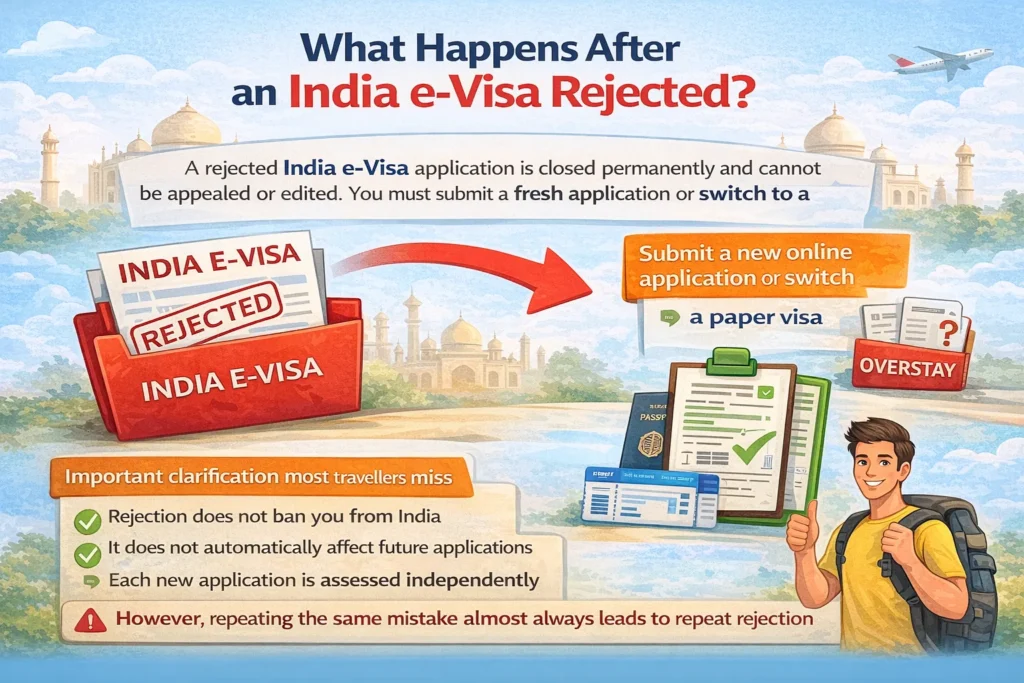
Important clarification most travellers miss
- Rejection does not ban you from India
- It does not automatically affect future applications
- Each new application is assessed independently
However, repeating the same mistake almost always leads to repeat rejection.
🔁 Can You Reapply After India e-Visa Rejection?
Yes, you can reapply for an India e-Visa immediately only if the rejection was due to a correctable error. Otherwise, a regular embassy visa is advised.
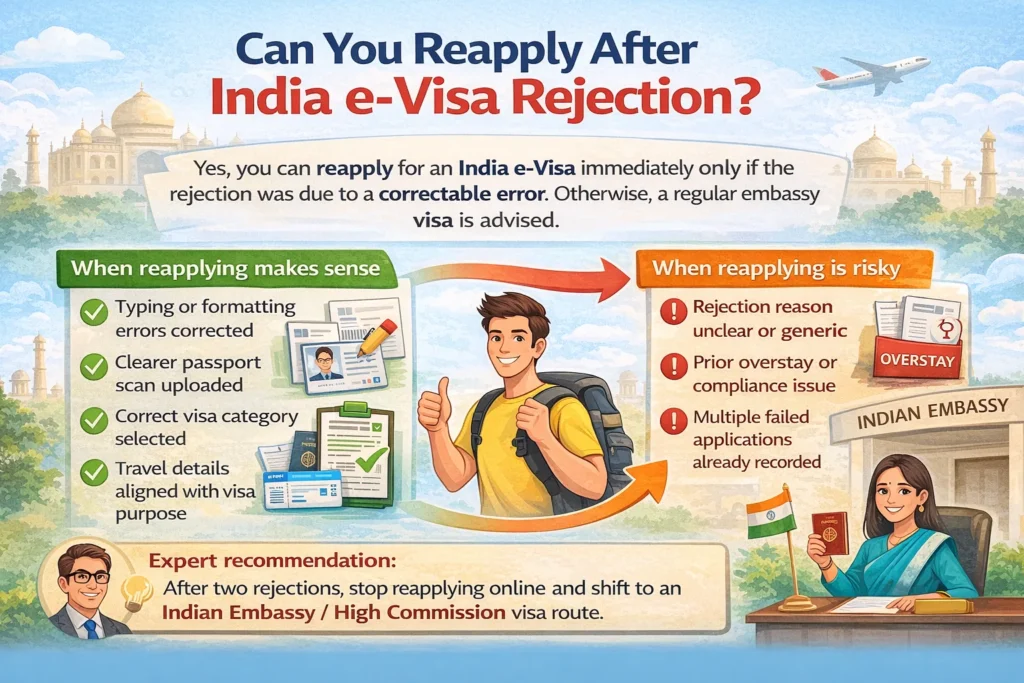
When reapplying makes sense
- Typing or formatting errors corrected
- Clearer passport scan uploaded
- Correct visa category selected
- Travel details aligned with visa purpose
When reapplying is risky
- Rejection reason unclear or generic
- Prior overstay or compliance issue
- Multiple failed applications already recorded
Expert recommendation:
After two rejections, stop reapplying online and shift to an Indian Embassy / High Commission visa route.
🛂 How to Avoid India e-Visa Rejection (2026 )
India e-Visa rejection can be avoided by submitting error-free passport details, uploading clear documents, and choosing the correct visa category that matches your travel purpose. Careful review before submission prevents most rejections.
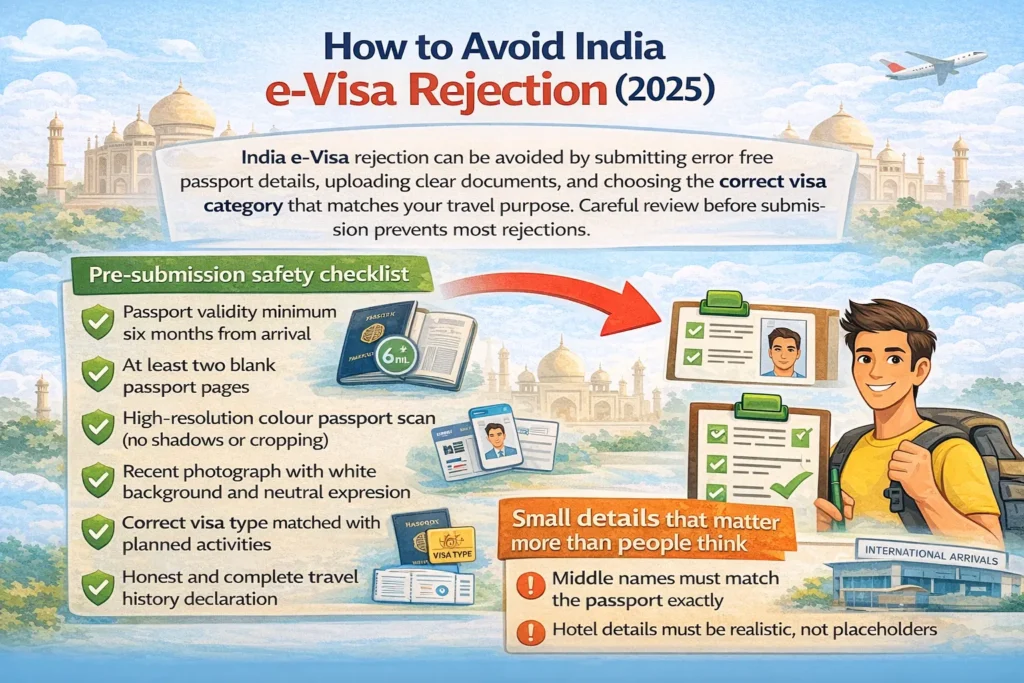
Pre-submission safety checklist
- Passport validity minimum six months from arrival
- At least two blank passport pages
- High-resolution colour passport scan (no shadows or cropping)
- Recent photograph with white background and neutral expression
- Correct visa type matched with planned activities, The application requires an itinerary, so if you are planning a multi-state trip, use our complete guide on [how to travel between major cities in India] to plan realistic train, flight, or bus routes.
- Honest and complete travel history declaration
Pro Tip to Avoid Second Rejection: Over 80% of technical rejections happen due to incorrect file sizes or blurry uploads. Before you reapply, make sure to read our strict 2026 guide on how to prepare documents for Indian e-Visa to ensure your passport PDFs and photos meet the exact KB/MB limits set by the government portal.
Small details that matter more than people think
- Middle names must match the passport exactly
- Hotel details must be realistic, not placeholders . If you are unsure how to decode hotel meal plans or booking jargon while filling out your application, check out our guide on [travel terms and accommodation secrets] to avoid form errors.
- Arrival airport must be approved for e-Visa entry
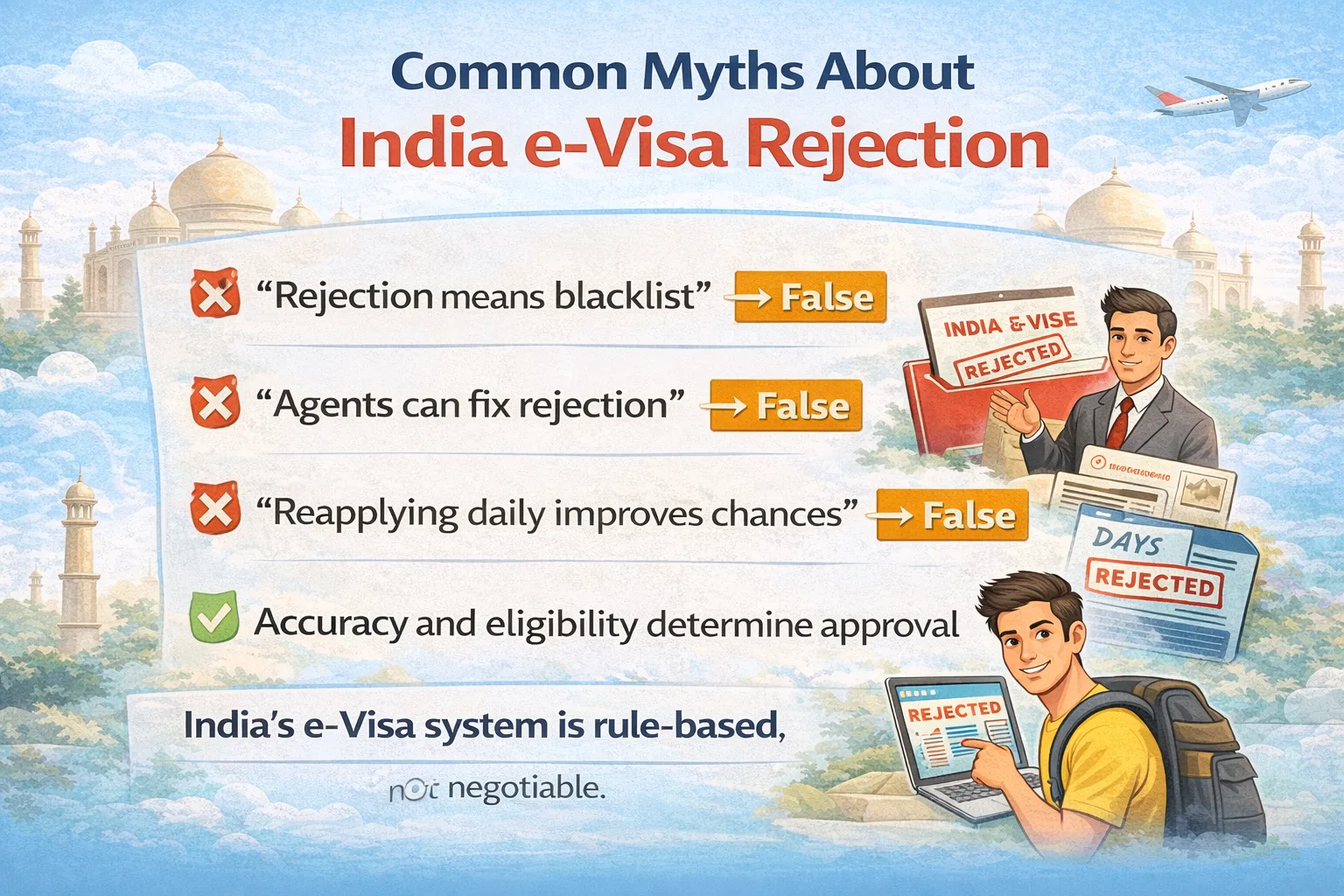
⚠️ Common Myths About India e-Visa Rejection
- ❌ “Rejection means blacklist” → False
- ❌ “Agents can fix rejection” → False
- ❌ “Reapplying daily improves chances” → False
- ✅ Accuracy and eligibility determine approval
India’s e-Visa system is rule-based, not negotiable.
🧭 What to Do If Your Travel Date Is Close
If your India e-Visa is rejected close to departure, the safest option is applying for a regular visa through the Indian Mission rather than repeated e-Visa attempts.
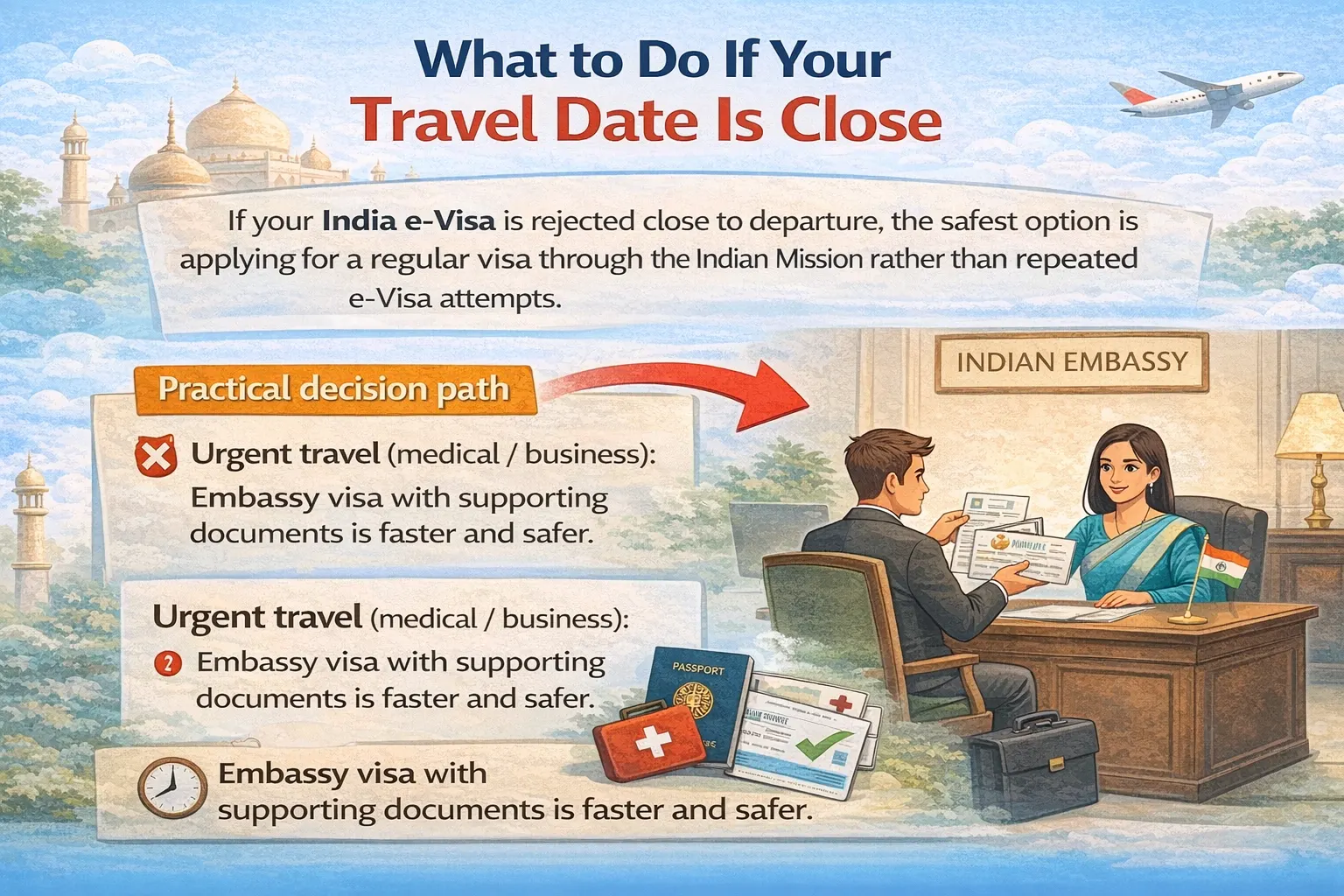
Practical decision path
Urgent travel (medical / business):
Embassy visa with supporting documents is faster and safer.
📌 Final Expert Insight
India’s e-Visa system is designed for low-risk, clearly defined travel.
When applicants treat it casually, rejection feels random.
When treated with precision, approvals are routine.
If this section is followed correctly, most first-time travellers will never face rejection at all.Once your e-Visa is approved, your next challenge is clearing immigration. Be fully prepared for customs, duty-free rules, and security by reading our [India Airport Survival Guide for Delhi and Mumbai].
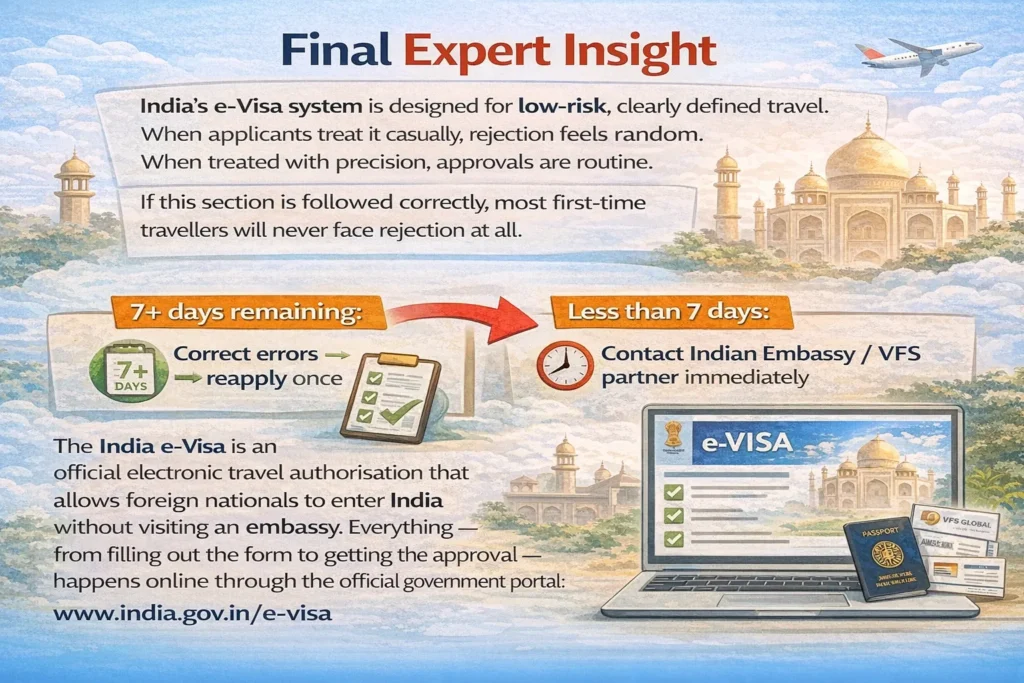
7+ days remaining:
Correct errors → reapply once
Less than 7 days:
Contact Indian Embassy / VFS partner immediately
The India e-Visa is an official electronic travel authorisation that allows foreign nationals to enter India without visiting an embassy. Everything — from filling out the form to getting the approval — happens online through the official government portal:
Official References
- Ministry of Home Affairs (MHA), Government of India
Official authority governing India e-Visa eligibility, approvals, and rejection rules. - https://www.mha.gov.in/en
- Official Indian e-Visa Portal (Government of India)
Primary platform for application requirements, document standards, and entry rules. - https://indianvisaonline.gov.in/
- Bureau of Immigration (BOI), Government of India
Responsible for immigration compliance, overstays, and airport entry regulations. - https://boi.gov.in/boi/
Related Posts
[India Travel Budget Guide 2026: Daily Costs & Real Examples]
- Plan your daily costs, accommodation, connectivity, and know exactly how much cash to carry.
- 👉 Read Guide →
https://travelwiseguide.com/india-travel-budget-guide-daily-costs/
[25+ Indian Festivals Calendar 2026: Dates & Travel Guide]
- Want to experience the Big 5 festivals like Diwali and Holi? Find the best time to visit India.
- 👉 Read Guide →
https://travelwiseguide.com/indian-festivals-calendar-2026/
[Indian Cuisine Travel Guide: Regional Food, Culture & Flavours
- Decode Indian food culture, explore famous regional thalis, and discover must-try GI-tag edibles.
- 👉 Read Guide →
https://travelwiseguide.com/indian-cuisine-travel-guide/
Why is an India e-Visa rejected?
An India e-Visa is rejected when the application fails official eligibility, document accuracy, or purpose-of-travel checks set by the Government of India. Most rejections are caused by data mismatches, incorrect visa selection, or non-compliant uploads rather than security concerns.
In practice, the system is rule-driven and even small errors during submission can trigger an automatic refusal.
Does India e-Visa rejection mean I am blacklisted?
No, an India e-Visa rejection does not mean you are blacklisted or banned from entering India. A rejection only applies to that specific application and does not automatically affect future visa requests.
Travellers can still apply again or choose a regular embassy visa, provided the earlier mistake is corrected and eligibility rules are met.
Can I apply again immediately after my India e-Visa is rejected?
Yes, you can reapply immediately only if the rejection was due to a clear, correctable error such as incorrect passport details or a poor document scan.
If the reason is unclear, repeated online applications often fail again, and applying through an Indian Embassy or High Commission is usually the safer option.
What is the most common mistake that causes India e-Visa rejection?
The most common cause of India e-Visa rejection is a mismatch between passport details and the information entered in the application form.
Even a minor spelling difference, incorrect date of birth, or name order issue can cause automated validation to fail during processing.
What should I do if my India e-Visa is rejected just before travel?
If your India e-Visa is rejected close to departure, applying for a regular visa through the Indian Embassy or its official visa service partner is the most reliable solution.
Multiple last-minute e-Visa attempts rarely succeed and can waste valuable time when travel is urgent.