Magh Mela Prayagraj: Complete Guide to Rituals, Kalpvas and Spiritual Significance
Last Updated on
16/01/2026
Where Faith Meets Cosmic Science
What makes millions of people willingly step into freezing river waters before sunrise — not out of compulsion, but devotion?
Why does a simple act like bathing at a river confluence carry the power to reshape habits, calm the mind, and reset one’s inner life?
Every winter, something extraordinary unfolds at the sacred Triveni Sangam in Prayagraj. Magh Mela Prayagraj is not just a religious gathering; it is a living system where faith, astronomy, discipline, and ancient behavioural science operate together in real time. Long before modern psychology spoke about habit formation or circadian rhythms, this tradition had already mastered them through ritual and repetition.
Held during the auspicious Hindu month of Magh (January–February), Magh Mela offers pilgrims a rare annual opportunity to pursue spiritual purification and inner clarity — without waiting for the twelve-year cycle of the Kumbh Mela. Unlike one-time pilgrimages, this is a daily practice of transformation, where early rising, cold-water immersion, silence, charity, and simplicity work together as a complete spiritual methodology.
This Magh Mela Prayagraj guide goes far beyond surface-level rituals. Here, you will discover the meaning behind Magh Snan, the discipline of Kalpvas, the science behind auspicious bathing dates, practical travel and safety guidance, and the deeper spiritual psychology that makes this ancient gathering profoundly relevant even today.International visitors planning their first spiritual journey may also benefit from an India travel planning guide for international visitors, which explains visa requirements, travel routes, and a structured 20-day itinerary.
- Where Faith Meets Cosmic Science
- Snapshot of Magh Mela Prayagraj : Fast Facts for Pilgrims ⚡
- Why Magh Mela Is Spiritually Unique ❤️
- Mythology Meets Astronomical Science 📜🔭
- Magh Mela and the Kumbh Connection 🔗
- Kalpvas: The Heart of Magh Mela 🏕️
- Essential Rituals of Magh Mela: More Than Symbolism 🕯️
- 🧘 Tarpan & Pind Daan: Remembering the Ancestors
- 🪔 Ganga Aarti: Collective Devotion in Motion
- 🏕️ Kalpvas: Living the Discipline, Not Visiting It
- Sadhus & Saints: The Living Knowledge Systems
- Accommodation, Food, Health & Safety During Magh Mela
- 🏨 Hotels in Prayagraj City (Comfort-Oriented)
- 🛕 Dharamshalas & Ashrams (Austere & Authentic)
- 🏠 Homestays (Cultural Immersion)
- Food & Dining During Magh Mela 🍲
- 🥗 Food Stalls & City Restaurants
- Health & Hygiene: Staying Well During the Mela 🩺
- Safety & Security Guidelines 🚨
- Weather & Climate Preparedness 🌤️❄️
- How to Reach, Navigation, Crowd Science
- Local Transportation During Magh Mela 🚶♂️🛺
- Understanding the Mela Layout 🗺️
- Crowd Management & Safety Science 🚨
- Mobile Connectivity & Internet 📱
- The Inner Meaning of Magh Mela: Beyond Rituals ✨
- Conclusion
- Official Reference
- Related Posts
- ❓ Frequently Asked Questions (FAQs) – Magh Mela Explained
- ❓ What is the spiritual purpose of Magh Mela Prayagraj?
- ❓ How is Magh Mela different from Kumbh Mela?
- ❓ What is Magh Snan and why is it considered important?
- ❓ What is Kalpvas and who should do it?
- ❓ Is Magh Mela Prayagraj suitable for first-time pilgrims?
- ❓ What are the most auspicious bathing days during Magh Mela?
- ❓ Is Magh Mela safe for elderly people and women?
- ❓ How many days are enough to experience Magh Mela meaningfully?
- Start Planning your trip now
Snapshot of Magh Mela Prayagraj : Fast Facts for Pilgrims ⚡
- 📍 Sacred Location: Triveni Sangam, magh mela Prayagraj
- 🕉️ Spiritual Objective: Liberation from karmic cycle
- 🌤️ Best Time: January to February
- ⏳ Ideal Duration: 3 days to full Kalpvas (1 month)
- 🧭 Officially promoted by: Uttar Pradesh Tourism
This sacred site is recognised nationally and internationally as one of Hinduism’s most powerful tirthas (pilgrimage centres).
Why Magh Mela Is Spiritually Unique ❤️
Unlike the Kumbh Mela, which occurs periodically, Magh Mela happens every single year, ensuring the continuity of spiritual energy at Prayagraj.
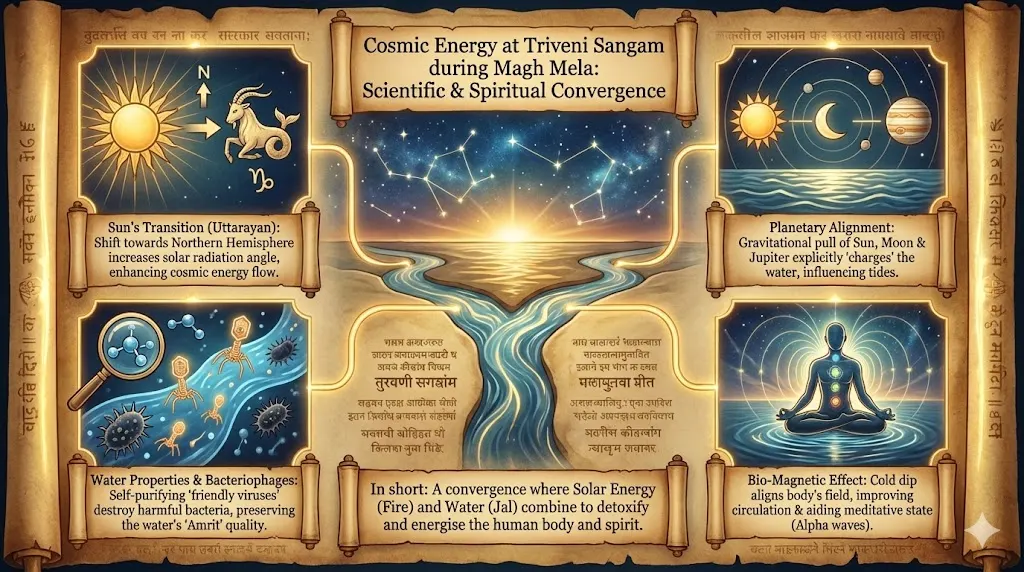
According to Hindu cosmology, the Triveni Sangam — the confluence of Ganga, Yamuna, and the invisible Saraswati — becomes cosmically energised throughout the month of Magh.
Devotees believe that:
- Even one sincere ritual bath
- Performed with discipline and faith
- Can generate spiritual merit equivalent to years of penance
🏛️ These beliefs are deeply rooted in Puranic literature and are actively preserved and promoted by Incredible India, reinforcing Magh Mela’s cultural and spiritual authenticity.
Mythology Meets Astronomical Science 📜🔭
Ancient Scriptural Foundations
Texts such as the Matsya Purana describe Magh Snan as exceptionally auspicious, capable of weakening the cycle of rebirth (samsara) and purifying accumulated karmas.
The Legend of Lord Brahma 🔥
Hindu tradition recounts that Lord Brahma, the cosmic creator, performed a grand yajna at this very confluence.
The spiritual energy generated by this cosmic sacrifice is believed to remain embedded in the waters, becoming especially potent during Magh.
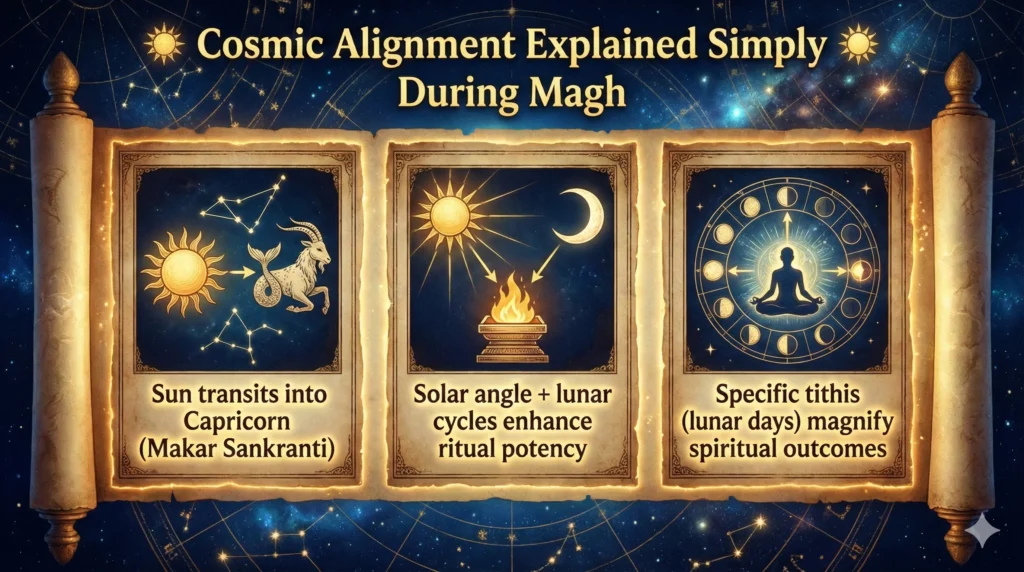
Cosmic Alignment in magh monthExplained Simply ☀️
- The Sun transits into Capricorn (Makar Sankranti)
- Solar angle + lunar cycles enhance ritual potency
- Specific tithis (lunar days) magnify spiritual outcomes
Most sacred bathing days include:
- Makar Sankranti
- Mauni Amavasya
- Basant Panchami
- Maghi Purnima
🧠 Scientific insight: Ritual timing follows predictable astronomical cycles, demonstrating that ancient practices were astronomically informed, not arbitrary.
Magh Mela and the Kumbh Connection 🔗
- 🔁 Every 12 years → Kumbh Mela
- 🔁 Every 6 years → Ardh Kumbh
- 🔁 Every year → Magh Mela
Spiritually speaking, Magh Mela is not a lesser version of Kumbh, but rather its annual spiritual foundation, less commercialised and more disciplined.
Kalpvas: The Heart of Magh Mela 🏕️
What Is Kalpvas?
Kalpvas is a month-long vow of austerity where pilgrims reside on the riverbanks, observe strict discipline, and dedicate life to japa (mantra repetition), meditation, seva (service), and satvik living.
🧠 Symbolism explained:
One month of Magh = one day of Lord Brahma (Kalp), meaning the spiritual merit multiplies exponentially.
A Kalpvasi’s Daily Routine (Simplified)
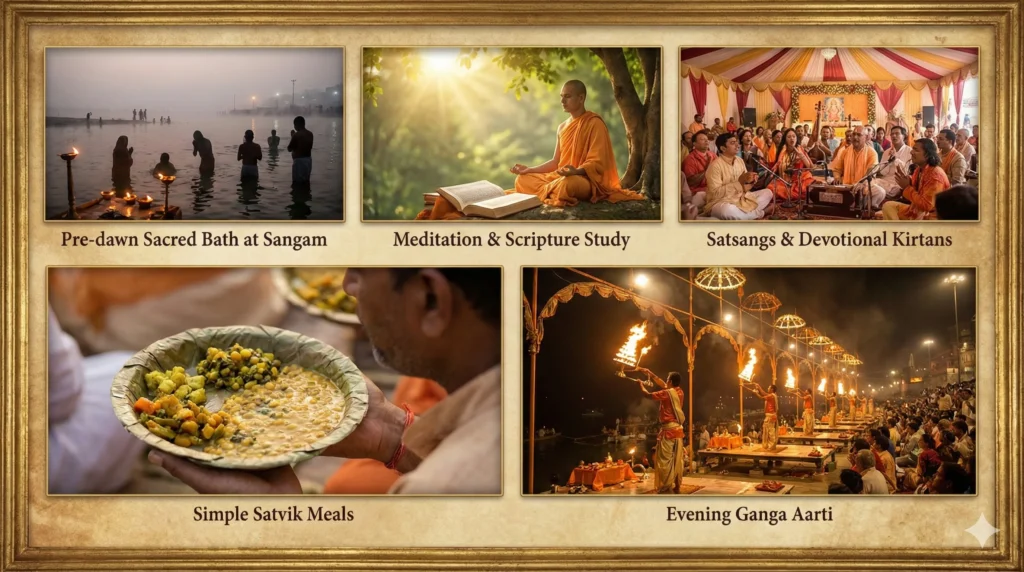
- Pre-dawn sacred bath at Sangam
- Meditation and scripture study
- Satsangs and devotional kirtans
- Simple satvik meals
- Evening Ganga Aarti
Even partial Kalpvas (15 days or selected auspicious days) is believed to yield profound spiritual benefit.
Essential Rituals of Magh Mela: More Than Symbolism 🕯️
Magh Mela rituals are not random religious acts. They follow a structured spiritual methodology, refined over thousands of years. Each ritual targets mental purification, behavioural discipline, and karmic balance.
🌊 The Sacred Bath (Magh Snan): Ritual + Science
Why the Bath Is Central
The Magh Snan is the heart of Magh Mela. Scriptures state that water at the Triveni Sangam during Magh becomes spiritually activated.
From a scientific lens:
- Cold-water immersion stimulates circulation and nervous system
- Early-morning sunlight regulates circadian rhythm
- Chanting mantras induces parasympathetic calm
🧠 Ancient ritual, modern physiological effect.
How to Perform Magh Snan (Authentic Method)
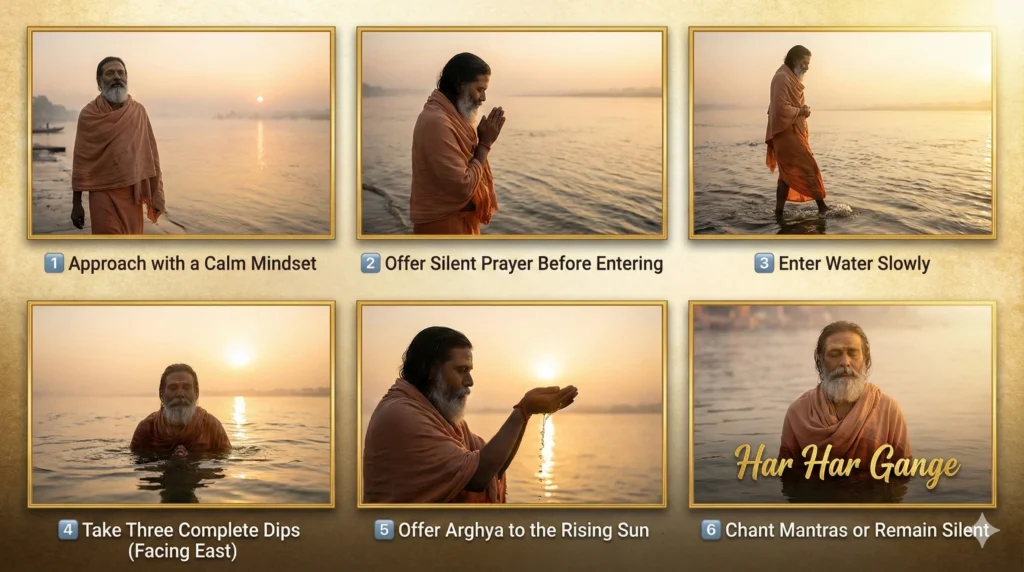
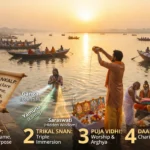
1️⃣ Approach the river with a calm and respectful mindset
2️⃣ Offer silent prayer before entering
3️⃣ Enter water slowly (never rush)
4️⃣ Take three complete dips, facing east
5️⃣ Offer arghya (water offering) to the rising sun
6️⃣ Chant simple mantras or remain silent
Common Mantras
- “Har Har Gange”
- “Om Namo Bhagavate Vasudevaya”
- “Gange cha Yamune chaiva…”
👉 Important: Faith matters more than complexity.
Most Auspicious Bathing Days 📅
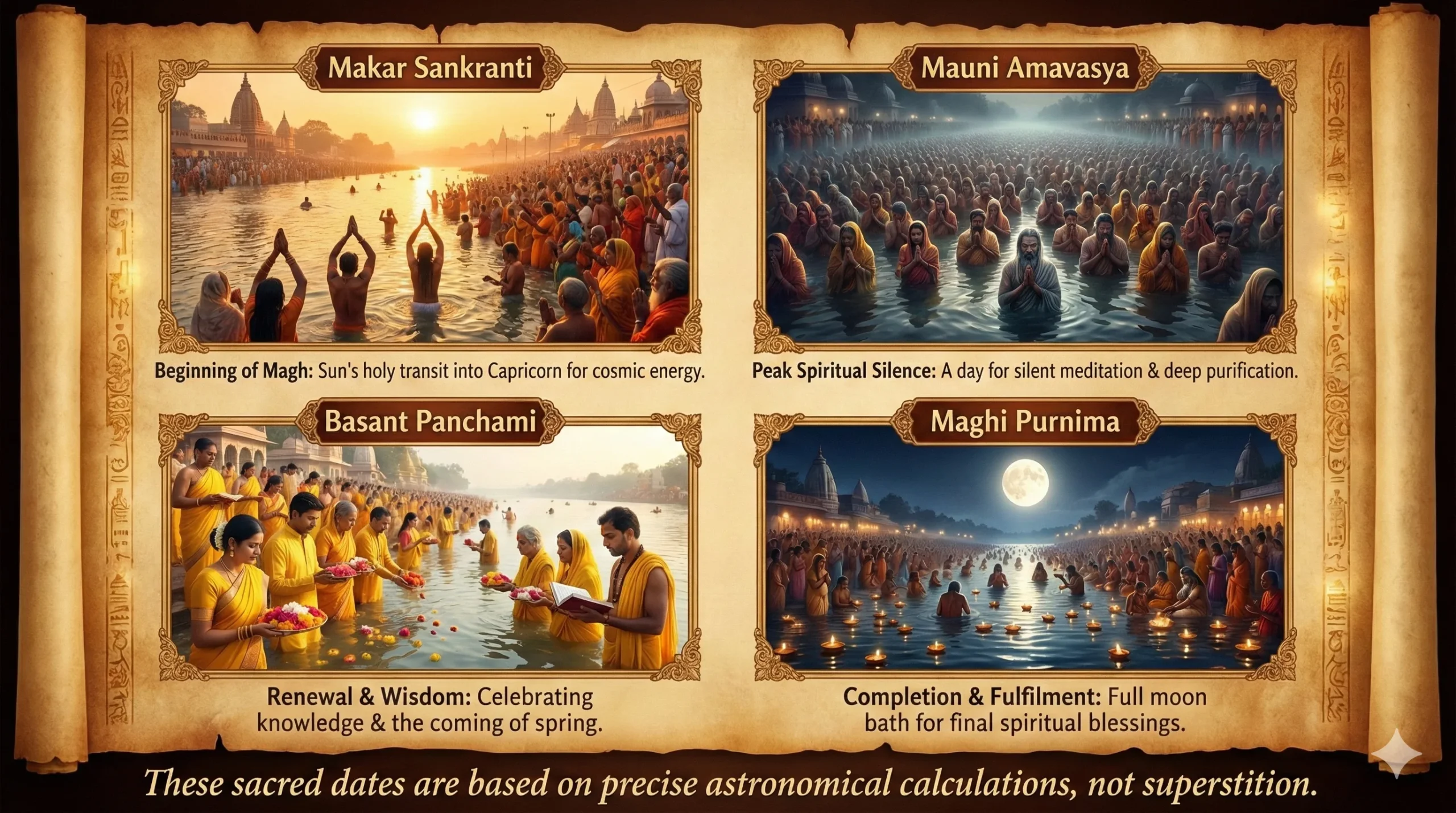
- Makar Sankranti – Beginning of Magh
- Mauni Amavasya – Peak spiritual silence
- Basant Panchami – Renewal & wisdom
- Maghi Purnima – Completion & fulfilment
These dates are based on astronomical calculations, not superstition.
🧘 Tarpan & Pind Daan: Remembering the Ancestors
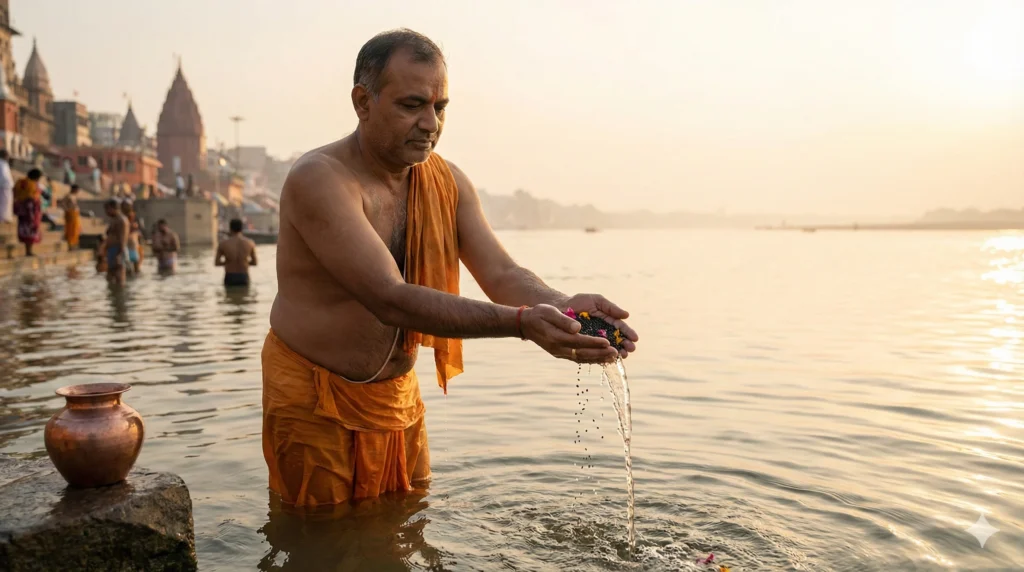
What Is Tarpan?
Tarpan is a daily water-offering ritual to honour departed ancestors.
- Performed after the sacred bath
- Facing the southern direction
- Uses water, sesame seeds, and remembrance
🧠 Psychological aspect:
This ritual provides closure, gratitude, and emotional continuity across generations.
Pind Daan (Optional but Powerful)
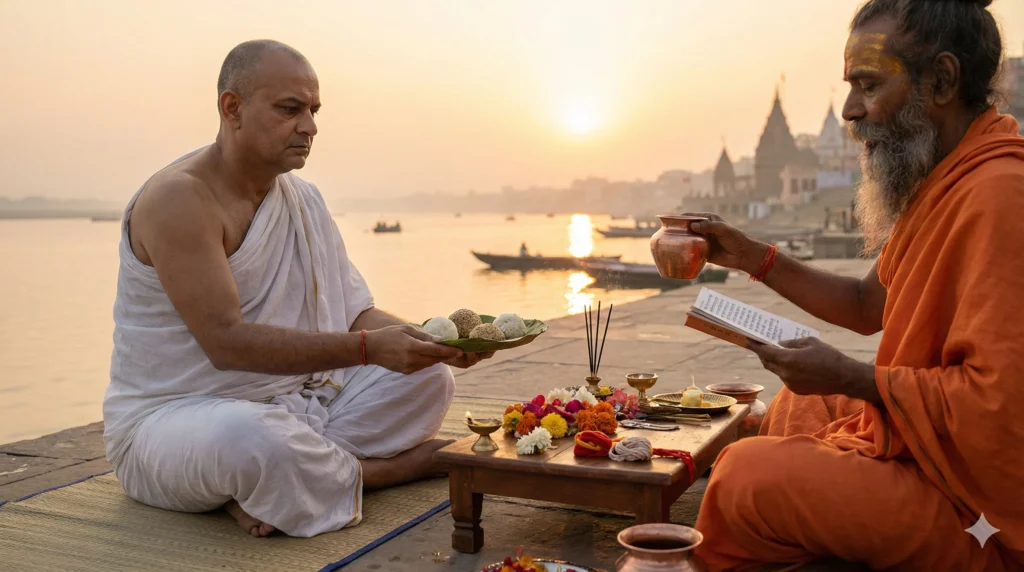
- Conducted with a qualified priest
- Especially recommended if a family death occurred recently
- Symbolises helping ancestral souls progress spiritually
⏳ Duration: 1–2 hours
💰 Cost: ₹500–₹5,000 depending on ritual depth
🔥 Dan (Charity): The Spiritual Multiplier
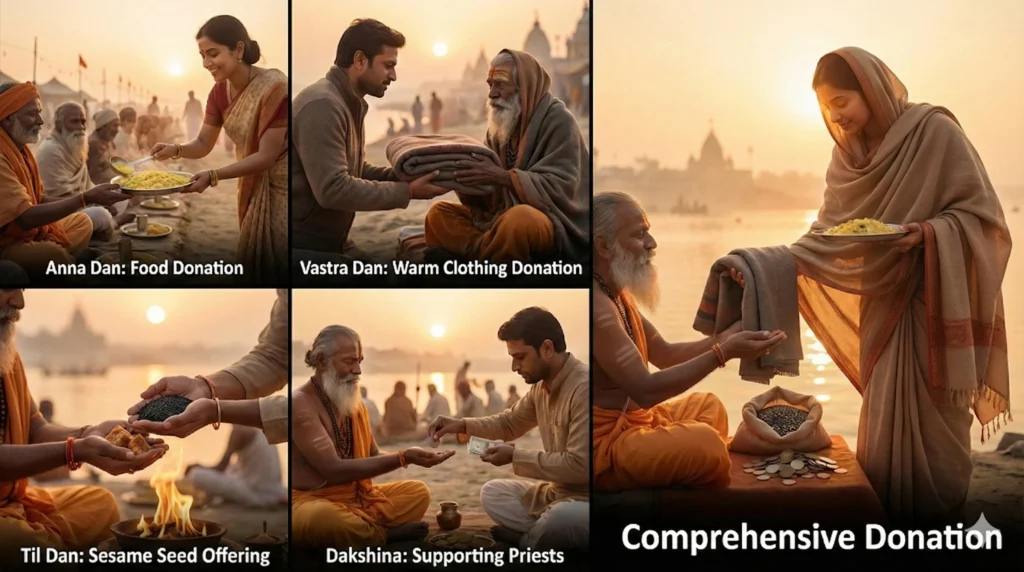
(Dan) is considered the fastest method of karmic purification during Magh Mela.
Types of Dan Performed
- Anna Dan – Feeding pilgrims or donating to bhandaras
- Vastra Dan – Donating warm clothes
- Til Dan – Sesame seed offerings
- Dakshina – Supporting priests or sadhus
🧠 Scientific psychology:
Charitable behaviour activates reward circuits in the brain, increasing emotional fulfilment and humility.
🪔 Ganga Aarti: Collective Devotion in Motion
What Happens During Ganga Aarti
- Priests perform synchronised rituals with large oil lamps
- Mantras, bells, and bhajans fill the air
- Pilgrims float earthen diyas on the river
📍 Best time: Sunset (arrive 30 minutes early)
🕯️ Diya cost: ₹10–₹50
🧠 Collective chanting creates group coherence, enhancing emotional depth.
🏕️ Kalpvas: Living the Discipline, Not Visiting It
Kalpvas is not tourism.
It is temporary renunciation.
Daily Life of a Kalpvasi (Detailed)
Pre-Dawn (4:00–6:00 AM)
- Wake during Brahma Muhurta
- Silence or mantra chanting
- Prepare for bath
Morning (7:00–10:00 AM)
- Personal puja
- Scripture reading (Gita, Ramayana, Puranas)
- Light satvik breakfast
Midday (10:00 AM–4:00 PM)
- Satsangs
- Kirtans
- Visits to saints
Evening (4:00–7:00 PM)
- Ganga Aarti
- Meditation
Night (7:00–9:00 PM)
- Light meal or fasting
- Early rest
🧠 Behavioural science:
Repetition + simplicity rewires habits and increases self-control.
Kalpvas Rules & Disciplines 🧘
- Strict satvik vegetarian diet
- No intoxicants
- Celibacy (brahmacharya)
- Minimal possessions
- Silence on Mauni Amavasya
Even 7–15 days of sincere Kalpvas is believed to yield profound benefit.
Sadhus & Saints: The Living Knowledge Systems
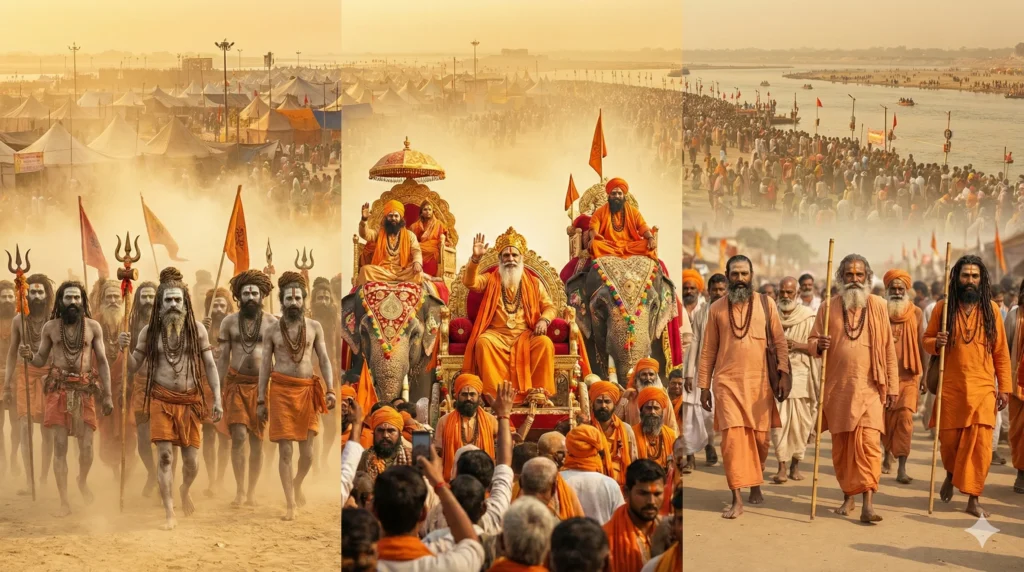
Magh Mela brings together thousands of ascetics from various Hindu traditions.
Types of Sadhus You’ll Encounter
- Naga Sadhus – Renunciates of extreme austerity
- Mahamandaleshwars – Senior spiritual leaders
- Wandering Yogis – Individual seekers
How to Approach Sadhus (Etiquette)
- Join palms, bow gently
- Remove footwear
- Sit lower than the sadhu
- Speak softly
- Never photograph without permission
Blessings may include:
- Vibhuti (sacred ash)
- Sindoor
- Silent gestures
🧠 Interaction with ascetics often triggers introspective reflection, not verbal teaching.
🧘 Satsangs & Spiritual Discourses
Satsang = Association with truth
- Organised daily by akharas
- Includes discourse, chanting, meditation
- Open to all pilgrims
📌 Etiquette:
- Arrive early
- Sit quietly
- Avoid mobile phones
- Leave respectfully
Accommodation, Food, Health & Safety During Magh Mela
This Magh Mela Prayagraj guide now moves into practical aspects such asAccommodation, Food, Health & Safety
Where to Stay During Magh Mela 🏕️🏨
Choosing the right stay directly affects your spiritual experience. Magh Mela accommodation ranges from austere tents to full-service hotels in Prayagraj.
🏕️ Kalpvas at magh mela Camps (Traditional & Most Immersive)
What Is Kalpvas Accommodation?
Kalpwas dururing kalpwas magh mela prayagraj Pilgrims live in tents along the riverbanks for the entire month (or part of it), following strict spiritual discipline.
Types of Kalpvas Camps
1️⃣ Government Camps
- Organised by Uttar Pradesh Tourism
- Basic tents with shared toilets
- Very affordable
- Limited availability
💰 ₹500–₹1,500 per night
2️⃣ Private Camps
- Basic → Semi-deluxe → Luxury
- Options with heaters, attached washrooms, meals
💰 ₹2,000–₹10,000+ per night
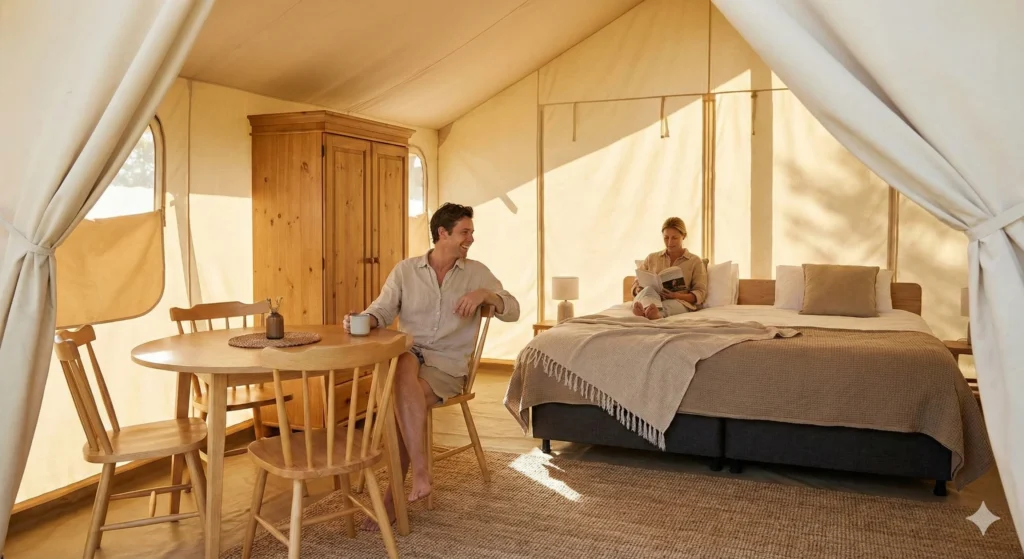
What’s Usually Included
- Mattress, blankets
- Security
- Lighting
- Satvik meals (in some camps)
📌 Booking tip:
Book 2–3 months in advance, especially for Mauni Amavasya.
🏨 Hotels in Prayagraj City (Comfort-Oriented)
If camping feels too demanding, city hotels are a reliable alternative.
Hotel Categories
- Budget: ₹800–₹2,000
- Mid-range: ₹2,000–₹5,000
- Luxury: ₹5,000–₹15,000+
📍 Distance from Mela grounds: 5–15 km
🚕 Many hotels offer shuttle services.
Booking Platforms
- MakeMyTrip
- Booking.com
- Direct hotel websites
🛕 Dharamshalas & Ashrams (Austere & Authentic)
- Donation-based or ₹100–₹500/day
- Very basic facilities
- Some require advance permission
🧠 Best for pilgrims seeking simplicity over comfort.
🏠 Homestays (Cultural Immersion)
- Local families host pilgrims
- ₹1,000–₹3,000 per night
- Found via Airbnb or local contacts
Food & Dining During Magh Mela 🍲
Food during Magh Mela is satvik, meaning:
- Vegetarian
- No onion or garlic
- Cooked with ritual purity
🍛 Meals in Kalpvas Camps
Camp Kitchens
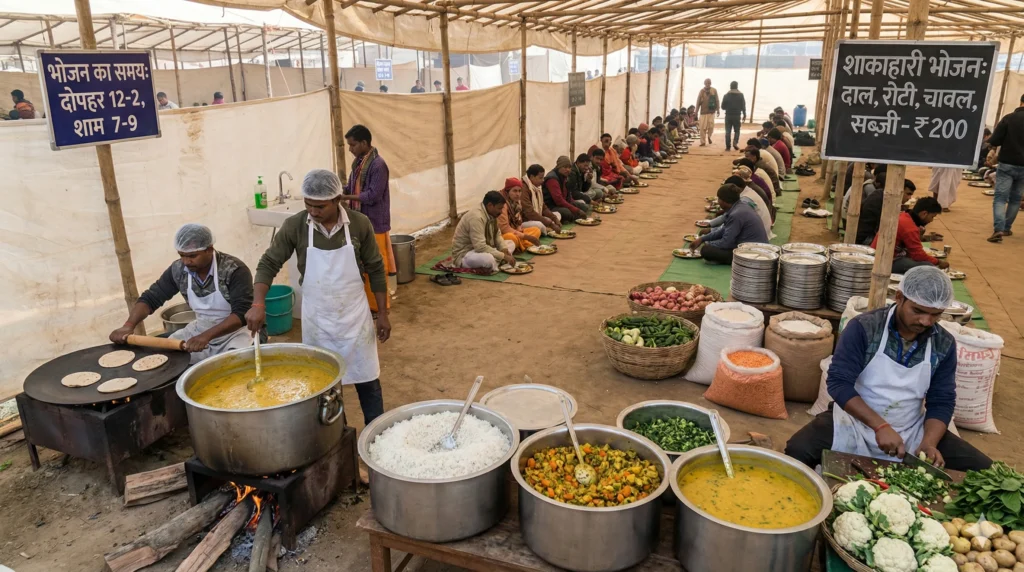
- Dal, roti, rice, sabzi
- Fixed meal timings
- Hygienic, simple, nourishing
💰 ₹200–₹500 per day
Self-Cooking
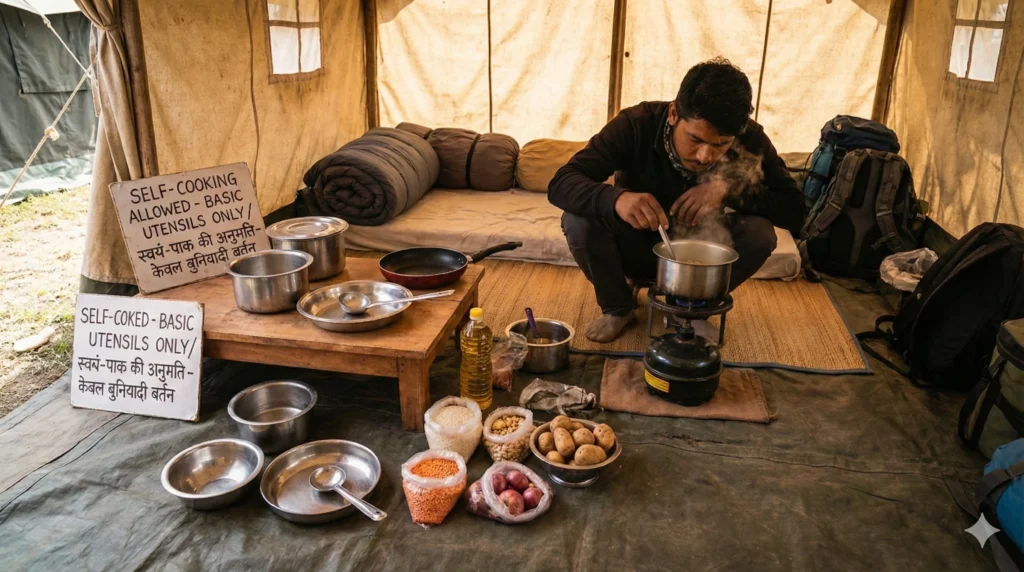
- Allowed in some camps
- Basic utensils only
- Limited ingredients available
🍽️ Bhandaras (Free Community Kitchens)
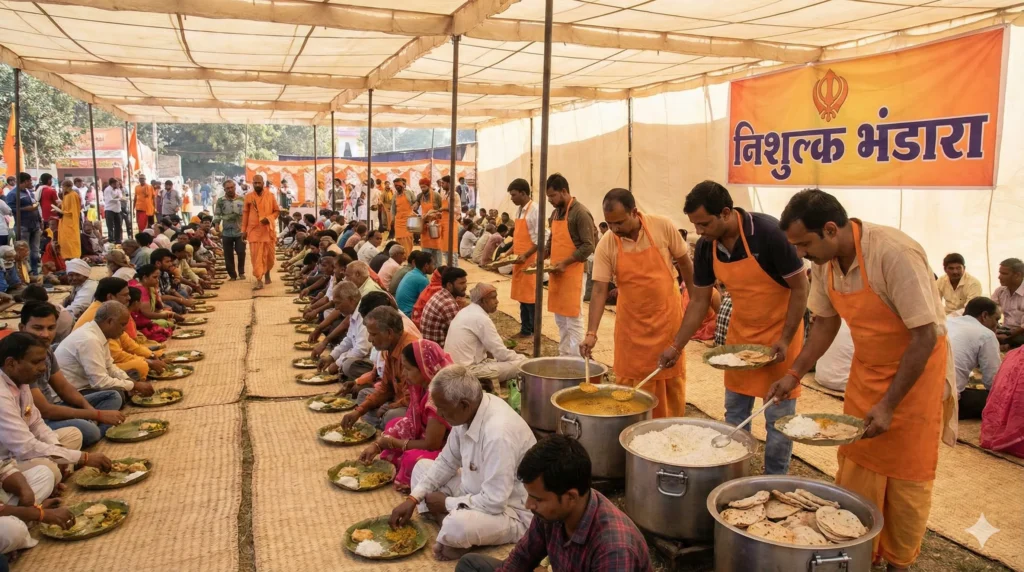
- Run by religious organisations
- Open to all pilgrims
- No registration needed
🧠 Spiritual idea:
Eating in bhandaras cultivates humility and equality.
🥗 Food Stalls & City Restaurants
- Tea, snacks, poori-sabzi, kachori
- Avoid raw salads & cut fruits
- Stick to hot, freshly cooked food
💰 Snacks: ₹20–₹40
💰 Meals: ₹60–₹150
Health & Hygiene: Staying Well During the Mela 🩺
Large gatherings demand preventive health awareness.
🧴 Personal Health Essentials
- Drink bottled or filtered water only
- Wash hands frequently / use sanitiser
- Carry ORS packets
- Avoid street food late at night
💊 Medical Facilities
- Temporary hospitals inside Mela area
- 24/7 ambulance services
- First-aid centres in every sector
📞 Emergency numbers:
- Police: 100
- Ambulance: 108
- Fire: 101
Safety & Security Guidelines 🚨
Magh Mela is well-policed, but personal awareness is essential.
👤 Personal Safety Tips
- Stay in groups, especially at night
- Keep valuables minimal
- Use money belts
- Avoid overcrowded shortcuts
👩🦰 Safety for Women Pilgrims
- Prefer organised camps
- Avoid isolated ghats
- Maintain modest dress
- Travel in pairs/groups
🧓 Elderly Pilgrims
- Choose accommodation with attached toilets
- Avoid peak bathing hours
- Carry full medication list
- Use wheelchairs or helpers if needed
Weather & Climate Preparedness 🌤️❄️
January–February Conditions
- Day: 18–25°C
- Night: 5–12°C
- Dense morning fog common
What to Carry
- Woollens & shawls
- Waterproof jacket
- Moisturiser
- Sunscreen
🧠 Cold mornings + river moisture = layered clothing is critical.
How to Reach, Navigation, Crowd Science
How to Reach Prayagraj for Magh Mela 🚆✈️🚌
Prayagraj is one of North India’s most well-connected pilgrimage cities, especially during Magh Mela, when special transport arrangements are made by the administration.
✈️ By Air: Fastest for Distant Travellers
- Prayagraj Airport (Bamrauli) is about 12 km from the city centre
- Regular flights from Delhi, Mumbai, Bengaluru, Kolkata
- During Mela, additional charter and seasonal flights may operate
🚕 Airport to city/Mela area: ₹500–₹800 (prepaid taxi)
🧠 Tip: Morning flights are more reliable in winter due to fog conditions.
🚆 By Train: Most Preferred & Economical
Major stations:
- Prayagraj Junction
- Prayagraj Chheoki
- Naini Station
✔ Connected to all major Indian cities
✔ Special “Mela Trains” run during peak bathing days
📌 Book tickets 2–3 months in advance, especially for:
- Mauni Amavasya
- Maghi Purnima
Railway arrangements are coordinated with state authorities and monitored by Indian Railways.
🚌 By Road: Flexible & Scenic
- Well-connected via National Highways
- State-run and private buses operate from:
- Lucknow (200 km)
- Varanasi (120 km)
- Kanpur (200 km)
- Delhi (635 km)
- Lucknow (200 km)
🚗 Parking zones near Mela grounds: ₹50–₹200/day
Local Transportation During Magh Mela 🚶♂️🛺
Inside the Mela area, walking is primary, but other options exist.
🚶 Walking (Most Reliable)
- Clearly marked pathways
- Safe but long distances
- Comfortable footwear essential
🛺 E-Rickshaws & Cycle Rickshaws
- Available between sectors
- ₹20–₹100 per ride
- Always negotiate before boarding
🚌 Shuttle & Special Services
- Elderly and disabled pilgrims assisted by:
- Golf carts
- Volunteer services
- Golf carts
- Operated in coordination with local administration
🧠 Crowd science: Walking reduces congestion and keeps crowd flow stable.
Understanding the Mela Layout 🗺️
Magh Mela spans several square kilometres, divided into clearly defined sectors.
Main Zones Include:
- Akhara zones (sadhu camps)
- Government & private camps
- Bathing ghats
- Medical centres
- Police & help desks
- Lost & found centres
Navigation Tips (Very Important)
- Collect a printed Mela map on arrival
- Save your sector number & camp name on phone
- Share live location with family
- Fix a meeting point if travelling in a group
🧠 These steps reduce anxiety and cognitive overload in large crowds.
Crowd Management & Safety Science 🚨
Magh Mela is one of the best-managed religious gatherings in the world.
Safety Measures Include:
- CCTV surveillance
- River patrols
- Crowd density monitoring
- Emergency evacuation routes
All coordinated by district administration with state support.
Best Time to Visit the Sangam
- Early morning (4:30–7:00 AM) → Sacred + less crowded
- Avoid midday on major bathing days
- Evening visits are calmer but colder
Mobile Connectivity & Internet 📱
- All major networks function
- Congestion likely on peak days
- Carry power banks
📌 Download:
- Offline maps
- Emergency numbers
- Camp details screenshots
The Inner Meaning of Magh Mela: Beyond Rituals ✨
Magh Mela is not merely a religious gathering measured in dates, tents, or rituals.
It is a living spiritual ecosystem, where discipline replaces distraction and simplicity becomes sacred.
Every pre-dawn bath at the Triveni Sangam symbolises more than physical cleansing — it represents the intentional release of accumulated karmas, mental clutter, and ego-driven habits.
In a world dominated by speed and stimulation, Magh Mela teaches the science of slowing down.
🧠 Spiritual psychology:
Repetitive ritual + controlled environment + collective belief creates deep cognitive calm and long-lasting behavioural change.
Why Magh Mela Leaves a Permanent Imprint 🕊️
Pilgrims often report:
- Heightened emotional clarity
- Reduced anxiety
- Stronger self-discipline
- Renewed sense of purpose
This is not coincidence.
It is the result of:
- Early rising
- Cold-water immersion
- Satvik diet
- Reduced sensory overload
- Community-based devotion
Modern neuroscience recognises these as powerful behavioural reset mechanisms.
Magh Mela vs Modern Pilgrimage Tourism 🧭
Unlike destination tourism that focuses on consumption, Magh Mela centres on contribution:
- Giving (Dan)
- Serving (Seva)
- Listening (Satsang)
- Observing silence (Maun)
That is why Magh Mela is continuously promoted as a cultural-spiritual heritage experience by bodies such as Incredible India, not as a commercial event.
If You Are Visiting for the First Time: Final Advice 🪔
- Do not try to do everything
- Choose one or two practices and follow them sincerely
- Respect local customs and ascetic lifestyles
- Keep expectations minimal and awareness high
🧠 Rule of sacred travel:
Depth matters more than coverage.
Continuing the Spiritual Journey After Magh Mela 🔁
Many pilgrims find that Magh Mela is not an ending, but a starting point.
In Prayagraj:
- Visit Akshayavat and Patalpuri Temple
- Explore historical sites like Anand Bhavan
- Attend regular Ganga Aarti at city ghats
Nearby Sacred Destinations:
- Varanasi – City of liberation
- Ayodhya – Birthplace of Lord Rama
- Chitrakoot – Forest exile of Rama
- Vindhyachal – Shakti Peeth of Goddess Vindhyavasini
Conclusion
Magh Mela is not measured by the number of days you stay, the rituals you perform, or the photographs you take. Its real impact is internal — subtle, lasting, and deeply personal.
Each pre-dawn bath at the Sangam is more than a symbolic act. It is a conscious pause from a fast, distracted world. The cold water awakens the body, the silence steadies the mind, and the disciplined routine gently dissolves excess desire and mental clutter. Over time, this simple structure creates clarity, self-control, and emotional balance — outcomes that modern neuroscience now recognises as powerful behavioural resets.
This is why Magh Mela Prayagraj continues to draw pilgrims year after year. Not for spectacle, but for stillness. Not for comfort, but for meaning. Whether you stay for two days or undertake Kalpvas, the experience leaves behind something rare — the ability to slow down without fear.
If you are visiting for the first time, remember this: do less, but do it sincerely. Choose one practice, follow it with discipline, and allow the environment to work on you. The true gift of Magh Mela is not something you collect; it is something you shed.
When you finally step away from the Sangam, wrapped in morning mist and fading chants, you may realise that the journey did not end at Prayagraj. It quietly began there — lighter in thought, calmer in habit, and clearer in purpose. 🕊️🙏For travellers who wish to explore India beyond Prayagraj with confidence and structure, this India travel guide for first-time travellers with visa and itinerary details offers a clear roadmap for a meaningful journey.
Official Reference
- 1️⃣ Prayagraj District Official Website
- All rituals sangam everything about Praygraj
- 🔗 https://prayagraj.nic.in/tourism/
- 2️⃣Incredible India
- Also for tourism places of prayagraj (Allahbad )
- 🔗 https://www.incredibleindia.gov.in/en
Related Posts
- 1️⃣ The Ultimate Indian Festival Calendar 2026: Dates, Rituals, and Itineraries for 24 Major Celebrations
- This is ultimate blog here you can search all festivals of India every ritual related to that festival
- 🔗 https://travelwiseguide.com/indian-festivals-calendar-2026/
- 2️⃣ Prayagraj (Allahabad) Travel Guide: Sacred Sangam, Kumbh Mela & Complete City Exploration
- Timeline of Allahabad from Lord Brahmma raja harishchandraRam ,pandav,all rituals,miracles about Akshaya Vat kumbh (2037)
- 🔗https://travelwiseguide.com/prayagraj-travel-guide-2026/
- 3️⃣ Varanasi Travel Guide 2025: Famous Ghats, Ganga Aarti & Sacred Vibes
- Know the land of Kashi you will be fully aware about Ganga Arti, Darshan timings , food , boating
- 🔗https://travelwiseguide.com/varanasi-travel-guide-2025/
- 4️⃣ Ayodhya Ram Janmabhoomi Darshan:Timings,Significance and Travel Guide
- About Ramjanmbhum every keypoint you will get here
- 🔗 https://travelwiseguide.com/ayodhya-ram-janmabhoomi-darshan-guide/
❓ Frequently Asked Questions (FAQs) – Magh Mela Explained
❓ What is the spiritual purpose of Magh Mela Prayagraj?
Magh Mela Prayagraj is held for spiritual purification, karmic cleansing, and self-discipline. Pilgrims believe that bathing at the Triveni Sangam during the month of Magh helps reduce accumulated karmas and supports progress towards moksha through disciplined living.
❓ How is Magh Mela different from Kumbh Mela?
Magh Mela is organised every year, while Kumbh Mela occurs once every 12 years. Unlike the grand scale of Kumbh, Magh Mela focuses more on daily rituals, Kalpvas, and sustained spiritual discipline rather than a single mass event.
❓ What is Magh Snan and why is it considered important?
Magh Snan is the sacred ritual bath taken at the Triveni Sangam before sunrise. It is believed that during Magh, the river waters become spiritually energised, and bathing at this time purifies the mind, body, and karmic impressions.
❓ What is Kalpvas and who should do it?
Kalpvas is a period of disciplined living observed on the riverbanks during Magh Mela. It involves early rising, daily bathing, meditation, satvik food, and minimal comforts. It is ideal for seekers looking for mental clarity, self-control, and deeper spiritual focus.
❓ Is Magh Mela Prayagraj suitable for first-time pilgrims?
Yes. Magh Mela Prayagraj is suitable even for first-time pilgrims. Visitors can attend for 2–3 days, perform Magh Snan, attend satsangs, and experience the spiritual atmosphere without undertaking full Kalpvas.
❓ What are the most auspicious bathing days during Magh Mela?
The most sacred bathing days are:
Makar Sankranti
Mauni Amavasya
Basant Panchami
Maghi Purnima
These dates are calculated using lunar and solar astronomy, making them spiritually significant.
❓ Is Magh Mela safe for elderly people and women?
Yes. With proper accommodation, avoidance of peak crowd hours, and basic health precautions, Magh Mela is safe for elderly pilgrims and women. Medical camps, police support, and volunteer services are available throughout the Mela area.
❓ How many days are enough to experience Magh Mela meaningfully?
A 2–3 day visit is sufficient for a spiritual introduction.
A 5–7 day stay allows deeper ritual participation.
Kalpvas (15–30 days) is for those seeking complete spiritual discipline and inner transformation.