Lakshadweep Travel Guide: Unlocking the 7 Secrets of Coral Paradise
Last Updated on
8 March 2026
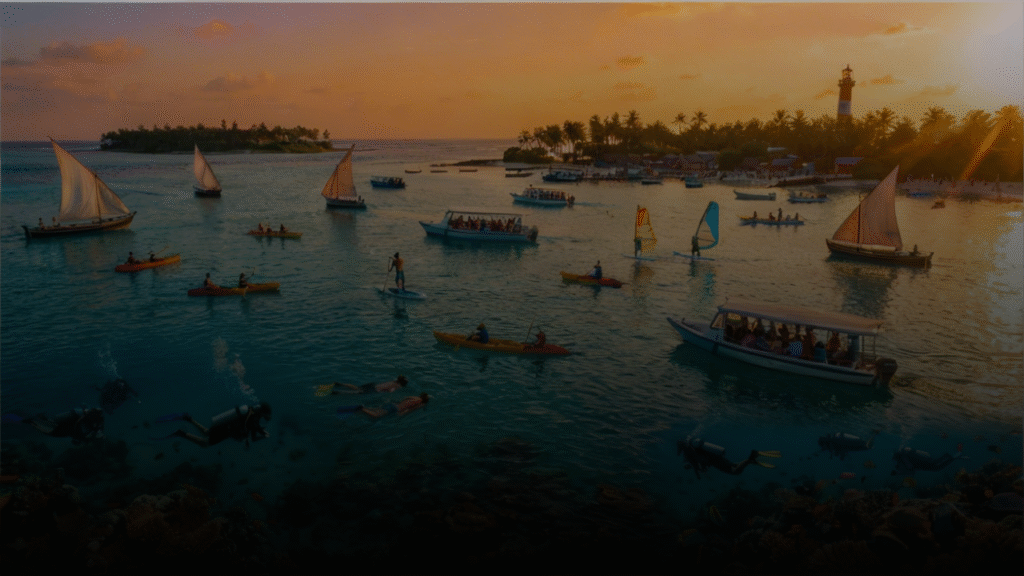
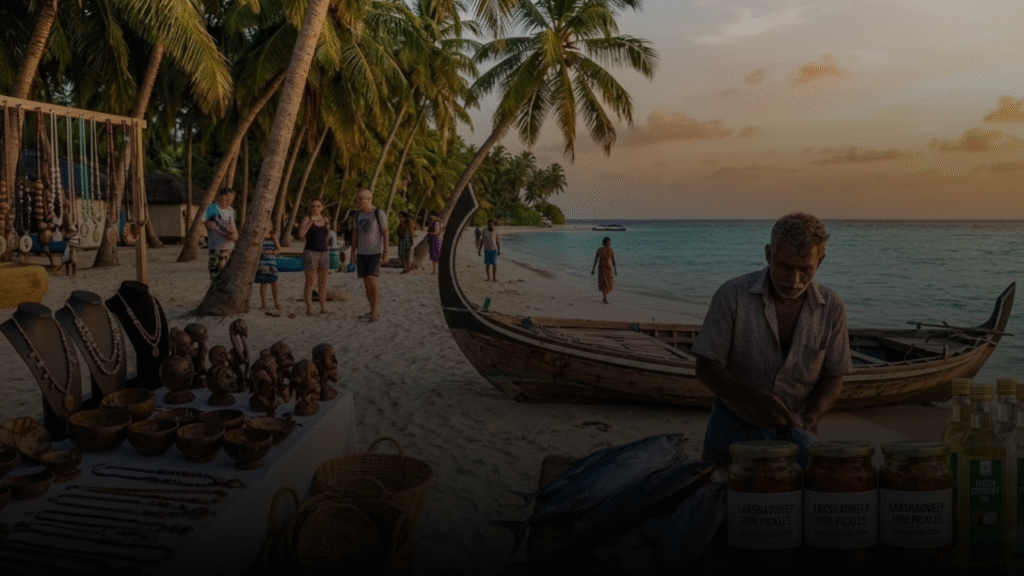
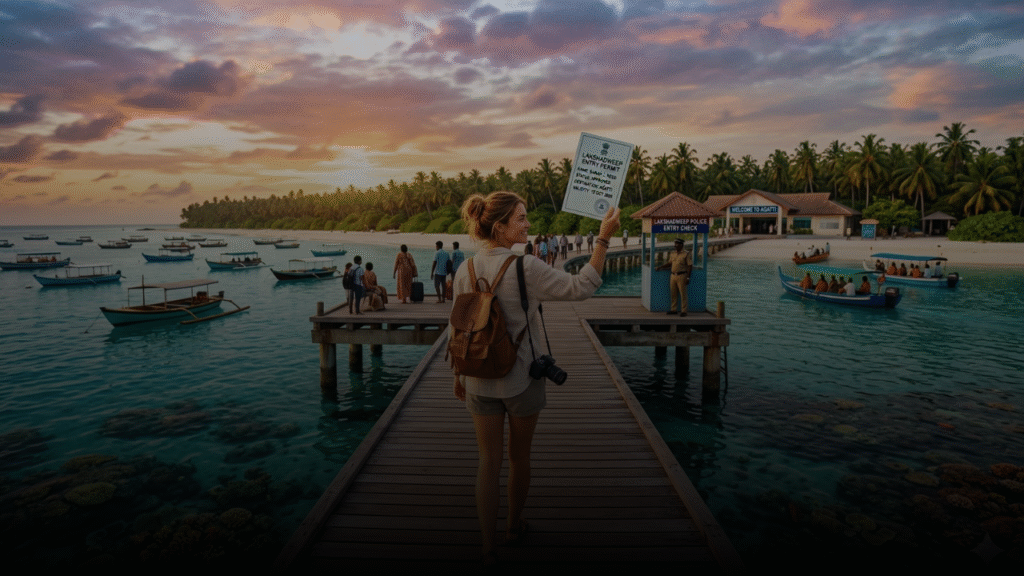

Standing waist-deep in crystalline turquoise waters, watching my footsteps illuminate the beach with an ethereal blue glow, I realised I’d stumbled upon something truly magical. Lakshadweep, India’s only coral archipelago, isn’t just a destination—it’s a living, breathing paradise that exists almost in defiance of our modern world.
This comprehensive Lakshadweep travel guide will unlock the secrets of India’s most exclusive tropical paradise. Scattered like precious emeralds across the Arabian Sea, these 36 islands form India’s smallest union territory, yet harbour secrets that dwarf continents. What makes this Lakshadweep travel guide extraordinary isn’t just showcasing beauty—it’s the exclusivity. The permit system ensures only genuine nature lovers and responsible travellers experience this coral wonderland, keeping mass tourism at bay and preserving its pristine character.
- Lakshadweep Water Sports
- Lakshadweep Local Life
- Lakshadweep Entry Permit Online
- How to Reach Lakshadweep
- The Natural Architecture: Understanding Lakshadweep Atolls and Lagoons🌊
- Legends and Heritage: Uncovering the History of Lakshadweep📜
- Avatar Nights: Experiencing the Bioluminescence Phenomenon in Lakshadweep
- The Underwater Rainforest: Discovering Lakshadweep’s Marine Biodiversity🐠
- The Secret of "Island Time": Traditional Wellness and Local Soul 🌿
- Planning Your Adventure: What is the Best Time to Visit Lakshadweep?📅
- Official Reference
- Related Posts
- FAQs About Lakshadweep Travel Guide
- Conclusion: Your Gateway to India’s Exclusive Coral Sanctuary 🗺️
The Natural Architecture: Understanding Lakshadweep Atolls and Lagoons🌊
To truly appreciate this coral paradise, we must first understand the geological masterpiece that took millions of years to create. These natural formations are the foundation of everything that makes Lakshadweep extraordinary. Let me take you through the fascinating science behind these living islands.
Atolls: Nature’s Circular “Necklace of Moonstones
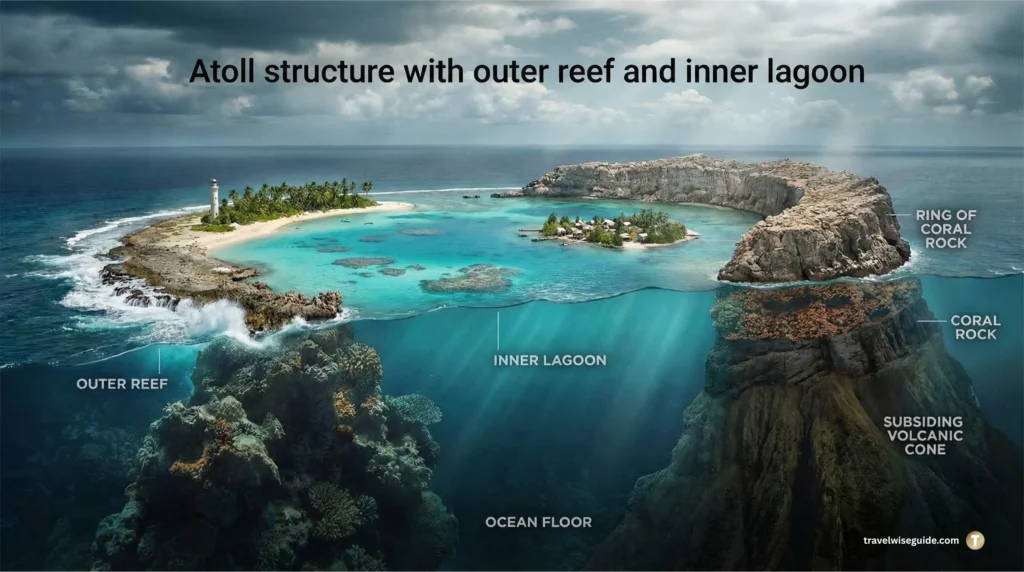
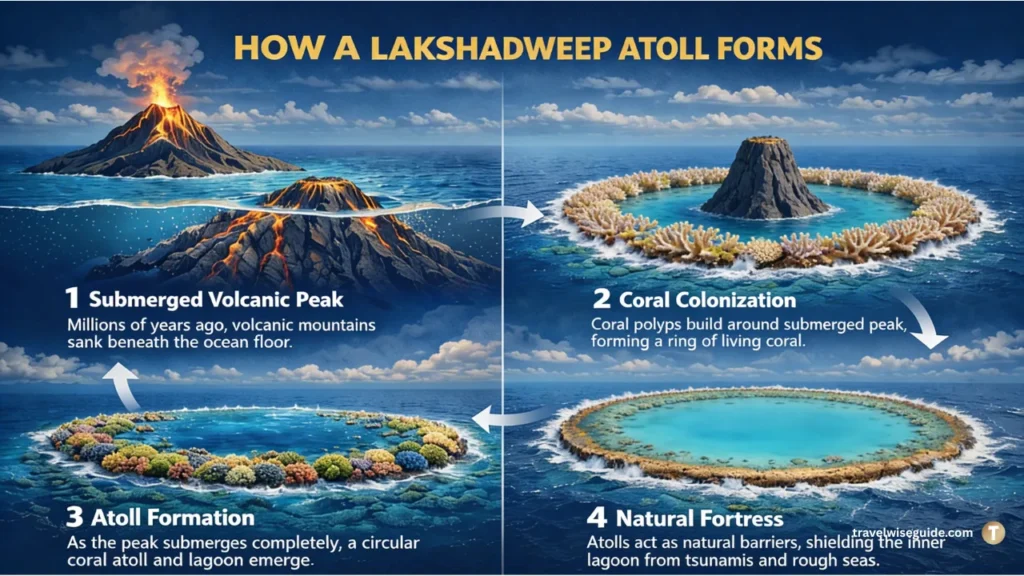
Picture this: millions of years ago, volcanic mountains jutted from the ocean floor. As they slowly submerged, coral polyps—tiny marine architects—began building upon their peaks. What emerged are Lakshadweep atolls and lagoons, circular rings of living coral that locals poetically call “necklaces of moonstones.
During my first helicopter transfer to Agatti, I gasped seeing these perfect circles from above. Each atoll forms a natural fortress, protecting the inner lagoons from tsunamis and rough seas. It’s remarkable—these aren’t just islands, they’re living barriers that grow stronger with time.
Key characteristics of Lakshadweep atolls: • Circular coral formations built over submerged volcanic peaks • Act as natural tsunami barriers protecting inner lagoons • Continuously growing and self-repairing marine ecosystems • Home to diverse coral species creating underwater gardens
Lagoons: Turquoise Sanctuaries of Peace
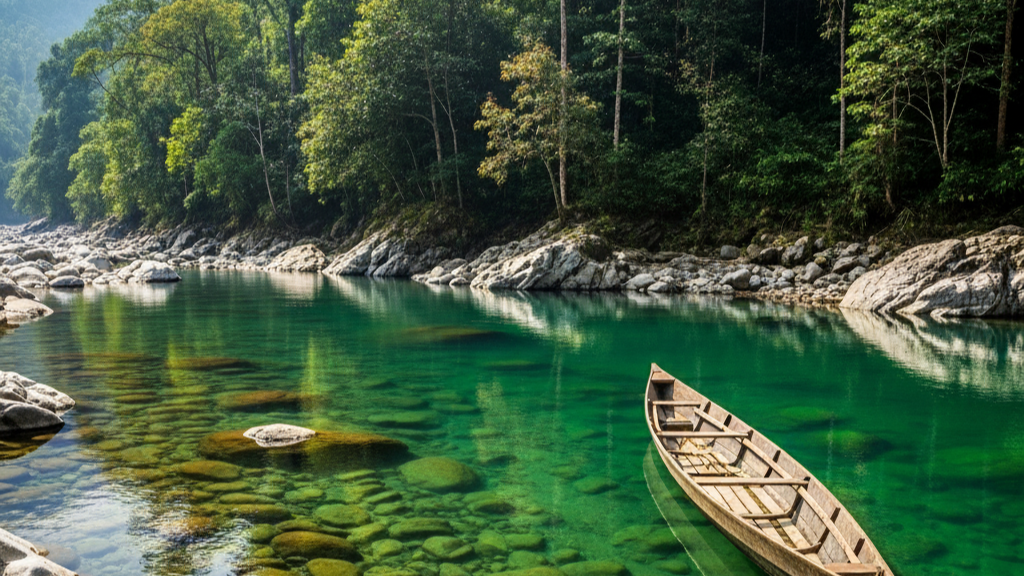
The contrast hit me immediately—beyond the atolls roared the deep blue Arabian Sea, yet within their embrace lay Lakshadweep lagoons so calm they resembled enormous swimming pools. These shallow, protected waters shimmer in every shade of turquoise imaginable.
I remember wading into Kavaratti’s lagoon at dawn. The water, barely three feet deep and crystal clear, mirrored coconut palms so perfectly it felt like stepping into a liquid mirror. Here’s why these Lakshadweep atolls and lagoons make this destination a water sports paradise:
What makes the lagoons special: • Protected from ocean swells by surrounding coral reefs • Consistently warm temperatures (26-28°C year-round) • Exceptional visibility for snorkelling (often 20+ metres) • Safe, shallow waters perfect for beginners and families • Natural nurseries for tropical fish and sea life
[Insert Graphic: Cross-section diagram showing atoll structure with outer reef and inner lagoon]
Legends and Heritage: Uncovering the History of Lakshadweep📜
The story of these mystical islands stretches back over a millennium, weaving together royal legends, spiritual journeys, and cultural fusion. Every coral formation here whispers tales of ancient kings, brave saints, and the remarkable people who made these remote atolls their home. Let me share the captivating chronicles that shaped this paradise.
The Cheraman Perumal Connection
The history of Lakshadweep begins with legend. Ancient texts speak of Cheraman Perumal, the last great king of Kerala, who during a storm-tossed voyage in the 7th century, spotted these islands shimmering on the horizon. Overwhelmed by their beauty, he named them “Lakshadweep”—meaning “one hundred thousand islands” in Sanskrit.
Standing in Kavaratti’s old quarters, local elders shared this tale with such conviction that I could almost see the king’s weathered ship approaching these very shores. Whether fact or folklore, this story captures the awe these islands have inspired for over a millennium, making any Lakshadweep travel guide incomplete without this legendary beginning.
The Arrival of Islam: Saint Ubeidullah’s Legacy
The cultural transformation came when Saint Ubeidullah arrived, bringing Islam to these Hindu-Buddhist communities. Rather than replacing local traditions, a beautiful fusion emerged. Today, you’ll find ornate mosques standing beside traditional architecture, creating a unique cultural tapestry that defines the history of Lakshadweep.
Cultural highlights reflecting this heritage: • Ornate mosques with traditional Maldivian influences • Local festivals blending Islamic and regional customs • Traditional boat-building techniques passed down generations • Unique dialect mixing Malayalam, Arabic, and local languages
In Minicoy, I witnessed this cultural blend firsthand—the island’s lighthouse, built by the British, overlooks a mosque where the call to prayer mingles with the sound of waves, creating an almost mystical atmosphere.
Avatar Nights: Experiencing the Bioluminescence Phenomenon in Lakshadweep
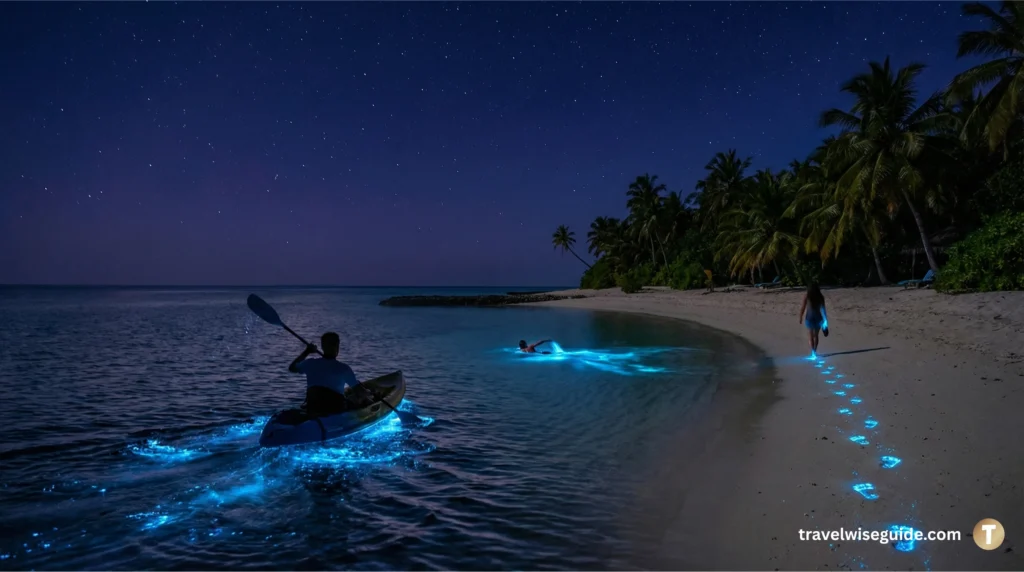
Nothing—absolutely nothing—prepared me for my first bioluminescent night on Bangaram. As darkness fell and I walked barefoot along the shore, each step erupted in electric blue sparkles. The waves crashed in cascades of liquid starlight, as if the Milky Way had melted into the sea.
This natural magic comes from dinoflagellate phytoplankton—microscopic organisms that emit light when disturbed. Scientists call it a defence mechanism, but experiencing it feels like stepping into James Cameron’s Pandora. Any comprehensive Lakshadweep travel guide must highlight this otherworldly phenomenon.
Best bioluminescence experiences: • Bangaram Island: Most reliable sightings year-round • New moon nights offer darkest skies for maximum effect • Gentle swimming creates trails of blue light around your body • Beach walks leave glowing footprints lasting several seconds • Kayaking through bioluminescent waters feels otherworldly
The phenomenon peaks during warmer months, but I’ve witnessed spectacular displays even in December. Pro tip: resist using torches or phone lights—your eyes need 20-30 minutes to adjust for the full magical effect.
The Underwater Rainforest: Discovering Lakshadweep’s Marine Biodiversity🐠
Diving into Lakshadweep’s reefs felt like entering an underwater Amazon. Marine biologists call coral reefs “rainforests of the sea,” and here I understood why. The biodiversity density rivals any terrestrial jungle, making this archipelago a crown jewel for any Lakshadweep travel guide.
Gentle Giants of the Deep
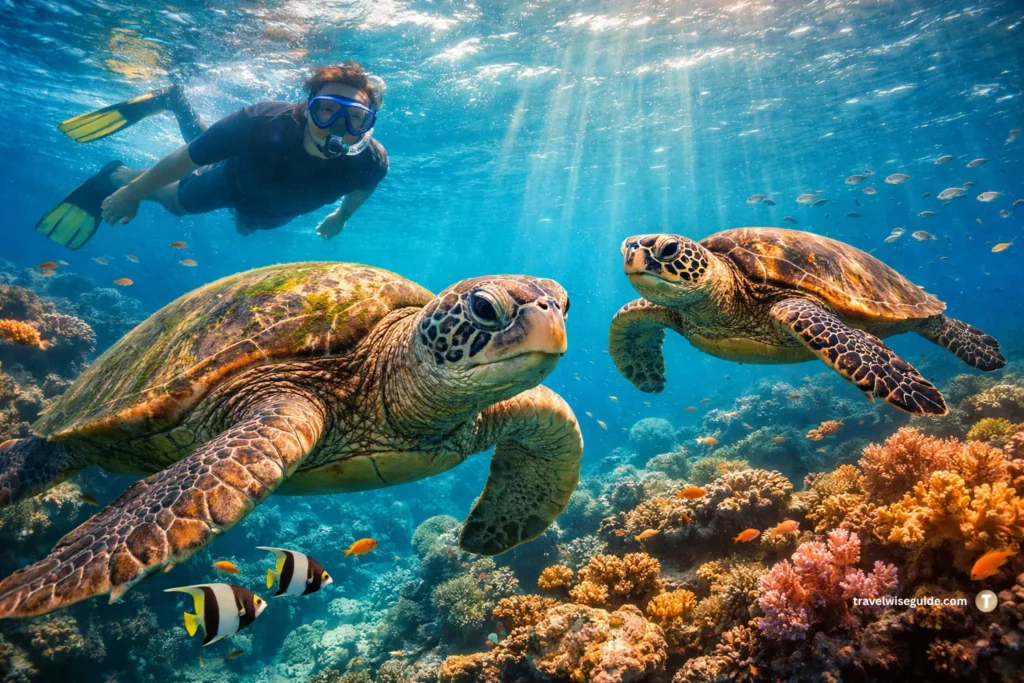
My most memorable encounter came while snorkelling off Agatti. A massive sea turtle, easily four feet across, glided past with prehistoric grace. Its ancient eyes held such wisdom I felt like an intruder in cathedral waters. These green and hawksbill turtles nest on several islands, making Lakshadweep atolls and lagoons crucial for their survival.
The Living Jewels: Giant Clams and Coral Gardens
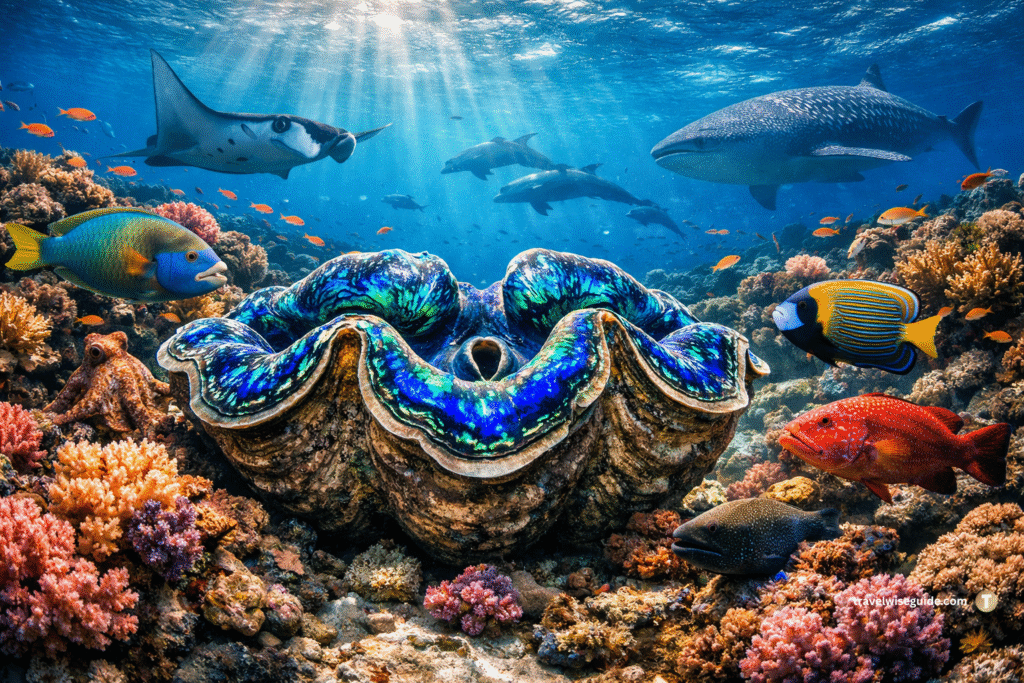
Discovering my first giant clam was breathtaking—these massive molluscs, some over three feet wide, filter hundreds of litres of seawater daily. Their mantles shimmer with electric blues and greens, creating living kaleidoscopes on the reef floor.
Marine life highlights: • Over 600 fish species including parrotfish, angelfish, and groupers • Manta rays and whale sharks during migration seasons • Pristine hard and soft coral gardens spanning multiple species • Octopi, eels, and countless invertebrate species • Seasonal dolphin pods near major islands
A Responsible Traveller’s Pledge
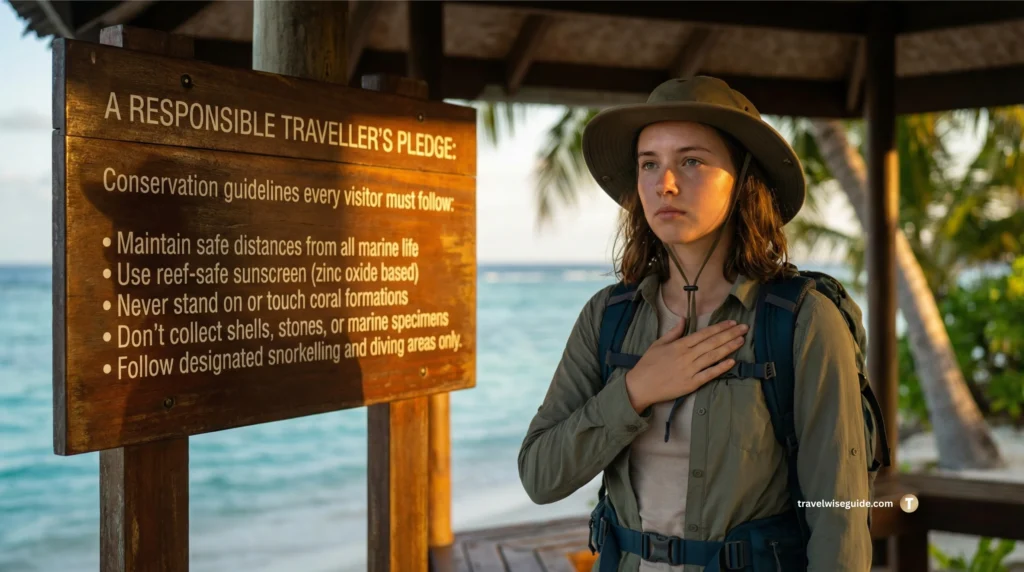
Here’s what I learned the hard way: never touch the corals. During my first snorkel, I accidentally brushed a staghorn coral. My guide’s immediate concern taught me these organisms take decades to grow but seconds to damage. Every broken fragment represents years of lost growth and habitat destruction.
Conservation guidelines every visitor must follow: • Maintain safe distances from all marine life • Use reef-safe sunscreen (zinc oxide based) • Never stand on or touch coral formations • Don’t collect shells, stones, or marine specimens • Follow designated snorkelling and diving areas only
The Secret of “Island Time”: Traditional Wellness and Local Soul 🌿
Beyond the coral and lagoons lies Lakshadweep’s most guarded secret: a lifestyle rooted in ancient wellness and a profound connection to the rhythm of the tides. In a world of digital noise, the 70,000 residents here have preserved a self-sufficient way of life that feels like a masterclass in mindfulness.
Hiyalee and Herbal Wisdom: The Healing Touch
During my stay, I discovered that hospitality here extends far beyond a warm welcome; it’s about healing. Local elders, known for their longevity, still practice traditional herb-based wellness. I watched a grandmother in Kalpeni prepare a cooling tonic from island-grown botanicals—a secret passed down through generations to combat the tropical sun. It’s not just medicine; it’s a spiritual bond with the land.
The Philosophy of “Island Time
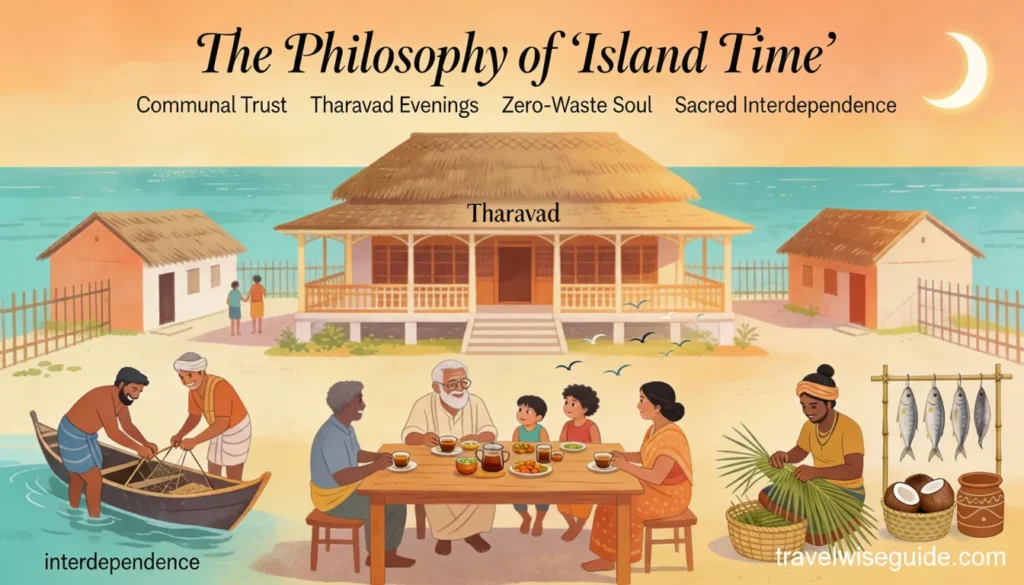
The most profound cultural “secret” I uncovered was the concept of time. In Lakshadweep, life isn’t dictated by clocks, but by the moon and the sea. Key aspects of this unique island soul:
- Communal Living: Houses often lack high fences, reflecting a society built on absolute trust and shared responsibility.
- The “Slow-Life” Ritual: Evenings are reserved for “Tharavad” (ancestral home) gatherings where stories of the sea are shared over spiced black tea.
- Sustainable Soul: Islanders possess an innate “zero-waste” mindset, using every part of the environment with deep religious and cultural respect.
- Interdependence: The isolation has bred a culture where helping a stranger is considered a sacred duty, not just a courtesy.
Cultural Experiences to Ground You:
Home-Cooked Simplicity: Savouring meals where every ingredient is sourced within a five-mile radius of your plate.xxxxIsland Life: Understanding the Lakshadweep Economy and Local Culture 🥥
Mindful Walking: Joining locals for a sunset stroll where the only “agenda” is watching the horizon.
The Art of “Mahl” Conversation: Learning a few words of the local tongue, which instantly turns a host into a lifelong friend.
Life on these remote coral islands follows rhythms unchanged for centuries, where every coconut palm and fishing boat tells a story of survival and sustainability. The isolation that makes Lakshadweep so pristine has also created a remarkably self-sufficient society built on natural resources and unbreakable community bonds. Join me as we explore how 70,000 islanders have crafted a unique way of life in harmony with their marine paradise.
Planning Your Adventure: What is the Best Time to Visit Lakshadweep?📅
Timing your visit to this coral paradise can make the difference between an ordinary trip and an extraordinary adventure that lives in your memory forever. The archipelago’s location in the Arabian Sea means weather patterns dramatically affect everything from accessibility to water visibility and marine life encounters. Let me share the insider knowledge I’ve gathered from multiple visits to help you choose the perfect window for your Lakshadweep journey.
Best Time to Visit: October to March Magic
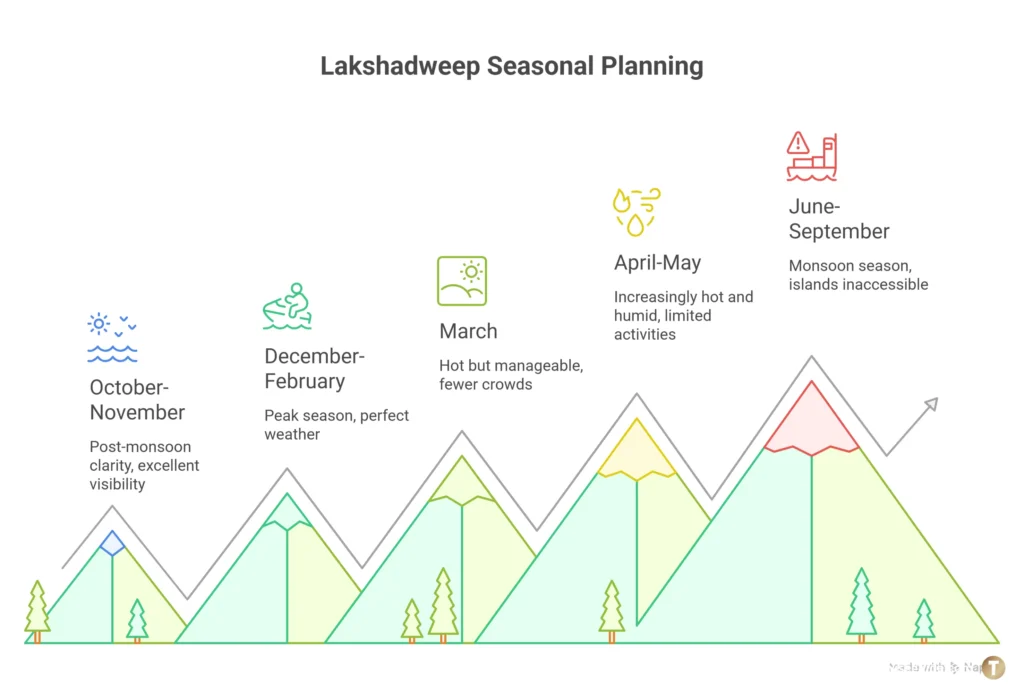
My multiple visits taught me timing is everything in Lakshadweep. The best time to visit stretches from October through March, when monsoons retreat and trade winds calm the seas. December and January offer perfect conditions—sunny days, gentle breezes, and glass-smooth lagoons ideal for water sports.
Understanding the best time to visit is crucial for any traveller planning their Lakshadweep adventure. The weather patterns significantly impact accessibility to various Lakshadweep atolls and lagoons.
Seasonal breakdown: • October-November: Post-monsoon clarity, excellent visibility for exploring Lakshadweep atolls and lagoons • December-February: Peak season with perfect weather conditions • March: Hot but manageable, fewer crowds, great for photography • April-May: Increasingly hot and humid, some activities limited • June-September: Monsoon season, most islands inaccessible
Accessing Paradise: Permits and Transportation
Entry requires permits obtained 15 days in advance through official channels. My advice: apply early and have backup dates flexible. Access comes via flights to Agatti Airport or ships from Kochi—the 14-20 hour cruise offers spectacular sunrise arrivals. Every Lakshadweep travel guide emphasises the importance of proper planning due to these restrictions.
Official Reference
1. ZSI (Zoological Survey of India) – Marine Biodiversity Portal
- What to look for: This is the best official resource to learn about how the atolls were formed and the diverse species living in the “underwater jungles.” It provides scientific information on the coral reefs and the unique marine life of the Lakshadweep archipelago.
- Link: https://zsi.gov.in/
2. Lakshadweep Administration – Science & Technology Department
- What to look for: This department handles the environmental protection of the islands. It is a great place to find official information on the ecosystem, including the conservation of the coral reefs and the natural phenomena like the bioluminescence seen during “Avatar nights.
- ” Link: https://lakshadweep.gov.in/departments/
3. SPORTS (Society for Promotion of Nature Tourism and Sports)
- What to look for: To experience the “underwater jungles” yourself, you need to book through this official body. Here, you can find the approved list of scuba diving and night-time lagoon activities that allow tourists to witness the coral paradise safely.
- https://www.lakshadweeptourism.com/
4. Ministry of Environment, Forest and Climate Change (Lakshadweep Portal)
- What to look for: This portal outlines the rules for tourists to ensure they don’t damage the fragile atolls. It’s essential for readers to know the “Do’s and Don’ts” of interacting with the coral reefs to keep the paradise pristine.
- Link: https://moef.gov.in/
Related Posts
Ladakh Travel Guide: 7 Insider Secrets for a Perfect Trip!
- Authentic himalayan hospitality ,health tips , reliable guide to the navigating the highlands ,
- https://travelwiseguide.com/ladakh-travel-guide-essentials/
Travel Terms Meaning: 20 Expert Secrets to Save Thousands!
- Decoding flight connection, accommodation mastery , decoding hotel meal plan , master hotel timings .
- https://travelwiseguide.com/travel-terms-meaning-secrets/
FAQs About Lakshadweep Travel Guide
Why are the Lakshadweep atolls and lagoons considered unique?
The Lakshadweep atolls and lagoons are unique because they are built entirely on living coral reefs atop ancient volcanic peaks. Unlike the Andaman Islands, which are mountainous, these are flat “coral islands.” The atolls act as a natural wall, protecting the turquoise lagoons from the rough Arabian Sea, creating a safe, shallow sanctuary for diverse marine life.
Can I see the “Blue Glow” (Bioluminescence) on every island?
While bioluminescence is a natural phenomenon, Bangaram Island is the most famous for its “Avatar-like” blue glow. To witness this, the best time to visit is during a New Moon night when the sky is darkest. Avoid using flashlights on the beach; let your eyes adjust to the darkness to see the glowing phytoplankton clearly.
How can I responsibly explore the marine biodiversity in Lakshadweep without damaging the reef?
Exploring the “Underwater Rainforest” of the Lakshadweep atolls and lagoons requires a mindful approach to conservation. To ensure these pristine ecosystems survive for future generations, every visitor should follow a strict “Look but don’t touch” policy.
Maintain Coral Integrity: Never touch or stand on coral formations. During my own dives, I’ve seen how a single misplaced flipper can snap a staghorn coral that took a decade to grow.
Observe Safe Distances: Whether you are swimming with green sea turtles or admiring the electric mantles of giant clams, keep a distance of at least 2–3 metres to avoid distressing the wildlife.
Use Reef-Safe Suncream: Standard suncreams often contain oxybenzone, which is toxic to reefs. Opt for mineral-based (zinc oxide) alternatives to prevent coral bleaching.
Leave No Trace: It is strictly prohibited (and unethical) to collect shells, dead coral, or stones as souvenirs. As this Lakshadweep travel guide emphasises, the only things we should leave behind are bubbles and a commitment to protection.
Which island is better for a 4-day trip: Agatti or Kadmat?
If you have limited time, Agatti is the most convenient because it houses the only airport. However, if you are looking for long, pristine stretches of Lakshadweep atolls and lagoons, Kadmat is superior. Pro-Tip: If you want a balance of accessibility and quiet beauty, stay at Agatti but take a day boat trip to Bangaram or Thinnakara.
. What should I pack for a sustainable trip to Lakshadweep?
To protect the fragile Lakshadweep atolls and lagoons, we recommend packing:
Reef-safe sunscreen (Oxybenzone-free) to protect the corals.
Reusable water bottles to minimize plastic waste.
Cash (INR), as ATMs are rare and digital payments can be slow due to network issues.
Dry bags for your electronics during boat transfers.
How did the islands get their name and who discovered them?
According to the history of Lakshadweep, the name translates to “one hundred thousand islands” in Sanskrit. Legend credits the discovery to the Kerala King Cheraman Perumal in the 7th century. Over centuries, the islands’ culture was shaped by the arrival of Saint Ubeidullah, creating a unique blend of Malayali and Islamic traditions that you see today.
Is there a strict dress code for tourists in Lakshadweep?
Since the local culture is conservative and deeply rooted in the history of Lakshadweep, it is respectful to dress modestly when visiting local villages or mosques (covering shoulders and knees). However, inside the private tourist resorts and on the beaches of uninhabited islands like Bangaram, standard swimwear is perfectly fine.
What exactly is a lagoon, and why are the Lakshadweep lagoons so unique?
In the simplest terms, a lagoon is a shallow body of sparkling salt water separated from the deep ocean by a barrier—in this case, a protective ring of coral reefs known as an atoll. What makes the Lakshadweep atolls and lagoons truly extraordinary is their geological “Sanctuary” effect.
While the open Arabian Sea can be rough and unpredictable, the lagoon remains as calm as a swimming pool, often with a consistent depth of just 1 to 3 metres. During my sunrise wades in Kavaratti, I noticed how the water acts like a natural liquid mirror, reflecting the palms with startling clarity. For travellers, these lagoons are the ultimate playground for snorkelling and kayaking, offering safe, crystal-clear turquoise waters where you can spot tropical fish and coral gardens without the worry of strong ocean currents.
Conclusion: Your Gateway to India’s Exclusive Coral Sanctuary 🗺️
This Lakshadweep travel guide has merely unlocked the first of 7 Secrets of India’s Coral Paradise. We’ve journeyed through the stunning Lakshadweep atolls and lagoons, uncovered the rich history of Lakshadweep, and learned why choosing the best time to visit is vital for an optimal experience. From the sustainable tuna economy to the magical bioluminescence, these 36 emerald islands are a masterclass in living in harmony with nature.
But my final secret is this: Lakshadweep local life is as fragile as it is beautiful, preserved only through our respectful choices as responsible travellers. While this guide provides the foundation, your adventure is just beginning with our upcoming Lakshadweep Travel Series, covering everything from detailed permit procedures to island-by-island breakdowns of costs and water sports rates. Pack your sense of wonder, leave only footprints, and prepare for the journey of a lifetime in India’s most exclusive coral sanctuary. Bookmark this series and join thousands of mindful travellers discovering the future of sustainable tourism. 🌺