Mussoorie local culture: Exploring authentic traditions beyond the common myths
Last Updated on
29 March 2026
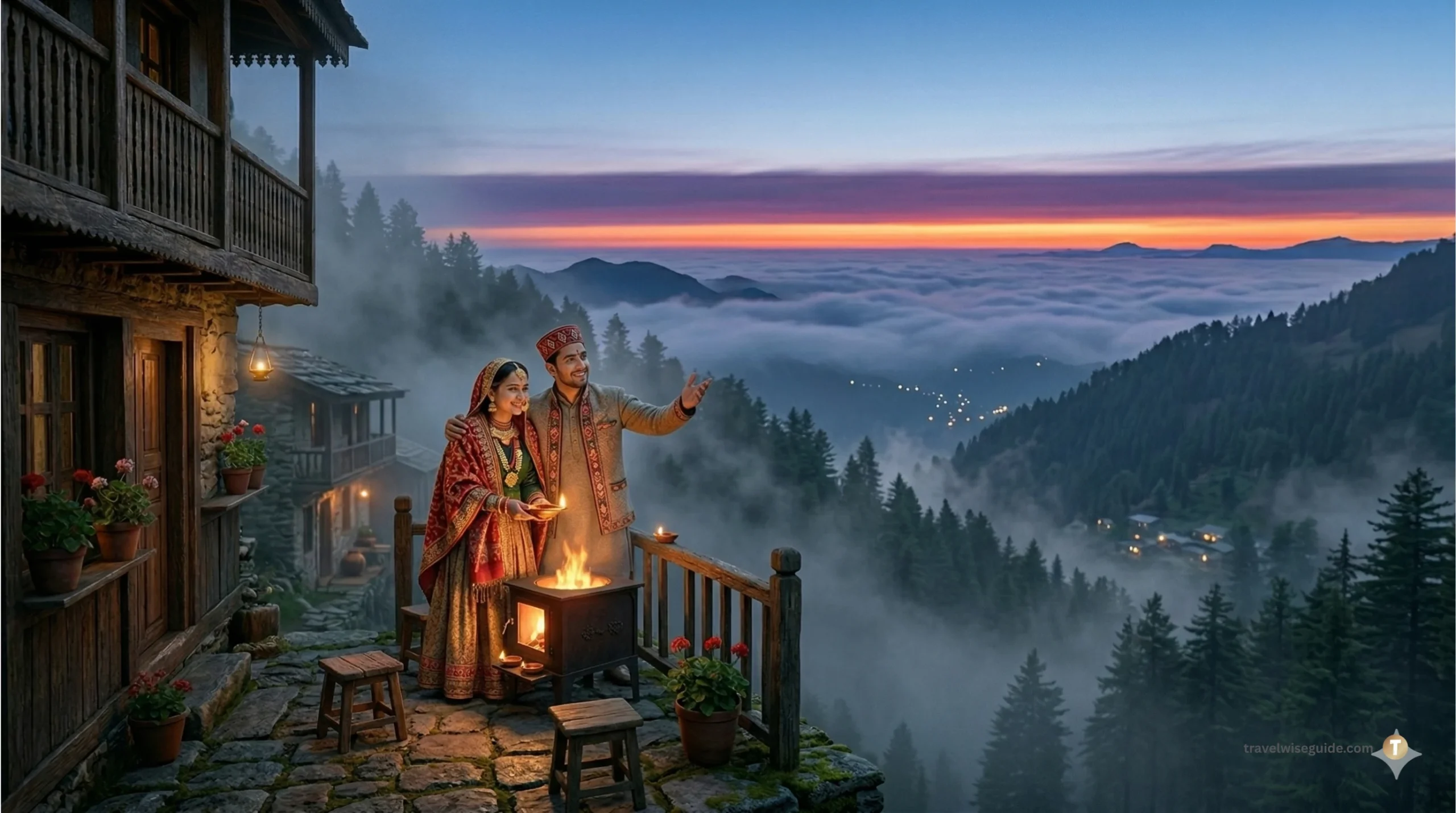
To truly experience Mussoorie local culture, one must step away from the bustling Mall Road. This insider guide unveils hidden places in Mussoorie, traditional Garhwali festivals like Igas, the rare atmospheric phenomenon known as the Winter Line, and the quiet, historic alleyways that define the true soul of the Queen of the Hills.
If you think you know Mussoorie because you have strolled down the Mall Road with a cone of soft-serve ice cream or taken a rather crowded photograph at Kempty Falls, I must gently burst that bubble. I used to think the same, until I decided to lose the map, ignore the tourist brochures, and truly immerse myself in the misty, pine-scented reality of this Himalayan town. Trading the chaotic heat of the plains for this altitude wasn’t just a change in weather; it was a shift in perspective.
This is not a list of commercial spots. This is a chronicle of my personal journey into the very marrow of the mountains, designed to transform you from a fleeting visitor into a knowledgeable insider who truly understands Mussoorie local culture.
- Beyond the Tourist Facade: Discovering True Mussoorie Local Culture
- Synchronising with the Himalayan Seasons and Mussoorie Local Culture
- Unearthing Architectural Ghosts and Academic Legacies
- The Digital Nomad's Haven: Top Mussoorie Workation Spots
- The Pragmatic Traveller: Navigating Logistics and the Infamous Mist
- The Ephemeral Magic: Witnessing the Winter Line in Mussoorie
- The Economic Backbone: A Tale of Hospitality and Erudition
- Official References
- Related Posts
- FAQ About Mussoorie local culture
- Conclusion: Your Transformation into a Mussoorie Local Culture Insider
Beyond the Tourist Facade: Discovering True Mussoorie Local Culture
The heartbeat of this hill station does not reside in its souvenir shops, but rather in the ancient traditions that still echo through the valleys. To truly appreciate Mussoorie local culture is to witness a profound respect for nature and Garhwali heritage.
The Symphony of Folk Dances and Festivals of Uttarakhand
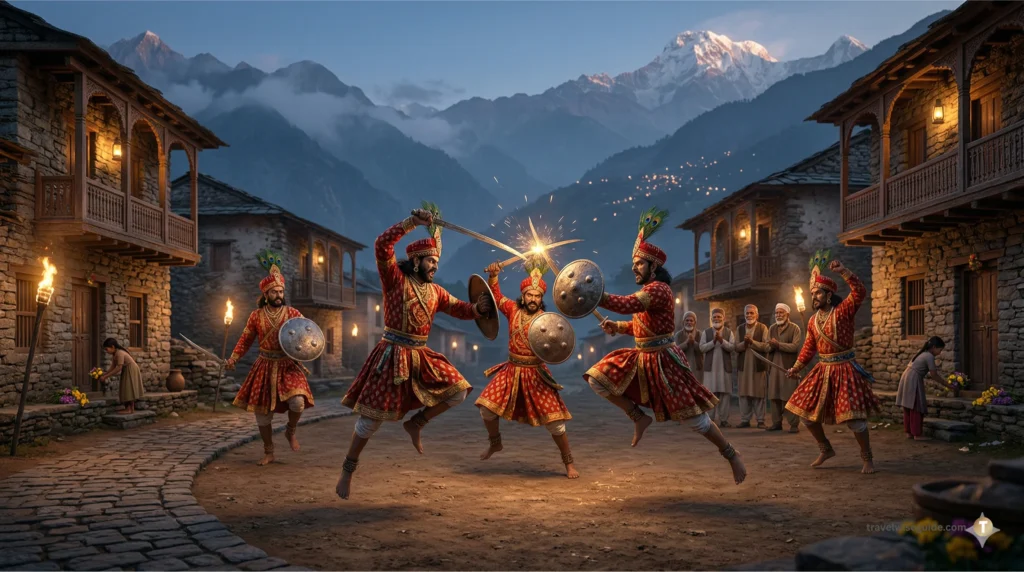
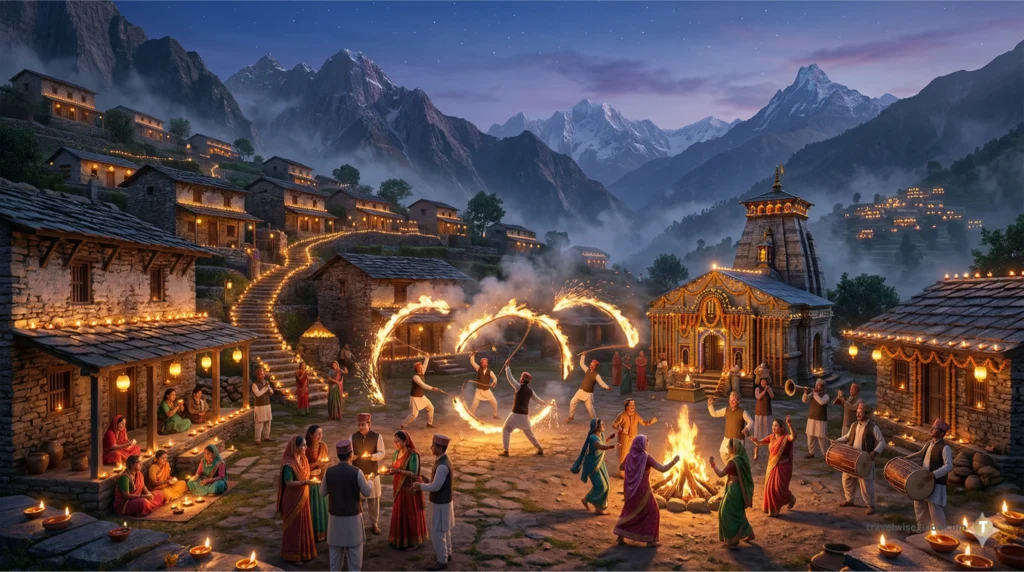
During my wandering through a quieter settlement near Landour, I was fortunate enough to witness the Choliya dance. It is a breathtaking, martial folk dance where men uses swords and shields, telling tales of ancient bravery that made the hairs on my arms stand up. It is a stark contrast to the gentle Phool Dei celebrated in spring, where children place freshly plucked flowers on doorsteps, singing traditional blessings. If you happen to visit during autumn, you might witness Igas Bagwal. The hills celebrate their own Diwali eleven days after the rest of the country, a poignant reminder of how long news took to travel up these treacherous terrains in the past. These festivals of Uttarakhand are the invisible threads holding the community together, proving that Mussoorie local culture is vibrant and alive.
The Woven Pride: Garhwali Attire in Mussoorie Local Culture
One crisp morning, whilst observing the locals, I noticed the distinct, elegant attire that speaks volumes of their lineage. The traditional Pahari cap worn by the elder men is not merely protection against the biting cold; it is a crown of immense regional pride deeply embedded in Mussoorie local culture. Similarly, the women gracefully adorn the Nath (a large, intricately designed gold nose ring) and the Pichora during ceremonies. These aren’t just accessories; they are geographic identifiers as deeply rooted as the Deodar trees themselves.
Synchronising with the Himalayan Seasons and Mussoorie Local Culture
To survive and thrive in the Himalayas, one must abandon the rigid ticking of a clock and instead learn to read the shifting clouds. Adapting seamlessly to these harsh yet beautiful elements is the very essence of Mussoorie local culture.
Culinary Shifts and the Fireplace Comfort
I have always had a keen eye for hospitality and culinary mechanics, and the local kitchens here operate with brilliant seasonal logic. As winter approaches, Mussoorie local culture dictates a diet that shifts dramatically to provide internal warmth. I found myself warming my hands by a traditional angheeti (coal stove) in a local home, savouring Mandua ki Roti (finger millet bread) and a robust Gehat ki Daal. This isn’t just rustic food; it is thermal engineering on a plate, designed to keep the body warm from the inside out. When searching for the best time to visit Mussoorie for snow, remember that the local Garhwali cuisine is your best defence against the chill.
Secret Alleyways: Exploring Hidden Places in Mussoorie
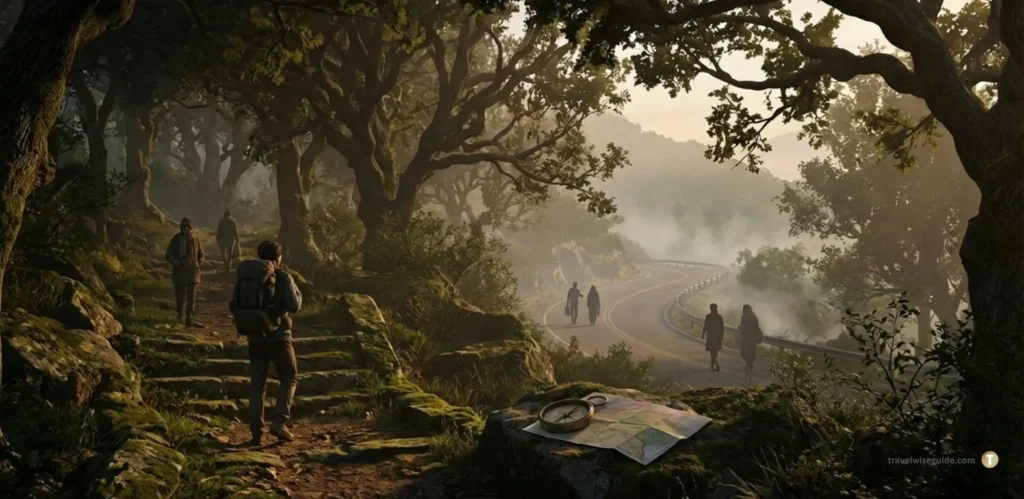
If you rely solely on your GPS, you will remain trapped in traffic, missing the true charm of the hills. The locals navigate via a complex, unmapped network of pagdandiyan (narrow walking trails) and moss-covered stone staircases. Discovering these hidden places in Mussoorie requires abandoning the main road; I took a shortcut that shaved forty minutes off my journey, leading me through a canopy of ancient oaks. By 6:00 AM, Camel’s Back Road transforms into a sanctuary for the locals’ daily walk—a quiet, unspoken social club where greetings are exchanged in hushed tones, long before the tourist taxis begin to honk.
Unearthing Architectural Ghosts and Academic Legacies
There is a distinct colonial hangover that gives the town its character, heavily influencing Mussoorie local culture even today. The architecture tells stories of empires, whilst the premier institutions shape the country’s administrative future.
The Hogwarts of the Hills: Boarding Schools
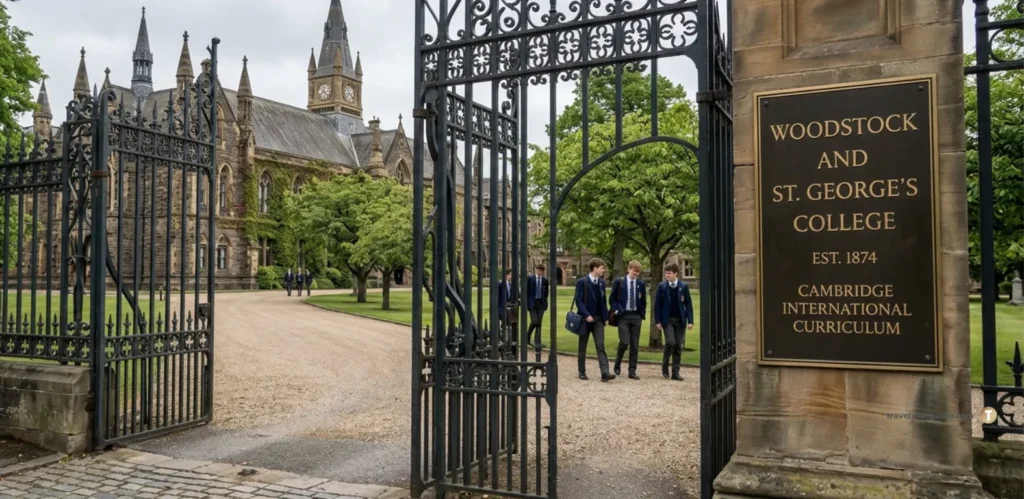
Walking past the towering iron gates of Woodstock and St. George’s College, I couldn’t help but marvel at the sprawling estates. The Gothic architecture, complete with ivy-clad stone walls and grand clock towers, feels like a scene borrowed straight from Harry Potter. Watching the students, it made me reflect on the intense discipline of international curricula like the Cambridge board; these schools do not just educate, they mould characters in complete isolation from the modern world’s distractions.
The Quiet Dignity of LBSNAA and the 1843 Library
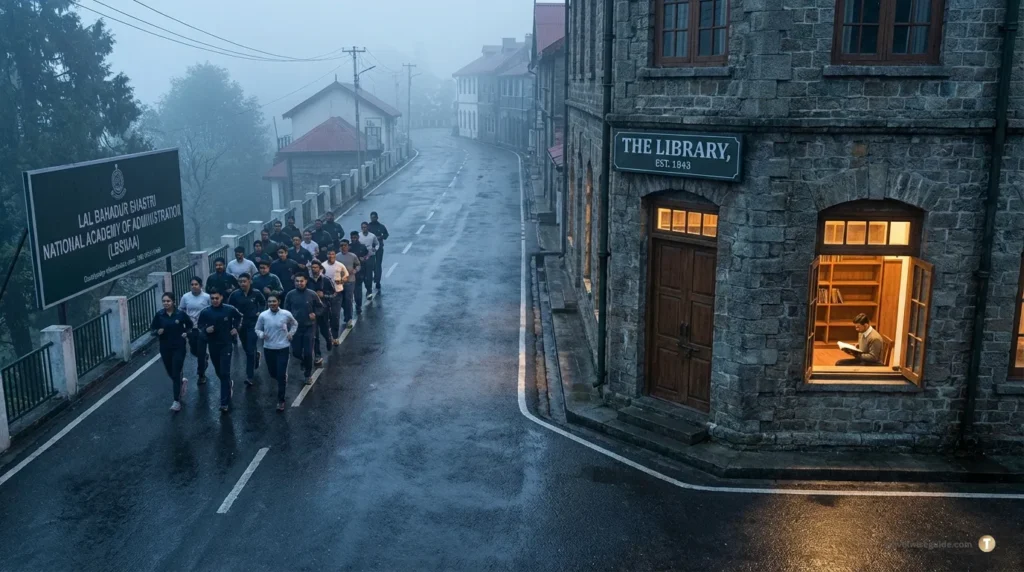
Venture towards the Happy Valley side, and the atmosphere shifts from leisurely to exceptionally disciplined. This is the domain of the Lal Bahadur Shastri National Academy of Administration (LBSNAA). Seeing India’s future bureaucrats jogging in the misty mornings adds an undeniable layer of prestige to the town. Later, I found refuge in The Library, established in 1843 at the corner of Mall Road. Most tourists walk right past it, but stepping inside is like inhaling history. The scent of old paper and polished mahogany offers a masterclass in silent heritage.
The Digital Nomad’s Haven: Top Mussoorie Workation Spots
The modern era has gracefully infiltrated the mountains without destroying their traditional charm or Mussoorie local culture. For those seeking productivity away from concrete jungles, this town has quietly evolved into a premium remote working destination.
Finding Wi-Fi in the Wilderness
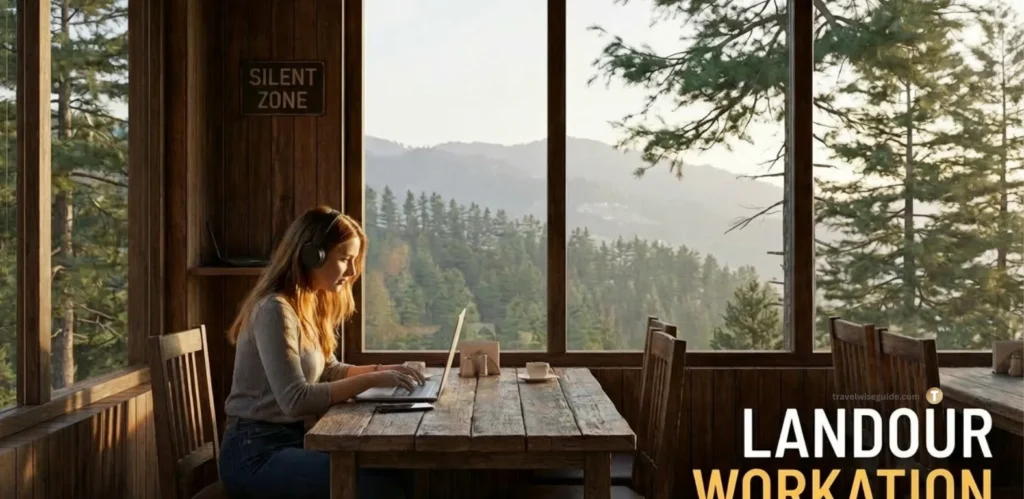
I spent an entire afternoon working from a quaint, wood-panelled café in Landour, and the experience was flawless. Surrounded by pine trees, this area hosts some of the premier Mussoorie workation spots available today. The 5G connectivity is surprisingly robust, allowing for seamless video calls whilst looking out over the Doon Valley. The café culture here, particularly in the upper cantts, respects the ‘silent zone’ ethos. There is no blaring music, only the hiss of the espresso machine and the rustle of the wind. It is an absolute haven for writers, developers, and entrepreneurs who need absolute focus.
The Pragmatic Traveller: Navigating Logistics and the Infamous Mist
Romance and aesthetics aside, fully immersing yourself in Mussoorie local culture demands practical respect for the mountainous terrain. A lack of logistical foresight can quickly turn a dream holiday into a profoundly stressful ordeal.
The Great Parking Conundrum
Allow me to share a critical piece of advice from an operational standpoint: parking space is the most fiercely contested real estate in this town. My golden rule, born out of frustrating experience, is to unequivocally ensure your accommodation has private, guaranteed parking. Do not believe vague promises of “parking available nearby.” If you fail to secure this, you will spend your serene holiday fighting for space on incredibly narrow, precarious ledges.
Mastering the Serpentine Roads and Monsoon Fogs
The drive up from Dehradun is a short but dizzying spiral. If you are prone to motion sickness, preventative medication is non-negotiable. However, the real test of nerve comes during the monsoon. I have driven through the Himalayan mist where visibility dropped to less than two metres. It is an ethereal, almost haunting experience, but it requires low-beam headlights, a reliance on the yellow road markers, and absolute patience. Do not rush the mountains; they will not yield.
The Ephemeral Magic: Witnessing the Winter Line in Mussoorie
Amongst all the hidden places in Mussoorie, the most spectacular secret is not a physical location, but a fleeting moment in time. It is a visual symphony that defies standard meteorological expectations.
A Phenomenon Shared Only with Switzerland
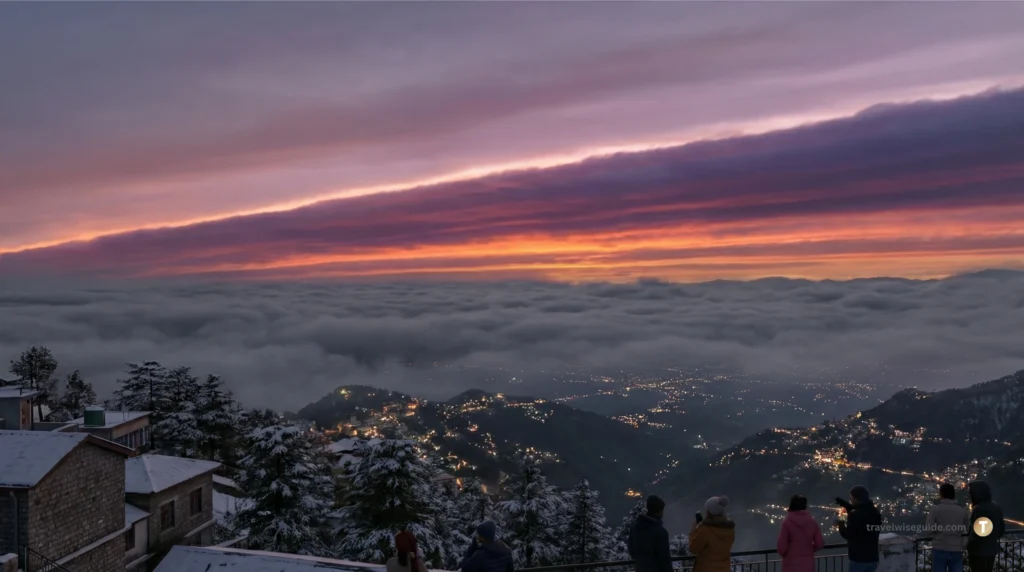
This is the ultimate prize for the winter traveller and a cherished part of Mussoorie local culture. The Winter line in Mussoorie is a rare atmospheric illusion. As the sun dips below the horizon between late October and January, a sharp, brilliant false horizon forms—a striking band of mauve, orange, and deep purple resting atop a sea of grey mist. The only other place on Earth this naturally occurs is the Swiss Alps. Standing near Lal Tibba, watching this celestial line form as the valley lights began to twinkle below, I realised that this single view is worth every winding mile of the journey.
The Economic Backbone: A Tale of Hospitality and Erudition
To truly respect a destination and its Mussoorie local culture, one must understand what feeds its people. The local economy is a fascinating study of dual dependencies, operating with a smooth, almost invisible efficiency.
The Dual Pillars of Sustenance
The town survives on two primary arteries: tourism and education. The standard of hospitality here, even in the smallest homestays, is remarkably high, driven by generations of experience in catering to global travellers. Simultaneously, the sprawling academic estates provide year-round employment, ensuring that the town does not completely shut down during the off-season. It is a highly literate, deeply cultured society that knows precisely how to balance commercial welcoming with personal boundaries.
Official References
Uttarakhand Tourism Development Board
- ‘here you learn about local culture ,like folk dances , rituals etc.
- https://uttarakhandtourism.gov.in/
India Meteorological Department (IMD) – Dehradun
- weather, fogs , safety roads informations, traffic ,Winter Line’
- https://mausam.imd.gov.in/dehradun/
Incredible India (Ministry of Tourism)
- here you can find everything about Mussoorie about culture , food , rituals
- https://www.incredibleindia.org/
Related Posts
Best Food in Mussoorie: Locals’ Hidden Cafes & Secrets 2026
- Authentic Garhwali cuisine , Legendary bakeries, street food , souvenir
- https://travelwiseguide.com/best-food-in-mussoorie/
Mussoorie Trip Plan 2026 (Find Peace via Secret Walks)
- How to avoid traffic , traffic free revolution, activity master list , 3 day itinerary
- https://travelwiseguide.com/mussoorie-trip-plan-2026/
Travel Terms Meaning: 20 Expert Secrets to Save Thousands!
- Decoding flight connection, accommodation mastery , decoding hotel meal plan , master hotel timings .
- https://travelwiseguide.com/travel-terms-meaning-secrets/
FAQ About Mussoorie local culture
Is it safe to drive to Mussoorie during the monsoon, and how is the parking situation?
Driving in the Mussoorie monsoon requires extreme caution due to dense mist, and pre-booking a hotel with private parking is an absolute necessity. When I drove through the Himalayan fogs, visibility often dropped to less than two metres. To ensure a safe and stress-free trip, keep these practical points in mind:
Visibility: Always use low-beam headlights and rely on yellow road markers.
Parking Rule: Never rely on “parking available nearby” promises; space is fiercely contested on these narrow ledges.
Health: Keep motion sickness medication handy for the dizzying spiral roads from Dehradun. (Internal Link Idea: Read my full guide on navigating Himalayan roads here.)
Mall Road vs. Landour: Which is better for a peaceful remote workation?
For a peaceful and highly productive workation, Landour is vastly superior to the commercialised Mall Road. During my time working from a wood-panelled café in Landour, I found it to be the ultimate digital nomad haven. Here is a quick comparison:
Vibe: Mall Road is loud and tourist-heavy; Landour strictly follows a ‘silent zone’ ethos.
Connectivity: Upper cantt areas in Landour offer surprisingly robust 5G connectivity for seamless video calls.
Environment: Landour cafes offer undisturbed views of the Doon Valley with just the sound of wind and espresso machines.
What is the exact time and place to see the Mussoorie Winter Line?
The rare Mussoorie Winter Line is best viewed from Lal Tibba between late October and January, just as the sun dips below the horizon. Standing near Lal Tibba watching this phenomenon was the highlight of my trip. It forms a striking false horizon of mauve, orange, and deep purple resting above the grey mist.
Fun Fact: This stunning atmospheric illusion only occurs naturally in two places on Earth—Mussoorie and the Swiss Alps.
What authentic Garhwali food should I try in winter to beat the cold?
To combat the winter chill, you must eat traditional Garhwali dishes like Mandua ki Roti (finger millet bread) and a robust Gehat ki Daal cooked over an angheeti. With my keen eye for culinary mechanics, I quickly realised that local kitchens operate on brilliant seasonal logic. This diet isn’t just rustic food; it is thermal engineering on a plate designed to keep your body warm from the inside out. Skip the generic café food and seek out local homestays for this authentic experience.
When is Igas Bagwal celebrated in Mussoorie, and can tourists witness it?
Igas Bagwal, the traditional hill Diwali, is celebrated exactly eleven days after the main Indian Diwali festival, and respectful tourists are welcome to observe. If you visit during late autumn, you will see the hills light up. It is a poignant reminder of how long news of Lord Rama’s return took to travel up these treacherous terrains in ancient times. Engaging with these festivals of Uttarakhand is the best way to connect with the true, unvarnished soul of the local community.
Besides viewpoints, what historical or architectural sites showcase Mussoorie’s heritage?
The true heritage of Mussoorie lies in its prestigious institutions, specifically The Library (established in 1843) and the Gothic architecture of boarding schools like St. George’s College. Most tourists walk right past The Library at the corner of Mall Road, but stepping inside allowed me to experience a masterclass in silent heritage.
Must-See Areas: Venture towards the Happy Valley side to witness the quiet dignity of LBSNAA, where India’s future bureaucrats train, adding a unique layer of prestige to the town.
Conclusion: Your Transformation into a Mussoorie Local Culture Insider
Mussoorie is not a checklist of viewpoints to be rushed through in a weekend. It is a feeling. It is the chill of the mist on your face, the taste of authentic Garhwali cuisine by a warm fire, the respect for the silent library, and the awe of witnessing the Winter Line paint the evening sky.
Three Common Mussoorie Myths, Busted
Before you pack your bags, let us quickly dismantle three widespread illusions about the Queen of the Hills:
- Myth 1: The Mall Road is the main attraction. Reality: The town’s true soul lies in ancient Garhwali festivals like Igas and exploring Mussoorie local culture in the quiet trails of Landour.
- Myth 2: GPS is your best guide. Reality: Algorithms will trap you in traffic. Locals navigate via hidden pagdandiyan, and travelling without pre-booked private parking is a guaranteed nightmare.
- Myth 3: Snow is the ultimate spectacle. Reality: The ephemeral Winter Line—a stunning phenomenon shared only with the Swiss Alps—is the true crowning glory of the region.
When you visit next, I urge you to leave the crowded epicentres behind. Walk the forgotten trails, engage with the locals wearing their Pahari caps, and respect the quiet rhythm of the hills. This comprehensive guide to Mussoorie local culture is your passport to experiencing the true, unvarnished soul of the Queen of the Hills. Travel wisely, and let the mountains reveal their secrets to you.