Valley of Flowers Travel Guide 2026: Best Time, Trek & Tips
Last Updated on
16 AUG 2026
Planning a trip to the Valley of Flowers? This complete guide covers the best time to visit, how to reach, trekking, tourist facilities, where to stay, what to pack and the most important things to know before you go.
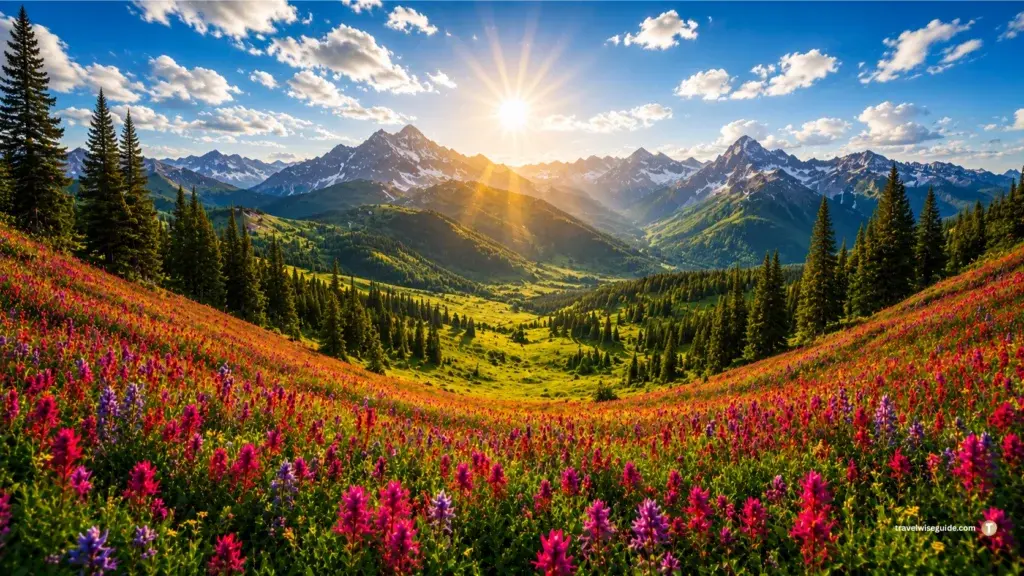
Located in Chamoli, Uttarakhand, the Valley of Flowers National Park is a high-altitude Himalayan landscape known for its alpine flowers, green meadows, waterfalls and mountain scenery. It forms part of the Nanda Devi and Valley of Flowers National Parks UNESCO World Heritage Site, recognised for its natural beauty and rich plant and wildlife.
Quick Answer: The Valley of Flowers is best visited during its open season, with the main flower abundance generally seen from July to September. Visitors usually travel to Govindghat, continue to Ghangaria and then trek into the valley. Ghangaria is the main base for accommodation and basic tourist needs, while overnight stay inside the national park is not allowed.
Expert Tip: Do not plan this trip only to see flowers. The Valley of Flowers is a Himalayan trek, so your experience also depends on weather, road conditions, fitness and proper planning.
Why Is the Valley of Flowers So Special?
The Valley of Flowers is more than a beautiful trekking destination. It is part of a protected Himalayan ecosystem with a rich variety of alpine plants and wildlife. UNESCO describes the area as an internationally important landscape with exceptional natural beauty and significant biodiversity.
The valley lies at around 3,600 metres above sea level. Official Uttarakhand Tourism information says that more than 600 species of flowers can be found in the wider park area, along with forests, streams and mountain landscapes.
What makes the experience special is that the valley changes with the season. You may see fresh greenery, different flowers, mist, clouds or clearer mountain views depending on when you visit.
This is why a Valley of Flowers travel guide should not focus on only one month. Every part of the visiting season can offer a different experience.
Best Time to Visit Valley of Flowers
According to Uttarakhand Tourism, flowers can be viewed broadly between May and October, while the maximum abundance is generally from July to September. Exact conditions can change from year to year because weather plays a major role in the Himalayan region. The Valley of Flowers is also one of India’s most popular monsoon destinations. If you are planning a wider seasonal trip, explore our Top Monsoon Destinations in India 2026: 10 Best Places to Visit for more beautiful places to visit during the monsoon.
| Period | What You Can Expect |
|---|---|
| Early season | Fresh greenery and the start of the mountain season, depending on access conditions |
| July | Lush landscapes and increasing flower abundance |
| August | Colourful flowers and beautiful monsoon scenery, but also more rain |
| September | Flowers may still be visible, with changing colours and weather |
| Late season | Conditions change quickly as the main flower season comes to an end |
Important: Always check the latest official opening status, weather forecast road situation and local advice before starting your journey. Mountain conditions can change quickly.
is the Valley of Flowers Worth Visiting Outside August?
Yes. This is exactly why travellers should look beyond a single month. July, August and September are all important parts of the main flowering period, while the beginning and end of the season can provide a different natural experience.
How to Reach the Valley of Flowers
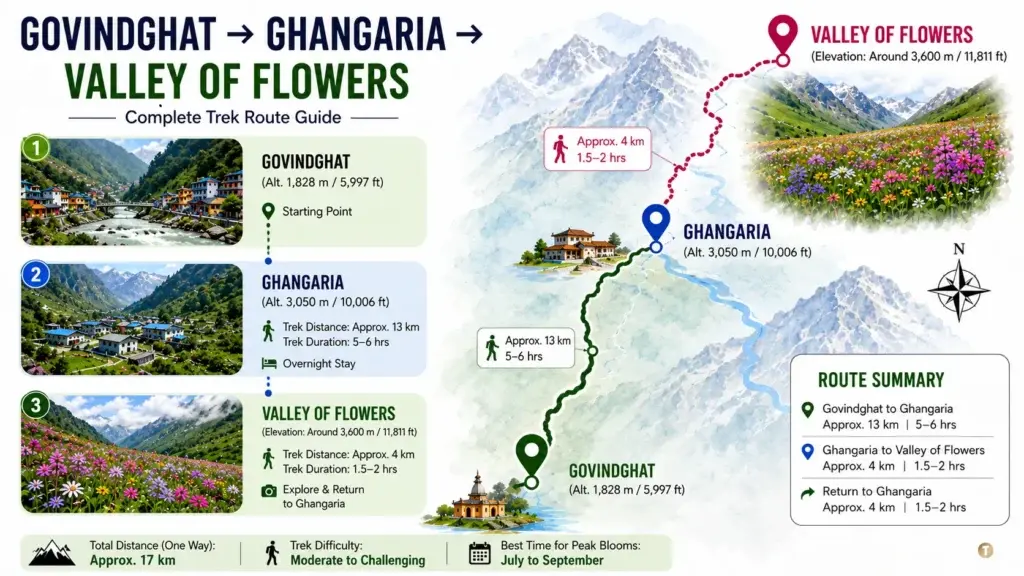
The journey usually follows this route:
Haridwar or Rishikesh → Joshimath region → Govindghat → Ghangaria → Valley of Flowers
Govindghat is an important starting point, while Ghangaria is the main base for visiting both the Valley of Flowers and Hemkund Sahib. Uttarakhand Tourism describes the route to Ghangaria as approximately 15 km from Govindghat in its trek itinerary.
From Ghangaria, the Valley of Flowers is reached on foot. The official tourism itinerary places the valley at approximately 4 km from Ghangaria, although the total walking distance can be greater depending on how far you explore inside the valley. If you are planning a longer journey through North India, you can also explore our 8-Day North India Itinerary for a practical travel plan covering some of the region’s most popular destinations.
The Expert Rule for Himalayan Travel
Never plan your mountain journey with no extra time.
Road closures, heavy rain, landslides and weather can affect travel. A good itinerary should include at least one flexible day where possible.
This is especially important if you are travelling a long distance to reach Uttarakhand.
Where Do Tourists Stay?
You cannot stay inside the Valley of Flowers National Park.
Ghangaria is the main place for tourists to stay before and after their visit. It is the last inhabited settlement on the route and acts as the base for both the Valley of Flowers and Hemkund Sahib.
Accommodation options can include hotels, guesthouses, homestays and other seasonal arrangements. Book early during busy periods because availability may become limited.
Food and Basic Needs
Ghangaria is also the main place for food and basic supplies. However, do not depend on finding everything you need on the trail.
Carry:
- Drinking water
- Light snacks
- Personal medicines
- Rain protection
- A small first-aid kit
- Phone power backup
Expert Tip: Buy or arrange important personal items before reaching the higher trekking area. Choice can be limited compared with a city.
What Tourist Facilities Are Available?
The Valley of Flowers is a protected natural area, so visitors should not expect city-style facilities.
Uttarakhand Tourism states that the trek is moderate to challenging and that ponies and porters are available on the route. Availability can depend on local conditions and demand.
| Facility or Service | What to Know |
| Accommodation | Mainly arranged around Ghangaria |
| Food | Available at main stop points and Ghangaria |
| Drinking water | Carry your own bottle and water |
| Porters | Available on the trekking route |
| Ponies | Available in suitable sections |
| Medical needs | Carry your personal medicines |
| Mobile network | Do not depend on constant connectivity |
| Toilets and rest points | Facilities may be limited and conditions can vary |
The most important point is simple: prepare before you begin the trek.
How Difficult Is the Valley of Flowers Trek?
The Valley of Flowers is not an extreme expedition, but it should not be treated like a short city walk.
Official Uttarakhand Tourism describes the trek as moderate to challenging. Your experience will depend on your fitness, weather and trail conditions.
You should be comfortable walking for several hours.
Before the Trip, Prepare Your Body
Start simple:
- Walk regularly
- Practise climbing stairs
- Build your stamina gradually
- Wear comfortable shoes before the trip
- Do not use brand-new trekking shoes for the first time on the trek
Walk at your own pace. There is no benefit in trying to finish quickly.
If you feel seriously unwell, very weak or unable to continue safely, do not force yourself. High mountain travel requires sensible decisions.
What Should You Pack?
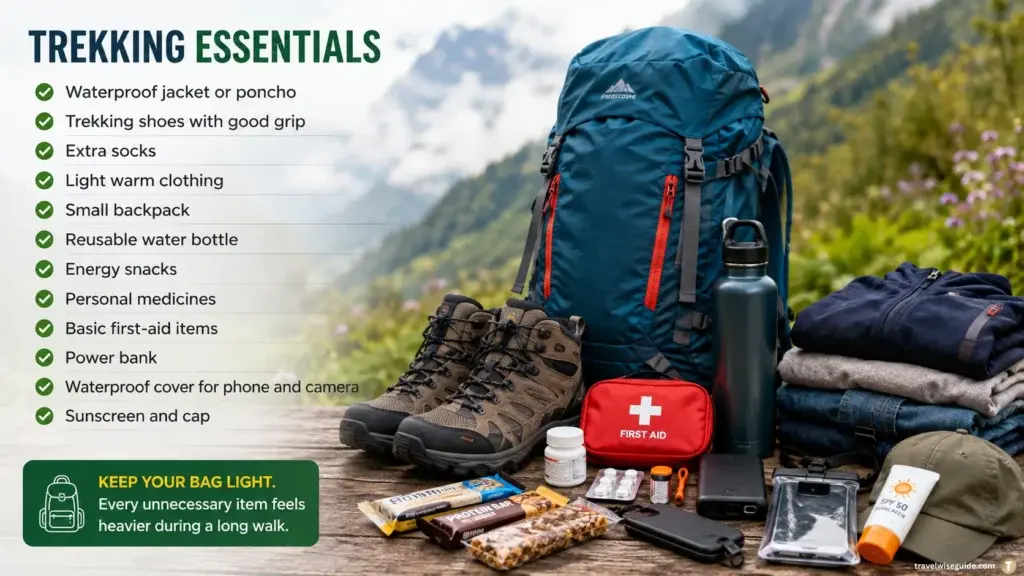
The weather can change quickly in the Himalayas, so smart packing is more useful than carrying a heavy bag.
Essential Packing List
- Waterproof jacket or poncho
- Trekking shoes with good grip
- Extra socks
- Light warm clothing
- Small backpack
- Reusable water bottle
- Energy snacks
- Personal medicines
- Basic first-aid items
- Power bank
- Waterproof cover for phone and camera
- Sunscreen and cap
Keep your bag light. Every unnecessary item feels heavier during a long walk.
Can You Stay or Camp Inside the Valley?
No. Uttarakhand Tourism states that overnight stay and camping are not allowed inside the Valley of Flowers, and visitors need to return to Ghangaria. The official tourism page also advises returning to Ghangaria by 5 pm.
This means you should start early.
A late start can create unnecessary pressure and force you to rush. Give yourself enough time to walk, enjoy the scenery and return safely.
The Most Important Rules Every Visitor Should Follow
The Valley of Flowers is a protected World Heritage landscape, not simply a place for photographs. UNESCO highlights the importance of protecting its natural habitats, plants and wildlife.
Please Do Not:
- Pick flowers
- Leave plastic or rubbish behind
- Disturb wildlife
- Walk carelessly through sensitive areas
- Ignore park rules
- Light fires where prohibited
- Enter restricted areas
- Camp inside the national park
Take photographs, leave only footprints, and let the flowers remain where they belong.
Responsible tourism helps protect the valley for future visitors.
Should You Combine Valley of Flowers With Hemkund Sahib?
Many travellers visit both because Ghangaria is the main base for the two destinations. Hemkund Sahib is a major Sikh pilgrimage site in the Garhwal Himalayas.
However, do not try to do too much in too little time.
A better plan is:
- One day: Travel and reach Ghangaria
- One day: Visit the Valley of Flowers
- One separate day: Visit Hemkund Sahib, if suitable for your fitness and schedule
- One flexible day: Keep for weather or travel delays
This gives you a safer and more enjoyable journey.
A Practical Valley of Flowers Itinerary
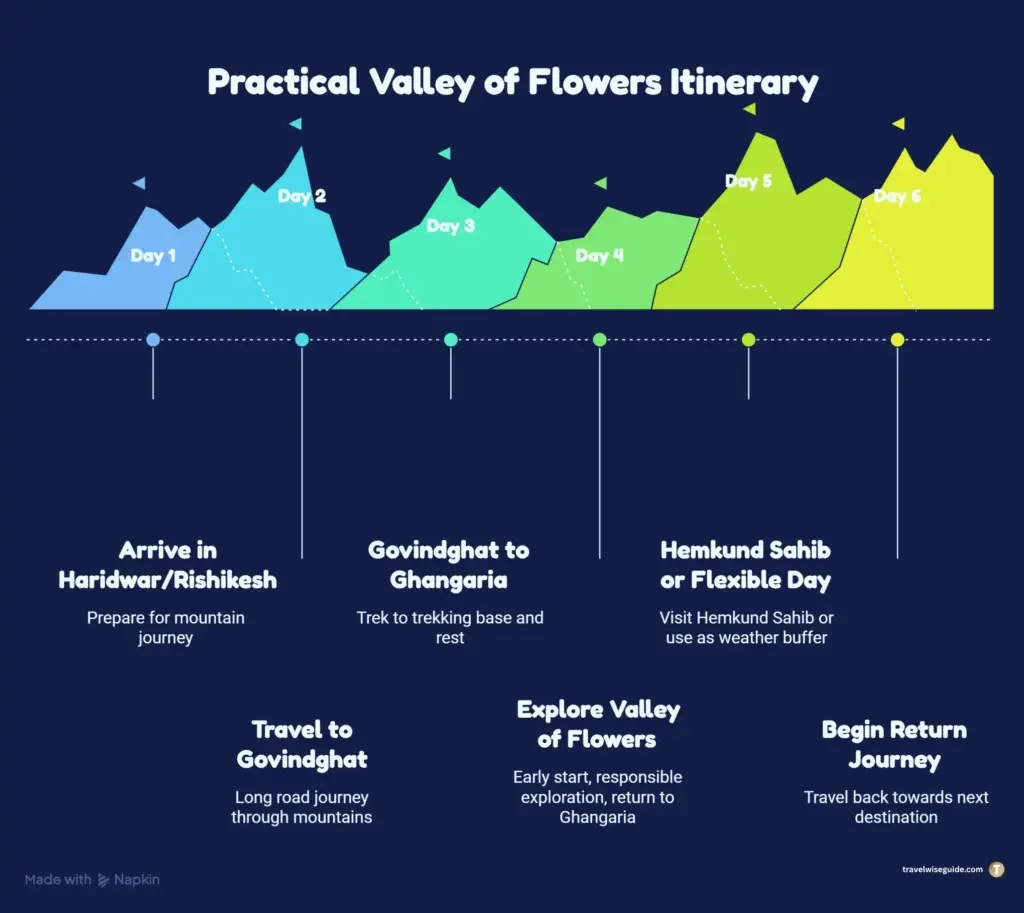
Day 1: Reach Haridwar or Rishikesh
Arrive and prepare for the mountain journey.
Day 2: Travel Towards Govindghat
Keep enough time for the long road journey through the mountains.
Day 3: Govindghat to Ghangaria
Continue towards your trekking base and rest properly.
Day 4: Visit Valley of Flowers
Start early, explore the valley responsibly and return to Ghangaria.
Day 5: Hemkund Sahib or Flexible Day
Use this day for Hemkund Sahib or keep it as a weather buffer.
Day 6: Begin Your Return Journey
Travel back towards your next destination.
This plan is only a general guide. Your final schedule should depend on current weather, access conditions and your own fitness.
Photography Tips Without Damaging Nature
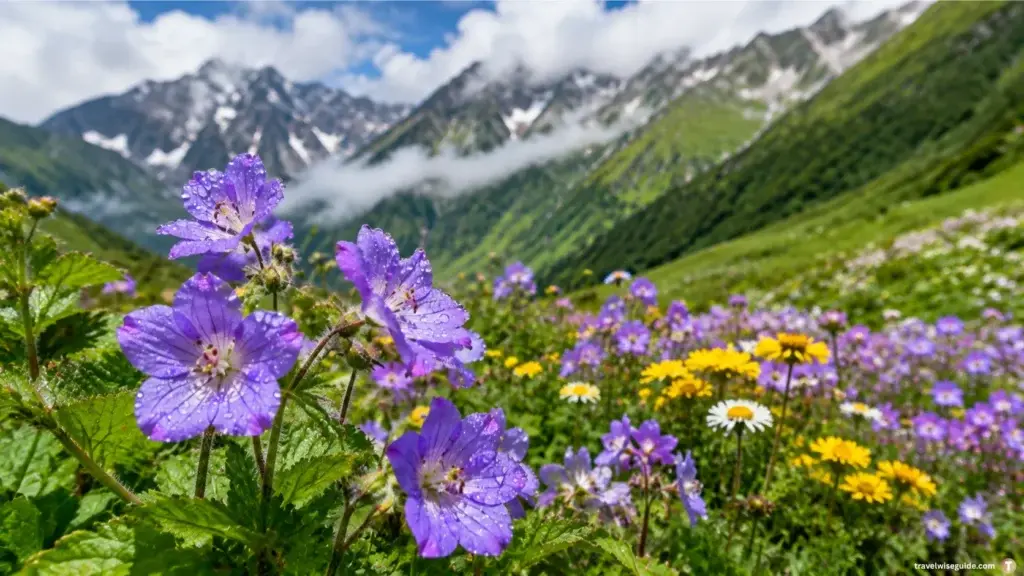
The Valley of Flowers is a dream destination for photographers, but good photography should never harm the landscape.
Follow these simple rules:
- Stay on permitted paths
- Do not step on flowers for a better photograph
- Carry rain protection for your camera
- Take both wide landscape and close-up images
- Keep a safe distance from wildlife
- Do not leave rubbish behind
Sometimes the best photograph comes when you simply stop walking and observe the valley for a few minutes.Valley of Flowers Travel Guide 2026: Best Time, Trek & Tips
FAQs About Valley of Flowers
What is the best time to visit the Valley of Flowers?
The best time to visit the Valley of Flowers is generally from July to September, when flower abundance is at its peak. August is often popular for colourful blooms, but exact flower conditions depend on rainfall, weather and seasonal changes.
How difficult is the Valley of Flowers trek?
The Valley of Flowers trek is generally considered moderate to challenging. Visitors need to walk for several hours in Himalayan conditions, and difficulty can increase because of rain, slippery trails, altitude and changing weather. Basic fitness and proper preparation are recommended.
How far is the Valley of Flowers from Ghangaria?
The Valley of Flowers is approximately 4 km from Ghangaria to the entry area, according to the official tourism itinerary. However, the total walking distance can be greater depending on how far you explore inside the valley before returning.
Can I stay or camp inside the Valley of Flowers?
No. Overnight stay and camping are not allowed inside the Valley of Flowers National Park. Visitors must return to Ghangaria, which is the main accommodation base for tourists visiting the Valley of Flowers.
Where should I stay when visiting the Valley of Flowers?
Ghangaria is the main place to stay when visiting the Valley of Flowers. Accommodation can include hotels, guesthouses, homestays and seasonal options. It is also the main base for travellers visiting Hemkund Sahib.
How many days are needed for the Valley of Flowers trip?
A practical Valley of Flowers trip usually takes around 5 to 6 days, depending on your starting point, weather and travel conditions. It is also wise to keep at least one flexible day because rain, landslides or road closures can affect Himalayan travel.
Can I visit the Valley of Flowers and Hemkund Sahib on the same trip?
Yes. Many travellers visit both because Ghangaria is the main base for the Valley of Flowers and Hemkund Sahib. However, it is better to keep separate days for each destination, especially because both involve demanding mountain travel.
What should I know before following a Valley of Flowers Travel Guide?
Before following a Valley of Flowers Travel Guide, always check the latest opening status, weather forecast, road conditions and local advice. Pack rain protection, good trekking shoes, water, medicines and warm clothing, keep your itinerary flexible and avoid treating the Himalayan journey like a fixed timetable.
Final Expert Advice Before You Visit
The biggest mistake is planning the Valley of Flowers like a fixed timetable.
Nature does not follow your travel schedule.
The flowers, clouds, rain, roads and mountain views can change from day to day. Go prepared, keep some flexibility and respect local rules.
Choose the best time based on the experience you want, rather than believing the valley is worth visiting during only one month. The main flower abundance is generally between July and September, but the wider visiting experience changes across the season.
Pack well, stay at Ghangaria, start your trek early and never take unnecessary risks for a photograph or a faster journey.
The Valley of Flowers is best enjoyed slowly.