Lakshadweep Local Life: 9 Reality Checks, Economy Facts & Shopping Guide
Last Updated on
7 March 2026
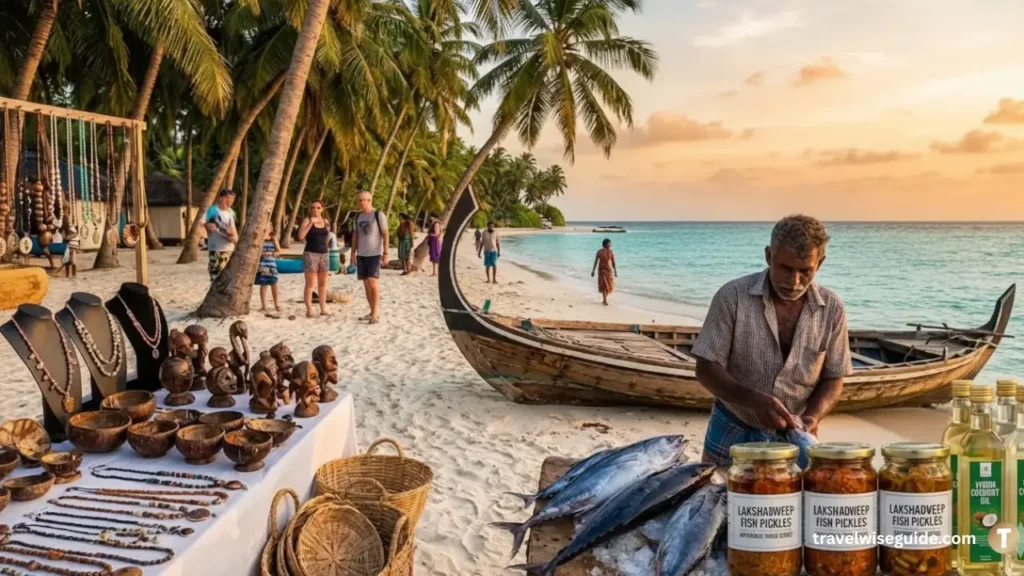


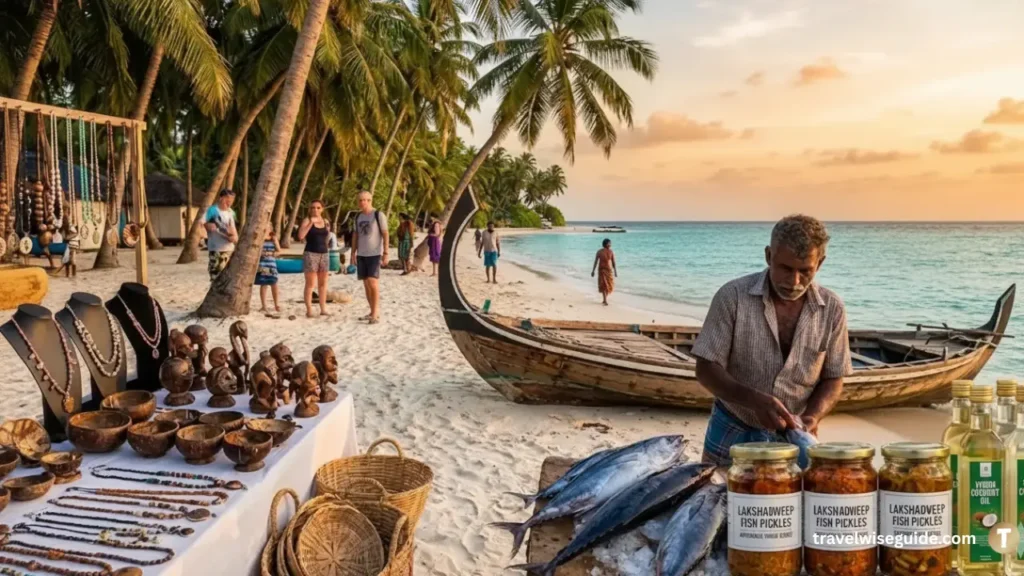
Picture this: I’m standing on Agatti’s pristine beach at dawn, watching local fishermen prepare their traditional boats for another day of sustainable tuna fishing. That’s when it hit me – Lakshadweep isn’t just a postcard destination; it’s a living, breathing ecosystem where every coconut tree tells a story of survival.
Most travellers arrive expecting Maldives-style luxury but discover something far more precious: authentic island life that’s remained unchanged for centuries. After spending weeks exploring these 36 coral atolls, I’ve uncovered nine reality checks that transform how you’ll experience Lakshadweep local life.
These insights aren’t just travel tips – they’re your gateway to understanding why this archipelago represents India’s most successful sustainable tourism model.
- Lakshadweep Travel Guide
- Lakshadweep Water Sports
- How to Reach Lakshadweep
- Lakshadweep Entry Permit Online
- 1 . The Tuna Economy: A Pillar of Lakshadweep Local Life 🐟
- 2. The Coconut Economy: Supporting Lakshadweep Local Life.🥥
- 3. The Permit Factor: A Reality Check for Lakshadweep Local Life
- 4. Cultural Blend: Exploring Lakshadweep Island Culture & Traditions 🎭
- 5. No Alcohol Policy: Respecting Authentic Lakshadweep Local Life 🍺
- 6. Island Hopping Logistics: Practical Reality of Lakshadweep Travel⛵
- 7. Authentic Shopping in Lakshadweep: Finding the Best Souvenirs 🛍️
- 8.Plastic-Free Mission: Preserving Lakshadweep Local Life & Ecosystem ♻️
- 9. Coir Craftsmanship: Traditional Products for Shopping in Lakshadweep 🧵
- Official References
- Related Posts
- FAQs About Lakshadweep Local Life
- Conclusion: Your Authentic Island Adventure Awaits 🌴
1 . The Tuna Economy: A Pillar of Lakshadweep Local Life 🐟
As I observed the bustling local markets and the rhythm of the islands, it became clear that life here truly revolves around the ocean and the tuna. The driving force behind the multi-crore Lakshadweep economy is a remarkable, centuries-old technique that defies modern industrial norms
The Pole and Line Revolution: Key Lakshadweep Economy Facts
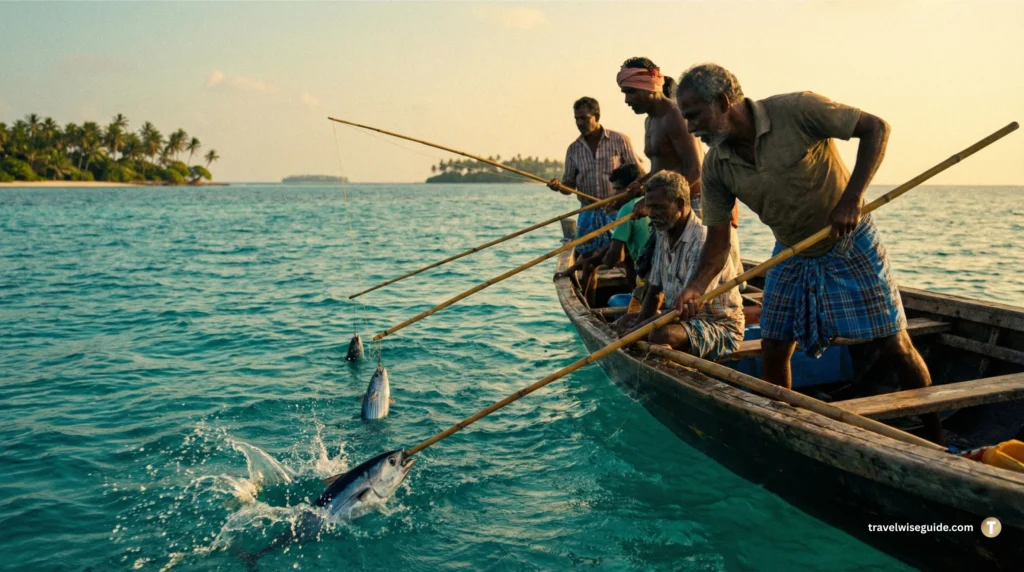
Walking through Minicoy’s fish market at 6 AM, I witnessed something extraordinary. Local fishermen were sorting through their catch using a method that’s 500 years old yet more environmentally conscious than modern techniques.
Lakshadweep’s tuna fishing industry operates on the ‘pole and line’ method. In this method, each fisherman holds a long wooden or bamboo pole with a short fishing line and a barbless hook attached. This ensures the fish can be removed easily without injury, and more importantly, there are no nets and no by-catch—just skilled fishermen and their poles.
This traditional approach highlights some of the most impressive Lakshadweep economy facts:
- Generates ₹200 crores annually from skipjack tuna exports.
- Employs over 8,000 islanders directly in fishing activities.
- Maintains zero impact on coral reef ecosystems.
- Supplies 70% of India’s canned tuna requirements.
During my conversation with Abdul Kalam, a third-generation fisherman from Kadmat, he explained: “Our grandfathers taught us that the ocean gives only when you take respectfully.” It’s a powerful reminder that in Lakshadweep local life, tradition and profit can go hand-in-hand.
2. The Coconut Economy: Supporting Lakshadweep Local Life.🥥
While the turquoise waters are the first thing you notice, the real backbone of the Lakshadweep economy stands tall on the land. I quickly realised that these palms are far more than just a scenic backdrop; they are the financial lifelines for every island household.
Beyond Tropical Aesthetics
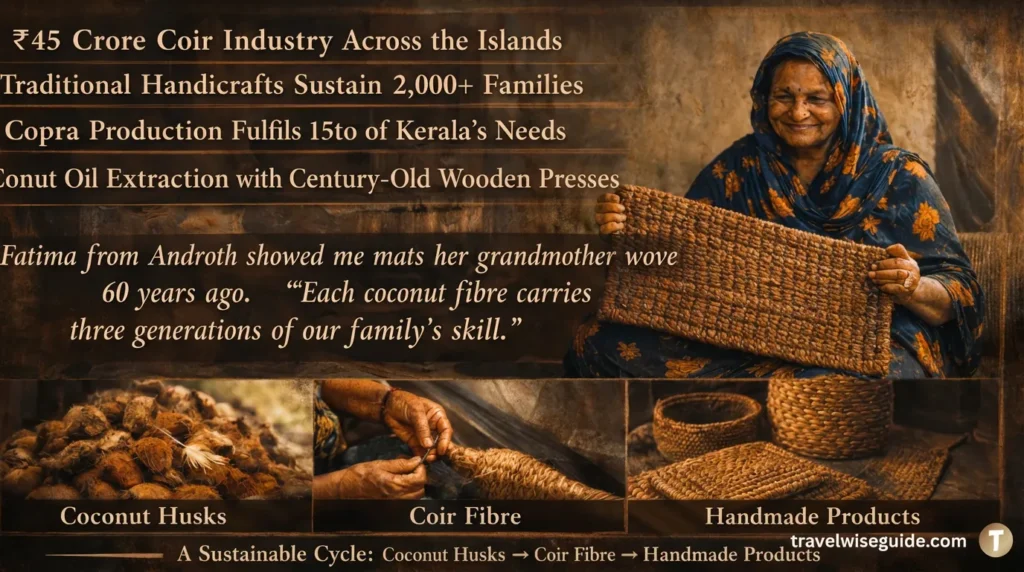
Every coconut palm in Lakshadweep is a multi-generational investment. I discovered this while visiting a coir manufacturing unit in Kalpeni, where three generations of the same family work together processing coconut fibre. This is a vital part of the Lakshadweep local life, where the “Tree of Life” provides more than just shade.
The coconut economy supports:
- Coir industry worth ₹45 crores annually across the islands.
- Traditional handicrafts providing income to 2,000+ families.
- Copra production meeting 15% of Kerala’s requirements.
- Coconut oil extraction using century-old wooden presses.
Fatima, a coir artisan from Androth, showed me mats her grandmother wove 60 years ago – still in perfect condition. She explained: “Each coconut fibre carries three generations of our family’s skill.” The sustainable cycle: Coconut husks → Coir fibre → Handmade products → Best souvenirs for shopping in Lakshadweep that support local families.
3. The Permit Factor: A Reality Check for Lakshadweep Local Life
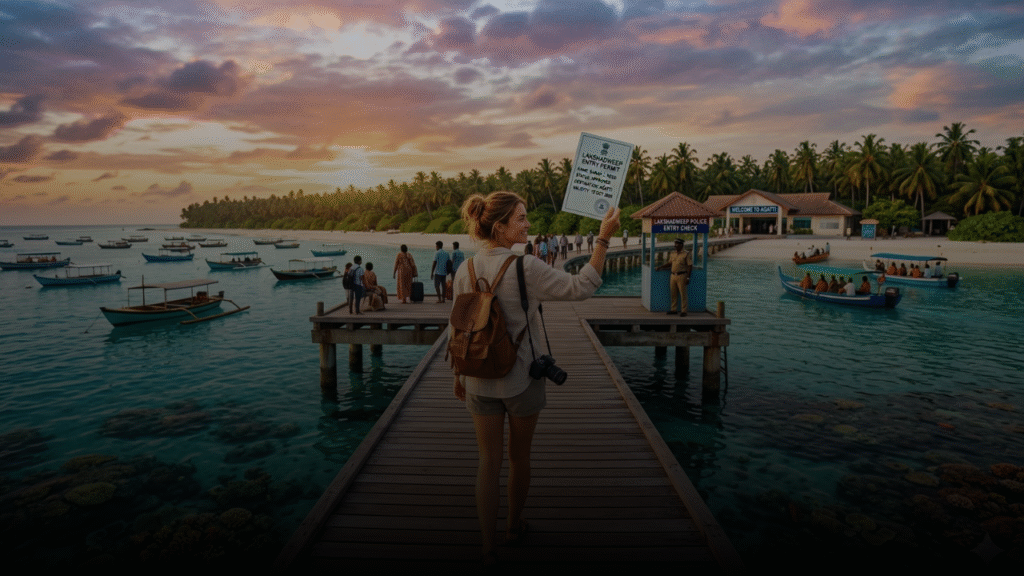
If you think a flight ticket is all you need to witness Lakshadweep local life, think again. I soon discovered that the archipelago’s commitment to preservation starts long before you set foot on its coral sands, governed by a gatekeeping system that is as strict as it is necessary.
Entry Isn’t Guaranteed
Here’s what tourism websites won’t tell you: getting to Lakshadweep requires more paperwork than international travel. I learned this the hard way during my first visit attempt. This strict entry system is a key part of maintaining the Lakshadweep local life and its fragile ecosystem.
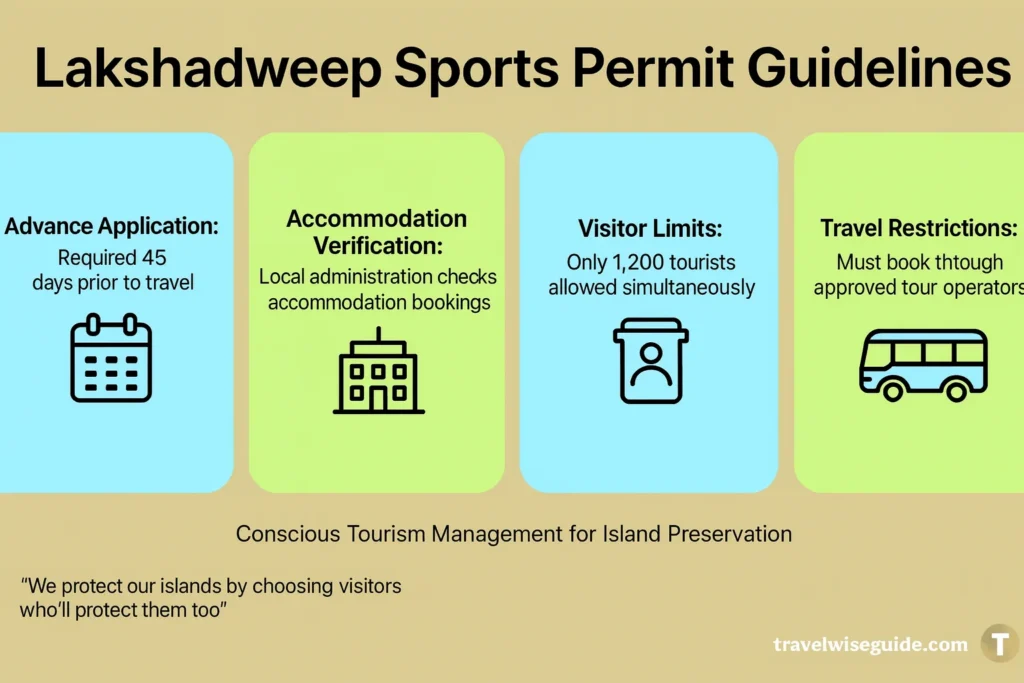
The permit process reality:
- SPORTS Permits: Required 45 days in advance through the official channel.
- Verification: Local administration checks your accommodation bookings strictly.
- Strict Limits: Only about 1,200 tourists are allowed across the islands at once.
- No Independent Travel: You must book through approved tour operators.
This isn’t bureaucratic inconvenience – it’s conscious tourism management. During my permit interview, the administrator explained: “We protect our islands by choosing visitors who’ll protect them too.” This system ensures that your visit remains an exclusive experience rather than a crowded tourist trap.
4. Cultural Blend: Exploring Lakshadweep Island Culture & Traditions 🎭
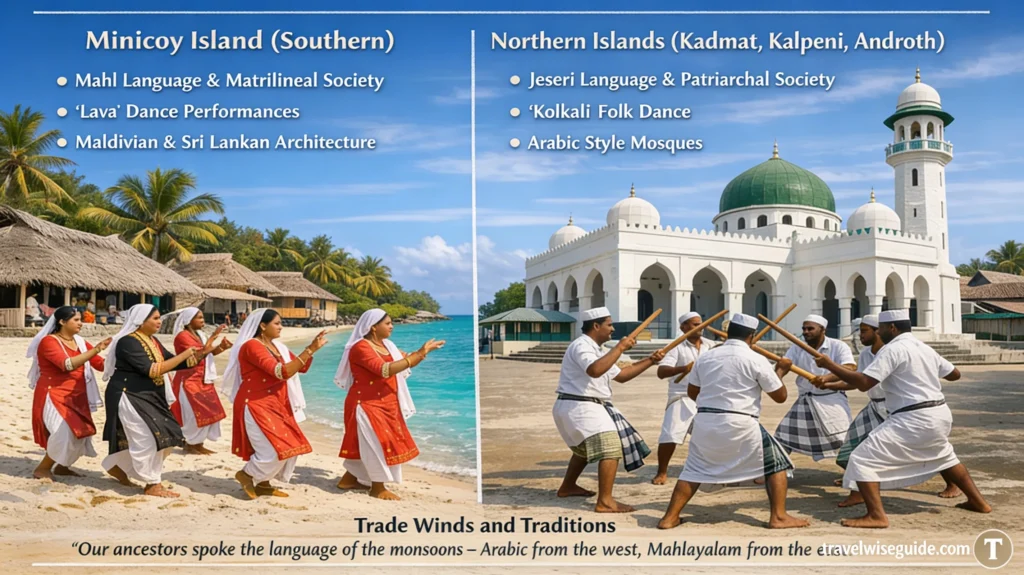
As I travelled between the atolls, I was surprised to find that the “local” experience changes almost as frequently as the tides. My journey through the island hopping culture of this archipelago revealed a fascinating tapestry of traditions that vary significantly from the north to the south.
Island Hopping Culture: Discovering Lakshadweep Local Life Across Atolls.
Standing in Minicoy’s cultural centre, listening to Mahl language songs, I realised Lakshadweep isn’t culturally uniform. Each island cluster has distinct identities shaped by historical trade routes.
The fascinating cultural divide:
Minicoy Island (Southern): • Mahl language (similar to Maldivian Dhivehi) • Matrilineal society with unique inheritance customs • Traditional ‘Lava’ dance performances during festivals • Architectural influence from Maldives and Sri Lanka
Northern Islands (Kadmat, Kalpeni, Androth): • Jeseri language (Malayalam influence) • Patriarchal social structure • ‘Kolkali’ folk performances during celebrations • Arabic architectural elements in mosques
During my island hopping culture exploration, I witnessed how trade winds shaped traditions. A local historian in Kavaratti explained: “Our ancestors spoke the language of the monsoons – Arabic from the west, Malayalam from the east.”xxxxx
5. No Alcohol Policy: Respecting Authentic Lakshadweep Local Life 🍺
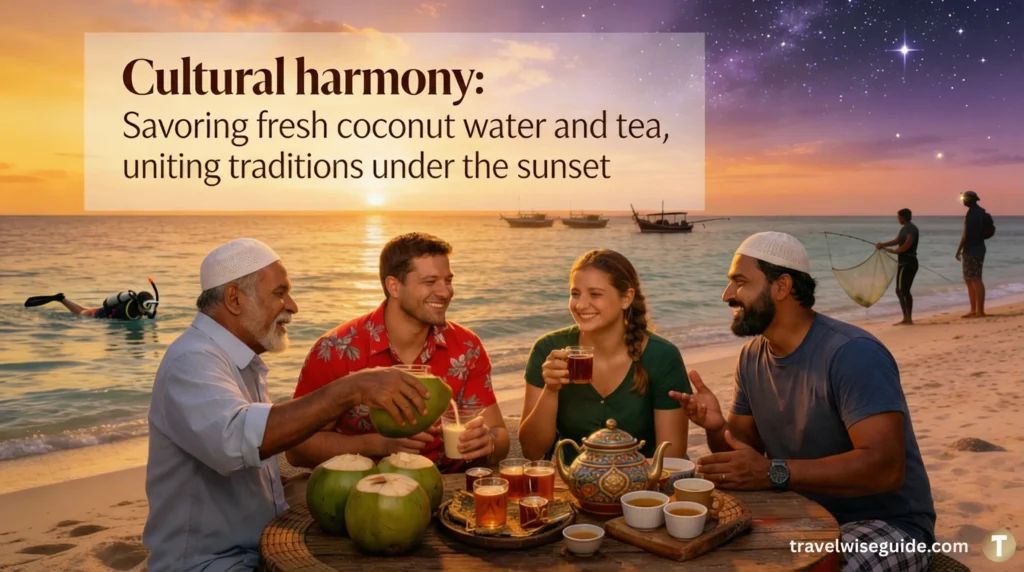
One of the most significant aspects of Lakshadweep local life is the deep-rooted respect for heritage that dictates the island’s social atmosphere. I quickly found that while the bars are absent, the spirit of the islands is more vibrant than any cocktail lounge could ever be.
Dry Islands, Rich Experiences
My first evening in Bangaram, I watched sunset celebrations powered by fresh coconut water and traditional tea. The absence of alcohol isn’t restriction – it’s cultural preservation.
The reality behind the policy:
• 100% Muslim population follows Islamic traditions respectfully • Community harmony maintained through shared cultural values • Traditional beverages like ‘kallu’ (palm wine) available during specific festivals • Focus shifts to natural highs: snorkelling, fishing, stargazing
Ahmed, my guide from Agatti, shared: “Tourists often worry about no alcohol, but then discover they’re naturally intoxicated by the coral gardens.”
Unexpected benefit: Crystal-clear morning dives without hangovers, making every snorkelling session more vivid and memorable.
6. Island Hopping Logistics: Practical Reality of Lakshadweep Travel⛵
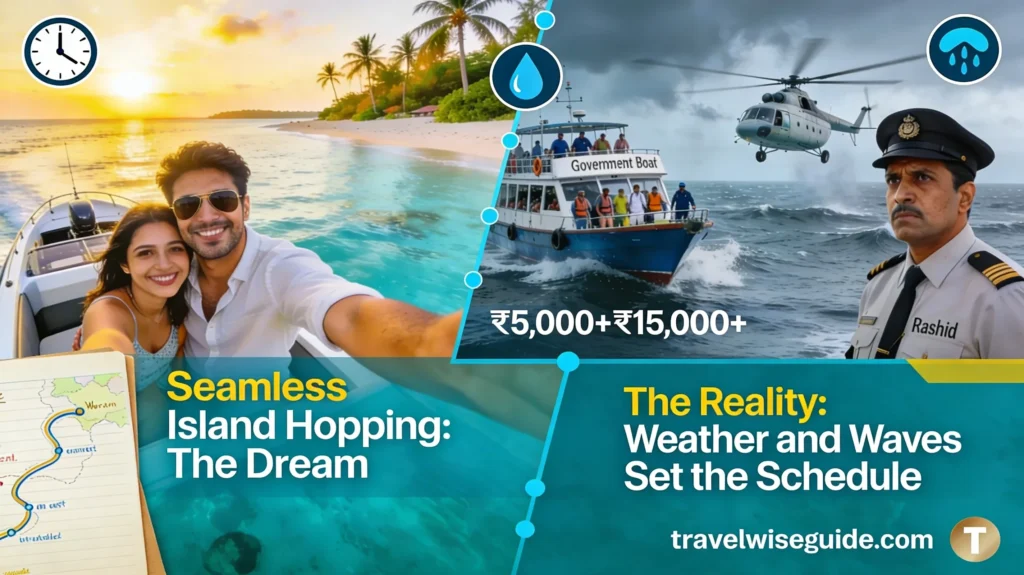
While many dream of drifting effortlessly between atolls, the actual Lakshadweep island culture of travel is governed entirely by the whims of the Arabian Sea. My own journey taught me that moving from one coral paradise to the next is less about following a digital clock and more about synchronising with the tides.
Romantic Expectations vs. Practical Reality
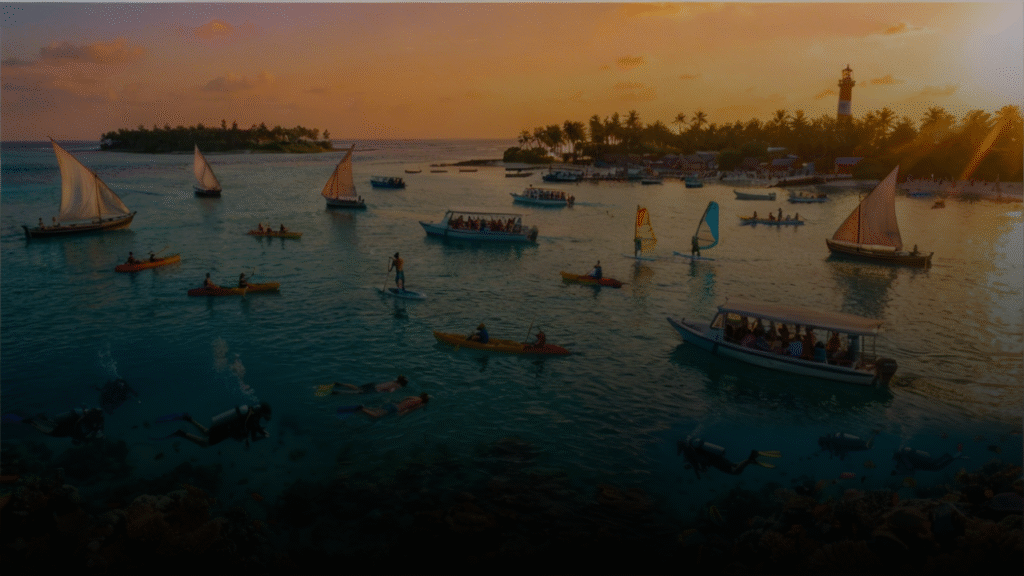
Promotional videos show seamless island hopping, but real logistics involve weather windows, tide timings, and mechanical realities. I learned this during a 4-hour delayed transfer from Kavaratti to Kalpeni.
The transportation truth:
• Helicopter services: Weather dependent, ₹5,000+ per trip • Government boats: Scheduled but often delayed by rough seas • Private speedboats: Expensive (₹15,000+ for day trips) • Traditional boats: Authentic but 3-4 hour journeys between islands
Monsoon reality (May-September): Rough seas limit inter-island travel to helicopter-only options, significantly increasing costs.
Captain Rashid from the government boat service explained: “The Arabian Sea decides our schedule, not our timetables.”
Planning tip: Build flexibility into your itinerary – the ocean’s moods become part of your adventure story.
7. Authentic Shopping in Lakshadweep: Finding the Best Souvenirs 🛍️
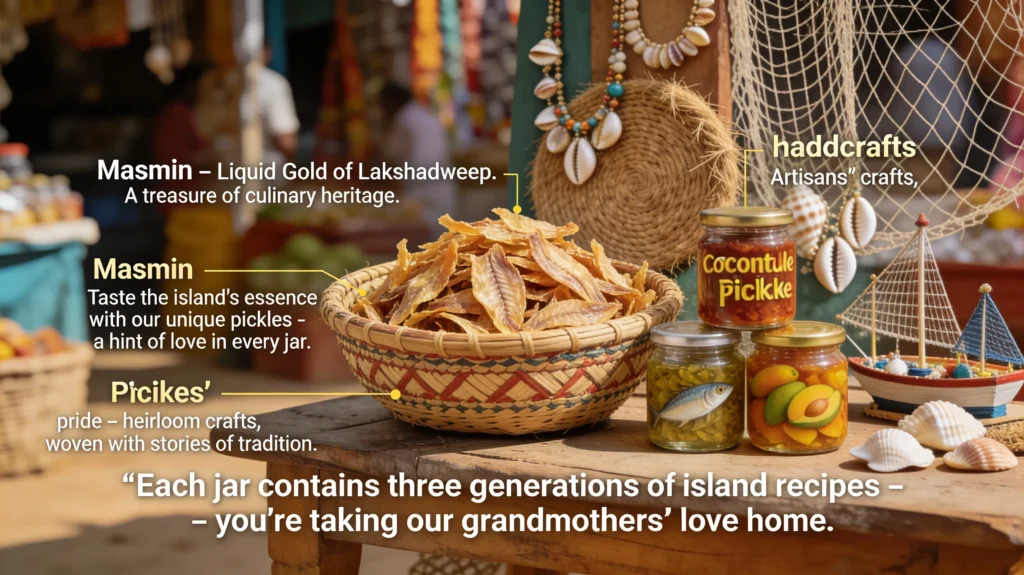
As I wandered through the narrow lanes of Androth, I realised that the most meaningful keepsakes aren’t found in shiny gift shops. To truly take a piece of the islands home, you have to look for the best souvenirs from Lakshadweep that carry the scent of the sea and the warmth of the local kitchen.
Beyond Typical Tourist Trinkets
In Androth’s local market, I discovered masmin – sun-dried tuna flakes that locals consider liquid gold. This isn’t just preserved fish; it’s culinary heritage you can take home.
Authentic Lakshadweep souvenirs:
Masmin (Dried Tuna): • Traditional preservation technique using solar drying • 6-month shelf life without refrigeration • Protein-rich addition to curries and rice dishes • Directly supports fishing families economically
Traditional Pickles: • Coconut pickle (nariyal achar) with island spices • Fish pickle using local tuna varieties • Mango pickle from island-grown raw mangoes
Local handicrafts with stories: • Coir mats woven by Kalpeni artisans • Shell jewellery crafted by Minicoy women • Traditional fishing nets (miniature versions)
Amina, a pickle maker from Kadmat, shared her secret: “Each jar contains three generations of island recipes – you’re taking our grandmothers’ love home.”
8.Plastic-Free Mission: Preserving Lakshadweep Local Life & Ecosystem ♻️
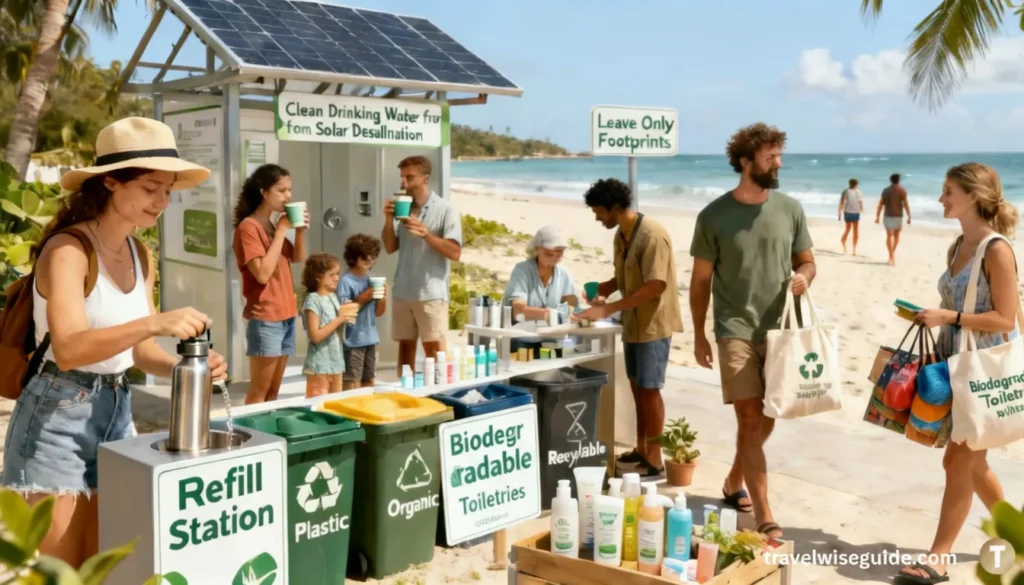
As I spent more time observing the rhythms of Lakshadweep local life, I noticed a refreshing absence of the litter that plagues so many global coastlines. It became clear that the pristine beauty of these shores is no accident, but the result of a pioneering commitment to the environment.
Islands Leading India’s Green Revolution
Walking across Bangaram beach, I was struck by something missing – plastic waste. Lakshadweep has implemented India’s most successful plastic-free tourism model.
The green reality:
• Complete ban on plastic bottles since 2018 • Mandatory eco-friendly packaging for all tourist supplies • Solar-powered desalination plants providing clean drinking water • Waste segregation training for every tourist group
What this means for travellers: • Carry steel water bottles (refill stations available) • Biodegradable toiletries only • Cloth bags for shopping and beach activities • Leave only footprints isn’t a slogan – it’s enforced policy
Dr. Rajesh Kumar, the archipelago’s environmental officer, told me: “We’re not just protecting coral reefs – we’re proving sustainable tourism generates better revenue than plastic convenience.”
Economic impact: Eco-tourism premium allows islanders to earn 40% more than conventional tourism destinations.
9. Coir Craftsmanship: Traditional Products for Shopping in Lakshadweep 🧵
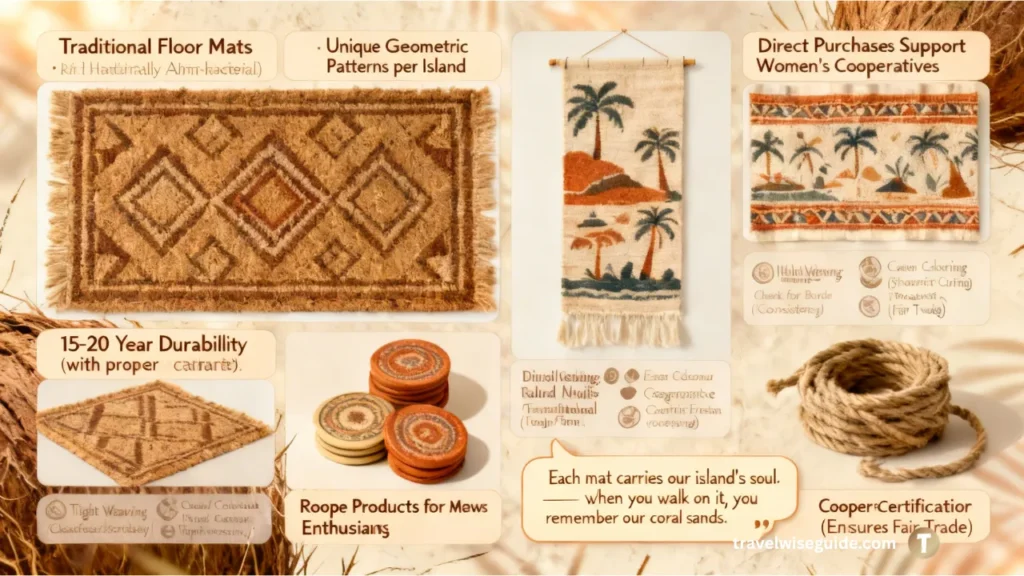
During my final days in Kalpeni, I was drawn to the rhythmic humming of the local workshops, where the true soul of the Lakshadweep economy is woven by hand. I discovered that the most durable and culturally rich of all the best souvenirs from Lakshadweep are born from the humble coconut husk, transformed through incredible patience and skill.
The Art of Coconut Fibre Mastery
In Kalpeni’s coir cooperative, I watched Zainab create intricate floor mats using techniques her great-grandmother taught her. Each piece represents 15-20 hours of skilled handwork – making these genuinely best souvenirs from Lakshadweep.
Coir craftsmanship varieties:
Traditional Floor Mats: • Hand-woven using coconut coir (naturally anti-bacterial) • Geometric patterns specific to each island • Durability of 15-20 years with proper care • Direct purchase supports women’s cooperatives
Decorative Items: • Wall hangings featuring island motifs • Table runners with traditional borders • Coasters sets perfect for gifting • Rope products for maritime enthusiasts
Quality indicators: • Tight weaving (check border consistency) • Natural coconut fragrance (indicates fresh processing) • Even colouring (shows proper curing) • Cooperative certification (ensures fair trade)
Zainab explained: “Each mat carries our island’s soul – when you walk on it, you remember our coral sands
Official References
1. Lakshadweep Shipping & Inter-Island Connectivity Portal
- What to look for: This is the most important site for “Reality Check #1” (How to get from one island to another). You can find the schedules for high-speed ferries and inter-island vessels that connect the inhabited islands.
- Link: https://lakshadweep.irctc.co.in/
2. Lakshadweep Administration – Local Culture & Prohibition Rules
- What to look for: This section provides official information on the “No Alcohol” policy and the Islamic cultural blend of the islands. It helps tourists understand the local laws and dress codes to ensure they respect the community.
- Link: https://lakshadweep.gov.in/about-lakshadweep
3. Department of Industries (Lakshadweep Souvenirs & Economy)
- What to look for: To learn about the “Tuna and Coconut Economy,” this site offers details on the local coir (coconut fibre) and tuna canning industries. It is the best place to find information on authentic, locally-made handicrafts and souvenirs.
- Link: https://lakshadweep.gov.in/departments/industries/
4. Lakshadweep Co-operative Marketing Federation (LCMF)
- What to look for: This is the official body that handles the marketing of local produce. Tourists can use this to identify where to buy genuine “Mass Min” (dried tuna) and high-quality coconut products directly from the islanders.
- Link: https://lakshadweep.gov.in/service/lcmf/
Related Posts
- Ladakh Culture: 15+ Rare Foods|Untold Secrets Revealed
- Monasteries, festivals , 15 authentic dishes, shopping guide, technology , economy, homestay
- https://travelwiseguide.com/ladakh-culture-food-local-life-guide/
2. Travel Terms Meaning: 20 Expert Secrets to Save Thousands
- Decoding flight connection, accommodation mastery , decoding hotel meal plan , master hotel timings .
- https://travelwiseguide.com/travel-terms-meaning-secrets/
FAQs About Lakshadweep Local Life
Is Lakshadweep safe for solo travelers, especially regarding local transport?
Yes, Lakshadweep is exceptionally safe for solo travelers due to its close-knit community and strict permit system. During my weeks exploring the 36 atolls, I noticed that crime is virtually non-existent. However, the real “safety” concern is transport; always verify your boat timings with the local port officer, as the Arabian Sea’s tides can change schedules instantly.
Can I buy alcohol in Lakshadweep as a tourist?
No, Lakshadweep is a ‘dry’ territory, and alcohol is strictly prohibited on all inhabited islands to respect local Islamic traditions. The only exception is the tourist resort on Bangaram Island, which has a bar license. Pro-tip: Instead of looking for a drink, try the fresh ‘Neera’ (sweet coconut nectar) at Agatti’s morning market for a natural island high.
What are the best souvenirs to buy from Lakshadweep that support the local economy?
For an authentic experience, focus on products that drive the Lakshadweep economy. The top 3 souvenirs are:
Masmin: Traditional sun-dried smoke-cured tuna (lasts 6 months).
Hand-woven Coir Mats: Durable mats made by women’s cooperatives in Kalpeni.
Coconut Shell Handicrafts: Intricate jewelry boxes and spoons from Minicoy.
Agatti vs. Bangaram: Which island is better for a first-time visitor?
It depends on your vibe: Agatti is best for experiencing “Lakshadweep Local Life” and budget-friendly stays, while Bangaram is ideal for luxury, privacy, and water sports. If you want to see how the tuna economy works and interact with locals, stay in Agatti. If you want a secluded Maldives-style resort feel, head to Bangaram.
How strictly are ferry timings followed for island hopping in Lakshadweep?
Ferry timings in Lakshadweep are governed by ‘Sea Time,’ meaning they are highly dependent on weather and tides. While there is a fixed schedule, delays of 1-3 hours are common. Captain Rashid from the government boat service advised me: “Never book a return flight on the same day you’re traveling between islands.” Always keep a buffer day.
Is the internet (Wi-Fi) reliable for remote work in Lakshadweep?
Digital connectivity is limited; BSNL and Airtel are the only reliable networks, and speeds are mostly restricted to 2G/3G. While Kavaratti and Agatti have better signals, don’t expect to attend high-def Zoom calls. It’s the perfect place for a digital detox, so finish your important blog uploads before you sail!
. What is the ‘Pole and Line’ fishing method I see in Lakshadweep?
This is a 500-year-old sustainable tuna fishing technique where no nets are used. Local fishermen use bamboo poles and barbless hooks to catch fish one by one. This method ensures zero by-catch (no dolphins or turtles are harmed), making Lakshadweep’s tuna exports worth ₹200 crores some of the most eco-friendly in the world.
What should I pack for a trip to Minicoy in December?
Since it’s a matrilineal society with deep Islamic roots, modest dressing is essential.
Clothing: Light cotton clothes, but avoid bikinis/short-shorts in local village areas.
Essentials: A sturdy steel water bottle (Lakshadweep is a plastic-free zone) and high-SPF reef-safe sunscreen.
Cash: Carry enough cash as ATMs in Minicoy often run out or don’t accept certain cards.
Conclusion: Your Authentic Island Adventure Awaits 🌴
These nine reality checks of Lakshadweep local life transformed my understanding of sustainable tourism. What began as a search for pristine beaches became a discovery of India’s most successful eco-tourism model.
Your authentic experience includes: • Supporting traditional fishing families through responsible tourism • Purchasing handmade souvenirs that fund local cooperatives
• Experiencing cultural diversity across different island communities • Participating in plastic-free living that protects coral ecosystems • Understanding permit systems that preserve island authenticity
The Lakshadweep economy insights reveal a profound truth: sustainable practices generate better long-term revenue than exploitative tourism. Every tuna fisherman, coir artisan, and cultural performer you meet is part of this success story.
When you return home with masmin, coir handicrafts, and stories of island hopping culture, you’re carrying more than souvenirs – you’re ambassadors for responsible travel that proves conservation and commerce can coexist beautifully.
Your journey to Lakshadweep isn’t just a vacation; it’s a masterclass in sustainable living that India’s coral paradise has perfected over centuries.