
Living Root Bridges in Meghalaya – Ultimate Guide 2025
The Living Root Bridges in Meghalaya are one of India’s most magical wonders – bridges that are not built but grown . In the “Abode of Clouds”, these bridges made from the aerial roots of the Ficus elastica tree showcase how humans and nature can work together in perfect harmony.
For centuries, the Khasi and Jaintia tribes have trained the roots to grow across rivers and streams, creating living structures that last over 500 years. Today, the Living Root Bridges in Meghalaya are not only vital for local communities but also one of the state’s most iconic tourist attractions.
What Are Living Root Bridges in Meghalaya?
The Living Root Bridges in Meghalaya are natural bridges made by guiding the aerial roots of rubber fig trees across rivers until they intertwine and strengthen.
- Age: Some are more than 100–500 years old.
- Builders: Traditionally created by the Khasi and Jaintia tribes.
- Purpose: Provide safe crossings during heavy monsoons when bamboo bridges would wash away.
- Sustainability: Unlike man-made bridges, these structures grow stronger with time.
👉 Did you know? The Living Root Bridges in Meghalaya are considered “living architecture” and are on the UNESCO tentative World Heritage Site list.
Historical & Cultural Importance of Living Root Bridges
these living root bridges are pride of the peoples of Meghalaya cause is
- Symbols of patience and cooperation – taking 15–30 years to form.
- Cultural icons – deeply tied to Khasi and Jaintia traditions.
- Globally recognised – UNESCO’s tentative list adds heritage value.
- Tourist magnets – the most photographed eco-tourism attractions in Meghalaya.
Famous Living Root Bridges in Meghalaya
1. Nongriat Double-Decker Root Bridge (East Khasi Hills)
- Type: World’s only double-decker living root bridge.
- Length: ~50 metres
- Age: ~200 years
- Trek: ~3,500 steps from Tyrna village
- Special: The crown jewel of eco-tourism in Meghalaya.
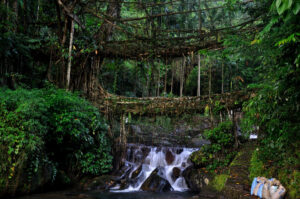
2. Riwai Root Bridge (Near Mawlynnong)
- Easy to access, only 15–20 minutes from Mawlynnong (Asia’s Cleanest Village).
- Perfect for beginners.
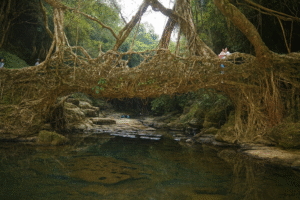
3. Rangthylliang Root Bridge
- The longest living root bridge in Meghalaya (~50+ metres).
- Surrounded by waterfalls, making it a trekker’s delight.
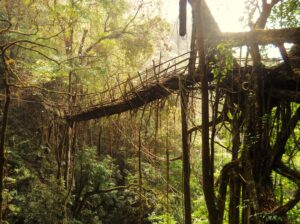
4. Umshiang Double Root Bridge (Nongriat)
- ~180 years old, ~45 metres long.
- Famous for the adventurous 6,500-step trek.
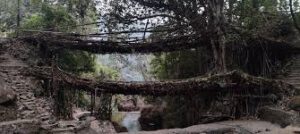
5. Padu Root Bridge (West Jaintia Hills)
- Unique double-span bridge side by side.
- Still actively used by villagers.
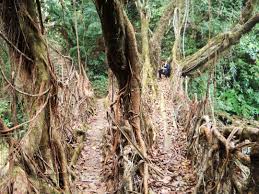
6. Nongbareh Root Bridge (West Jaintia Hills)
- Hidden gem, surrounded by dense forests.
- Less crowded, offering an authentic experience.
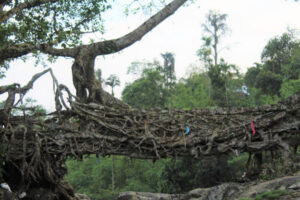
7. Laitkynsew Root Bridge (East Khasi Hills)
- Locally known as Jingkieng Deingjri.
- Over 100 years old, connecting farmlands.
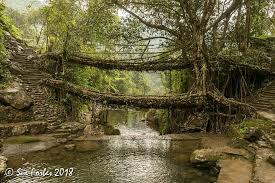
Would you like to visit Best Glass Bridges in India too, Click Here
Reaching to Living Root Bridges in Meghalaya
- By Air: Airport in Shilong which is (30 km) away or Airport in Guwahati which is (120 km)away
- By Rail: you can reach there by train railway station is at Guwahati
- By Road:
- Guwahati → Shillong: 100 km (3 hrs)
- Shillong → Cherrapunji: 55 km (2 hrs)
- Tyrna village → Base point for Nongriat trek.
Best Time to Visit Living Root Bridges in Meghalaya
- Winter (Nov–Feb): Best season – cool and pleasant (10–20°C).
- Summer (Mar–May): Warm, but trekking is comfortable.
- Monsoon (Jun–Sep): Bridges look lush and green, but paths are slippery.

👉 Recommended: November to February
Travel Tips for Exploring Living Root Bridges in Meghalaya
✅ Keep snacks water raincoat last but not the least trekking shoes
✅ Hire a local guide for safety and cultural insights.
✅ Respect nature – take back your waste.
❌ Don’t damage or cut the roots.
❌ Avoid overcrowding or loud music.
Conservation & Challenges of Living Root Bridges in Meghalaya
The Living Root Bridges in Meghalaya face both opportunities and threats:
- Efforts: Maintained by villagers, supported by eco-tourism groups, and recognised by UNESCO.
- Challenges: Over-tourism, climate change, and lack of awareness.
By travelling responsibly, every visitor plays a role in protecting these bridges for future generations.
To know more visit Meghalaya Tourism website
FAQs about Living Root Bridges in Meghalaya
Q1. Number of living root bridges in Meghalaya?
Over 100, mostly in Khasi and Jaintia Hills.
Q2. Which is the most famous living root bridge?
The Nongriat Double-Decker Root Bridge.
Q3. How long is the Nongriat trek?
2–3 hours (~3,500 steps one way).
Q4. Are the root bridges safe?
Yes, but be cautious during monsoon.
Q5. Are they natural or man-made?
They are bio-engineered – roots are guided by humans.
Final Thoughts to visit to Living Root Bridges in Meghalaya
The Living Root Bridges in Meghalaya are not just crossings – they are living monuments of sustainability, patience, and harmony with nature. Whether you trek to the legendary Nongriat Double-Decker or wander through hidden bridges in Jaintia Hills, each one tells a story of resilience and eco-wisdom.
Visiting them in 2025 is more than a trip – it’s a reminder that the best architecture is sometimes the one that grows.








Very nice blog written I was planning to there. My all queries are resolved now