Varanasi Travel Guide 2025: Famous Ghats, Ganga Aarti & Sacred Vibes
Last Updated on
29/12/2025
This Varanasi Travel Guide 2025 presents a complete and practical overview of one of India’s oldest living cities, where spirituality, history, and everyday life continue along the banks of the River Ganga. From sacred ghats and temples to festivals, food, and itineraries, this guide helps travellers understand Varanasi beyond surface sightseeing.
As part of our wider India Travel Guide, this article places Varanasi within the broader cultural and geographic landscape of India, making trip planning easier for both first-time and returning visitors
At a Glance – Varanasi Travel
Average Daily Budget: ₹2,000–₹5,000 (budget stay & local food) | ₹6,000+ (mid-range & luxury).
Best Months to Visit: October to March (pleasant winter weather, festivals like Dev Deepawali & Mahashivratri).
Ideal Trip Length: 2–3 days (explore ghats, temples, Sarnath & Ramnagar Fort).
- At a Glance – Varanasi Travel
- Why Varanasi is the Ultimate Spiritual Capital of India
- Mythological & Spiritual Significance
- Walking Through Time:The Legacy of Varanasi
- Kashi Vishwanath Corridor – The Grand Gateway of Varanasi
- Sacred Temples of Varanasi
- Ghats of Varanasi – The living Soul of the City
- Ganga Aarti – The Sacred Evening Ritual of Varanasi
- Major Festivals of Varanasi
- Getting to and Moving Around Varanasi
- Best Time to Visit Varanasi
- Varanasi Travel Guide 2025 — Ghats, Ganga Aarti & 3-Day Itinerary
- 3-Day Varanasi Itinerary – Quick Snapshot
- Food & Street Cuisine of Varanasi
- Souvenirs to Take Home from Varanasi
- Safety & Travel Tips for Varanasi
- Where to Stay in Varanasi
- Excursions Around Varanasi
- Conclusion – Experiencing the Essence of Varanasi
- Official Reference
- Related Posts
- FAQs About Varanasi Travel Guide
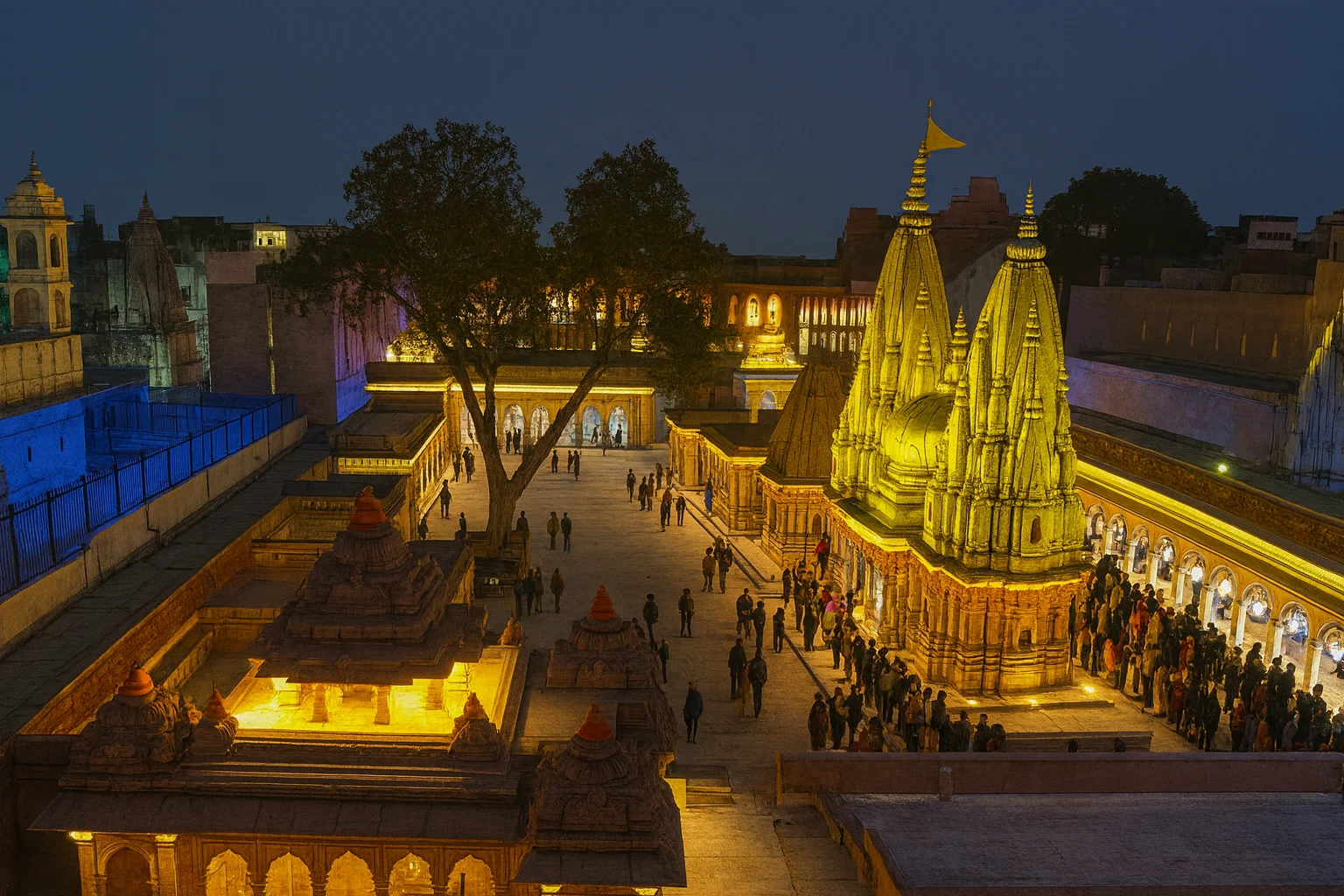
Why Varanasi is the Ultimate Spiritual Capital of India
Varanasi, also known as Kashi or Banaras, is not just a city—it is an emotion, a timeless journey. Often described as the oldest living city in the world, it stands proudly on the banks of the River Ganga. Hindus believe that Lord Shiva himself founded this city, making it a sacred gateway between life and liberation.
From the first rays of the sun glistening on the river, accompanied by the chants of priests, to the spellbinding Ganga Aarti at sunset, Varanasi feels like a place where the divine and the mortal worlds merge seamlessly. No wonder it is called the City of Light—a place where the soul feels illuminated.
👉 Who is this guide for? Whether you are a first-time visitor, a family seeking cultural depth, or a solo traveller in search of spirituality, this Varanasi Travel Guide 2025 — Ghats, Ganga Aarti & 3-Day Itinerary will help you experience the real essence of Varanasi.
Mythological & Spiritual Significance
Varanasi and Lord Shiva
According to legend, Varanasi is Lord Shiva’s own city, gifted to Goddess Parvati. Pilgrims believe that dying here grants moksha (salvation), freeing the soul from the cycle of rebirth. For millions, this belief makes Kashi not just a city but the ultimate destination of life.
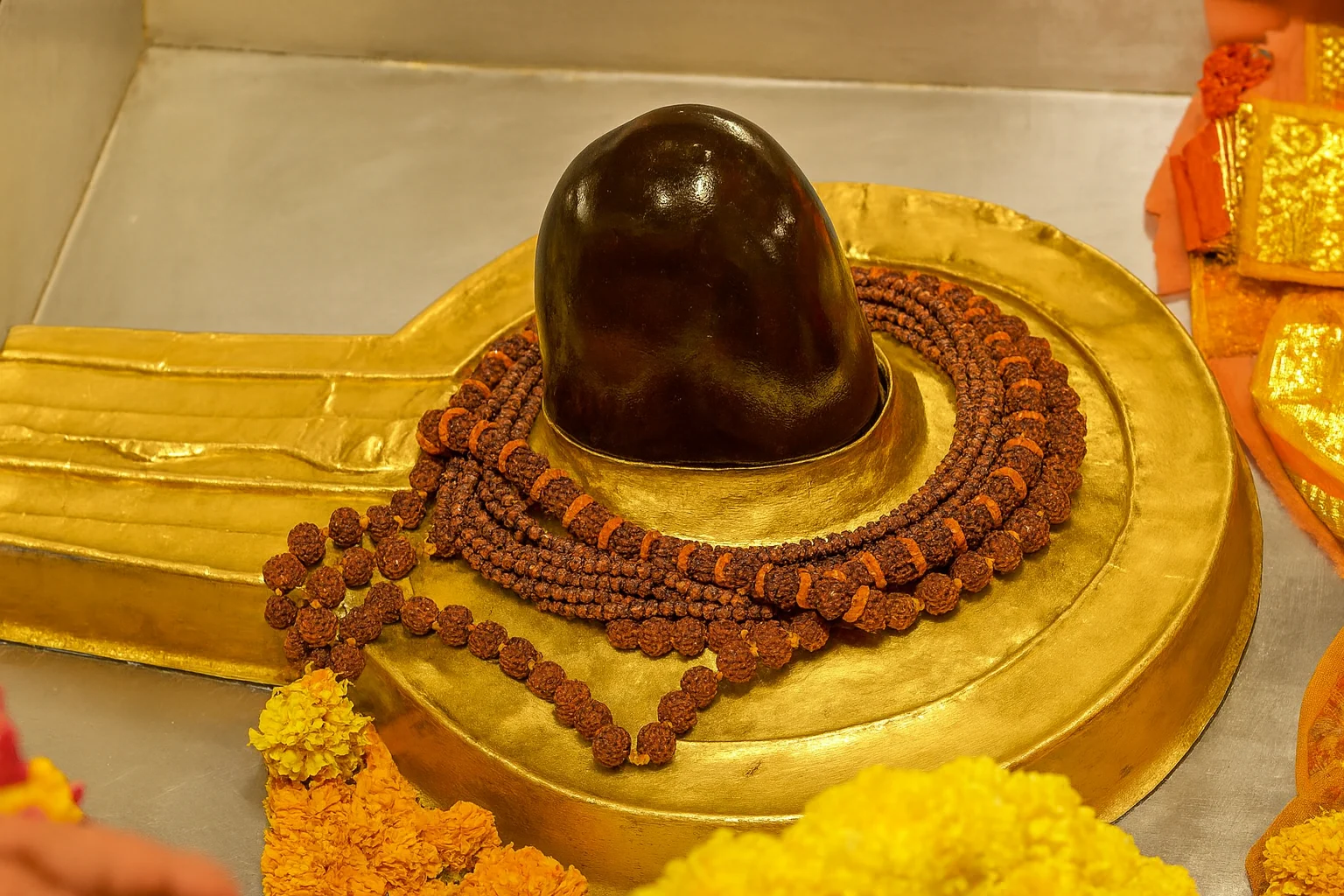
The Ganga and Her Divine Presence
The River Ganga is worshipped as a goddess. Nowhere else does she flow northwards as in Varanasi, a turn considered deeply auspicious. Bathing here is said to wash away lifetimes of sins.
Legends and Saints
Varanasi finds mention in the Rigveda, one of the oldest sacred texts in the world. It has also been home to saints and thinkers like Kabir, Tulsidas, and even Buddha, who walked its streets and left behind echoes of wisdom.
Walking Through Time:The Legacy of Varanasi
Ancient Civilisation
Varanasi is not just an old city—it feels eternal. Traces of its existence go back more than 3,000 years, making it one of the world’s oldest living cities. In the days of the Vedas, Kashi was already known as a centre of learning, philosophy, and spirituality. The Rigveda itself praises this sacred place. Here, sages and seekers once gathered on the banks of the Ganga to discuss the meaning of life and the mysteries of the universe. Pilgrims came to bathe in the river, believing her waters could wash away sins. At the same time, trade and crafts thrived—Banarasi silk, handicrafts, and temples dedicated to many deities shaped the city’s character. Even today, when you walk through its narrow lanes or sit quietly by the ghats, you don’t just see history—you feel it alive around you.
Medieval Conquests
It flourished under the Maurya and Gupta dynasties but also endured invasions during the Delhi Sultanate and Mughal eras. Yet, the spirit of Kashi survived, reviving again as a centre of Hindu philosophy and Sanskrit scholarship.
Colonial Era to Independence
During British rule, Banaras grew as a centre of silk weaving, trade, and education. It also became a nerve centre of cultural and political awakening.
Modern Varanasi
Today, Varanasi balances its heritage with modernity. The Kashi Vishwanath Corridor project, for example, has transformed temple access for millions of pilgrims, while still preserving the sacred atmosphere of the city.
Kashi Vishwanath Corridor – The Grand Gateway of Varanasi
The Kashi Vishwanath Corridor is a major temple redevelopment project that directly connects the Kashi Vishwanath Temple to the River Ganga. Inaugurated in December 2021, it was created to ease pilgrim movement, restore ancient shrines, and enhance the spiritual experience of Varanasi.
Purpose and Vision of the Corridor
Before the corridor was developed, devotees had to pass through extremely narrow and congested lanes to reach the temple. This caused crowd pressure, safety concerns, and limited access to the river after worship. The corridor was designed to resolve these issues while respecting the sacred character of the city.
The project aimed to create a seamless spiritual journey — from the holy waters of the Ganga to the sanctum of Lord Shiva — reflecting the traditional Hindu pilgrimage flow.
Scale, Architecture, and Restoration
Spread across a large heritage zone, the corridor has uncovered and restored more than 40 ancient temples that were previously hidden behind houses and shops. The complex features wide stone-paved pathways, spacious courtyards, pilgrim facilities, and carefully planned entry and exit routes.
Traditional sandstone architecture has been used to maintain harmony with the historic surroundings. The layout allows thousands of devotees to move comfortably without disturbing ritual practices.
Spiritual and Cultural Elements
The corridor is not merely an access path; it functions as a living cultural space. Statues and sculptural installations depict major figures and themes associated with Shaivism and Indian philosophy. Visitors encounter representations of saints, scholars, and sacred narratives that explain the spiritual significance of Kashi.
At night, the illuminated corridor creates a calm yet powerful atmosphere, enhancing the sense of devotion as pilgrims walk towards the temple for darshan.
Impact on Pilgrims and the City
The corridor has significantly improved crowd management, safety, and accessibility, especially during major festivals. Elderly devotees, women travellers, and families now experience a smoother and more dignified pilgrimage.
At the same time, the project has reinforced Varanasi’s identity as a global spiritual destination, balancing heritage conservation with modern urban planning.
Why the Kashi Vishwanath Corridor Matters Spiritually
In symbolic terms, the corridor represents the eternal connection between Lord Shiva and the River Ganga. The physical alignment of river, temple, and ritual space mirrors the spiritual belief that purification through the Ganga leads naturally to divine realisation.
This makes the corridor not just an infrastructure project, but a meaningful extension of Varanasi’s sacred geography.
Varanasi Travel Hack: The “Lazy” Way to Kashi Vishwanath
Pro Tip: Want to skip the chaotic, narrow lanes of the old city? and long walk from Assi ghat to the Kashi Viswanath temple Head straight to Assi Ghat and catch a shared boat for just ₹100. It’s a soulful journey that glides past all the famous Ghats of Varanasi, with the boatman sharing local legends along the way. The boat drops you directly at the Kashi Vishwanath Corridor entrance on the riverbank. You’ll arrive for your darshan refreshed, stress-free, and having enjoyed a scenic river tour!
Sacred Temples of Varanasi
Varanasi is home to some of Hinduism’s most sacred temples, primarily dedicated to Lord Shiva and associated deities. These temples form the spiritual core of the city and guide pilgrims through rituals connected with devotion, purification, protection, and liberation.Varanasi is recognised as one of India’s most important spiritual destinations, drawing pilgrims and cultural travellers from across the world, as officially highlighted by Incredible India, the national tourism platform of the Government of India.
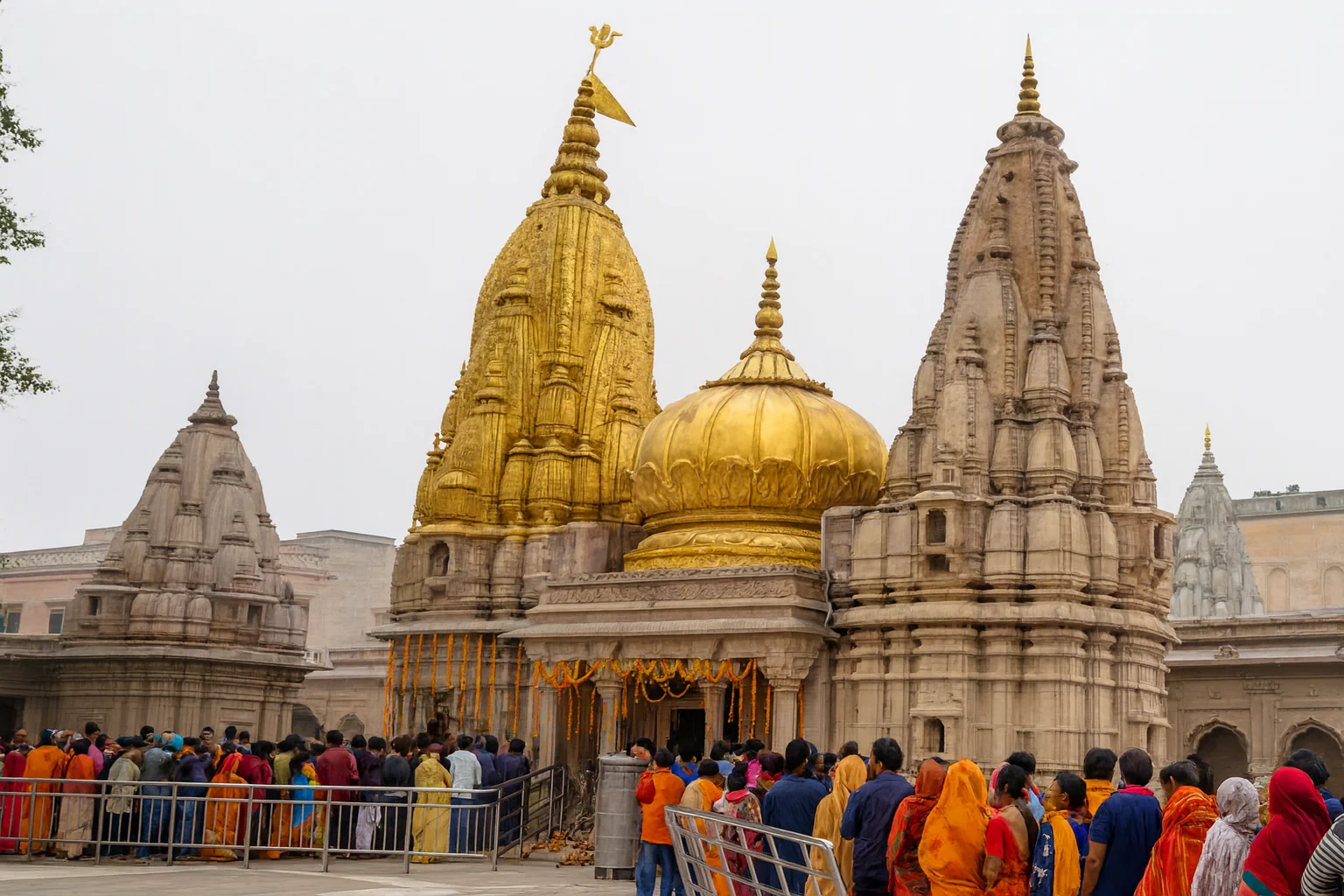
1. Kashi Vishwanath Temple
This temple is the spiritual heart of Varanasi and one of the twelve Jyotirlingas of Lord Shiva. Devotees believe that a single darshan here can help liberate the soul from the cycle of rebirth. The present structure dates to the 18th century, restored under the patronage of Queen Ahilyabai Holkar.
Daily worship follows a strict ritual sequence, with early-morning Mangala Aarti considered the most sacred. The temple’s connection with the River Ganga reinforces the belief that spiritual purification and divine grace converge at this site.
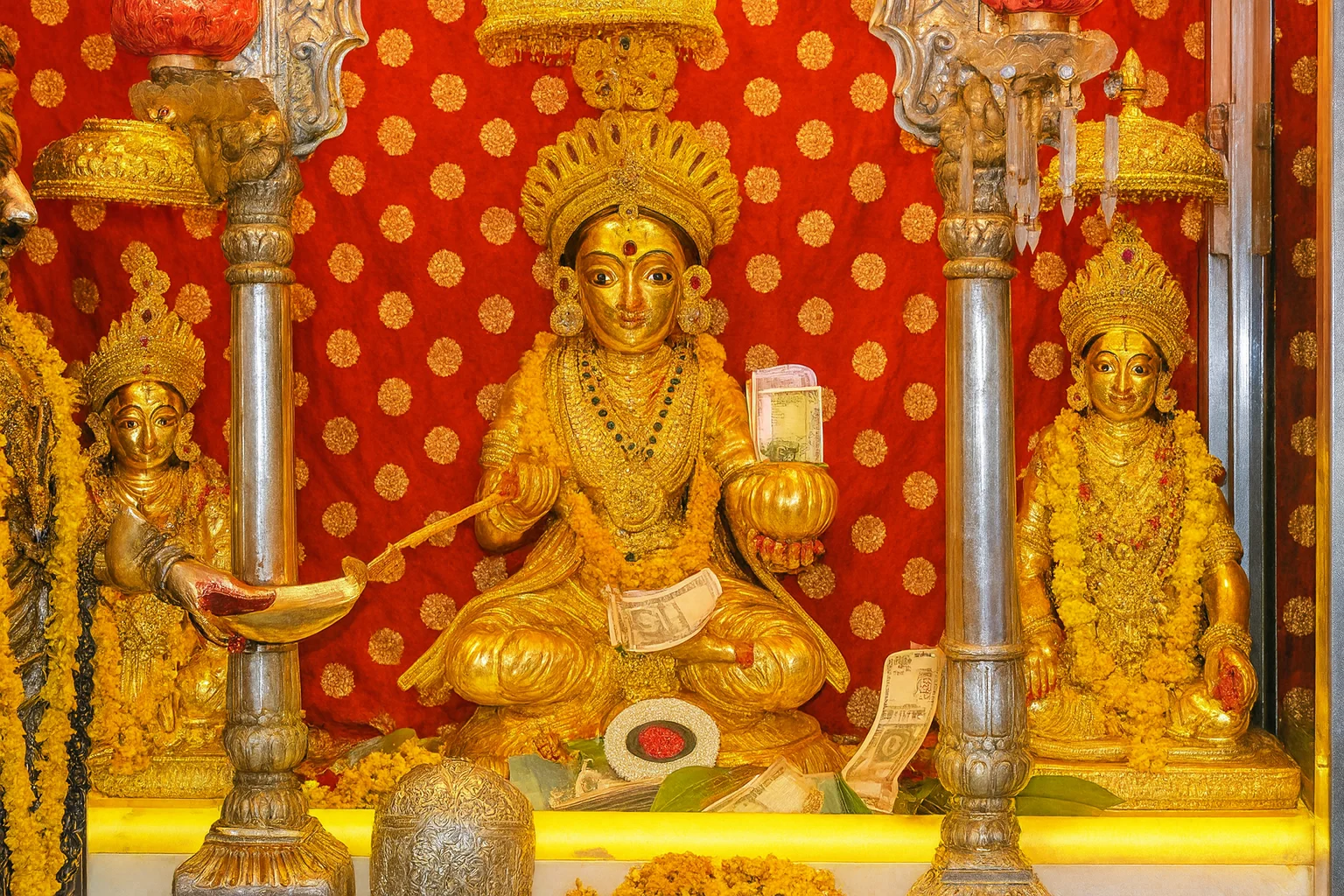
2. Annapurna Temple
Dedicated to Goddess Annapurna, this temple symbolises nourishment and abundance. Hindu belief associates the deity with the idea that food sustains both physical life and spiritual duty. Offering and sharing food is therefore considered a sacred act here.
The temple plays a major role during post-Diwali celebrations, when large-scale food offerings highlight the cultural importance of charity and community feeding in Varanasi.
3. Sankat Mochan Hanuman Temple
This temple is devoted to Lord Hanuman as the remover of obstacles and distress. It is especially popular among locals seeking protection, mental strength, and relief from personal difficulties.
Traditionally associated with the poet-saint Tulsidas, the temple emphasises devotion through chanting rather than elaborate rituals, creating an atmosphere of emotional and spiritual reassurance.
4. Nepali Mandir (Kathwala Temple)
Also known as the Kathwala Temple, this shrine reflects Nepalese pagoda-style architecture and was built by the King of Nepal in the 19th century. Constructed primarily of wood and stone, it closely resembles Kathmandu’s Pashupatinath Temple.
The temple offers a quieter and more contemplative experience compared to the city’s larger shrines, making it ideal for visitors seeking calm within the sacred landscape of Varanasi.
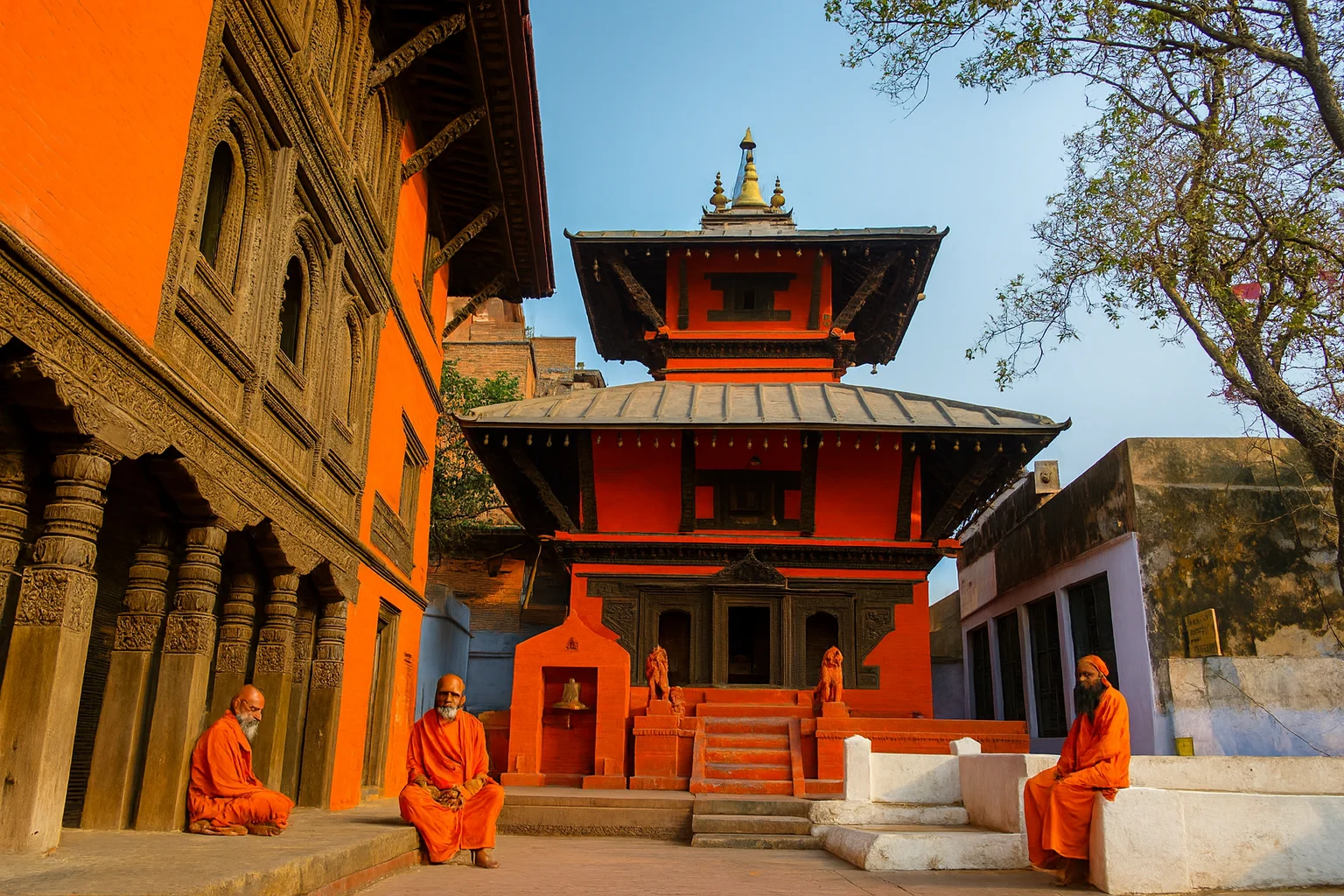
Sacred Temples of Varanasi – Quick Information Table
| Temple | Main Deity | Typical Timings | Key Rituals | Spiritual Significance |
|---|---|---|---|---|
| Kashi Vishwanath Temple | Lord Shiva (Jyotirlinga) | Early morning to late evening (multiple slots) | Mangala Aarti, Rudrabhishek | Liberation (moksha), centre of Shaivism |
| Annapurna Temple | Goddess Annapurna | Morning to night | Daily food offerings, Annadan | Nourishment, charity, abundance |
| Sankat Mochan Hanuman Temple | Lord Hanuman | Morning to night | Hanuman Chalisa chanting | Protection, removal of obstacles |
| Nepali Mandir (Kathwala) | Lord Shiva | Morning to evening | Simple daily worship | Meditation, architectural heritage |
Temple Etiquette & Traveller Notes (Micro-Snippet)
- Dress modestly; cover shoulders and legs
- Remove footwear before entering temple zones
- Photography is restricted inside sanctums
- Early mornings are least crowded and most peaceful
Ghats of Varanasi – The living Soul of the City
The ghats of Varanasi are stepped riverfront platforms along the River Ganga used for daily rituals, worship, cremation, and community life. They form the spiritual and social foundation of the city, where religious belief, human activity, and the philosophy of life and death coexist openly.
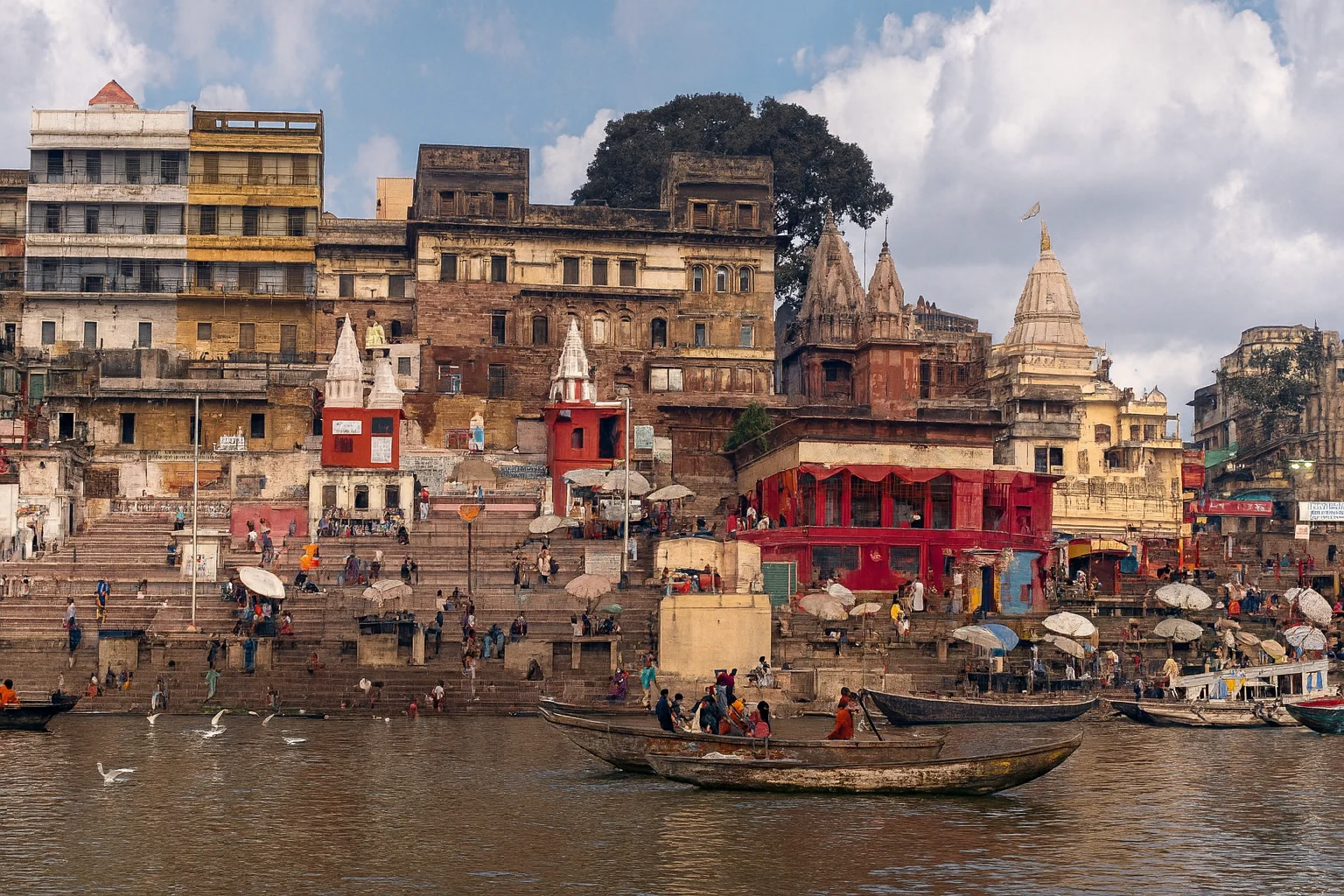
What Makes the Ghats of Varanasi Unique
Unlike ordinary riverbanks, the ghats of Varananasi function as sacred transition spaces. Here, the river is not only worshipped but actively integrated into everyday life. Bathing, prayer, meditation, cremation, and festivals occur side by side, reflecting the Hindu understanding that life and death are continuous, not separate states.
Each ghat has a defined purpose — some are meant for worship, some for learning, some for cremation, and others for social gathering. Together, they create a ritual geography that has remained active for centuries
Each ghat has a specific role, tradition, and symbolic meaning, contributing to the city’s identity as a living spiritual ecosystem rather than a static heritage site.
Dashashwamedh Ghat – Centre of Public Ritual
Dashashwamedh Ghat is the most prominent and continuously active ghat in Varanasi. It serves as the primary location for large-scale public worship and ceremonial offerings to the River Ganga.
Every evening, this ghat becomes the focal point of the city during the Ganga Aarti, when priests perform synchronised rituals with fire lamps, incense, and chants. The ghat symbolises collective devotion, where thousands participate in a shared spiritual experience rather than private prayer.
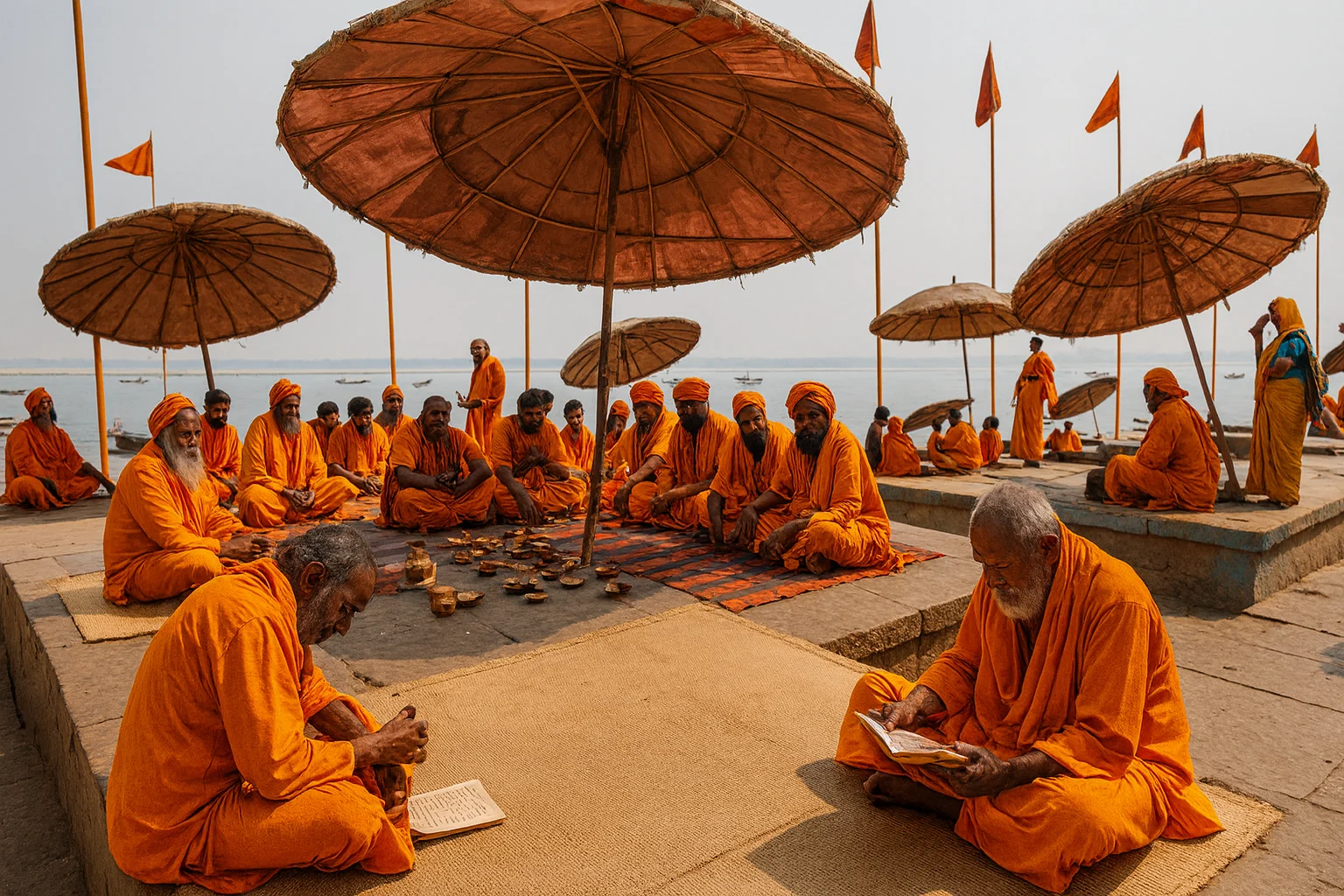
Manikarnika Ghat – The Philosophy of Liberation
Manikarnika Ghat is Varanasi’s principal cremation ground and one of the most sacred sites in Hindu belief. Cremation here is understood not as an end, but as a sacred release of the soul from physical existence.
Ritual fires burn continuously, reinforcing the idea of impermanence. Visitors often find this ghat intense, yet it represents the city’s deepest spiritual teaching: death is not feared, but accepted as part of cosmic order.
Assi Ghat – Daily Life and Renewal
Assi Ghat marks the southern boundary of the traditional ghat stretch and reflects the rhythm of everyday spiritual life. Mornings here are dedicated to yoga, meditation, music, and quiet river worship, while evenings attract students, artists, and travellers.
This ghat represents renewal rather than finality, showing how spirituality in Varanasi is woven into ordinary routines rather than confined to temples alone.
Ganga Aarti – The Sacred Evening Ritual of Varanasi
The Ganga Aarti in Varanasi is a daily evening ritual performed on the banks of the River Ganga, where priests offer fire, incense, sound, and prayer to the river as a living goddess. The ceremony symbolises gratitude, purification, and the spiritual bond between the city and the sacred river.
What Is Ganga Aarti and Why Is It Important?
Ganga Aarti is not a performance staged for visitors; it is a formal act of worship (puja) rooted in Hindu ritual tradition. In Varanasi, the river is regarded as a divine presence that sustains both physical life and spiritual order. The aarti represents collective devotion, where light is offered to acknowledge the river’s role in cleansing, continuity, and liberation.
The ritual transforms the riverbank into a sacred theatre of sound, fire, rhythm, and synchronised movement, reinforcing Varanasi’s identity as a city where faith is lived publicly rather than privately.
Dashashwamedh Ghat – The Primary Aarti Location
The main Ganga Aarti of Varanasi takes place at Dashashwamedh Ghat, the most prominent and centrally located ghat along the riverfront. This ghat has historically served as the focal point for public religious ceremonies and large-scale worship.
Every evening, multiple priests conduct the aarti simultaneously, facing the river. Their synchronised actions create a structured ritual sequence that is repeated daily, reinforcing continuity and tradition.
The Ritual Sequence (How the Aarti Is Performed)
The Ganga Aarti follows a fixed ceremonial order:
- Invocation through conch shells and bells
- Offering of incense to purify the space
- Presentation of large multi-tiered fire lamps
- Chanting of Vedic hymns and mantras
- Final offering of light to the flowing river
The use of fire symbolises knowledge and awareness, while sound elements such as bells and chants are believed to awaken spiritual consciousness.
Ganga Aarti Timings in Varanasi (Quick Reference)
| Season | Approximate Start Time |
|---|---|
| Summer (April–September) | Around 7:00 PM |
| Winter (October–March) | Around 6:00 PM |
| Duration | 45 minutes to 1 hour |
Arrival tip: Reach at least 45–60 minutes early on weekends and festival days for better visibility.
Best Ways to Watch the Ganga Aarti
Visitors can experience the ceremony in several ways, depending on preference:
- Standing at the ghat: Energetic but crowded
- Reserved seating: More organised viewing
- Rooftop viewpoints: Elevated perspective with refreshments
- Boat viewing from the river: Calm, immersive, and visually striking
Watching from the water offers a panoramic view of the illuminated ghat and the reflection of lamps on the river surface, creating a uniquely immersive experience.
Spiritual Meaning of the Ganga Aarti
Beyond its visual grandeur, the Ganga Aarti represents a philosophical idea central to Hinduism: nature is sacred and worthy of reverence. By offering light to the river, devotees acknowledge dependence on natural forces and reaffirm moral responsibility towards them.
This belief explains why the ceremony attracts both pilgrims seeking spiritual merit and travellers seeking cultural understanding.
Special Occasions and Festivals
On certain days, the Ganga Aarti is performed on a much larger scale:
- Dev Deepawali: The riverfront is illuminated with thousands of lamps
- Kartik Purnima: Considered one of the most sacred bathing days
- Major Hindu festivals: Enhanced rituals and increased priest participation
During these occasions, the aarti becomes a city-wide spiritual event rather than a single ritual
Respect seating and crowd instructions
Maintain silence during the ceremony
Avoid blocking ritual pathways
Do not use flash photography
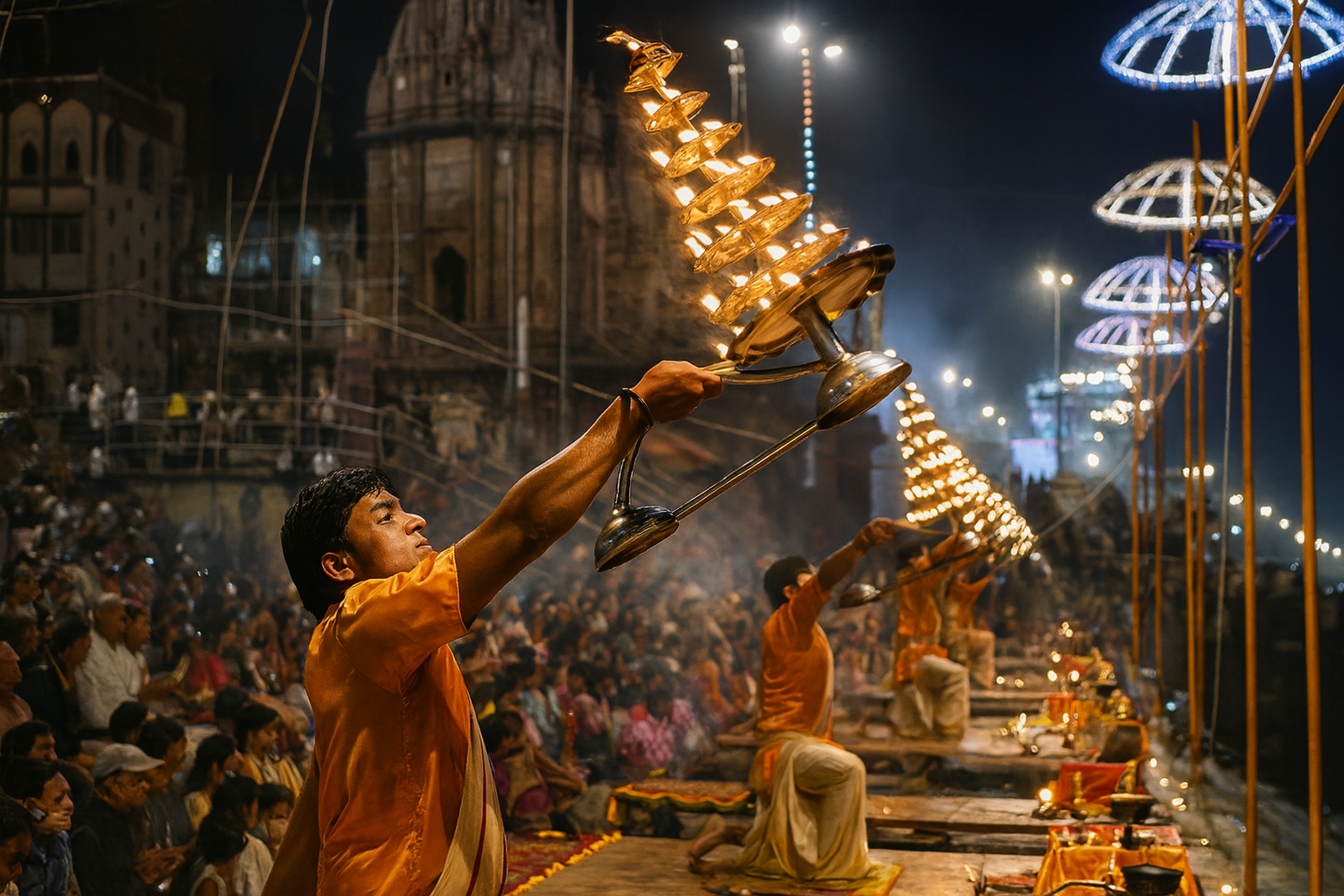
Varanasi Travel Secret: Three Magical Ways to Witness the Ganga Aarti
During my recent visit, I discovered that the spiritual spectacle of the Ganga Aarti isn’t just limited to one spot. To my surprise, you can witness this grand ritual at three distinct locations: Dashashwamedh Ghat, Assi Ghat, and the modern Khidkiya Ghat (Namo Ghat). Each venue offers a uniquely breathtaking experience.
If you want the most comfortable and stress-free view, I highly recommend heading to Assi Ghat. no need to walk till dasaswamegh Ghat or Khidkiya Ghat , just step out of vehicle Assi Ghat Ganga Arti is here (at evening ) . soak in the divine atmosphere without any fatigue. However, for the ultimate experience, nothing beats watching the ceremonies from a boat on the River Ganga. From the water, you can actually see all three Aartis as you glide along, offering a panoramic perspective of Varanasi’s devotion that you simply cannot get from the shore!”
Major Festivals of Varanasi
Varanasi celebrates a series of major religious and cultural festivals throughout the year that reflect its spiritual identity, ritual calendar, and living traditions. These festivals combine river worship, temple ceremonies, music, and community participation, making the city one of India’s most active sacred centres. Major festivals, cultural events, and tourist activities in Varanasi are officially promoted by Uttar Pradesh Tourism, which documents the state’s living heritage and ritual calendar.
Why Festivals Are Central to Varanasi’s Identity
In Varanasi, festivals are not occasional events but extensions of daily spiritual life. Rituals performed year-round intensify on festival days, transforming ghats, temples, and streets into shared ceremonial spaces. Most festivals are aligned with the Hindu lunar calendar and are closely linked to the River Ganga and the worship of Lord Shiva.
This continuity ensures that festivals in Varanasi are experienced as lived traditions rather than scheduled spectacles.
Dev Deepawali – The Festival of Divine Light
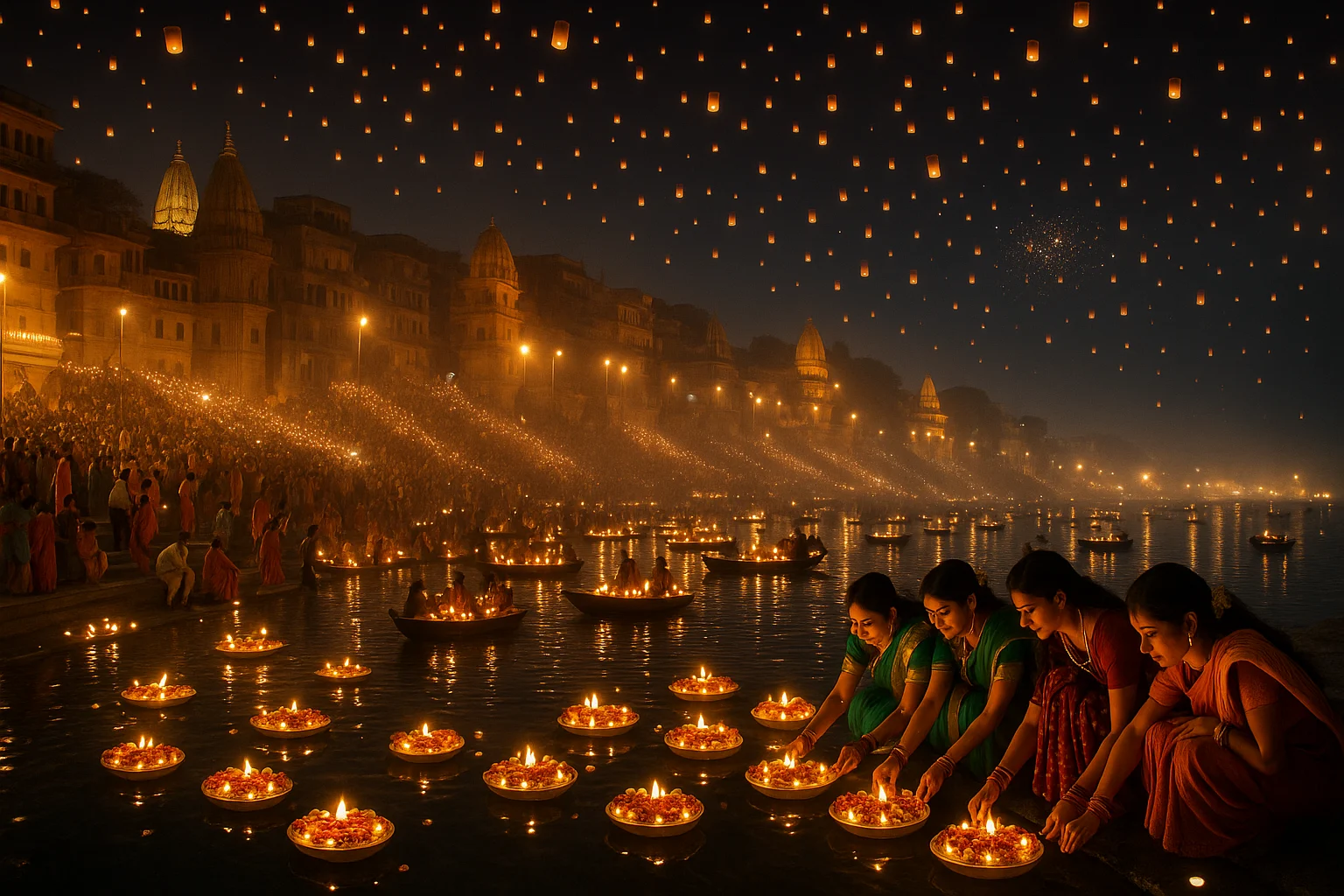
Dev Deepawali is celebrated on Kartik Purnima, approximately fifteen days after Diwali. It is believed to mark the day when divine beings descend to the River Ganga to bathe. On this occasion, the ghats are illuminated with thousands of earthen lamps, creating a continuous riverfront of light.
A special Ganga Aarti, fireworks, and cultural performances turn the entire city into a sacred visual landscape. This festival is considered one of the most spiritually significant nights in Varanasi’s calendar.
Mahashivratri – The Night of Lord Shiva
Mahashivratri commemorates the cosmic union of Lord Shiva and Goddess Parvati. In Varanasi, the festival holds exceptional importance due to the city’s identity as Shiva’s sacred abode.
Devotees observe fasting, night-long vigils, and continuous chanting. Processions representing Shiva’s wedding journey move through the city, while temples remain active throughout the night, reinforcing Varanasi’s role as the epicentre of Shaivite devotion.
Ganga Mahotsav – Celebrating the Sacred River
Ganga Mahotsav is a multi-day cultural festival dedicated to honouring the River Ganga. It combines classical music, dance, folk arts, wrestling, and traditional crafts, highlighting the cultural life that has evolved along the riverbanks.
The festival culminates on Kartik Purnima, merging seamlessly with Dev Deepawali, and symbolises the deep relationship between the river and the city’s artistic heritage.
Ramnagar Ramlila – Living Epic Theatre
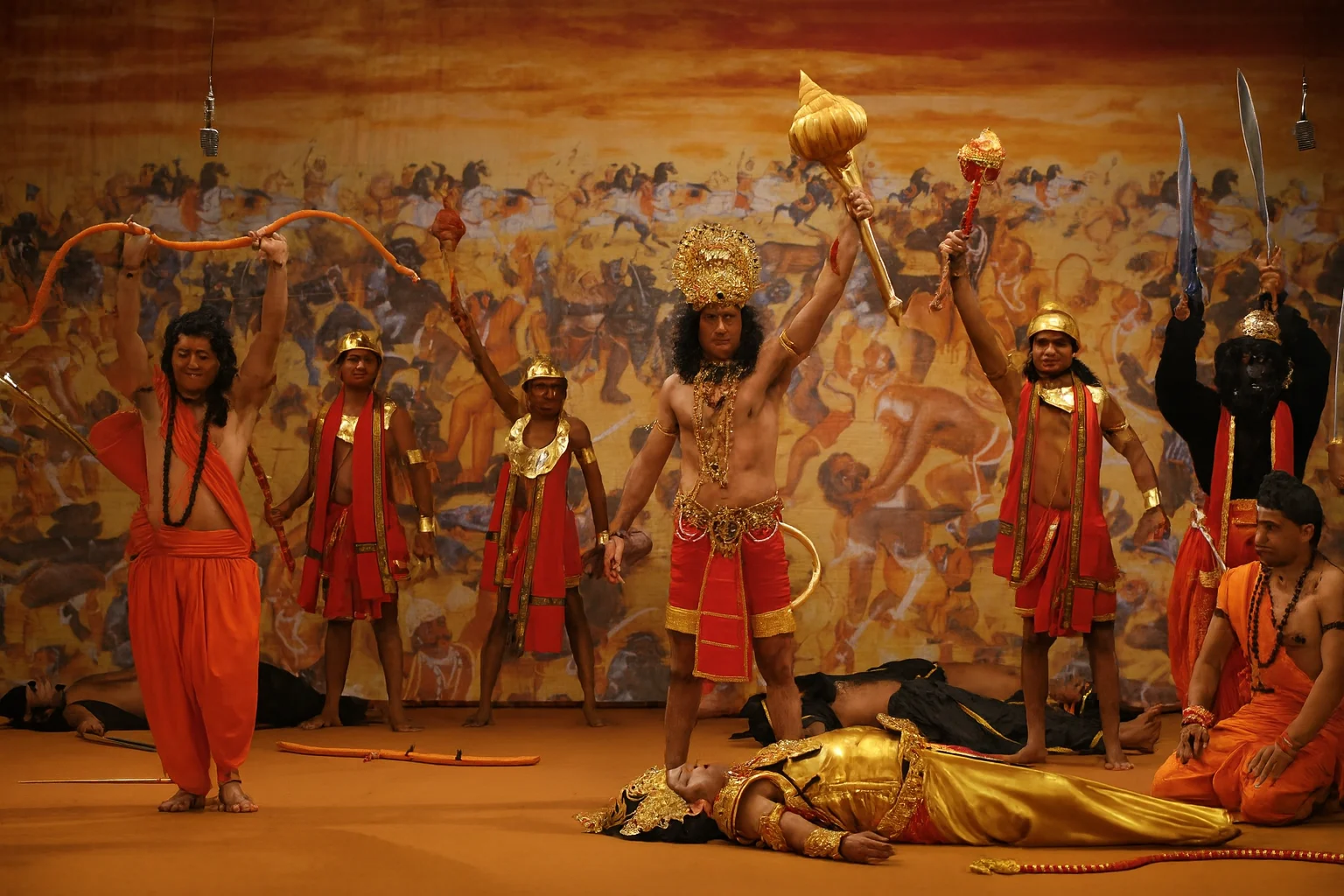
The Ramnagar Ramlila is a month-long enactment of the Ramayana, performed across multiple locations in Ramnagar near Varanasi. Unlike staged theatre, scenes unfold across real landscapes, with audiences moving alongside performers.
This tradition has continued for over two centuries and is recognised by UNESCO as Intangible Cultural Heritage, reflecting Varanasi’s role in preserving narrative traditions through performance.
Holi – Colour, Music, and Ritual Joy
Holi in Varanasi blends celebration with devotion. Alongside the playful use of colours, temples host music, devotional songs, and ritual offerings. Certain neighbourhoods observe traditional folk singing, while the use of bhang is culturally accepted during the festival period.
The festival marks seasonal renewal and reinforces communal bonds across the city.
Buddha Purnima – Buddhist Sacred Observance
Celebrated primarily at Sarnath, Buddha Purnima commemorates the birth, enlightenment, and passing of Lord Buddha. Monks, pilgrims, and visitors participate in prayer assemblies, sermons, and candle-lit ceremonies.
This festival highlights Varanasi’s importance not only in Hindu tradition but also in global Buddhist heritage.
Major Festivals of Varanasi – Quick Reference Table (Snippet-Friendly)
| Festival | Time of Year | Core Significance | Key Experience |
|---|---|---|---|
| Dev Deepawali | November (Kartik Purnima) | Divine descent to Ganga | Ghats lit with lamps, grand Aarti |
| Mahashivratri | Feb–Mar | Shiva–Parvati union | Night-long worship, processions |
| Ganga Mahotsav | Oct–Nov | Cultural honour of Ganga | Music, dance, crafts |
| Ramnagar Ramlila | Sept–Oct | Ramayana enactment | Month-long open-air theatre |
| Holi (Banarasi) | March | Seasonal renewal | Colours, music, rituals |
| Buddha Purnima | Apr–May | Buddhist sacred milestones | Sermons, meditation at Sarnath |
Festival Travel Insight
Evening rituals often require early arrival for clear viewing
Expect heavy crowds during Kartik Purnima and Mahashivratri
Book accommodation well in advance during festival weeks
Getting to and Moving Around Varanasi
Varanasi is easily accessible by air and rail, while local movement relies on short-distance, low-speed transport suited to narrow lanes and crowded areas.
By Air:
Lal Bahadur Shastri International Airport is located about 25 km from the city centre. Prepaid taxis and app-based cabs provide the most convenient airport transfers.
By Train:
Varanasi Junction and Manduadih Railway Station connect the city with major Indian metros, including Delhi, Kolkata, and Mumbai.
Local Transport Options:
- Auto-rickshaws: Practical for medium distances
- E-rickshaws: Quiet, eco-friendly, ideal for short rides
- Cycle rickshaws: Best for navigating old city lanes
Travel tip: Short trips often take longer due to congestion—plan buffer time.
Getting There & Around
- Airport: Lal Bahadur Shastri International Airport (25 km, taxi ₹700–₹900)
- Railway: Varanasi Junction & Manduadih, well connected with Delhi, Kolkata, Mumbai
- Local Transport:
Auto-rickshaws – ₹15–20 per km
E-rickshaws – ₹10–15 per km (eco-friendly, best for
Short rides)
Cycle rickshaws – ₹20–₹40 for narrow lanes
Boats – ₹200–₹500 (shared), ₹1,000+ (private
Sunrise /sunset rides)
Best Time to Visit Varanasi
The best time to visit Varanasi is from October to March, when temperatures are moderate, rainfall is low, and major religious festivals take place. This period offers the most comfortable conditions for ghat walks, temple visits, boat rides, and evening rituals.
Why October to March Is Ideal
During these months, Varanasi experiences mild winters with pleasant daytime temperatures and cool evenings. The reduced heat allows visitors to explore the ghats, narrow lanes, and heritage areas without physical strain. Clear skies also improve visibility for sunrise boat rides and evening Ganga Aarti.
In addition, this season coincides with Varanasi’s most significant spiritual events, making it culturally the richest time to visit.
Semantic intent: best season, pleasant weather, festival time, ideal travel months
Visiting Varanasi in Winter (October to March)
Winter is the peak travel season in Varanasi. Days remain comfortable, while early mornings may feel cool, especially near the river.
Why choose winter:
- Comfortable walking conditions
- Clear mornings for river activities
- Major festivals and ceremonies
- Best atmosphere for cultural experiences
Things to note:
January mornings can be foggy, occasionally affecting flights and early boat rides.
Visiting Varanasi in Summer (April to June)
Summers in Varanasi are hot, with temperatures often rising sharply during the day. While the city remains active, outdoor exploration becomes physically demanding.
Who should visit in summer:
- Pilgrims with fixed religious dates
- Travellers seeking fewer crowds
- Visitors focused on temple rituals rather than sightseeing
Travel advice:
Plan activities for early mornings and evenings; avoid midday exposure.
Visiting Varanasi During the Monsoon (July to September)
The monsoon season brings humidity and occasional heavy rainfall. The River Ganga swells, and some ghat activities may be restricted for safety reasons.
Pros:
- Lush riverbanks and dramatic skies
- Fewer tourists
- Lower accommodation prices
Cons:
- Boat services may be limited
- Slippery steps and reduced visibility
Best Time to Visit Varanasi – Month & Season Overview
| Season | Months | Travel Experience |
|---|---|---|
| Winter | Oct – Mar | Best weather, festivals, peak season |
| Summer | Apr – Jun | Hot, fewer tourists, budget travel |
| Monsoon | Jul – Sep | Humid, scenic, limited river activity |
Best Time for Festivals and Rituals
- Dev Deepawali: November
- Kartik Purnima: October–November
- Mahashivratri: February–March
These dates offer the most immersive spiritual atmosphere.
Best Time to Visit Varanasi for Festivals & Rituals
- Early morning: Ghats, boat rides, temples
- Afternoon: Museums, rest periods
- Evening: Ganga Aarti, markets, riverfront walks
Varanasi Travel Guide 2025 — Ghats, Ganga Aarti & 3-Day Itinerary
A 3-day Varanasi itinerary allows travellers to experience the city’s spiritual rituals, historic temples, riverfront life, and cultural heritage at a relaxed pace. The plan typically combines sunrise activities on the Ganga, temple visits, Sarnath exploration, and evening ceremonies.
Day 1 – River Rituals and the Spiritual Core
| Time | Activity | Why It Matters |
|---|---|---|
| Early Morning | Sunrise boat ride on the River Ganga | Reveals daily rituals, bathing practices, and the ghats at their most peaceful |
| Morning | Visit Kashi Vishwanath Temple area | Central shrine of the city and core of Shaivite worship |
| Late Morning | Walk along Dashashwamedh and nearby ghats | Understand how public ritual shapes everyday life |
| Afternoon | Rest and local lunch | Necessary downtime due to crowds and walking |
| Evening | Attend Ganga Aarti at Dashashwamedh Ghat | Signature spiritual ceremony of Varanasi |
| Night | Stroll through Godowlia markets | Observe local commerce, food culture, and evening life |
Day 2 – History, Learning, and Cultural Heritage
| Time | Activity | Why It Matters |
|---|---|---|
| Morning | Visit Sarnath (stupa and archaeological remains) | Site of Buddha’s first sermon and key Buddhist heritage centre |
| Late Morning | Sarnath Museum (if open) | Contextualises Buddhist art and history |
| Afternoon | Silk weaving neighbourhoods | Insight into Banarasi textile traditions |
| Evening | Visit Ramnagar Fort | Historic seat of the former Kashi rulers |
| Sunset | View the Ganga from Ramnagar | Calm contrast to the city’s main ghats |
Day 3 – Daily Life, Local Beliefs, and Hidden Corners
| Time | Activity | Why It Matters |
|---|---|---|
| Early Morning | Assi Ghat for yoga and meditation | Shows everyday spiritual discipline |
| Morning | Visit Sankat Mochan and nearby temples | Focus on community-oriented worship |
| Late Morning | Heritage walk through old city lanes | Understand residential life and urban continuity |
| Afternoon | Street food exploration | Experience Banarasi flavours and local habits |
| Evening | Classical music or cultural performance (if available) | Reflects Varanasi’s artistic traditions |
| Night | Quiet ghat walk | Observe the city after rituals settle |
3-Day Varanasi Itinerary – Quick Snapshot
| Day | Focus Theme | Key Highlights |
|---|---|---|
| Day 1 | Spiritual rituals | Ganga boat ride, main temples, evening aarti |
| Day 2 | History & culture | Sarnath, silk weaving, Ramnagar Fort |
| Day 3 | Local life | Assi Ghat, old city walk, food and music |
Travel Planning Tips for This Itinerary
Comfortable footwear is essential
Start early to avoid crowds and heat
Keep afternoons lighter due to walking fatigue
Reserve evenings for riverfront activities
| Time | Activity | Notes |
| 5:00–7:00 AM | Sunrise boat ride on the Ganga → Kashi Vishwanath Temple | Magical start to the day |
| 8:00–11:00 AM | Breakfast (kachori-sabzi + jalebi) → Explore Manikarnika & Dashashwamedh Ghats | Authentic street food |
| 12:00–3:00 PM | Visit Sarnath (museum + stupa) | Closed on Fridays |
| 4:00–7:00 PM | Ganga Aarti at Dashashwamedh Ghat | Arrive 45 mins early |
| Night | Banarasi paan & bazaar stroll | Local shopping at Godowlia |
✅ 2-Day Itinerary – Spiritual + Cultural Varanasi
| Day | Morning | Afternoon | Evening |
| Day 1 | Same as 1-day plan | Visit Sarnath | Ganga Aarti |
| Day 2 | Assi Ghat for Subah-e-Banaras (yoga, music) + temples (Sankat Mochan, Durga, Nepali Mandir) | Lunch + Silk weaving workshops | Ramnagar Fort & Sunset |
✅ 3-Day Itinerary – Deeper Varanasi Experience
| Day | Morning | Afternoon | Evening |
| Day 1 | Sunrise boat ride + Kashi Vishwanath Temple | Sarnath visit | Ganga Aarti |
| Day 2 | Subah-e-Banaras at Assi Ghat + temple tour | Silk weaving & local lunch | Ramnagar Fort visit |
| Day 3 | Kaal Bhairav Temple + Heritage Walk in Chowk lanes | Street food trail (Tamatar Chaat, Malaiyyo in winter, Thandai) | Classical music/dance show (if available) |
Top Things to Do in Varanasi: From Sunrise Boat Rides to Sarnath
The best things to do in Varanasi include experiencing river rituals on the Ganga, visiting sacred temples, exploring ancient learning centres, walking historic lanes, and engaging with the city’s living cultural traditions. These activities reveal Varanasi as both a spiritual destination and a continuously inhabited cultural landscape.
Experience a Sunrise Boat Ride on the River Ganga
A sunrise boat ride offers the clearest understanding of daily life in Varanasi. As the city awakens, pilgrims bathe, priests perform morning rituals, and chants echo across the river. This experience highlights the practical and spiritual role of the Ganga in sustaining the city’s rhythm.
Why it matters: reveals ritual bathing, early worship, and the calmest atmosphere of the ghats.
Attend the Evening Ganga Aarti
Witnessing the Ganga Aarti is one of the most significant things to do in Varanasi. The synchronised use of fire lamps, incense, bells, and chants transforms the riverfront into a shared devotional space. The ceremony reflects collective faith rather than individual worship.
Semantic intent: evening ritual, river worship, Hindu ceremony, spiritual experience.
Visit the Sacred Temples of the City
Temple visits form the spiritual core of a Varanasi journey. Each shrine represents a different aspect of belief — devotion, nourishment, protection, or liberation. Moving between temples allows travellers to understand how religion is woven into everyday urban life.
Travel insight: early mornings are quieter and more conducive to contemplation.
Explore Sarnath – The Buddhist Heritage Site
Sarnath, located near Varanasi, marks the place where the Buddha delivered his first sermon. Exploring its stupas, ruins, and museum provides historical depth and highlights Varanasi’s importance beyond Hindu tradition.
Semantic intent: Buddhist heritage, ancient learning centre, meditation site.
Walk the Ghats and Observe Daily Life
A slow walk along the ghats reveals the city’s layered existence — prayer, commerce, teaching, and cremation coexist openly. This activity is not about sightseeing but observation, offering insight into how philosophy shapes everyday behaviour.
Best time: early morning or late afternoon.
Take a Heritage Walk Through Old City Lanes
The narrow lanes of old Varanasi preserve residential life, traditional shops, and neighbourhood temples. A guided or self-led walk helps decode the city’s organic urban structure, which has evolved without formal planning.
Semantic intent: heritage walk, old city exploration, living history.
Discover Banarasi Food and Street Cuisine
Food in Varanasi reflects local taste, seasonal habits, and ritual practice. Sampling traditional breakfasts, sweets, and cooling drinks offers cultural insight beyond flavour alone.
Hygiene note: prefer busy stalls and freshly prepared items.
Visit Ramnagar Fort and Riverside Views
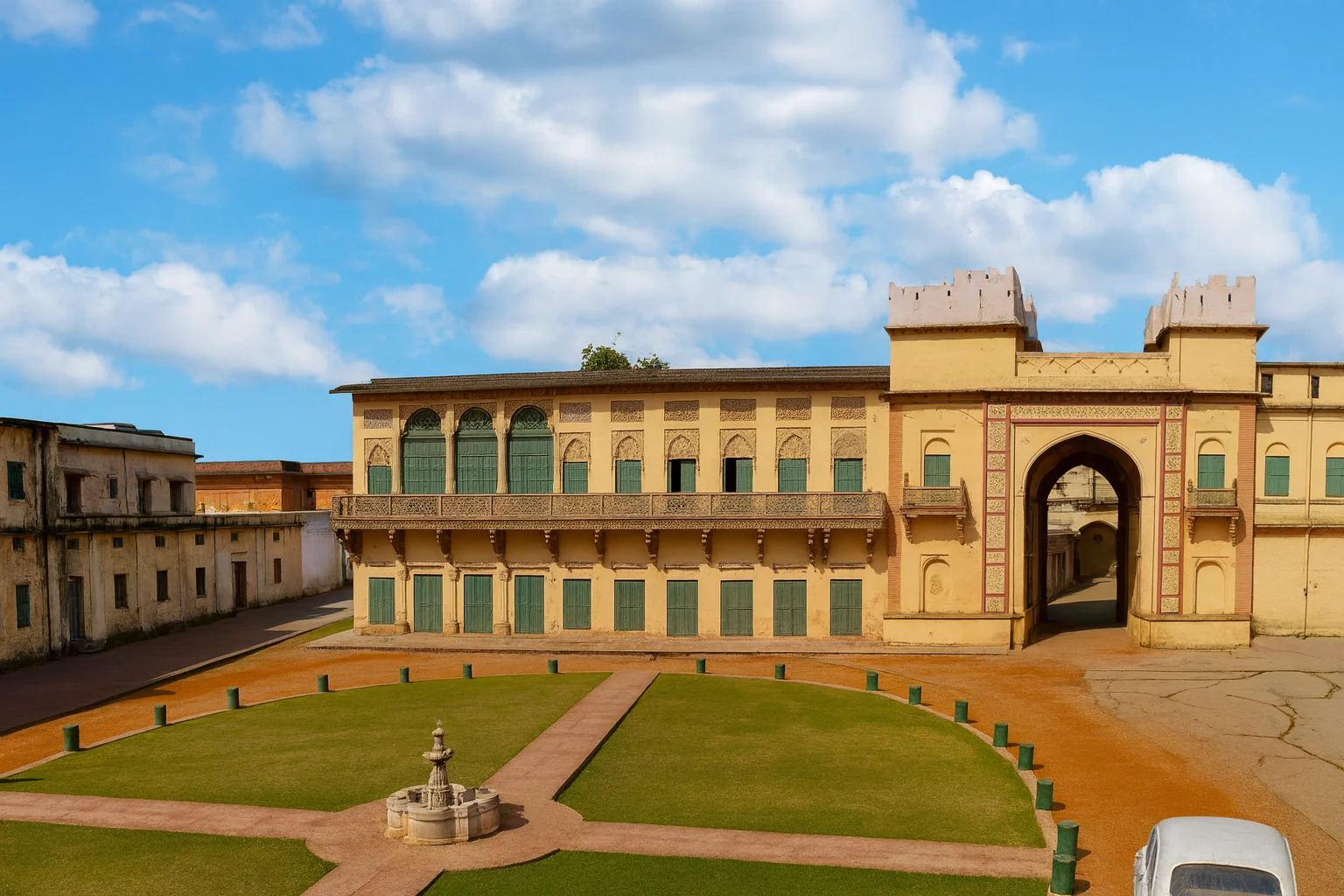
Ramnagar Fort represents the historical seat of the former rulers of Kashi. Visiting the fort and its river-facing grounds provides perspective on the city’s political and cultural past.
Best experience: late afternoon for softer light and fewer crowds.
Attend Classical Music or Cultural Performances
Varanasi has long been associated with classical music, devotional singing, and performance arts. When available, attending an evening recital or cultural programme adds artistic context to the city’s spiritual identity.
Semantic intent: Indian classical music, cultural heritage, live performance.
Things to Do in Varanasi – Quick Checklist
| Category | Activity | Best Time |
|---|---|---|
| River Experience | Sunrise boat ride | Early morning |
| Spiritual Ritual | Ganga Aarti | Evening |
| Heritage | Ghats walk | Morning / afternoon |
| Religion | Temple visits | Early morning |
| Culture | Sarnath exploration | Daytime |
| Lifestyle | Food walk & markets | Evening |
Responsible Travel Tips
Follow local guidance during ceremonies
Respect religious rituals and cremation spaces
Dress modestly near temples and ghats
Avoid intrusive photography
Food & Street Cuisine of Varanasi
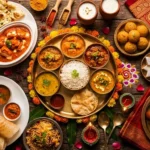
The food of Varanasi reflects local climate, religious tradition, and centuries-old culinary habits. Street cuisine here is largely vegetarian, seasonal, and ritual-aware, with flavours designed to suit digestion, fasting cycles, and daily spiritual routines.
Understanding Banarasi Food Culture
Banarasi cuisine is not built around luxury or complexity; it is shaped by timing, season, and ritual purity. Many dishes are consumed at specific hours of the day and prepared fresh in small quantities. Ingredients are simple, but techniques are refined through repetition rather than formal recipes.
Street food in Varanasi functions as a social connector, bringing pilgrims, locals, and travellers together in shared public spaces.
Tamatar Chaat – The Signature Savoury Dish
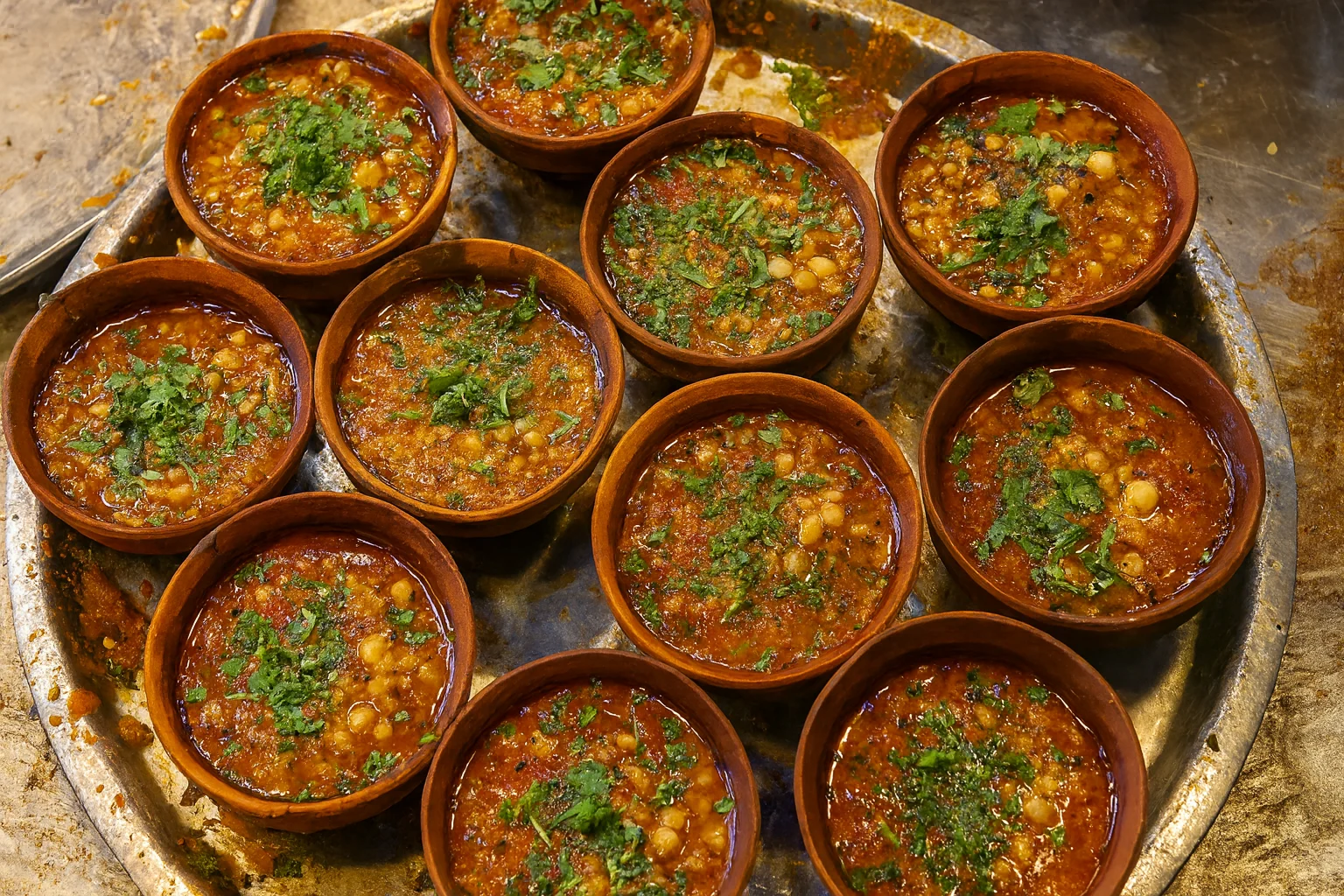
Tamatar chaat is one of the most distinctive street foods unique to Varanasi. Unlike typical chaat preparations, this dish uses slow-cooked tomatoes thickened with spices, ginger, green chillies, and crushed savouries. The result is a warm, tangy, and slightly sweet preparation, served hot.
It is traditionally eaten in the cooler months, as the dish is believed to generate internal warmth and aid digestion. Tamatar chaat represents how Banarasi cuisine adapts flavour to climate rather than trend.(₹40-60)
Banarasi Paan – More Than a Mouth Freshener
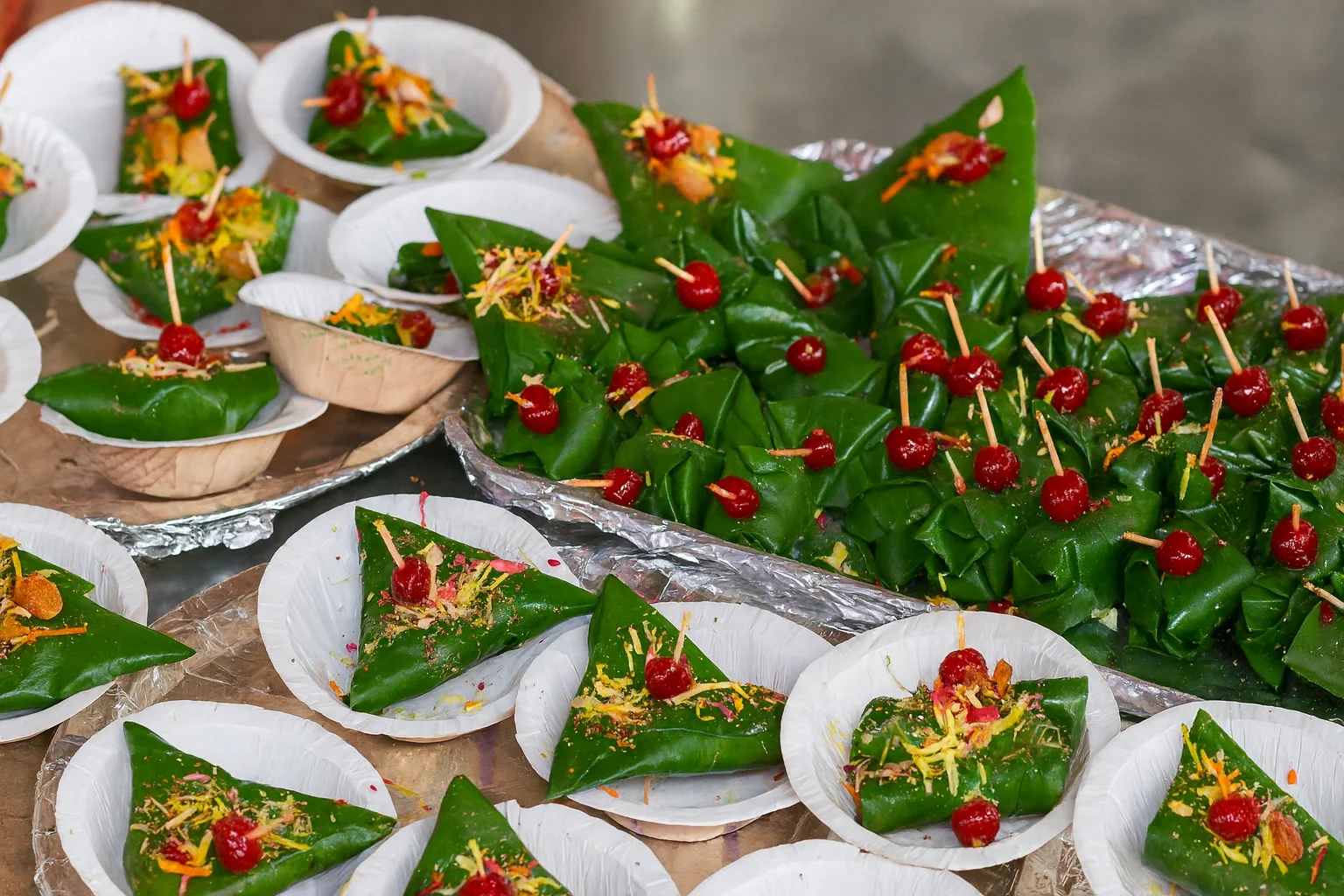
Banarasi paan holds cultural and ceremonial significance far beyond its role as a digestive. Prepared using fresh betel leaves, it contains a carefully balanced mixture of aromatic ingredients that stimulate the senses and freshen the palate after meals.
The act of eating paan is embedded in social rituals, hospitality, and celebration. In Varanasi, paan is often offered as a symbolic conclusion to meals, religious gatherings, and important conversations. From ₹20 for a simple paan to ₹200 for the royal version.there is a surprising thing about this Banarasi paan ( it has G I tag )
Malaiyyo – A Seasonal Winter Delicacy
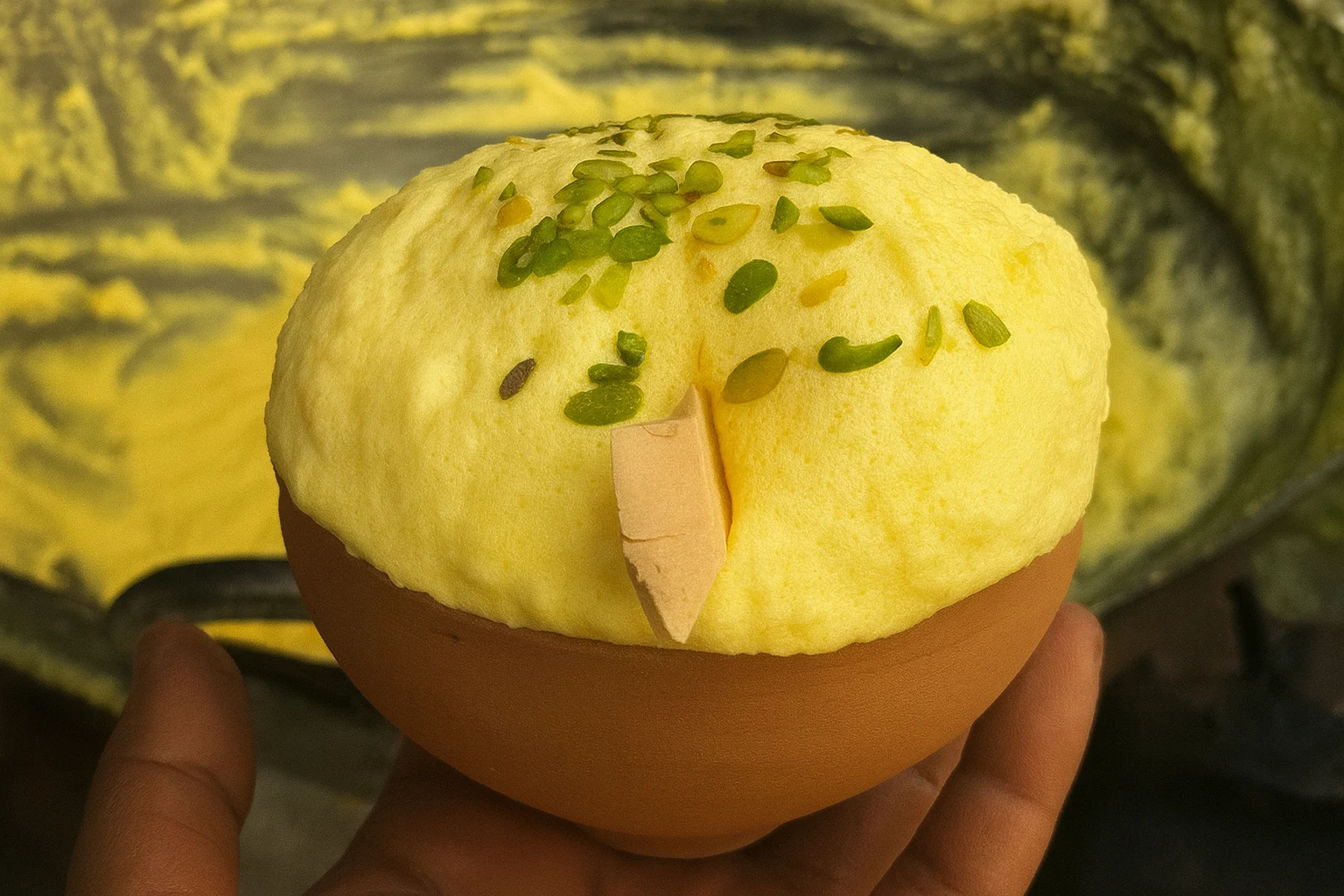
Malaiyyo is a rare, seasonal sweet available only during winter mornings (Dec–Feb mornings only, ₹50–₹80). Made by aerating milk foam overnight in the cold air, it is lightly sweetened and flavoured with saffron and cardamom. Its texture is airy and delicate, dissolving almost instantly.
This sweet cannot be industrially produced and must be prepared under specific climatic conditions, making it a true example of place-specific cuisine. Malaiyyo is typically sold early in the morning and disappears as temperatures rise.
Why Street Food in Varanasi Is Mostly Vegetarian
Varanasi’s street food culture is predominantly vegetarian due to religious norms, pilgrimage traditions, and ritual purity requirements. Ingredients such as onions and garlic are sometimes avoided during fasting periods, influencing flavour profiles and preparation methods.
This has led to a cuisine that relies on spices, dairy, grains, and fermentation rather than meat or heavy fats.
Must-Try Street Foods of Varanasi – Quick Reference Table
| Food Item | Type | Best Time to Eat | Cultural Significance |
|---|---|---|---|
| Tamatar Chaat | Savoury | Winter evenings | Local speciality, climate-based |
| Banarasi Paan | Digestive | After meals | Social and ritual importance |
| Malaiyyo | Sweet | Winter mornings | Seasonal, place-specific |
| Kachori-Sabzi | Breakfast | Early morning | Daily staple |
| Thandai | Beverage | Spring & festivals | Cooling, festive drink |
Hygiene & Food Safety Tips
Eat seasonal foods for better digestion
Choose stalls with high customer turnover
Prefer freshly prepared items
Avoid untreated water and ice
Souvenirs to Take Home from Varanasi
The best souvenirs to take home from Varanasi include Banarasi silk textiles, religious items, handcrafted brassware, traditional handicrafts, and locally sourced spices. These items reflect the city’s weaving heritage, spiritual culture, and artisan traditions.
Why Shopping in Varanasi Is Unique
Souvenirs from Varanasi are closely tied to craft lineage, religious practice, and daily life, rather than mass tourism. Many products are still handmade in small workshops or family-run units, making authenticity more important than appearance or price alone.
Purchasing locally also supports traditional artisans whose skills have been passed down for generations.
Best Souvenirs from Varanasi – Quick Buying Guide
| Item | Typical Price Range | Where to Buy | Why It’s Special |
|---|---|---|---|
| Banarasi Silk Saree | ₹3,000 – ₹15,000+ | Government emporiums (Godowlia, Chowk), weaver colonies in Madanpura | Handwoven heritage textile; known for intricate patterns and durability |
| Rudraksha Beads | ₹200 – ₹1,500 | Shops near major temples and ghats | Sacred prayer beads; authenticity and size determine value |
| Brassware (lamps, idols, utensils) | ₹200 – ₹5,000+ | Thatheri Bazaar, Vishwanath Gali | Traditional metal craft with detailed engraving |
| Wooden Toys & Handicrafts | ₹200 – ₹1,000 | Vishwanath Gali, Godowlia markets | Hand-carved, lightweight, and eco-friendly |
| Mini Sitar & Tabla | ₹500 – ₹2,000 | Local music shops near main ghats | Cultural keepsakes linked to classical music tradition |
| Banarasi Paan Boxes & Accessories | ₹300 – ₹1,000 | Chowk and Godowlia markets | Traditional storage items with ritual and cultural value |
| Spices & Tea Blends | ₹100 – ₹800 (packs) | Chowk spice markets | Locally mixed chai masala, cardamom, and aromatic spices |
| Religious Items (Tulsi mala, idols, Ganga jal) | ₹50 – ₹500 | Shops near temples and ghats | Symbolic blessings; compact and easy to carry |
How to Identify Authentic Souvenirs
- Prefer government emporiums for textiles
- Ask about handwoven or handmade origin
- Be cautious of extremely low prices
- Check weight and finish for metal items
Packing & Transport Tips
Keep receipts for higher-value purchases
Wrap brass and wooden items separately
Carry liquids like Ganga jal in sealed containers
Request fabric covers for silk sarees
Safety & Travel Tips for Varanasi
Varanasi is generally safe for visitors, but its dense crowds, narrow lanes, and active religious spaces require situational awareness. Following basic safety practices, respecting local customs, and planning movements carefully ensures a smooth and secure visit. Local travel infrastructure, public services, and civic information for visitors are managed by the Varanasi district administration, the official government authority for the city.
Personal Safety Checklist
- ✅ Stay alert in crowded areas such as ghats, temples, and markets
- ✅ Keep valuables secured and avoid displaying expensive items
- ✅ Use cross-body bags or money belts in busy lanes
- ❌ Avoid isolated ghats and poorly lit areas after dark
Temple & Ghat Etiquette (Very Important)
- ✅ Dress modestly; cover shoulders and knees
- ✅ Remove footwear before entering temple premises
- ✅ Follow queue systems and security instructions
- ❌ Do not photograph inside sanctums or during rituals
- ❌ Never take photographs at cremation ghats
Women & Solo Traveller Guidance
- ✅ Prefer well-lit and populated routes, especially in the evening
- ✅ Travel with licensed guides or organised walks if exploring lanes
- ✅ Use registered taxis or hotel-arranged transport at night
- ❌ Avoid engaging with persistent strangers offering unsolicited help
Health & Hygiene Precautions
- ✅ Drink sealed bottled water only
- ✅ Wash hands or use sanitiser before eating
- ✅ Choose busy food stalls with fresh preparation
- ❌ Avoid ice, cut fruits, and uncovered food
Transport & Movement Safety
- ✅ Fix boat and rickshaw prices before boarding
- ✅ Allow extra time for short distances due to congestion
- ✅ Walk carefully on ghat steps, especially during monsoon
- ❌ Do not rush during peak ritual hours
Crowd & Festival Safety
- ✅ Arrive early for Ganga Aarti and festival events
- ✅ Follow police and volunteer instructions during large gatherings
- ✅ Identify exit routes in advance
- ❌ Avoid pushing or counter-flow movement in crowds
Emergency Contacts (Micro-Snippet)
- Police: 112
- Ambulance: 108
- Women’s Helpline: 1091
Save numbers offline before arrival.
Cultural Awareness Tips
- ✅ Ask permission before photographing people
- ✅ Speak politely and avoid confrontational behaviour
- ✅ Respect silence during prayers and ceremonies
Safety & Travel Tips – Quick Snapshot
| Area | Key Advice |
|---|---|
| Personal safety | Stay alert, secure belongings |
| Temples & ghats | Modest dress, no ritual photography |
| Food & health | Bottled water, fresh food |
| Transport | Fix prices, walk carefully |
| Festivals | Arrive early, follow instructions |
Where to Stay in Varanasi
The best places to stay in Varanasi depend on travel purpose and budget. Areas near the ghats offer spiritual atmosphere and river views, while central neighbourhoods provide better connectivity, quieter nights, and easier access to transport hubs.
Understanding the Best Areas to Stay in Varanasi
Varanasi is not a spread-out city; however, accommodation choice significantly affects comfort and experience. Staying near the ghats immerses visitors in ritual life, while staying slightly away offers rest, space, and convenience.
Choosing the right area is more important than choosing a luxury rating alone.
Staying Near the Ghats (Spiritual & Experiential)
Accommodation near the River Ganga suits travellers seeking early-morning rituals, evening aartis, and walkable access to ghats.
Who should stay here:
- First-time visitors
- Pilgrims and spiritual travellers
- Photographers and cultural explorers
Things to note:
- Narrow lanes and limited vehicle access
- Night-time noise near major ghats
- Best for short stays and immersive experiences
Central City Areas (Balanced & Practical Stay)
Central neighbourhoods provide easier road access, calmer surroundings, and better connectivity to railway stations and the airport.
Who should stay here:
- Families
- Senior travellers
- Visitors planning day trips (e.g., Sarnath)
Advantages:
- Quieter nights
- Larger rooms and facilities
- Easier transport arrangements
Accommodation Options by Budget
Budget Stays (Backpackers & Short Visits)
- Guesthouses near Assi Ghat
- Simple lodges and hostels
- Basic amenities, clean rooms
Best for: solo travellers, students, pilgrims
Typical range: ₹800 – ₹1,500 per night
Mid-Range Hotels (Comfort & Value)
- Boutique hotels with river views
- Well-rated city hotels with modern facilities
Best for: families, couples, longer stays
Typical range: ₹2,500 – ₹5,000 per night
Luxury & Heritage Stays (Premium Experience)
- Riverside heritage properties
- Full-service hotels with gardens, dining, and concierge
Best for: leisure travellers, special occasions
Typical range: ₹7,000 and above per night
Where to Stay in Varanasi – Quick Comparison Table
| Traveller Type | Recommended Area | Accommodation Style |
|---|---|---|
| Pilgrims | Near ghats | Guesthouses, dharamshalas |
| First-time visitors | Ghats or central areas | Boutique or mid-range hotels |
| Families | Central city | Mid-range hotels |
| Luxury travellers | Riverside zones | Heritage & premium hotels |
| Solo travellers | Assi Ghat area | Hostels, budget stays |
Booking & Stay Tips
- Book early during festival seasons
- Confirm vehicle access if staying near ghats
- Choose upper floors for quieter nights
- Check cancellation policies during peak months
Excursions Around Varanasi
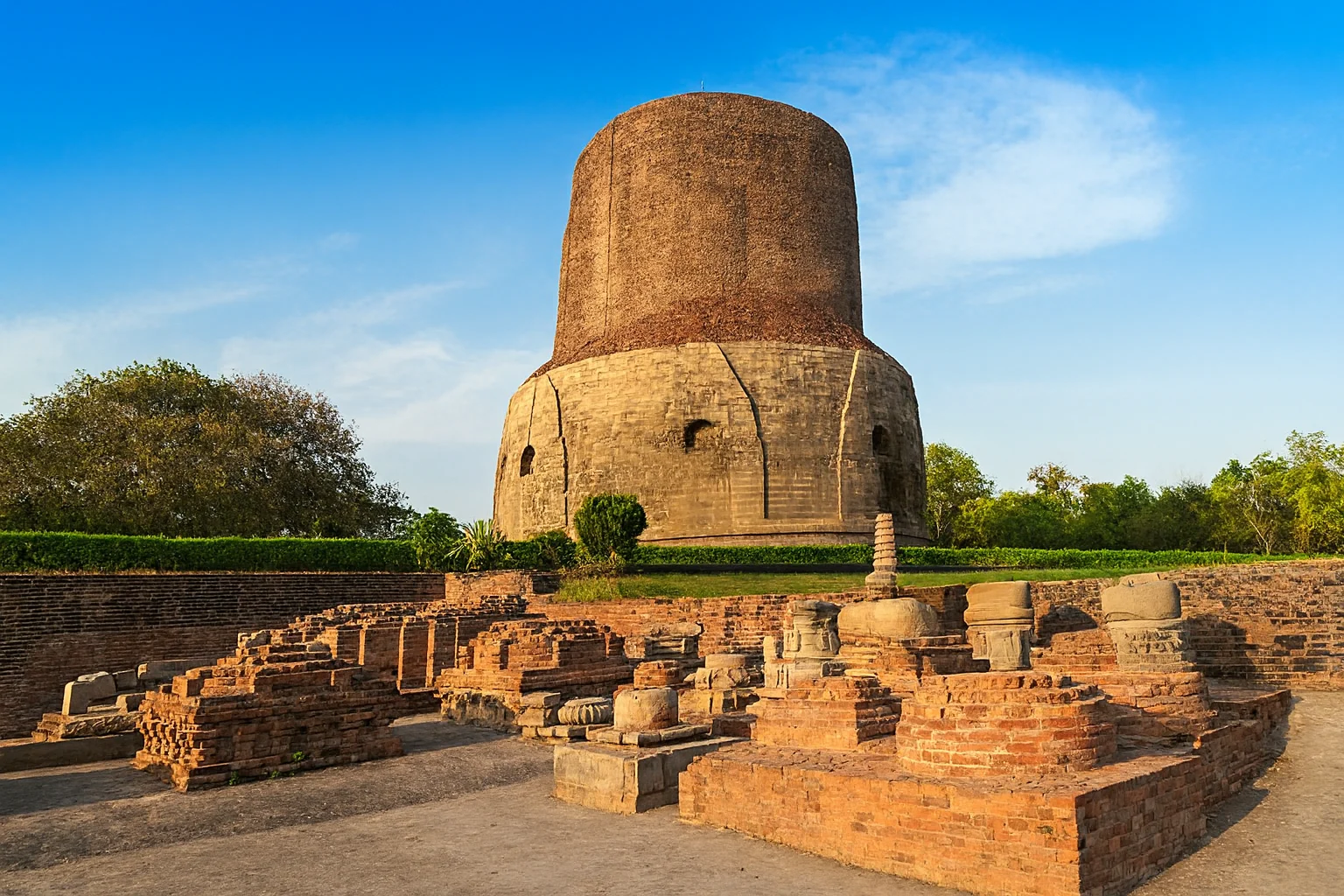
- Sarnath (10 km): Where Buddha delivered his first sermon.
- Ramnagar Fort: A Mughal-style palace with a vintage museum.
Conclusion – Experiencing the Essence of Varanasi
Varanasi is not a destination that can be reduced to a checklist of attractions. It is a living city where spirituality, history, and daily life continue side by side without interruption. From the ritual rhythm of the ghats and the philosophical acceptance of life and death to the lanes filled with craft, food, and devotion, the city offers an experience shaped by continuity rather than spectacle.
What sets Varanasi apart is its ability to remain unchanged at its core while adapting to the present. Temples, river rituals, festivals, and neighbourhood life are not preserved displays; they are active traditions practised every day. For travellers, this means engagement rather than observation — understanding comes through patience, respect, and time spent within the city’s natural flow.
A visit to Varanasi is therefore not about seeing more, but about seeing differently. Those who approach the city with curiosity and cultural sensitivity often leave with a deeper perspective on Indian civilisation, belief systems, and the relationship between people, place, and faith. For travellers planning a broader journey, Varanasi forms an essential part of understanding the country’s cultural depth — a theme explored further in our India travel guide 20 day itinerary , which connects destinations across the subcontinent through history, geography, and lived tradition.
Traveller Takeaway – What to Remember Before You Go
- Varanasi rewards slow travel; early mornings and quiet observation reveal more than rushed sightseeing
- Respect for rituals, temples, and cremation spaces is essential to meaningful engagement
- Seasonal timing strongly influences comfort, crowd levels, and festival experiences
- Choosing accommodation and activities based on intent improves overall satisfaction
- Local food, crafts, and traditions reflect lived culture, not tourist performance
Travellers who prepare thoughtfully and remain open to the city’s pace often find Varanasi to be one of the most intellectually and spiritually enriching journeys in India.
Varanasi is not just a place to see—it is a place to feel. It is a city where mythology, spirituality, history, and daily life flow together like the Ganga. From the mystical glow of Dev Deepawali to the calm of a sunrise boat ride, every moment here feels timeless.
No journey through India is complete without walking its ghats, witnessing the Ganga Aarti, and experiencing the eternal presence of Lord Shiva in Varanasi.
Official Reference
1️⃣Incredible India
- discover all about Varanasi
- https://www.incredibleindia.gov.in/en
Allahabad Travel Guide 2026: Sangam, Kumbh Mela & Hidden Gems
Related Posts
1️⃣Ayodhya Ram Janmabhoomi Darshan:Timings,Significance and Travel Guide
- Know the timings, types & names of Arti all festivals how and when to go
- https://travelwiseguide.com/ayodhya-ram-janmabhoomi-darshan
2️⃣Allahabad Travel Guide 2026: Sangam, Kumbh Mela & Hidden Gems
- Ganga Ghat rituals, Sangam rituals , best time to visit , safety checklist,
- https://travelwiseguide.com/prayagraj-travel-guide-2026/
Actual costs for tickets of Train ,bus , flight which one is cheap & how to book .
👉 Read Guide →https://travelwiseguide.com/how-to-travel-between-major-cities-in-india/
3️⃣Golden Triangle India: Perfect 7-Day Itinerary
To explore step -by-step route for Delhi–Agra–Jaipur, timings & entry f
👉 Read Guide → https://travelwiseguide.com/golden-triangle-india-7-day-itinerary/
FAQs About Varanasi Travel Guide
Is Varanasi worth visiting for first-time travellers?
Yes. Varanasi is ideal for first-time travellers interested in spirituality, culture, and living traditions. The city offers structured rituals, historic sites, and guided experiences that make exploration manageable even for newcomers.
What is the best time to visit Varanasi in 2025?
The best time to visit Varanasi is between October and March, when the weather is pleasant and major festivals take place. This period is ideal for ghat walks, temple visits, and evening Ganga Aarti.
How many days are enough to explore Varanasi properly?
Two to three days are sufficient to experience Varanasi’s key highlights, including the ghats, temples, Ganga Aarti, Sarnath, and local food culture, without rushing.
What are the must-see places in Varanasi?
Key places include the River Ganga ghats, Kashi Vishwanath Temple area, Dashashwamedh Ghat for Ganga Aarti, Assi Ghat for morning rituals, and Sarnath for Buddhist heritage.
Is Varanasi safe for solo and family travellers?
Varanasi is generally safe for both solo and family travellers. Staying aware in crowded areas, respecting local customs, and following basic travel precautions ensures a comfortable visit.
What is special about the Ganga Aarti in Varanasi?
The Ganga Aarti in Varanasi is a daily evening ritual where priests offer fire, sound, and prayer to the River Ganga. It symbolises collective devotion and the spiritual bond between the city and the river.
What food should travellers try in Varanasi?
Travellers should try tamatar chaat, Banarasi paan, and malaiyyo (seasonal winter sweet), as these reflect the city’s local taste, climate-based cuisine, and cultural traditions.
Where should tourists stay in Varanasi?
Tourists can stay near the ghats for a spiritual atmosphere or in central city areas for quieter surroundings and better transport access. The best choice depends on travel style and comfort preference.
What are the best souvenirs to buy in Varanasi?
Popular souvenirs include Banarasi silk textiles, brassware, Rudraksha beads, wooden handicrafts, traditional paan boxes, and locally sourced spices.
Is photography allowed at all ghats in Varanasi?
Photography is allowed at most ghats, but it is strictly discouraged at cremation ghats and during active religious rituals. Visitors should always respect local sensitivities.
Why is Varanasi called the spiritual capital of India?
Varanasi is called the spiritual capital of India because it has been a continuous centre of worship, learning, and liberation-focused philosophy for thousands of years, centred around the River Ganga and Shaivite tradition.
Is this Varanasi Travel Guide useful for planning a trip?
Yes. This Varanasi Travel Guide covers the best time to visit, things to do, food, festivals, safety tips, itineraries, and accommodation, making it suitable for both first-time and repeat travellers.
Can this Varanasi Travel Guide help with a 2-day or 3-day trip?
Yes. This Varanasi Travel Guide includes structured 1-day, 2-day, and 3-day itineraries designed to help travellers plan efficiently based on available time.