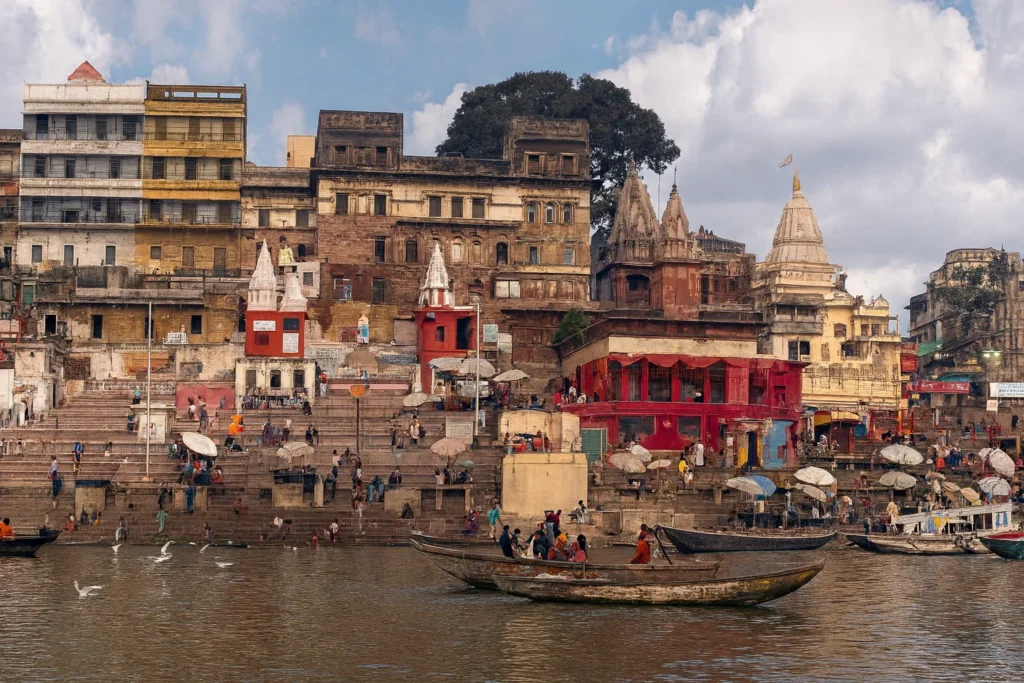
Karnataka Western Ghats Travel Guide 2026
Last Updated on
23 sept.2026
- What Makes Karnataka’s Western Ghats Special?
- Best Places to Explore in the Karnataka Western Ghats
- Wildlife in the Karnataka Western Ghats
- Waterfalls: One of Karnataka’s Biggest Western Ghats Attractions
- Trekking and Mountain Trails
- Coffee, Food and Local Life
- When Is the Best Time to Visit Karnataka Western Ghats?
- How Many Days Do You Need?
- A Simple Karnataka Western Ghats Travel Plan
- Practical Tips for Travelling Through the Western Ghats
- Where Should You Go Next?
- FAQs A bout Karnataka Western Ghats
- Conclusion
.
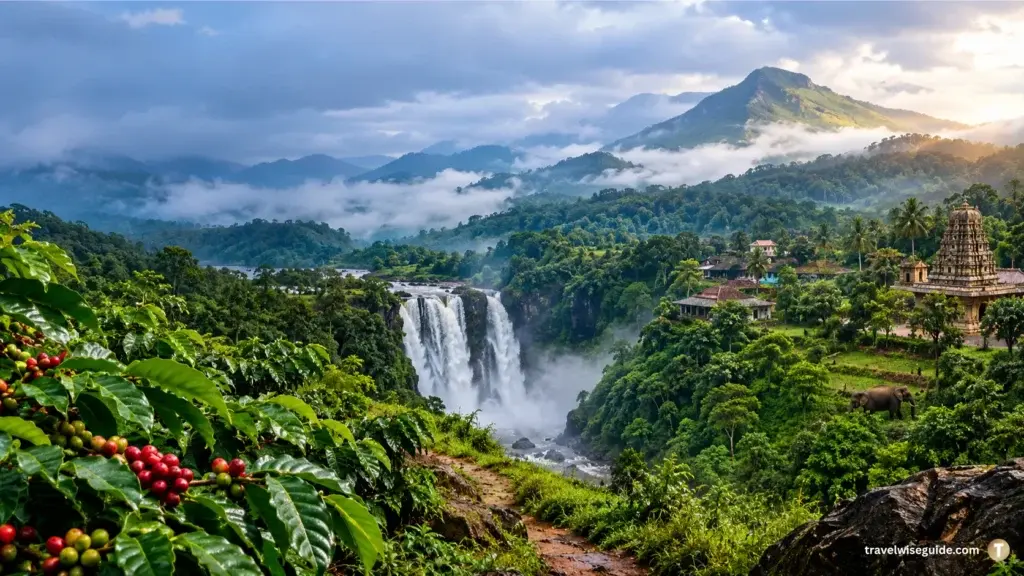
The Karnataka Western Ghats are not one single holiday destination. They are a long green world of misty hills, coffee estates, dense forests, rivers, waterfalls and quiet villages.
This is where Karnataka feels very different from its busy cities and dry inland landscapes. In one trip, you can move from the coffee hills of Coorg and Chikkamagaluru to the rainforests of Agumbe, the waterfalls around Shivamogga and the high mountain trails of the Western Ghats.
The Western Ghats are also much more than a scenic backdrop. UNESCO recognises the Western Ghats as a World Heritage site because of their exceptional biodiversity and high number of species found nowhere else.
This Karnataka Western Ghats Travel Guide brings the region together in one place, so you can understand where to go, what each area is known for and how to plan your journey.
Planning tip: Do not try to cover the whole Karnataka Western Ghats in one short trip. Choose one region and explore it properly.
What Makes Karnataka’s Western Ghats Special?
Karnataka’s Western Ghats combine several types of travel in a relatively small part of the state.
You will find:
- misty hill stations
- coffee plantations
- rainforest landscapes
- large waterfalls
- wildlife reserves
- trekking routes
- mountain peaks
- forest villages
- temples and local culture . Karnataka Tourism also highlights many of these hill and nature destinations across the state.
The landscape changes as you travel. Coorg is known for coffee and green hills. Chikkamagaluru combines coffee country with mountain trails. Agumbe is famous for its heavy rain and rainforest setting. Shivamogga is an important gateway to waterfalls and forest areas.
Karnataka Tourism lists destinations such as Coorg, Chikkamagaluru, Agumbe, Sakleshpur and Kemmanagundi among its hill destinations.
Best Places to Explore in the Karnataka Western Ghats
Instead of looking at the Western Ghats as one huge area, it is easier to divide your journey into a few travel regions.
| Region | Best known for | Ideal for |
|---|---|---|
| Coorg | Coffee, hills and forests | First-time visitors |
| Chikkamagaluru | Coffee, peaks and waterfalls | Nature and trekking |
| Agumbe | Rainforest and monsoon | Nature lovers |
| Sakleshpur | Green hills and plantations | Relaxed trips |
| Shivamogga region | Waterfalls and forests | Scenic road trips |
| Kudremukh region | Mountains and grasslands | Trekking |
| Kodachadri region | Hills, forests and views | Trekking and nature |
These regions should not be treated as separate worlds. Many of them connect naturally by road, making them useful for longer Western Ghats road trips.
Coorg
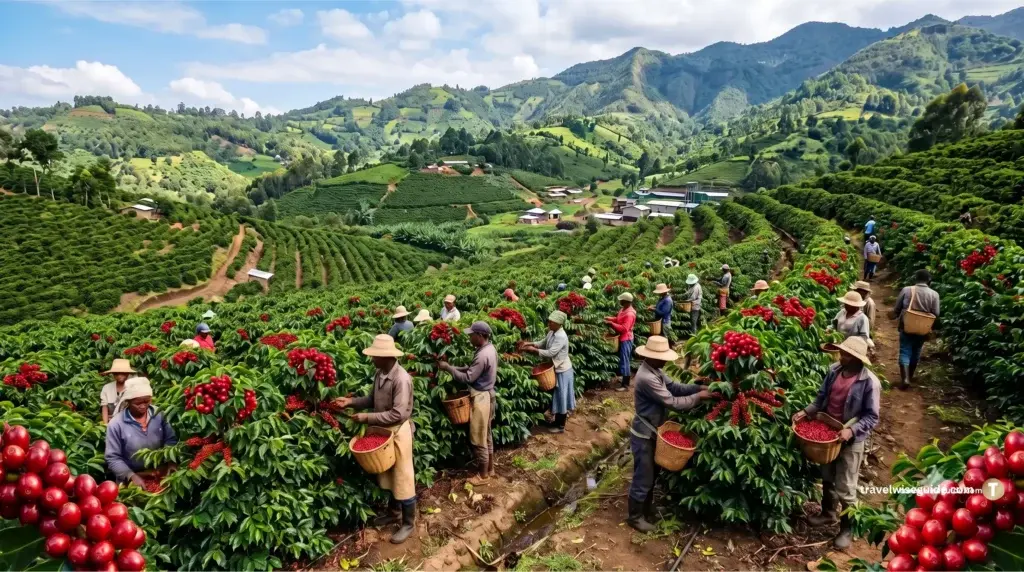
Coorg, also called Kodagu, is one of the best-known hill regions in Karnataka.
Coffee plantations, forested hills and small roads through the countryside give the area its character. It is a good choice if you want a mixture of nature, local food, coffee experiences and comfortable stays.
For a first Western Ghats trip, Coorg can also work well as a base for exploring nearby attractions.
Chikkamagaluru
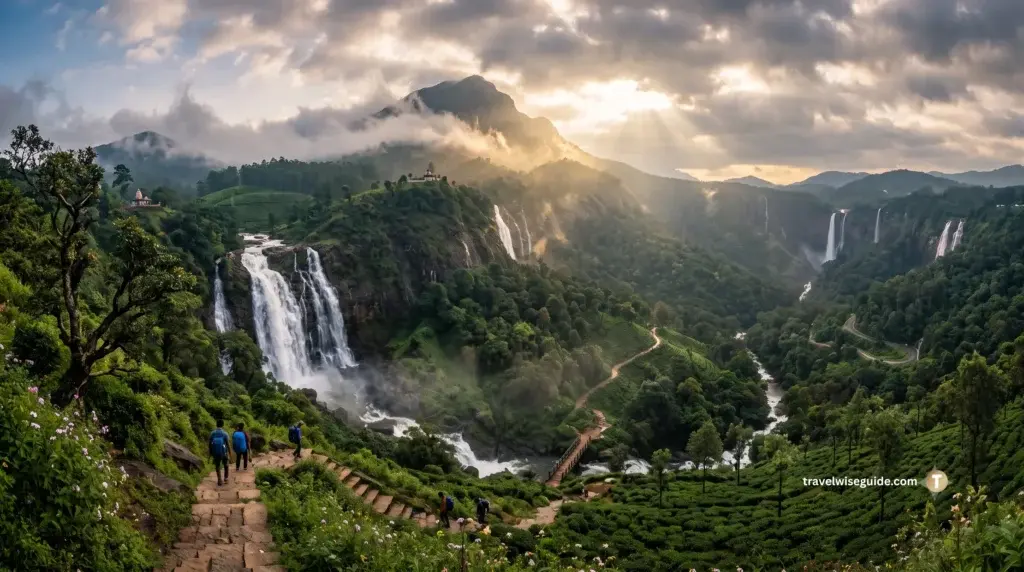
Chikkamagaluru is another important coffee-growing region and a natural choice for travellers who want hills and outdoor activities.
The area is closely connected with peaks, trekking routes and waterfalls. It is also a useful base for exploring places such as Mullayanagiri and nearby forest areas.
If your main interest is Karnataka waterfalls, Chikkamagaluru deserves special attention.
Agumbe
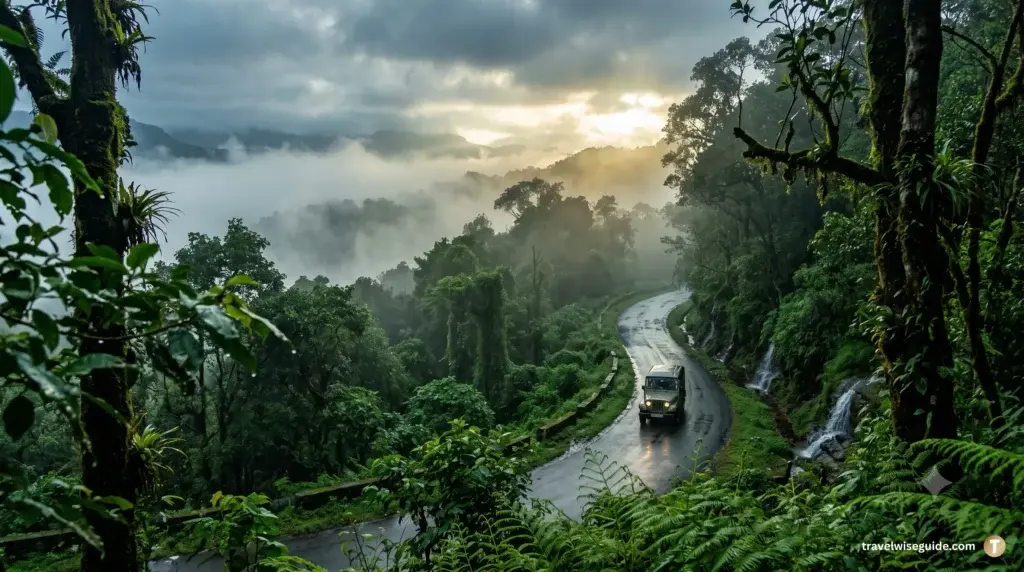
Agumbe gives you a very different Western Ghats experience.
It is a rainforest hill station in Shivamogga district and is known for heavy rainfall, dense greenery, mist and forest landscapes. Karnataka Tourism describes Agumbe as one of the state’s atmospheric hill stations and notes its importance for rainforest and wildlife experiences.
If you enjoy quiet roads, rain and deep green forests more than busy tourist attractions, Agumbe is worth adding to your plan.
Sakleshpur
Sakleshpur is another green hill destination where coffee plantations, rolling hills and countryside come together.
It works particularly well for travellers who want a slower trip rather than a packed sightseeing schedule.
Shivamogga and the Waterfall Country
The Shivamogga region is often a useful gateway for exploring the northern Karnataka Western Ghats.
Jog Falls is one of its best-known attractions, while the wider region has forests, rivers and other waterfalls.
Karnataka Tourism itself describes Shivamogga as a gateway to the Western Ghats and highlights its waterfalls, forests and green peaks.
For a detailed waterfall-by-waterfall trip, continue to our [Waterfalls in Karnataka 2026 guide].
Wildlife in the Karnataka Western Ghats
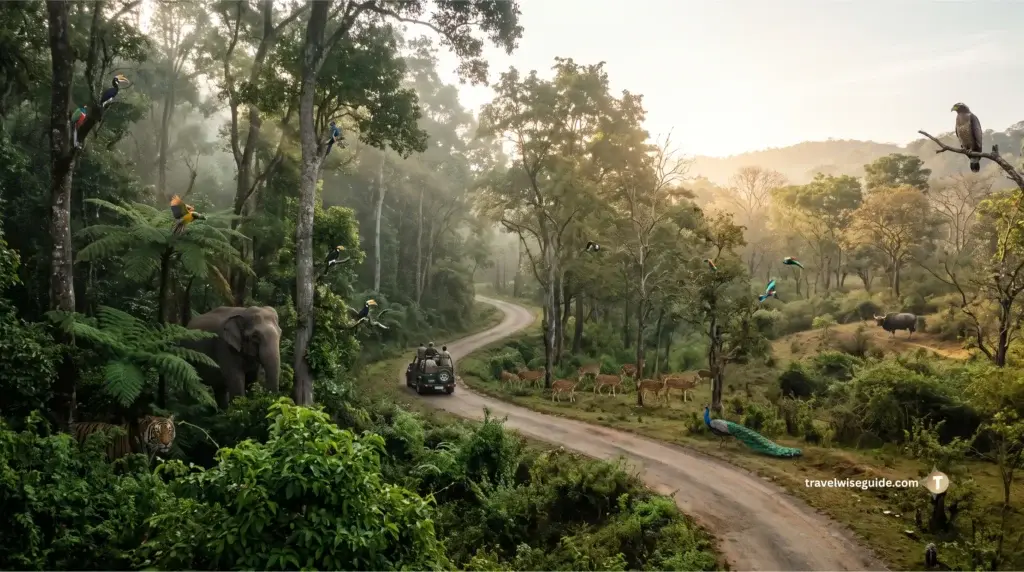
The forests of Karnataka are home to a wide range of wildlife and protected areas.
The experience is not limited to seeing a particular animal. Forest drives, birdwatching, guided nature walks and simply spending time near the forest can all be part of the journey.
Karnataka has a wide network of national parks, wildlife sanctuaries and tiger reserves, with landscapes ranging from dry forests to evergreen Western Ghats rainforest. Before planning a safari, check Karnataka’s official wildlife and safari information for current details.
Some important areas to consider include:
- Kudremukh region
- Brahmagiri Wildlife Sanctuary
- Bhadra region
- Pushpagiri Wildlife Sanctuary
- Biligiri Ranganatha Swamy Tiger Reserve
Wildlife visits should always follow local forest rules. Do not treat protected forests like ordinary sightseeing areas.
Waterfalls: One of Karnataka’s Biggest Western Ghats Attractions
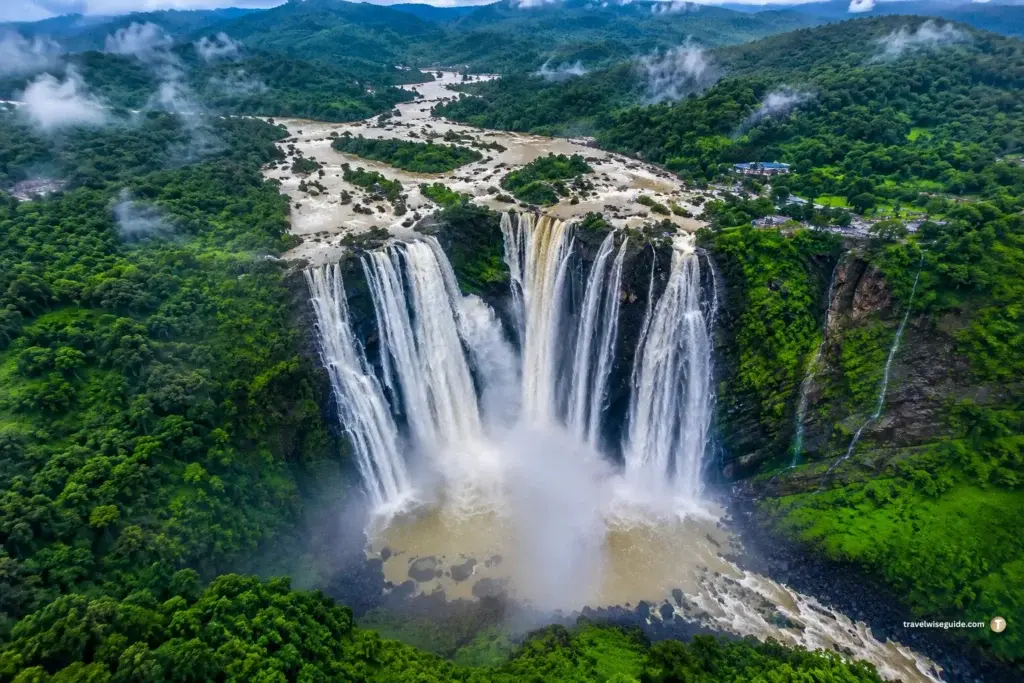
Rain is one of the reasons the Karnataka Western Ghats change so dramatically through the year.
During the monsoon, streams fill up and many waterfalls become much stronger. Jog Falls, Hebbe Falls, Barkana Falls and several lesser-known falls are part of this wider landscape. Karnataka Tourism currently lists Jog Falls, Barkana Falls and Hebbe Falls among its major hill attractions.
But there is an important travel point here:
More water does not always mean easier travel.
Heavy rain can make forest roads slippery and some trails difficult. Water levels can also affect access.
So before visiting a waterfall, check the latest local access conditions rather than relying only on an old travel post.
Monsoon reminder: The Western Ghats can look spectacular in heavy rain, but safety should come before the photograph. Follow local warnings, avoid unsafe edges and never enter fast-flowing water.
Trekking and Mountain Trails
The Karnataka Western Ghats also offer many trekking opportunities.
Mullayanagiri, Kudremukh and Kodachadri are among the better-known mountain areas.
Kudremukh is especially known for its open mountain landscapes, forests and grasslands. Kodachadri rises to about 1,343 metres and combines mountain scenery with forest and religious importance near Kollur.
Kumara Parvatha is another demanding mountain experience, rising above the Kukke Subramanya area. Karnataka Tourism describes it as a challenging trek within the Pushpagiri Wildlife Sanctuary landscape. If you want to explore these landscapes on foot, our guide to trekking in Karnataka covers the state’s popular mountain trails, forest routes and hill treks, including Mullayanagiri, Kudremukh, Kodachadri and Kumara Parvatha.
Do not choose a trek only because photographs look beautiful. Check the current trail condition, weather, permissions, guide requirements and your own fitness before starting.
Coffee, Food and Local Life
A Western Ghats trip is incomplete if you only stop at viewpoints.
Coffee is part of the identity of several Karnataka hill regions, especially Coorg and Chikkamagaluru. Plantation stays can give you a slower view of the region, away from the usual sightseeing route.
Local food is another reason to leave some free time in your itinerary. Try regional meals, coffee and local specialities instead of planning every hour around tourist attractions.
This is also where the Western Ghats become more than a landscape. Forests, farms, temples, villages and plantation communities all form part of the region’s travel story.
When Is the Best Time to Visit Karnataka Western Ghats?
There is no single best month for everyone.
| Season | What to expect | Best for |
|---|---|---|
| June–September | Heavy rain, waterfalls and deep greenery | Monsoon lovers |
| October–February | Cooler weather and clearer conditions | Road trips and trekking |
| March–May | Warmer conditions in many areas | Short hill escapes |
The southwest monsoon generally affects Karnataka between June and September, with the Western Ghats receiving some of the state’s heaviest rainfall.
For waterfalls, the monsoon and months soon after it can be attractive. For trekking, conditions depend heavily on the individual trail and current weather.
How Many Days Do You Need?
For a first trip, avoid trying to see every part of the Karnataka Western Ghats.
3–4 days
Choose one base such as Coorg or Chikkamagaluru and explore slowly.
5–7 days
You can combine two nearby regions and include waterfalls, plantations, viewpoints and one outdoor activity.
8–10 days
A longer road trip can connect several Western Ghats regions, but allow enough time for driving and changing weather.
The best itinerary is not the one with the highest number of places. It is the one that leaves enough time to actually enjoy each place.
A Simple Karnataka Western Ghats Travel Plan
For a first-time visitor, this is one practical way to think about the journey:
Day 1–2: Coorg
Day 3–4: Chikkamagaluru
Day 5: Waterfalls and nearby nature
Day 6: Trek or plantation experience
Day 7: Return journey
This is only a framework. Your final route should depend on your starting city, season and the places you want to explore.
If you are more interested in waterfalls, you can build the trip around our Karnataka waterfalls guide. If trekking is your priority, a mountain-focused itinerary will make more sense.
Practical Tips for Travelling Through the Western Ghats
Keep these simple points in mind:
- Check the weather before leaving.
- Start early for long drives and popular attractions.
- Keep some cash for smaller towns and local stops.
- Carry a light rain jacket, even outside the main monsoon months.
- Wear proper shoes for forest paths and trails.
- Follow forest department instructions.
- Do not leave plastic or food waste behind.
- Do not enter restricted forest areas.
- Keep extra travel time during heavy rain.
- Check attraction timings and access before setting out.
Most importantly, do not rush.
The Western Ghats are better experienced slowly.
Where Should You Go Next?
If you are planning your Karnataka Western Ghats journey, use this guide as your starting point and then go deeper into one theme.
For waterfalls: Explore our Waterfalls in Karnataka 2026 guide.
For hill escapes: Look next at Coorg, Chikkamagaluru, Agumbe and Sakleshpur.
For trekking: Explore Mullayanagiri, Kudremukh, Kodachadri and Kumara Parvatha.
For wildlife: Plan around protected forests and follow the latest local rules before travelling.
And if you are planning a much larger journey across the entire mountain chain, return to our [Ultimate Western Ghats Road Trip & Travel Guide] to see how Karnataka fits into the wider Western Ghats route.
The Karnataka Western Ghats are not about ticking off twenty places in one week. They are about forests after rain, coffee roads in the hills, the sound of a waterfall and the feeling of being away from the city.
Choose your region, travel at a comfortable pace and leave some room for the places you did not plan to find.
FAQs A bout Karnataka Western Ghats
What are the best places to visit in the Karnataka Western Ghats?
The best places to visit in the Karnataka Western Ghats include Coorg, Chikkamagaluru, Agumbe, Sakleshpur, Kudremukh, Kodachadri and the Shivamogga region. Each area offers a different mix of hills, forests, waterfalls, coffee plantations and trekking.
What is the best time to visit the Karnataka Western Ghats?
The best time depends on your travel plans. June to September is ideal for waterfalls, rain and lush green landscapes, while October to February is generally better for trekking, road trips and comfortable outdoor activities.
How many days are enough for a Karnataka Western Ghats trip?
Three to four days are enough to explore one main region, while five to seven days allow you to combine two or more areas. A longer trip is better if you want to cover waterfalls, hill stations, wildlife and trekking without rushing.
Which are the best waterfalls to visit in Karnataka?
Jog Falls, Hebbe Falls, Abbey Falls, Irupu Falls, Sathodi Falls and Barkana Falls are some of the well-known waterfalls to consider. Water levels and access can change during the monsoon, so check local conditions before travelling.
Is the Karnataka Western Ghats suitable for a family trip?
Yes, the Karnataka Western Ghats are suitable for a family trip, especially around hill stations, coffee plantations, scenic viewpoints and easier nature attractions. Difficult treks should be chosen according to the age and fitness of the travellers.
What are the best places for trekking in the Karnataka Western Ghats?
Mullayanagiri, Kudremukh, Kodachadri and Kumara Parvatha are among the popular trekking areas in the Karnataka Western Ghats. Trail difficulty, weather and access rules vary, so check current local information before starting a trek.
Which places are famous for coffee plantations in Karnataka?
Coorg and Chikkamagaluru are two of the best-known coffee-growing regions in the Karnataka Western Ghats. Visitors can explore coffee estates, stay at plantation properties and learn more about the region’s coffee-growing traditions.
What can you see on a Karnataka Western Ghats road trip?
A Karnataka Western Ghats road trip can include misty hills, coffee plantations, waterfalls, rainforests, wildlife areas, mountain trails and small villages. The exact route depends on your starting point, available time and the season of travel.
Conclusion
The Karnataka Western Ghats are best explored slowly. You do not need to cover every waterfall, hill station or trekking trail in one trip.
Choose a region that matches your interests. Go to Coorg or Chikkamagaluru for coffee hills, explore Agumbe for rainforest scenery, visit the Shivamogga region for waterfalls, or head towards Kudremukh and Kodachadri for mountain trails.
The beauty of this region is that the journey itself becomes part of the experience. A quiet road through green hills, a small coffee estate, mist around a mountain or the sound of a waterfall can be just as memorable as a famous tourist attraction.
Start with one part of the Western Ghats, give yourself enough time to explore it properly, and then return for another journey. Karnataka has enough forests, hills, waterfalls and quiet corners to make every trip feel different.