Agra Fort, The Canvas of Mughal Emperor
Who Built Agra Fort and When
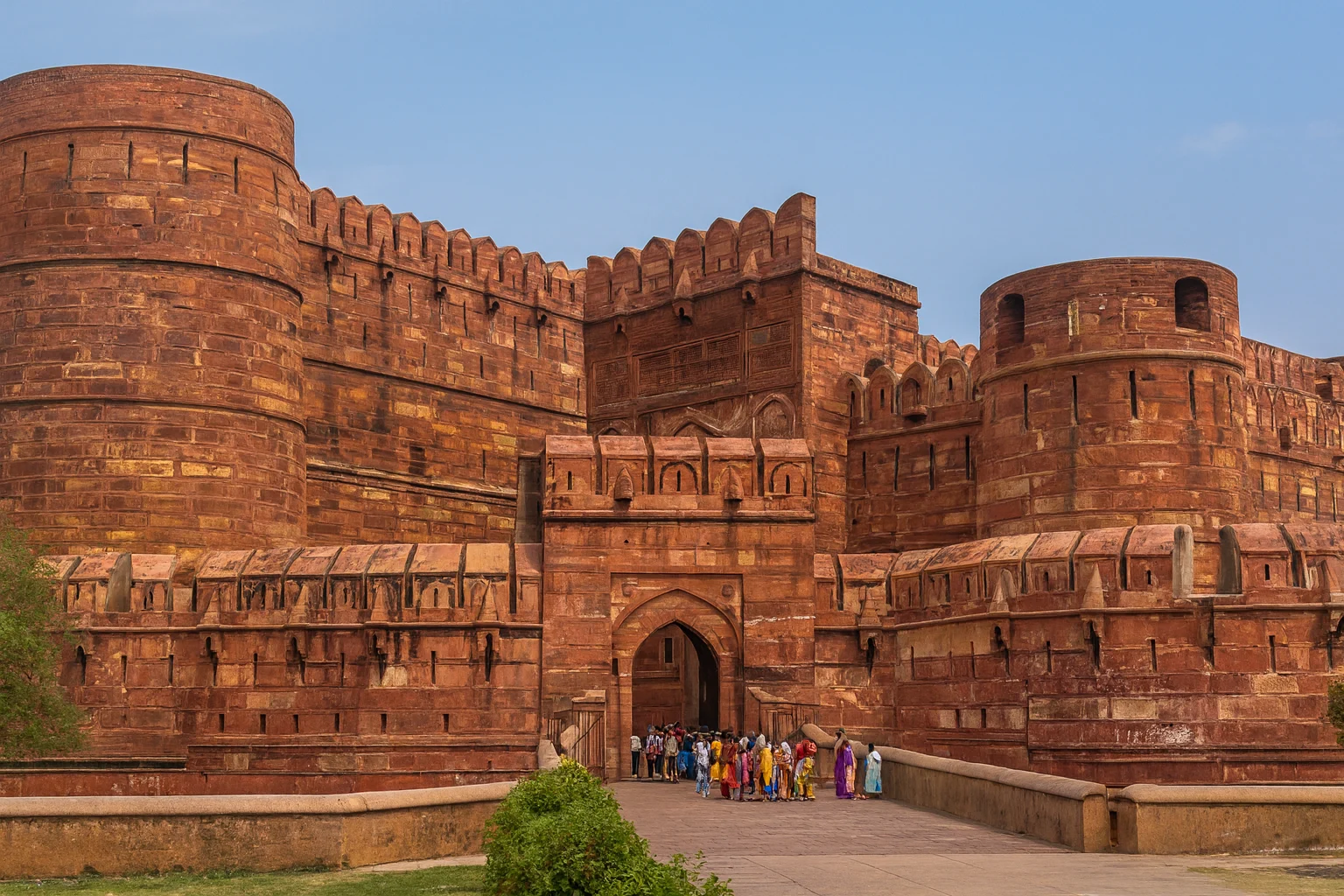
Agra Fort was commissioned by Emperor Akbar in 1565 CE and completed around 1573 CE. It rose on the ruins of the older Badalgarh Fort that had once belonged to the Lodhi dynasty.
Akbar quickly realised Agra’s importance – a city on the banks of the Yamuna, right in the heart of northern India. He decided to make it his capital, not just building a fortress but a palace city – one that could house queens, courtiers, soldiers, and treasuries.
What began as Akbar’s military stronghold was later polished into a masterpiece by his grandson Shah Jahan, who added the marble palaces that still dazzle visitors today. that is why said it a canvas of the Mughal emperors UNESCO recognised it in 1983 and declared the Agra Fort a cultural world heritage site.
- Who Built Agra Fort and When
- Architecture & Materials
- Dynasties and Kings of Agra
- Architecture of Agra Fort – Emperor-wise Comparison
- Later Period – Decline & Foreign Powers
- Interesting & Lesser-Known Facts
- What Tourists Often Miss
- Why Agra Fort Feels Alive
- How to Reach Agra Fort
- Agra Fort Timings
- Entry Fees
- Best Time to Visit
- Travel Tips
- FAQs
- Conclusion
Architecture & Materials
Style
Agra Fort’s style is not simply Mughal, it is a melting pot of cultures carved into stone. When you walk through its gateways, you notice how the Islamic domes rise gracefully while just next to them, Hindu-style lotus flowers bloom on stone brackets. Persian influences appear in the symmetry of the gardens, where water once flowed through narrow channels like veins of life, cooling the courtyards. Central Asian design brings balance and order, with perfect geometry in the arches and walls that frame the skyline.
This blend was not accidental – Akbar’s architects consciously drew from diverse traditions to reflect the empire’s diversity. In every arch and pillar you see a silent message: the Mughal state was not only powerful but also inclusive, weaving together the skills of craftsmen from Rajasthan, Gujarat, Persia, and Central Asia.
The result is a style that feels both monumental and intimate, fierce in its scale but warm in its detailing – a true cultural dialogue set in stone.
Materials
The choice of materials itself tells the story of two emperors. Akbar’s fort is clad in deep red sandstone quarried from Fatehpur Sikri, glowing in the sun like embers of fire. This sandstone was durable and military in character, perfect for the fort’s role as both shield and palace.
When Shah Jahan came to power, he overlaid this rugged red with Makrana marble, the same flawless white stone used to build the Taj Mahal. Marble changed the tone entirely – instead of raw strength, the fort now radiated beauty and refinement.
Inside, pietra dura inlay work decorated the marble panels with semi-precious stones shaped into flowers and vines, creating walls that looked like living paintings.
The contrast between Akbar’s earthy sandstone and Shah Jahan’s ethereal marble still defines Agra Fort today. You can feel the shift in mood as you walk: red sandstone speaks of power and command, while marble whispers of luxury, romance, and devotion. Together they make the fort both fortress and jewel box.
Layout
The layout of Agra Fort shows that it was never just a fort – it was a city within walls. Spread across a semi-circular enclosure of 2.5 kilometres, its ramparts rise 70 feet above the Yamuna’s banks, once mirrored in the river’s waters. The moat surrounding it was filled with crocodiles, turning the fort into an island of power, nearly impossible to attack.
Beyond the gates lies a self-contained world: sprawling courtyards where soldiers drilled and nobles paraded, audience halls where emperors sat on thrones of marble, and quiet gardens designed for leisure and reflection.
Palaces lined with carved balconies faced these gardens, while mosques gave the rulers their spiritual centres. Beneath the surface, secret tunnels whispered of strategy and escape, said to connect the fort with Fatehpur Sikri and even the Taj Mahal.
Moving through Agra Fort feels like wandering through layers of history – one moment you stand in a vast military court, the next you step into an intimate harem courtyard, then into a cool marble chamber where echoes of poetry and music once filled the air. The layout makes you realise this was not a monument but a living organism – a city that breathed with politics, power, and daily life.
Dynasties and Kings of Agra
For almost 100 years, Agra Fort was the beating heart of the Mughal Empire:
- Akbar (1556–1605): Turned it into a fortress-palace, symbolising strength and power.
- Jahangir (1605–1627): Loved luxury and gardens, held court here with European envoys.
- Shah Jahan (1628–1658): Marble palaces and audience halls; later imprisoned here by Aurangzeb.
- Aurangzeb (1658–1707): Added barracks, stripped away luxury, focused on military order.
- Later: Marathas, Jats, and finally the British (1803) took over, altering much of the Mughal grandeur.
Early Foundation – Before the Mughals
Before Akbar, the Lodhi-era Badalgarh Fort stood here. Babur camped at it after his 1526 victory at Panipat, but he dismissed it as weak and ruined. Later Humayun and Sher Shah Suri also occupied it briefly, but it was Akbar who rebuilt it into the monument we see today.
Emperor Akbar (1556–1605) – The Builder of Might
When Akbar decided to make Agra his capital, he dreamed of a fort that was more than just a fortress. He wanted a palace-city that would project Mughal strength across India, a place that could house his family, his court, his soldiers, and his treasury. Between 1565 and 1573 CE, Agra Fort rose from the banks of the Yamuna like a statement of power carved in red sandstone.
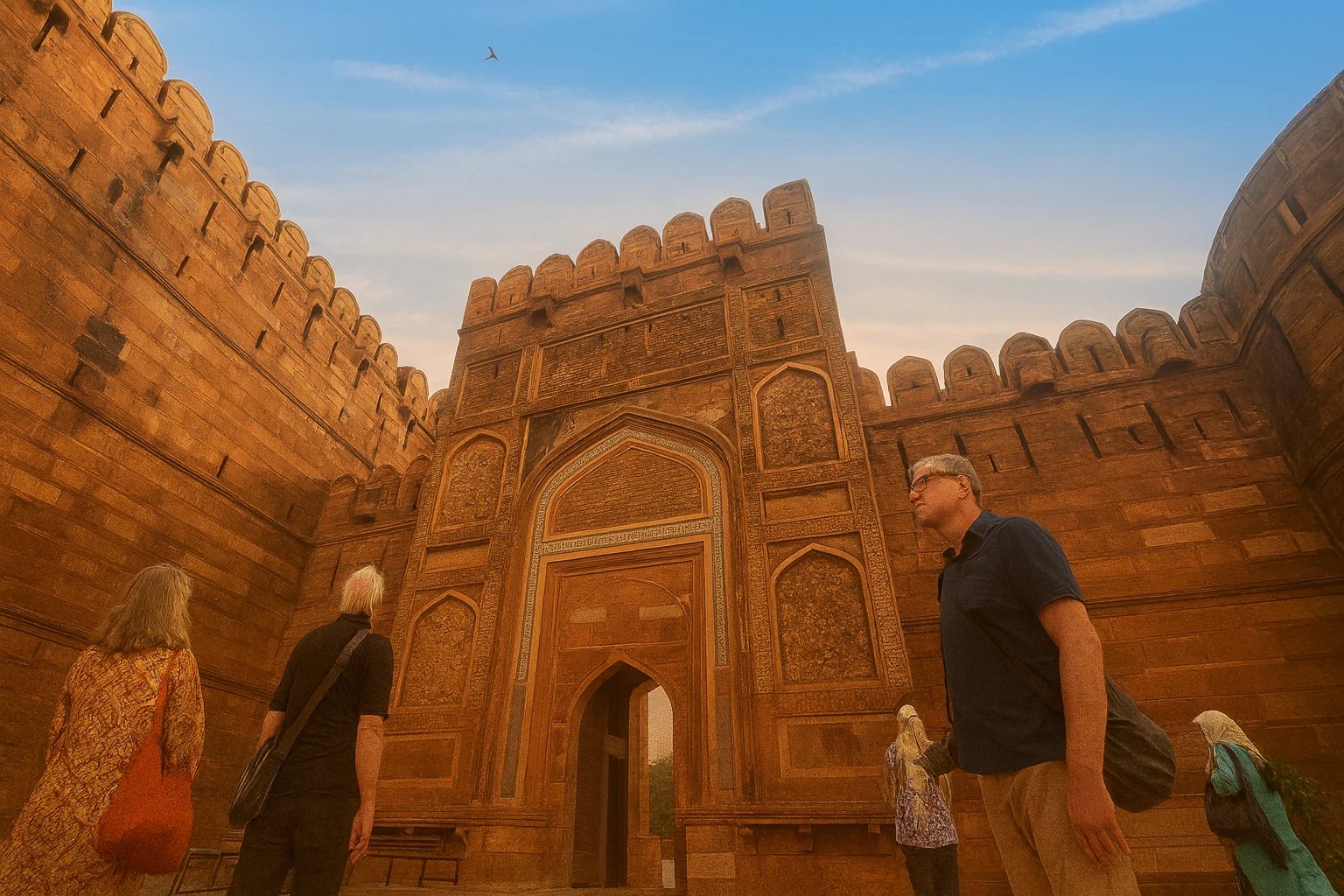
The Amar Singh Gate, with its zig-zag pathways, was designed not just for grandeur but for defence. Enemies could never storm straight in; they were forced to slow down under the watchful eyes of Mughal archers above. Even today, stepping through this gate feels like crossing into a world of authority and precision.
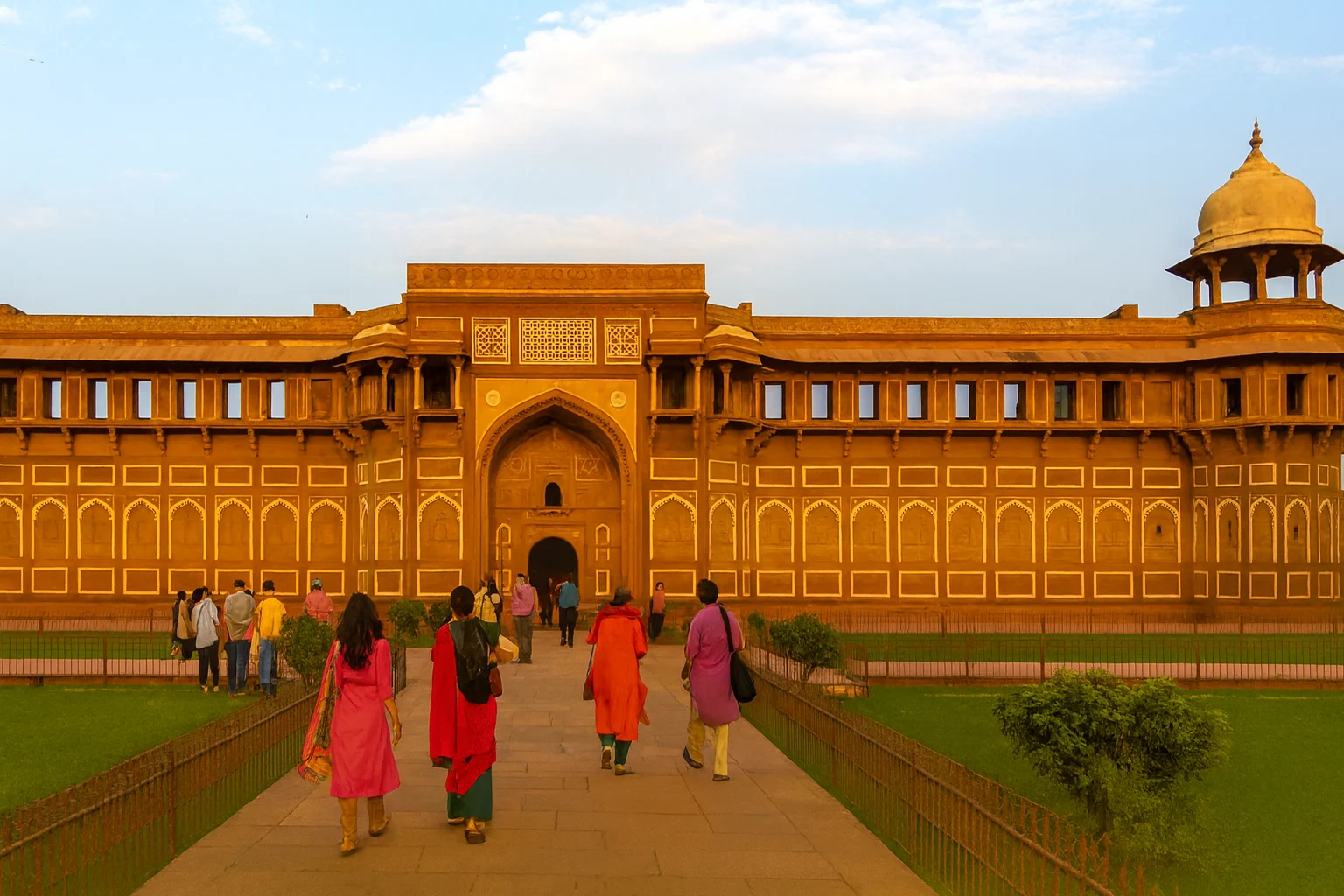
Inside, the Jahangiri Mahal stands as Akbar’s most celebrated construction. Built for the royal women, its courtyards once echoed with music, chatter, and the soft jingle of ornaments. Here, Hindu-style brackets and lotus motifs blended with Islamic arches, creating a fusion that reflected Akbar’s famous policy of tolerance. It wasn’t just a palace—it was a vision of cultural unity in stone.
Akbar’s own residence, the Bengali Mahal, and the now-ruined Akbari Mahal, remind us of his practical yet majestic taste. The Nagar khana (Drum House) once roared with music to announce the emperor’s presence, turning the fort into a stage for royal drama. With his sandstone-heavy style, Akbar’s Agra Fort felt bold, strong, and unshakable—much like the man himself.
Character: Military might and cultural fusion – Akbar’s fort was a fortress of power, but also a canvas of inclusivity.
Emperor Jahangir (1605–1627) – The Garden Lover
If Akbar built for power, Jahangir built for pleasure and refinement. He did not add massive new structures, but he reshaped Agra Fort into a place of leisure, elegance, and poetry. His love for nature and gardens can still be felt in the heart of the fort.
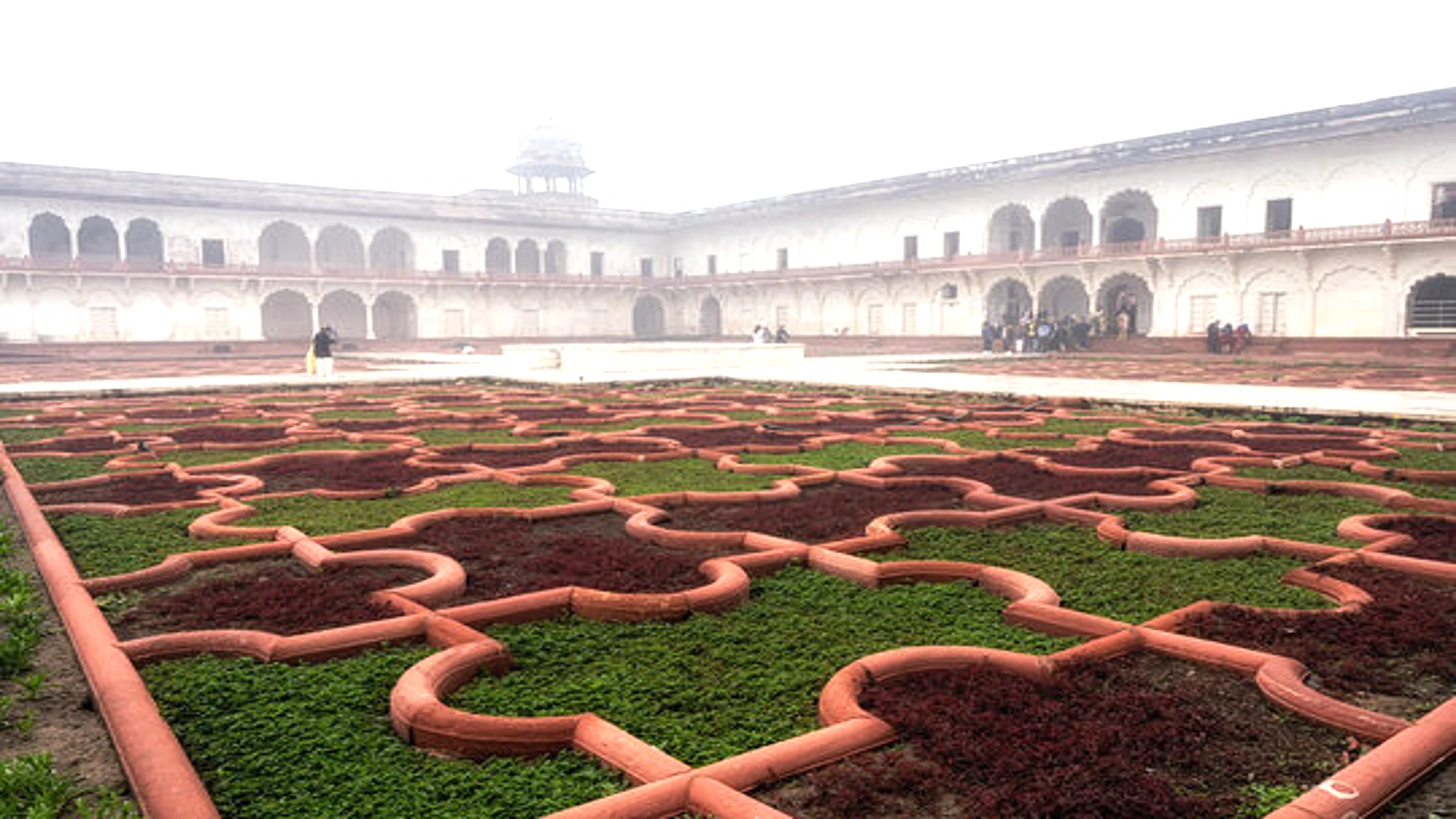
The most famous of his contributions is the Anguri Bagh (Grape Garden), a geometrical paradise once filled with vines, fountains, and shady pavilions. Imagine Jahangir here, reclining with poets, sipping wine, and listening to music as cool breezes drifted through the courtyard. It was less a military base and more a garden of delights, where Mughal sophistication bloomed.
Jahangir also adored art and delicate details. He introduced mosaic decorations, paintings, and ornamental finishes, softening Akbar’s heavy sandstone with touches of elegance. His court became famous for welcoming European envoys like Sir Thomas Roe, who carried back vivid tales of the splendour they witnessed inside Agra Fort.
Though Jahangir did not raise towering palaces, his mark is clear. He transformed Agra Fort from a place of discipline into a place of refined living, where culture, poetry, and pleasure were as important as politics.
Character: Gardens, wine, art, and elegance – Jahangir’s Agra Fort was a world of leisure, a palace where emperors could breathe.
Emperor Shah Jahan (1628–1658) – The Marble Dreamer
If Akbar gave Agra Fort its power, and Jahangir its elegance, it was Shah Jahan who gave it its soul of romance. Known as the emperor of white marble, Shah Jahan reshaped large parts of the fort into dazzling palaces and halls that still shimmer with beauty today. Walking through these spaces feels like stepping into a dream—where art, love, and power meet in perfect harmony.
One of his earliest additions was the Khas Mahal, his private residence. Built entirely of white marble, it glows softly under the sunlight. Its jali screens are so finely carved that they allowed light and air to pass through while keeping the emperor’s private life hidden from curious eyes. It was here that Shah Jahan lived not as a warrior, but as a man of refinement, surrounded by luxury and grace.
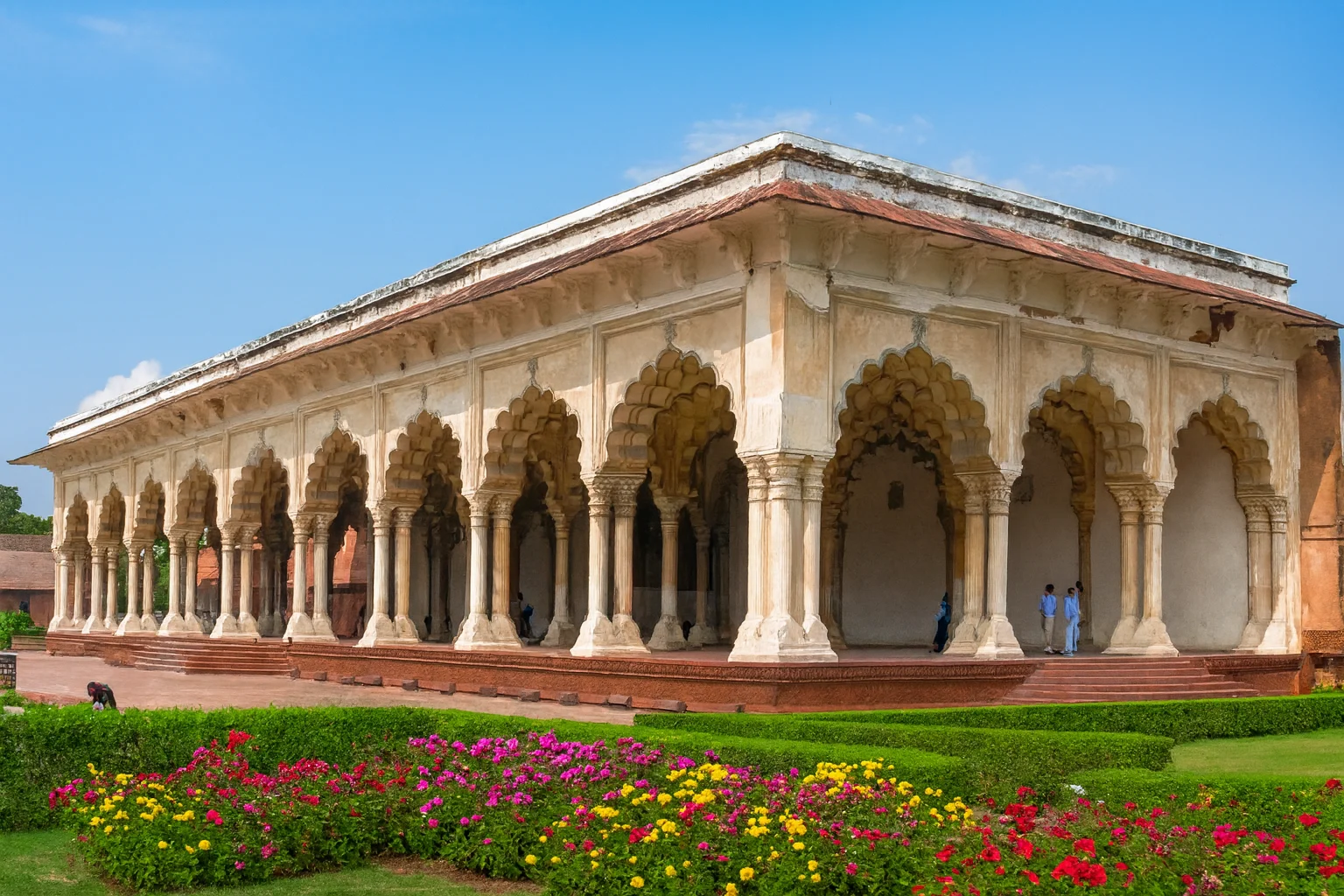
The Diwan-i-Am (Hall of Public Audience) and the Diwan-i-Khas (Hall of Private Audience) reflected his dual role as ruler and dreamer. In the public hall, he sat upon a marble throne to hear the petitions of his people. In the private hall, he presided over glittering meetings where the legendary Peacock Throne, studded with rubies, emeralds, and the Kohinoor diamond, once stood. These halls were less about military might and more about the splendour of the empire—a theatre where Shah Jahan was both emperor and artist.
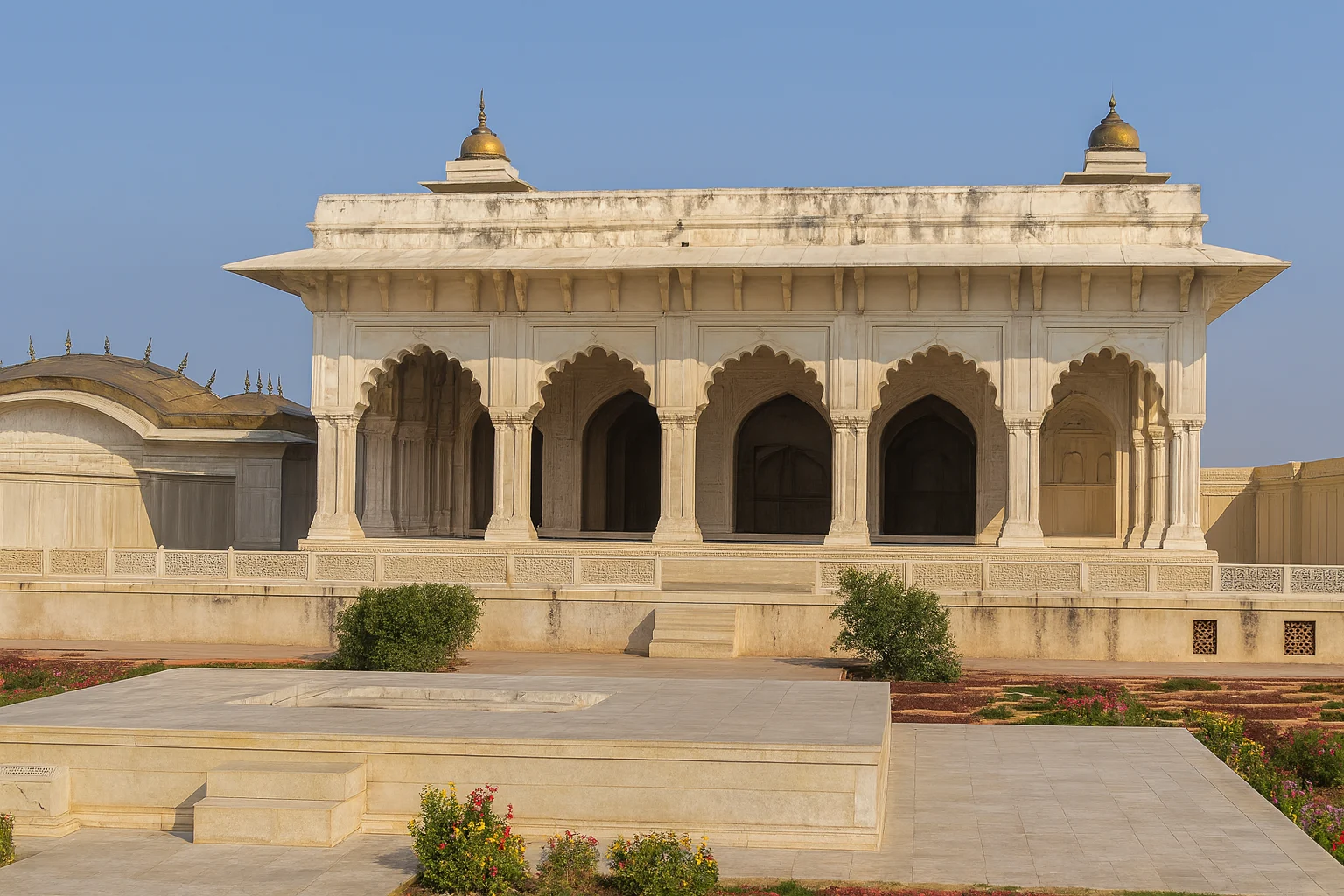
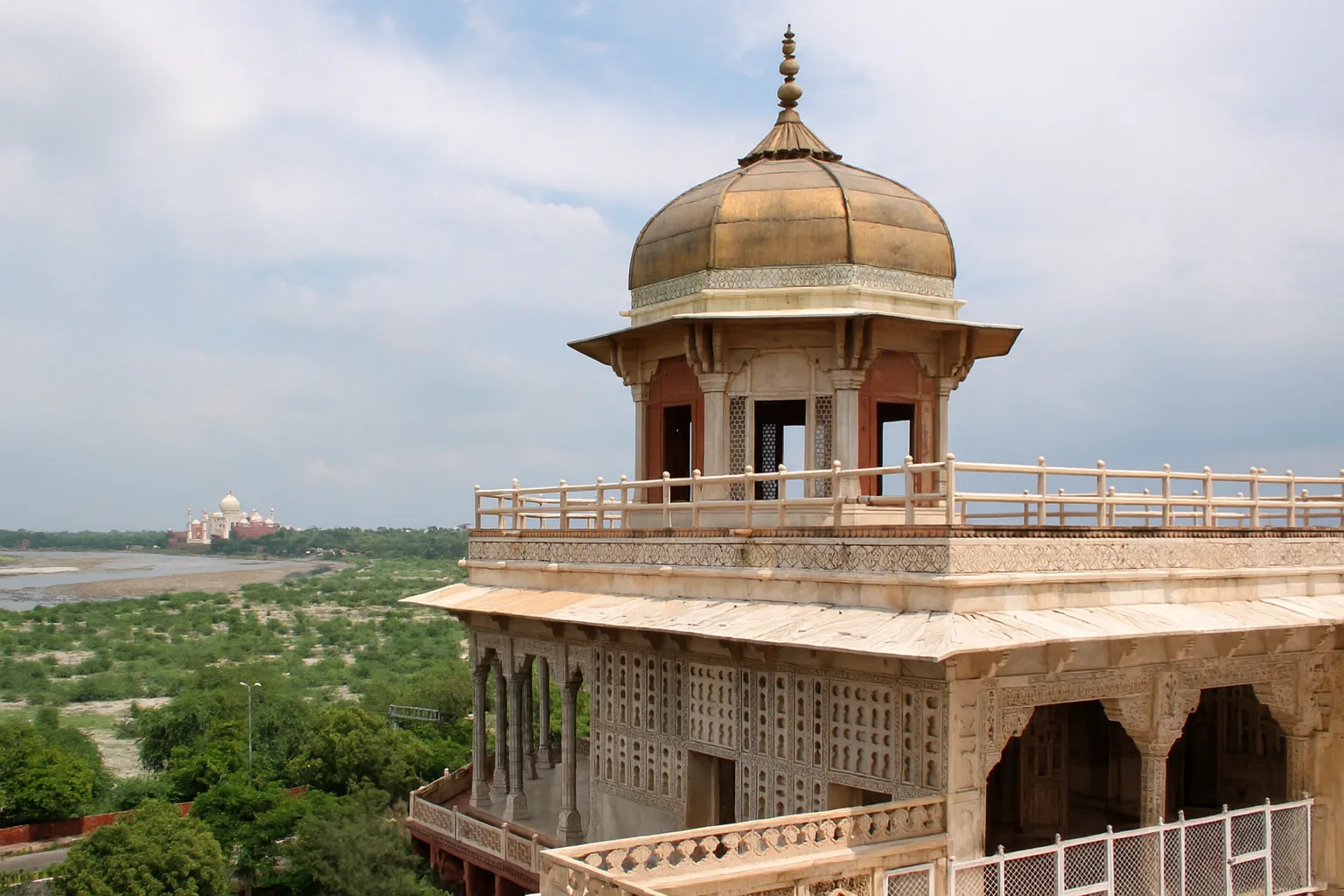
The Musamman Burj, an octagonal tower overlooking the Yamuna, holds the most poignant story of all. It was here that Shah Jahan was imprisoned by his son Aurangzeb. From its marble windows, he could gaze at the Taj Mahal—the final resting place of his beloved Mumtaz. Even in captivity, his world remained framed by love and marble, a poetic ending to a ruler who saw beauty as the highest form of power.
Perhaps the most enchanting of his creations is the Sheesh Mahal (Mirror Palace). Step inside, and you find walls studded with tiny mirrors that turn a single candle into a thousand shimmering stars. The Moti Masjid (Pearl Mosque), pure and glowing, and the Nagina Masjid, a hidden mosque for royal women, complete his vision of a fort where devotion, romance, and power lived side by side.
Character: White marble, pietra dura inlay, perfect symmetry – Shah Jahan’s Agra Fort is not just architecture, but poetry carved in stone.
Emperor Aurangzeb (1658–1707) – The Stern Ruler
When you step into the parts of Agra Fort shaped by Aurangzeb, the mood changes immediately. Gone is the romance of Shah Jahan’s marble pavilions, gone are the soft whispers of music and poetry from Jahangir’s gardens. What remains is a silence that speaks of control and discipline.
Aurangzeb’s story here begins with a dramatic act: imprisoning his own father, Shah Jahan, inside the Musamman Burj. Imagine the aging emperor gazing at the Taj Mahal, built for his beloved Mumtaz, while being held captive by his son. That single decision shows Aurangzeb’s character—practical, unyielding, and willing to sacrifice emotion for power.
His contributions to the fort were not meant to impress visitors or dazzle courtiers. Instead, he turned Agra Fort into a machine of governance and defence. He ordered the building of barracks for soldiers, making sure his army could be stationed right inside the walls. The Shish Gumbad and other additions were plain and functional, designed for strategy rather than beauty.
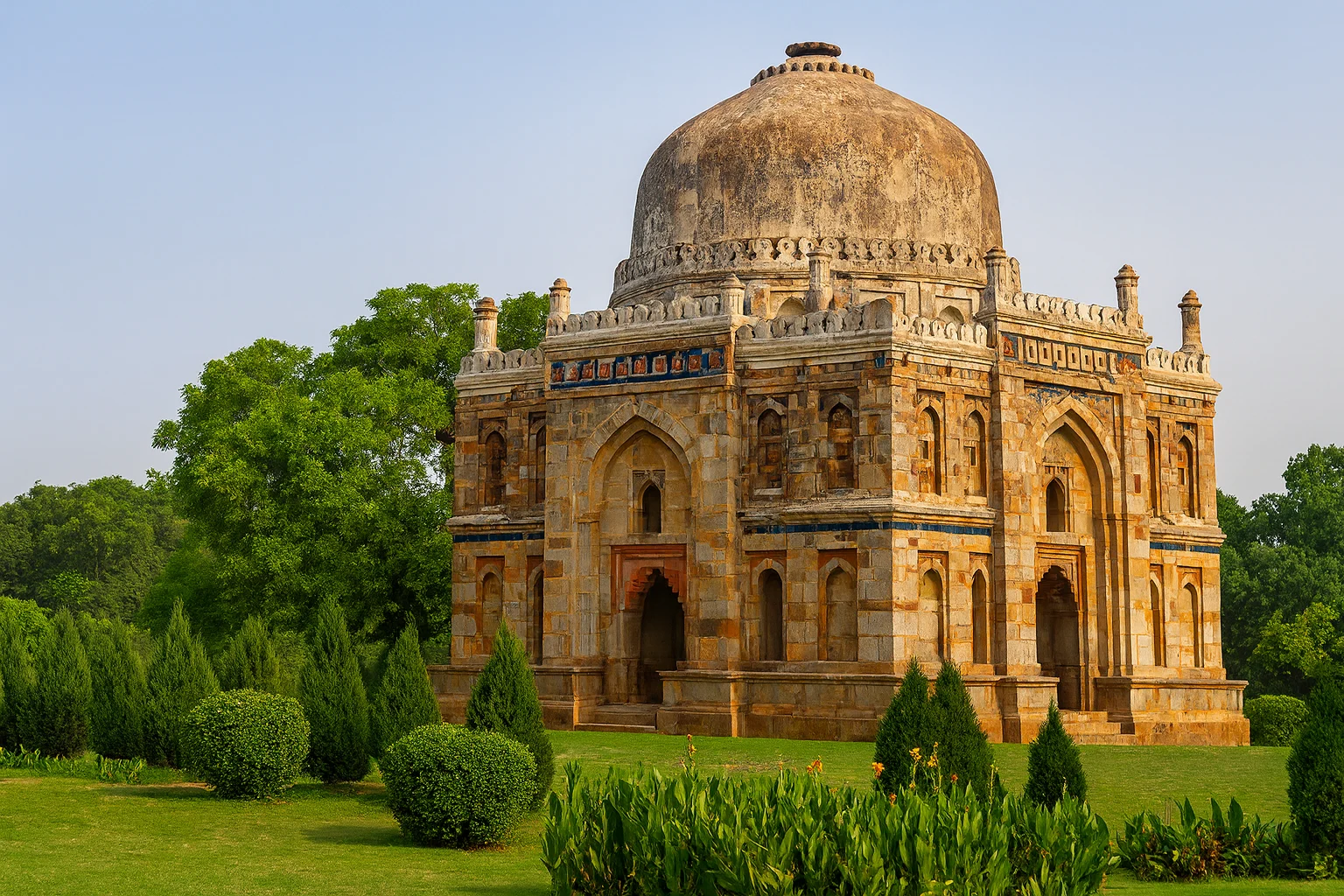
Walk through these sections today and you’ll notice the difference. There are no glittering inlays, no delicate marble screens, no mirror mosaics. Instead, there is bare stone, simple arches, and wide halls meant for order and discipline. It feels less like a palace and more like a fortress under constant watch.
Aurangzeb’s thinking was clear: luxury made rulers weak, discipline kept empires alive. While Akbar built for might, Jahangir for culture, and Shah Jahan for beauty, Aurangzeb built for control. His touch may have stripped away some of the fort’s grandeur, but it left behind a haunting reminder of how empires change when priorities shift from art to authority.
Character: Plain, functional, militaristic – Agra Fort under Aurangzeb whispers of power without ornament, a world where beauty was sacrificed for order.
Architecture of Agra Fort – Emperor-wise Comparison
| Emperor | Material Used | Style / Character | Examples | Purpose |
| Akbar | Red sandstone | Bold, Hindu–Islamic fusion | Jahangiri Mahal, Akbari Mahal | Power & Authority |
| Jahangir | Sandstone with fine finishes | Garden luxury, refined taste | Anguri Bagh, palace refinements | Leisure & Culture |
| Shah Jahan | White marble + pietra dura inlay | Symmetry, luxury, romance | Khas Mahal, Sheesh Mahal, Moti Masjid | Beauty & Romance |
| Aurangzeb | Sandstone + simple marble | Plain, functional, militaristic | Barracks, Shish Gumbad | Control & Austerity |
Later Period – Decline & Foreign Powers
- 18th century: The fort became a prize for Marathas, Jats, and Afghans.
- 1803: The British took over. They demolished many Mughal palaces for barracks and parade grounds.
- Ghazanvi Gate (1842): An 11th-century gate from Ghazni (Afghanistan) was oddly installed here by the British.
Battles and Importance
- 1526: Babur camped here after defeating Ibrahim Lodhi.
- 18th century: Fierce battles between Marathas and Jats.
- 1857: A key site of the Revolt of 1857 against the British.
The fort shaped India’s destiny as both palace and fortress.
Interesting & Lesser-Known Facts
- Shah Jahan’s tragic prison with a Taj Mahal view: The Musamman Burj holds the story of the emperor’s sorrowful last years.
- Crocodile-filled moat: Once a terrifying defence system circling the fort.
- Secret tunnels: Said to connect Agra Fort with Fatehpur Sikri and the Taj Mahal (now sealed).
- Kohinoor diamond: Once part of the legendary Peacock Throne housed here.
- Blend of religions: Akbar’s halls blend Hindu and Islamic motifs, showing inclusivity.
What Tourists Often Miss
- Ghazanvi Gate: An Afghan relic hidden inside the fort.
- Bengali Mahal: A layered palace combining Akbar’s vision and Shah Jahan’s remodels.
- Sheesh Mahal: Its mirror magic, where one candle becomes a thousand lights.
- Nagina Masjid: A secret mosque for royal women, away from public eyes.
- Amar Singh Gate: Pause to feel the echoes of drums, soldiers, and royal processions.
Why Agra Fort Feels Alive
Agra Fort is more than walls – it is a stage of empires.
Battles, betrayals, romances, and coronations all played out here. Every dome and arch tells a story. When you stand by the Yamuna and look at the fort, you don’t just see stone – you feel the heartbeat of Mughal history.
How to Reach Agra Fort
By Air
- Nearest is Kheria Airport (13 km) with limited flights.
- Most travellers use Delhi Airport (230 km) and then travel by road/rail.
By Train
- Agra Cantt station (5 km away) is the main hub.
- Rickshaws and taxis are easily available to the fort.
By Road
- Delhi–Agra via Yamuna Expressway: 3–4 hours.
- Regular buses and taxis from Delhi, Jaipur, and nearby cities.
Within Agra
- Auto-rickshaws, e-rickshaws, and cycle-rickshaws are the most common.
Agra Fort Timings
- Opening Time: 6:00 AM
- Closing Time: 6:00 PM
- Closed On: Open all days, including holidays
Entry Fees
- Indians: ₹50
- Foreigners: ₹650
- Children below 15 years: Free
(Rates as per Archaeological Survey of India – subject to minor changes)
Best Time to Visit
- Winter (Oct–Mar): Best season, 15–25°C, pleasant for sightseeing.
- Summer (Apr–Jun): Very hot (up to 45°C), avoid afternoons.
- Monsoon (Jul–Sep): Humid but less crowded; carry an umbrella.
- Best Hours: Early morning or late afternoon for photography and cooler weather.
want to know deeply about Agra tourism visit our Taj Mahal Blog
Travel Tips
- Hire an official guide or ASI audio guide to understand the stories.
- Wear comfortable shoes – the fort is vast and requires walking.
- Carry water bottles, especially in summer.
- Don’t miss the Musamman Burj view of the Taj Mahal.
- Photography is allowed; tripods may need special permission.
- Combine your visit with Taj Mahal (2.5 km) and Itimad-ud-Daulah’s Tomb (“Baby Taj”) for a full Mughal circuit.
FAQs
How much time is needed to explore Agra Fort?
Most visitors spend 2 to 3 hours inside Agra Fort. This allows enough time to walk through the major palaces, gardens, mosques, and viewpoints like the Musamman Burj with its Taj Mahal view. History lovers may want even longer.
Is a guide recommended for visiting Agra Fort?
Yes, hiring a licensed guide or using the ASI audio guide is highly recommended. A guide will explain the fascinating stories of emperors, queens, and battles, making the experience more meaningful.
Can I see the Taj Mahal from Agra Fort?
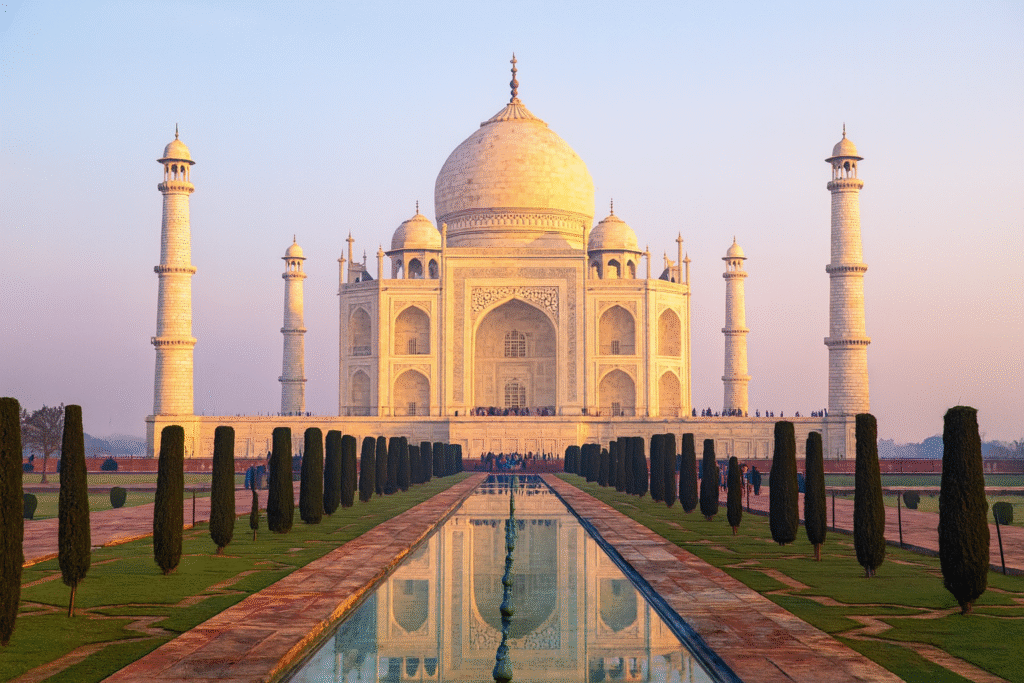
Absolutely! From the Musamman Burj inside Agra Fort, you get a direct view of the Taj Mahal across the Yamuna River — the same spot where Shah Jahan, imprisoned by Aurangzeb, spent his last years gazing at his masterpiece.
Are there food and water facilities inside Agra Fort?
There are drinking water points inside, but food stalls are not allowed within the fort premises to maintain cleanliness. It’s best to eat outside before or after your visit. Carry bottled water, especially in summer.
What is the best time of day to visit Agra Fort?
Early morning or late afternoon is ideal. The soft light makes photography better, and the fort is cooler to explore compared to the midday heat
Is Agra Fort accessible for differently-abled tourists?
Parts of the fort, especially the main courtyards and open spaces, are wheelchair accessible. However, some inner palaces and staircases may be difficult to navigate due to their historic design.
Is photography allowed inside Agra Fort?
Yes, photography is allowed throughout Agra Fort. However, tripods may need prior permission from the Archaeological Survey of India (ASI). Drones are strictly prohibited.
Can I visit Agra Fort and Taj Mahal on the same day?
yes, both monuments are just 2.5 km apart. Many tourists combine them in one day, starting with the Taj Mahal at sunrise and visiting Agra Fort afterward.
Are there any light and sound shows at Agra Fort
Yes, in the evenings the fort often hosts light and sound shows narrating Mughal history in an engaging way. Timings may vary, so it’s best to check locally before your visit.
Conclusion
Agra Fort is not just a monument – it is a living diary of the Mughal Empire. From Akbar’s sandstone power to Shah Jahan’s marble romance, from Aurangzeb’s austerity to British interventions, the fort has witnessed grandeur, sorrow, and survival.
To walk through Agra Fort is to walk through the very pages of history, where every arch and courtyard still echoes with the voices of emperors, battles, and love.
Mussoorie local culture: 3 Fake Myths to Avoid [2026]
Mussoorie local culture: Exploring authentic traditions beyond the common myths Last Updated on 29 March…
Best Food in Mussoorie: Locals’ Hidden Cafes & Secrets 2026
Best Food in Mussoorie: Discovering Hidden Culinary Gems and Iconic Landour Bakes Last Updated on…

Kerala Houseboat Booking Price 2026: Deluxe vs Luxury Guide
Kerala Houseboat Rates, Amenities & Packages 2026: Deluxe, Premium & Luxury Guide Last Updated on…
Mussoorie Trip Plan 2026 (Find Peace via Secret Walks)
Mussoorie Trip Plan 2026: A Guide to Skip Traffic and Walking Secrets Last Updated on…
Lakshadweep Entry Permit Online 2026: 5 Easy Steps to Apply!
How to Secure Your Lakshadweep Entry Permit Online: The Complete 2026 Planner & Travel Requirements…

Lakshadweep Local Life: 9 Reality Checks & Best Souvenirs
Lakshadweep Local Life: 9 Reality Checks, Economy Facts & Shopping Guide Last Updated on 7…