The Ultimate Indian Festival Calendar 2026: Dates, Rituals, and Itineraries for 25+Major Celebrations
Last Updated on
26/03/2026
Indian Festivals Calendar 2026 is a practical guide to exploring India through it’s most important celebrations, combining festival dates, rituals, cultural insights, and travel tips to help you experience the country beyond typical sightseeing.Before go through it know everything about india
- 🗓 Indian Festival Calendar 2026
- Part 1:The Big Five Indian Festivals – Global Icons
- Indian Festivals Calender 2026- Spiritual,Cultural &Harvest Festivals
- Part 3: Harvest, Tribal & Nature-Based Festivals of India
- 19.Sakat Chauth – The Guardian Fast
- 20.Basant Panchami – The Arrival of Spring
- 22.Karwa Chauth – The Moonlit Prayer of Love
- Part 4: The Year-End Grand Finale
- Official Refrences
- Related Posts
- Conclusion: Experiencing Indian Festivals in 2026
- FAQs About Indian Festivals
- What is the Indian Festivals Calendar 2026 and why should travellers use it?
- Which are the major festivals listed in the Indian Festival Calendar 2026?
- When is Holi celebrated in India in 2026?
- What is the best place to experience Diwali in India?
- Do Indian festival dates change every year?
- How can travellers plan visits around festival crowds and accommodations in 2026?
- What unique regional festivals should visitors know about in India 2026?
- Which Indian festivals in 2026 offer the best cultural experiences for travellers?
- Start Planning your trip now
🗓 Indian Festival Calendar 2026
| Date (2026) | Festival / Celebration | Region / Notes |
|---|---|---|
| Jan 01 | New Year’s Day | National / Public |
| Jan 06 | Sakat Chauth | North India |
| Jan 13 | Lohri | North India (Punjab etc.) |
| Jan 14 | Makar Sankranti / Pongal | National / Harvest Festival |
| Jan 23 | Basant Pnachami | North India / West Bangal |
| Jan 26 | Republic Day | National Holiday |
| Feb 15 | Maha Shivaratri | Hindu festival |
| Mar 03 | Holika Dahan | Pre-Holi ritual |
| Mar 04 | Holi – Festival of Colours | Nationwide |
| Mar 19 | Ugadi / Gudi Padwa / Navratri (Chaitra) | Regional New Year |
| Mar 21 | Eid-ul-Fitr (Tentative – depends on moon sighting) | Nationwide |
| Mar 26–27 | Ram Navami | Hindu festival |
| Apr 02 | Hanuman Jayanti | Hindu Festival |
| Apr 03 | Good Friday / Easter | Christian observances |
| Apr 14 | Vaisakhi / Baisakhi / Tamil New Year | Harvest & regional |
| Apr 15 | Bahag Bihu (Assam) | Regional harvest |
| May 01 | Buddha Purnima | Buddhist observance |
| May 27 | Eid-ul-Adha / Bakri Eid (Tentative) | Nationwide |
| Jul 16 | Rath Yatra | Odisha & across India |
| Aug 15 | Independence Day | National Holiday |
| Aug 26–28 | Raksha Bandhan / Onam | Nationwide / Kerala |
| Sep 04 | Janmashtami | Krishna’s Birthday |
| Sep 14 | Ganesh Chaturthi | Western & South India |
| Oct 02 | Gandhi Jayanti | National Holiday |
| Oct 11–20 | Navratri | Nationwide (varies by region) |
| Oct 20 | Dussehra / Vijayadashami | Nationwide |
| Oct 29 | Karwa Chauth | North India |
| Nov 06–11 | Diwali & associated days | Festival of Lights |
| Nov 15 | Chhath Puja | Bihar, eastern India |
| Nov 24 | Guru Nanak Jayanti (Gurpurab) | Sikh festival |
| Dec 25 | Christmas | Christian observance |
Part 1:The Big Five Indian Festivals – Global Icons
These are the grandest, most immersive festivals. Perfect for first-time visitors seeking the quintessential Indian experience.
1. Diwali (Deepavali) – The Festival of Lights
- The Vibe: Spiritual, Luminous, Grand.
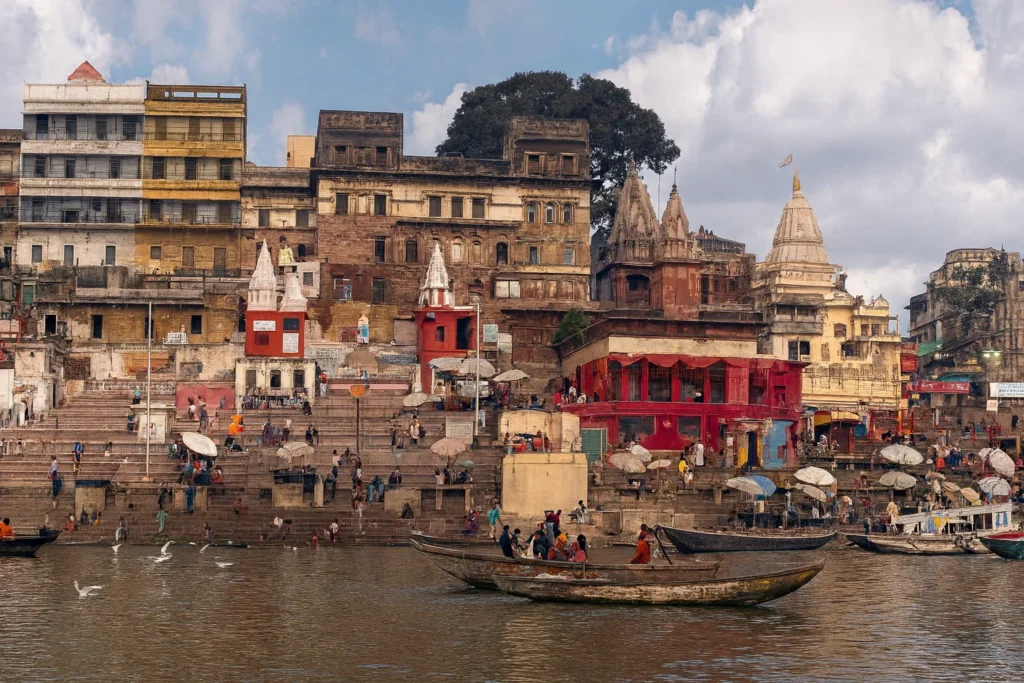
- Best Place to Celebrate: Varanasi (for Dev Deepawali) or Ayodhya (The birthland of lord Rama).
- Expected Month: October or November (Kartik Amavasya).
The Mythology (Why it is celebrated):
- The Return of the King: The most popular legend celebrates the return of Lord Rama to his kingdom, Ayodhya, after 14 years of exile and defeating the demon king Ravana. To welcome their king in the dark new moon night, residents lit earthen lamps to guide his way home.
- Goddess of Wealth: It also marks the night Goddess Lakshmi arose from the churning of the cosmic ocean (Samudra Manthan). Devotees pray to her for prosperity and financial wellbeing.
The Rituals (What happens):
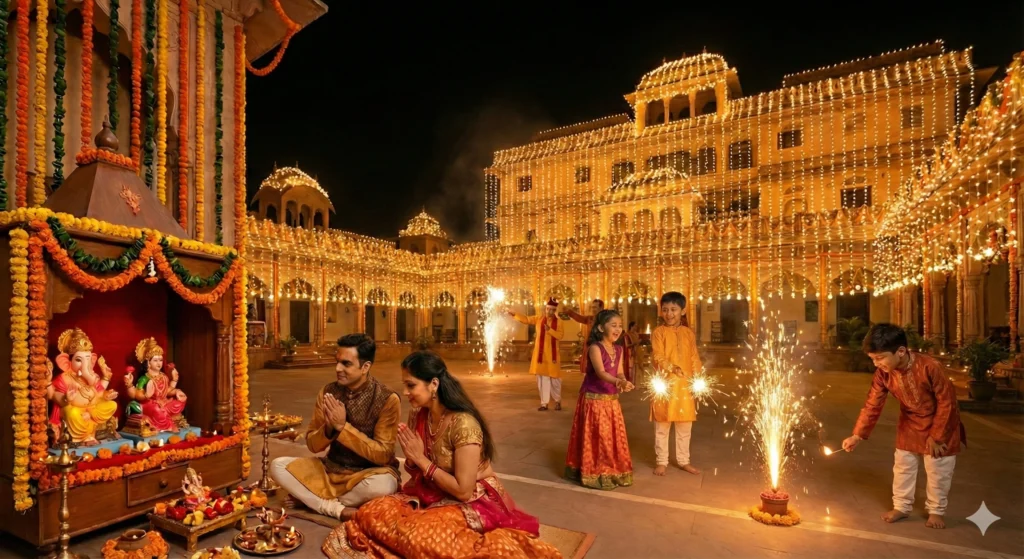
- Lighting of Diyas: Millions of clay lamps illuminate homes, river banks, and streets to ward off darkness and evil spirits.
- Rangoli: Intricate, colourful patterns made from powder, rice, and flowers adorn doorsteps to welcome guests and deities.
- Lakshmi Ganesh Puja: Families dress in their finest ethnic wear, perform a prayer ceremony for the Goddess Laxhmi and Ganesh ji , and exchange gifts with neighbours.
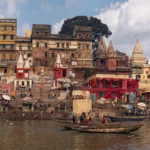
The Traveller’s Experience (Itinerary): If in Ayodhya you must visit the Saryu Ghats where millions of earthern lamps every year Ayodhya is making Guinnes world records and has been breaking it’s own record , it is wonderfull to see it .and Varanasi, witness the Dev Deepawali (celebrated 15 days after Diwali) where the 84 Ganges Ghats are lit with over a number of oil lamps. It is a sight that defies description.
- Day 1: Shop for clay lamps in the local market.
- Day 2: Watch the Ganga Aartiin varanasi and visit the saryu nadi in Ayodhya ; the crowds are massive, so arrive by 4 PM.
- Day 3: Take a sunrise boat ride to see the aftermath and the peaceful river.
💡 Pro Traveller Tip: If visiting Ayodhya for diwali and Varanasi for Dev Deepawali, book your hotel and boat ride at least 3 months in advance. The prices skyrocket closer to the date.
🍽️ The Taste of Faith (Food):
- Must-Eat: Kaju Katli (Diamond-shaped cashew fudge) and Soan Papdi.
- Why: Sweets represent the sweetness of victory. Exchanging sweets strengthens social bonds.
🔬 The Ancient Science:
- Logic: Diwali historically marked the end of the rainy season (Monsoon). The heat from millions of oil lamps killed insects and bacteria that bred during the damp rains. The thorough cleaning of homes before Diwali was an annual hygiene drive to prevent winter diseases.
👗 Dress Like a Local:
- Attire: This is the time for opulence. Men should wear Silk Kurtas with a jacket. Women often wear Banarasi Silk Sarees or heavy Lehengas with gold jewellery.
2. Holi – The Festival of Colours
- The Vibe: Wild, Energetic, Messy.
- Best Place to Celebrate: Mathura & Vrindavan (Traditional) or Pushkar (Traveller friendly).
- Expected Month: March (Phalguna Purnima).
The Mythology:
- Victory of Faith: Commemorates the burning of the demoness Holika (who had a boon to be immune to fire) while trying to kill Prince Prahlad, a devotee of Vishnu. It signifies that faith protects you from evil.
- Divine Love: It celebrates the playful love of Radha and Krishna. Legend says Krishna, jealous of Radha’s fair skin, playfully applied colour to her face, starting the tradition.
The Rituals:
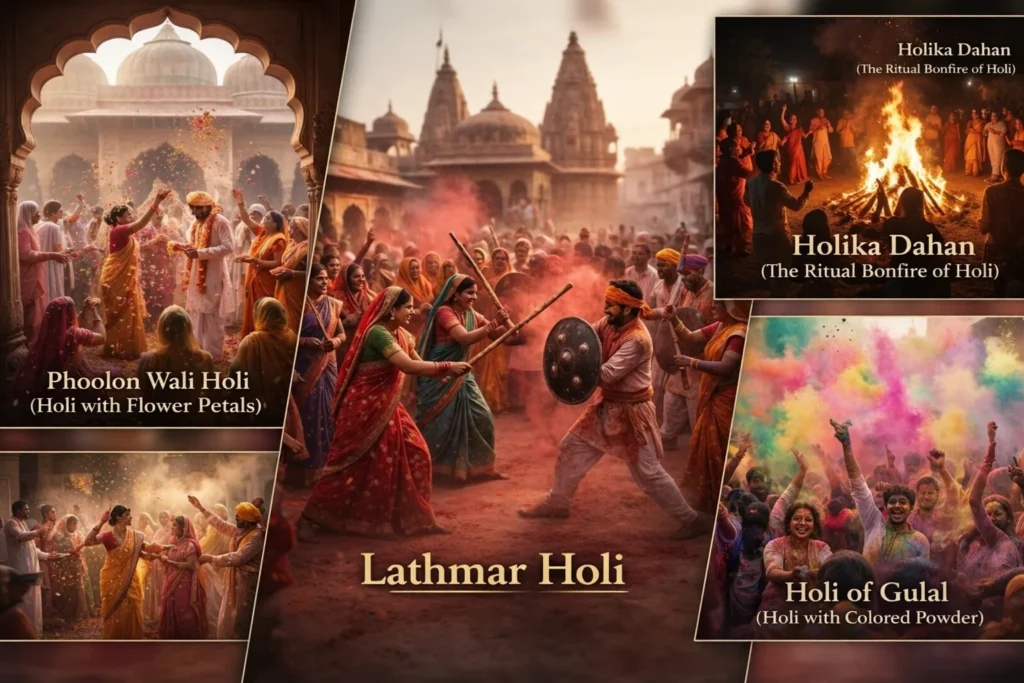
- Holika Dahan: The night before Holi, huge bonfires are lit at crossroads to symbolise the burning of negativity.
- Rangwali Holi: The main day is a free-for-all carnival where people throw coloured powder (Gulal) and water at friends and strangers alike.
- Thandai: A traditional spiced almond milk drink (often laced with Bhang – cannabis) is consumed in honour of Lord Shiva.
The Traveller’s Experience: In Mathura, the celebrations start a week early at the Banke Bihari Temple. In Pushkar, the main square hosts a massive electronic music party with colours.
⚠️ Safety Alert: Apply a thick layer of coconut oil on your skin and hair before stepping out. It acts as a barrier and makes washing off the stubborn colours much easier later.
🍽️ The Taste of Faith (Food):
- Must-Eat: Gujiya (Sweet fried dumpling filled with condensed milk and dried fruits).
- Why: It provides high calories and energy required for the day-long physical activity of playing colours.
🔬 The Ancient Science:
- Logic: Holi falls during the transition from Winter to Spring. This season change induces laziness (Kapha dosha in Ayurveda). The loud singing, movement, and heat from bonfires help combat this lethargy. Traditionally, natural colours (Turmeric, Neem, Tesu flowers) were used to heal the skin from winter dryness.
👗 Dress Like a Local:
- Attire: Wear a White Cotton Kurta/Salwar. White acts as the perfect canvas for the colours to show. Warning: The clothes will be ruined, so do not wear expensive brands.
Let us understand Holi in depth and explore where unusual and unique forms of Holi are celebrated across India 7 Unique Holi in India: Exploring Cultural Festivals of India from Braj to Varanasi
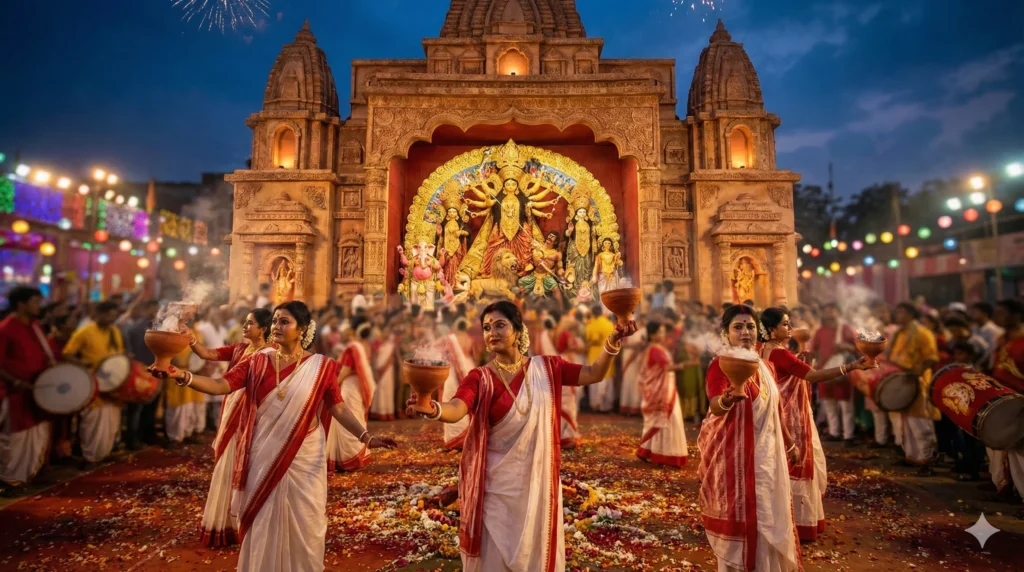
3. Durga Puja (Pujo) – The Carnival of Art
- The Vibe: Artistic, Emotionally Charged, Carnival-esque.
- Best Place to Celebrate: Kolkata, West Bengal.
- Expected Month: October (Ashvin).
The Mythology:
- The Warrior Goddess: Marks the victory of Goddess Durga over the shapeshifting buffalo demon Mahishasura, symbolising the triumph of female power (Shakti) over ego and evil.
- Homecoming: Bengalis believe the Goddess visits her maternal home on Earth (Bengal) for these five days with her children.
The Rituals:
- Pandal Hopping: The city transforms into an art gallery with temporary structures (Pandals) depicting intricate themes—from Harry Potter to ancient temples.
- Dhunuchi Naach: A frenzied, rhythmic dance performed by men and women holding earthen pots filled with burning coconut husks.
- Sindoor Khela: On the last day, married women smear vermilion on each other before the idol immersion.
The Traveller’s Experience: Hire a local guide for a “Pandal Hopping” tour (North Kolkata for traditional, South for modern art). The energy on the streets at 3 AM is safer and livelier than 3 PM.
🍽️ The Taste of Faith (Food):
- Must-Eat: Bhog Khichdi (Rice and lentil mix offered to the Goddess) and Kolkata Egg Rolls.
- Why: The Bhog is cooked without onions/garlic and is considered divine nourishment. The street food celebrates the carnival spirit.
🔬 The Ancient Science:
- Logic: The rhythmic drumming of the Dhak (huge drums) creates a trance-like state that reduces stress and induces community bonding, which is vital for mental health before the onset of winter gloom.
👗 Dress Like a Local:
- Attire: Women wear the traditional White Saree with a Red Border (Lal Paar Saree) in Tant or Garad silk. Men wear Dhuti-Punjabi (Dhoti-Kurta).
4. Pushkar Camel Fair – The Desert Spectacle
- The Vibe: Rustic, Photographic, Trade-focused.
- Best Place to Celebrate: Pushkar, Rajasthan.
- Expected Month: November (Kartik Purnima).
The Mythology:
- The Creator’s Flower: Legend says Lord Brahma (The Creator) dropped a lotus flower here, creating the holy Pushkar Lake. It is the only place in the world with a dedicated Brahma Temple.
The Rituals:
- The Trade: Over 50,000 camels and horses are traded by men in colourful turbans. It is a livestock market meets religious festival.
- The Holy Dip: Pilgrims take a dip in the lake on the full moon night to wash away lifetimes of sins.
The Traveller’s Experience: Book a Hot Air Balloon ride at sunrise to see the vast expanse of the fair and the desert from above. Stay in a luxury tent (Glamping) near the fairgrounds.
🍽️ The Taste of Faith (Food):
- Must-Eat: Malpua (Indian pancakes soaked in syrup) and Kadhi Kachori.
- Why: High-calorie, warm sweets and spicy snacks are essential to combat the desert chill at night.
🔬 The Ancient Science:
- Logic: The fair was historically a method to ensure genetic diversity in livestock. Traders from far-off lands met here, preventing inbreeding of camels and horses, which was crucial for the desert economy.
👗 Dress Like a Local:
- Attire: Layer up! The desert gets cold. Men wear colourful Turbans (Pagri). Women wear Ghagra Choli with heavy silver oxidised jewellery.
5. Ganesh Chaturthi – The Grand Procession
- The Vibe: Loud, Musical, Community-driven.
- Best Place to Celebrate: Mumbai or Pune (Maharashtra).
- Expected Month: August or September.
The Mythology:
- The Elephant Head: Celebrates the birth of Lord Ganesha. Created by Goddess Parvati from sandalwood paste, his head was replaced with an elephant’s head by Lord Shiva, granting him the status of the “Remover of Obstacles.”
The Rituals:
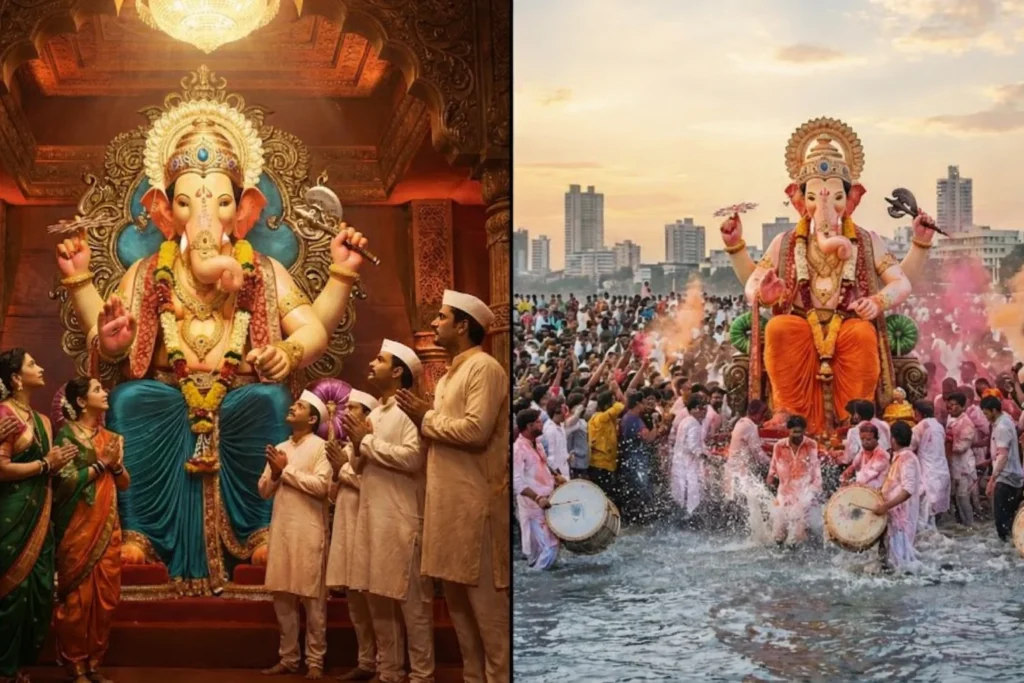
- Prana Pratishtha: Invoking life into clay idols placed in homes and public stages (Mandals).
- Visarjan (Immersion): The grandest day. Massive idols are carried to the Arabian Sea with drums (Dhol Tasha) and dancing.
The Traveller’s Experience: Head to Girgaon Chowpatty beach in Mumbai on the final day. When countless voices rise together in the chant of Ganpati Bappa Morya, the atmosphere becomes charged with an overwhelming surge of collective energy.”
🍽️ The Taste of Faith (Food):
- Must-Eat: Modak (Steamed rice flour dumpling filled with coconut and jaggery).
- Why: It is believed to be Lord Ganesha’s favourite sweet.
🔬 The Ancient Science:
- Logic: Historically, idols were made of river clay. Immersing them back into water bodies at the end of the rainy season helped settle the silt and purify the water with specific herbs used in the clay mix.
Best Time to Visit India for Festivals
India celebrates festivals throughout the year, but certain months offer a higher concentration of major celebrations and better travel conditions. October to November is widely considered the best time to visit India for festivals, with Diwali, Durga Puja, Dussehra, and Dev Deepawali creating an unmatched cultural atmosphere.
From January to March, travellers can experience harvest festivals like Pongal, Makar Sankranti, Bihu, and Lohri, along with spiritual events such as Maha Shivratri and Holi. The April to June period features regional and religious festivals like Ram Navami, Baisakhi, and Buddha Purnima, though temperatures rise in most parts of the country.
The monsoon and post-monsoon months (July to September) bring vibrant celebrations such as Rath Yatra, Onam, Janmashtami, and Ganesh Chaturthi, especially in coastal and southern India. Choosing your travel dates based on this festival calendar allows you to experience India at its most vibrant while aligning weather, culture, and local traditions.
Indian Festivals Calender 2026- Spiritual,Cultural &Harvest Festivals
For travellers seeking history, deep mythology, and intense devotion beyond the chaos.
6. Dussehra (Vijayadashami)
- Best Place to Celebrate: Mysore (Karnataka) or Kullu (Himachal).
- Expected Month: October.
The Mythology:
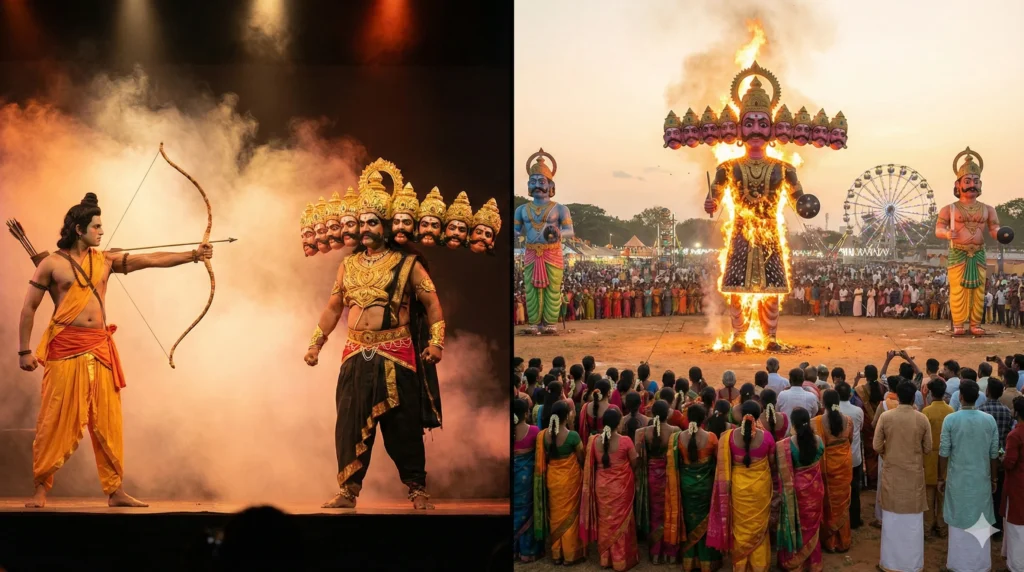
- Ramayana: Marks the day Lord Rama killed the ten-headed demon King Ravana. The 10 heads represent 10 human vices (ego, anger, greed, etc.).
- Mahabharata: The Pandavas retrieved their hidden weapons on this day to reclaim their kingdom.
The Rituals:
- North India: Giant effigies of Ravana, filled with firecrackers, are burned in open grounds (Maidans) to symbolise the destruction of evil.
- Mysore: The Jumbo Savari—a royal procession of decorated elephants originating from the illuminated Mysore Palace.
🍽️ The Taste of Faith (Food):
- Must-Eat: Paan (Betel leaf).
- Why: In many traditions, eating Paan on Dussehra symbolises the digestion of the heavy festive food and the sweetness of victory.
🔬 The Ancient Science:
- Logic: The burning of effigies (often filled with specific herbs historically) acted as a mass fumigation event to clear the air of mosquitoes and insects before winter set in.
👗 Dress Like a Local:
- Attire: Mysore Silk Sarees for women in the South. In the North, casual ethnic wear works best.
7. Navratri (The Nine Nights)
- Best Place to Celebrate: Gujarat (Vadodara/Ahmedabad).
- Expected Month: September/October.
The Mythology:
- Nine Forms: Dedicated to the nine avatars of Goddess Durga (Navadurga). Each day celebrates a different avatar representing power, purity, and knowledge.
- The Battle: Represents the 9-day battle between Durga and Mahishasura before her victory on the 10th day.
The Rituals:
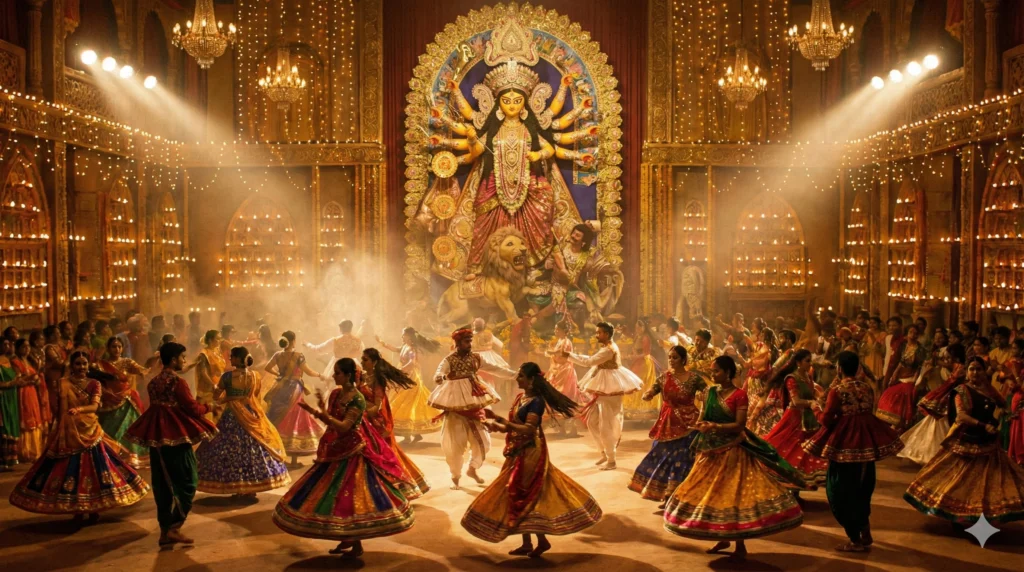
- Garba: The world’s longest dance festival. People dress in colourful costumes and dance in concentric circles around a clay lamp (Garbo) holding wooden sticks (Dandiyas).
- Fasting: Many devotees consume only fruits and milk (Satvik diet) for 9 days.
The Traveller’s Experience: You must buy a “Viewer Ticket” or “Player Ticket” to enter the big Garba grounds in Vadodara. The synchronization of 30,000 dancers is mesmerizing.
🍽️ The Taste of Faith (Food):
- Must-Eat: Sabudana Khichdi (Tapioca pearls with peanuts).
- Why: This is “Fasting Food.” It provides high energy (carbs) for the dancing but is light on the stomach and gluten-free.
🔬 The Ancient Science:
- Logic: Navratri occurs during seasonal changes (Equinox). The tradition of fasting (avoiding grains/meat) detoxes the digestive system, preparing the body’s immunity for the incoming season.
👗 Dress Like a Local:
- Attire: Chaniya Choli (Colourful flared skirts with mirror work) for women; Kediya (frilled top) for men.
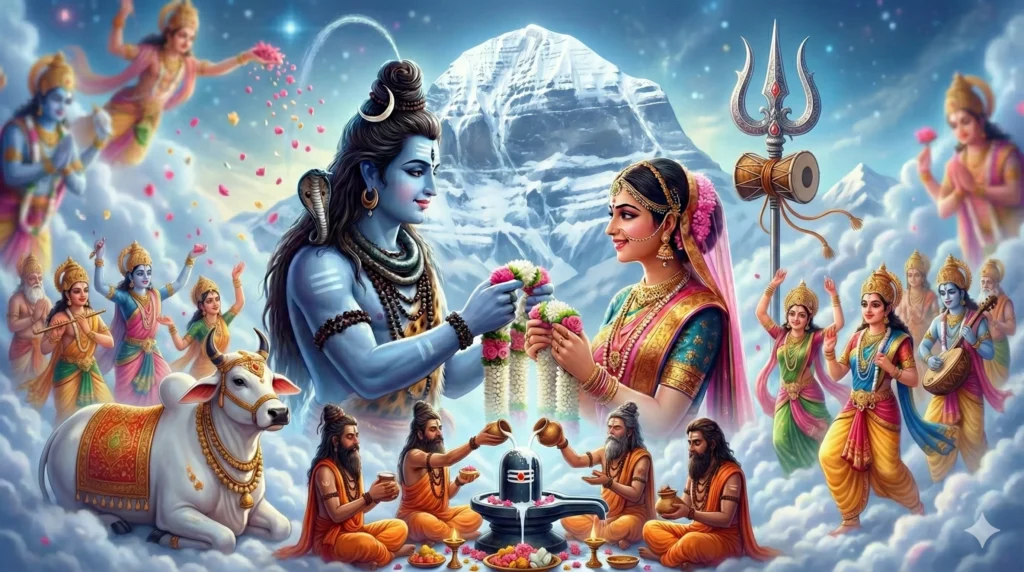
8. Maha Shivratri – The Night of Shiva
- Best Place to Celebrate: Varanasi or Ujjain , any famous temple of Bagwan Shankar . Worshippers remain awake throughout the night, symbolising heightened consciousness and mental alertness. Expected Month: February or March.
The Mythology:
- The Divine Wedding: Celebrates the marriage of Lord Shiva and Goddess Parvati.
- The Cosmic Dance: The night Shiva performs the Tandava (the dance of creation and destruction).
The Rituals:
- Jagaran: Worshippers remain awake throughout the night, symbolising heightened consciousness and mental alertness.
- Abhishekam: Offering milk, honey, and water to the Shiva Lingam.
🍽️ The Taste of Faith (Food):
- Must-Eat: Fruits and Milk (Sattvic diet) or Thandai.
- Why: Light food keeps the body alert for meditation; heavy food induces sleep.
🔬 The Ancient Science:
- Logic: Keeping the spine upright throughout the night takes advantage of a natural upsurge of energy in the human body that occurs on this specific planetary position.
👗 Dress Like a Local:
- Attire: Simple, loose Cotton or Linen clothes. Devotees often wear Rudraksha beads.
9. Hemis Festival – The Himalayan Spirit
- Best Place to Celebrate: Hemis Monastery, Ladakh.
- Expected Month: June or July.
The Mythology:
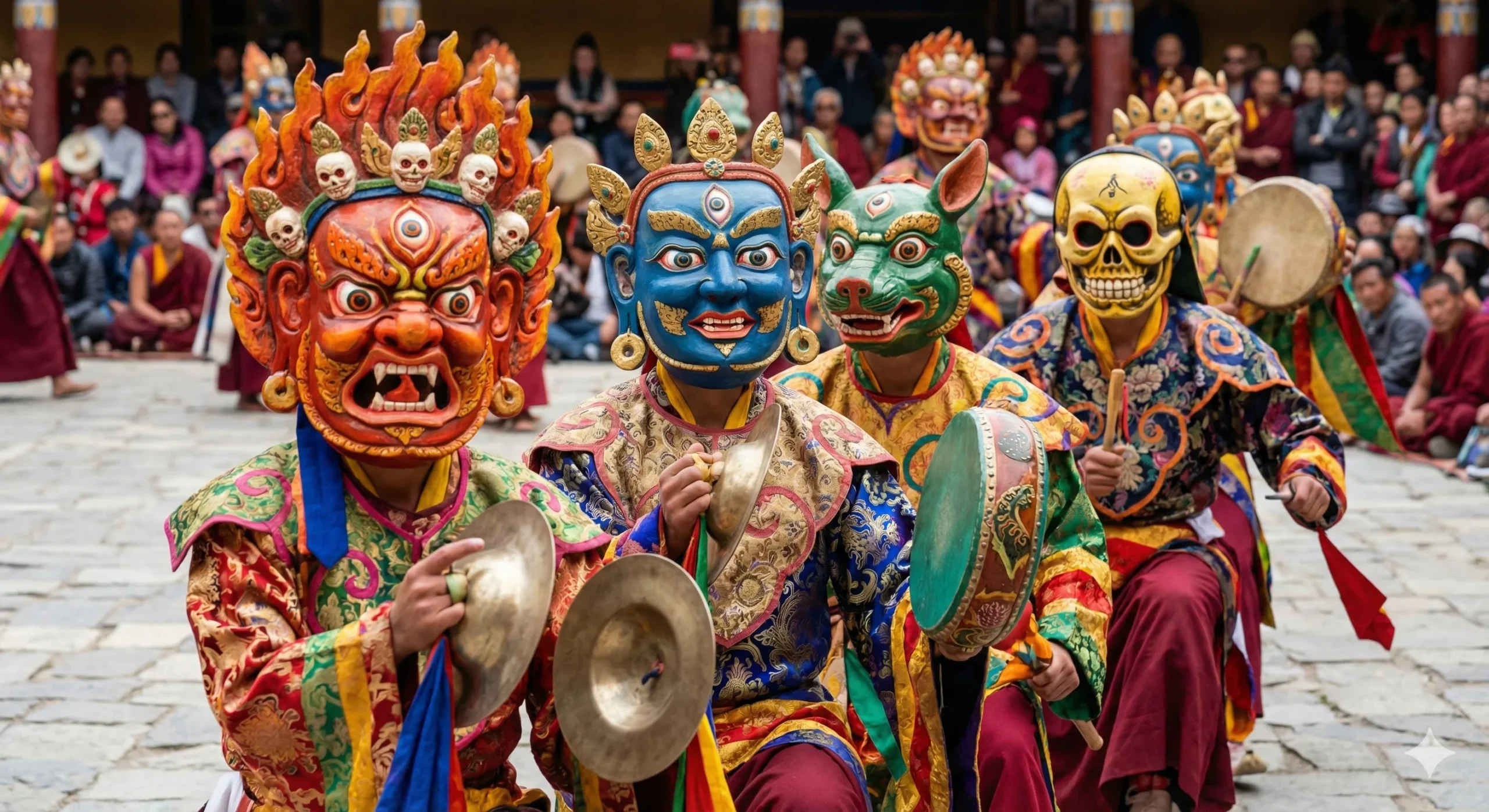
- Guru Rinpoche: Celebrates the birth anniversary of Guru Padmasambhava, the founder of Tibetan Buddhism, who is believed to have been born to defeat evil spirits.
The Rituals:
- Cham Dance: Monks wear vibrant masks representing deities and demons and perform a slow, sacred dance to the sound of cymbals and long horns.
- Thangka Display: A massive silk painting of the Guru is unveiled every 12 years.
The Traveller’s Experience: The festival happens in the monastery courtyard. Arrive by 7 AM to get a seat. The altitude is high, so stay hydrated.
🍽️ The Taste of Faith (Food):
- Must-Eat: Butter Tea (Gur Gur Chai) and Thukpa (Noodle soup).
- Why: The salt and butter in the tea prevent dehydration and provide essential fat calories in the high-altitude cold.
🔬 The Ancient Science:
- Logic: The dance movements are not just art; they are a form of “Moving Meditation” and exercise that keeps the monks physically fit in the low-oxygen environment.
👗 Dress Like a Local:
- Attire: Locals wear the Goncha, a thick maroon or brown woollen robe tied at the waist.
10. Rath Yatra – The Chariot Festival
- Best Place to Celebrate: Puri, Odisha.
- Expected Month: June/July.
The Mythology:
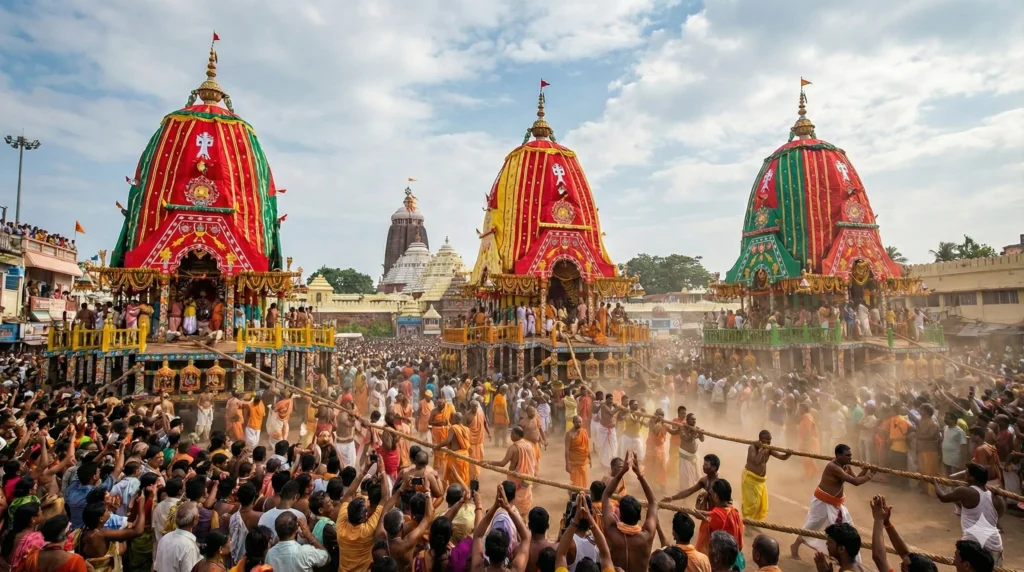
- The Journey: Lord Jagannath (Krishna), along with his brother Balabhadra and sister Subhadra, steps out of the temple to visit their aunt’s house (Gundicha Temple).
The Rituals:
- Chariot Pulling: Three massive wooden chariots (some 45 feet high) are pulled by millions of devotees. Touching the rope is considered auspicious.
🍽️ The Taste of Faith (Food):
- Must-Eat: Khaja (Layered crispy sweet).
- Why: It is the dry Mahaprasad of the Lord that stays fresh for days, meant for travellers to carry home.
🔬 The Ancient Science:
- Logic: The construction of the chariots every year uses traditional engineering without nails. It preserves the ancient knowledge of carpentry and woodwork guilds of Odisha.
👗 Dress Like a Local:
- Attire: Sambalpuri Ikat fabrics are the pride of Odisha. Light cotton represents humility before the Lord.
11. Janmashtami – Birth of Krishna
- Best Place to Celebrate: Mathura & Mumbai.
- Expected Month: August.
The Mythology:
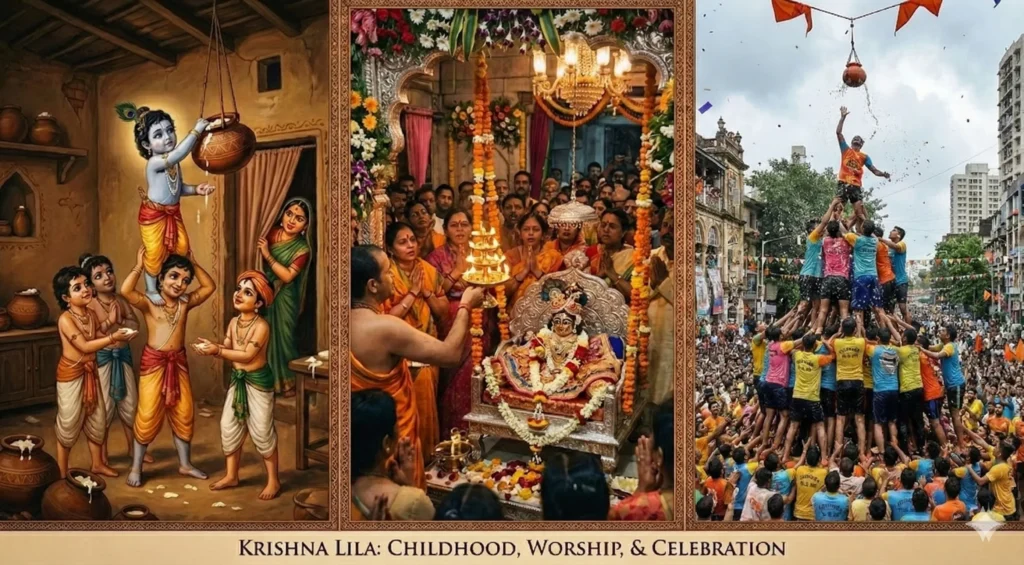
- The Divine Birth: Birth of Lord Krishna, the 8th avatar of Vishnu, born in a prison cell to destroy the tyrant Kansa.
The Rituals:
- Dahi Handi (Mumbai): Young men form human pyramids to break a clay pot filled with curd, mimicking Krishna’s childhood antics of stealing butter.
- Midnight Prayer: Temples remain open until midnight (the time of birth) for singing and dancing.
🍽️ The Taste of Faith (Food):
- Must-Eat: Makhan Mishri (Fresh white butter with rock sugar).
- Why: It was Baby Krishna’s favourite food. Butter provides essential fats.
🔬 The Ancient Science:
- Logic: Dahi Handi is a sport that promotes agility, balance, and teamwork among the youth during the monsoon season when outdoor farming work was less.
👗 Dress Like a Local:
- Attire: Yellow is Krishna’s colour. Wearing Pitambar (Yellow silk/cotton) is considered auspicious.
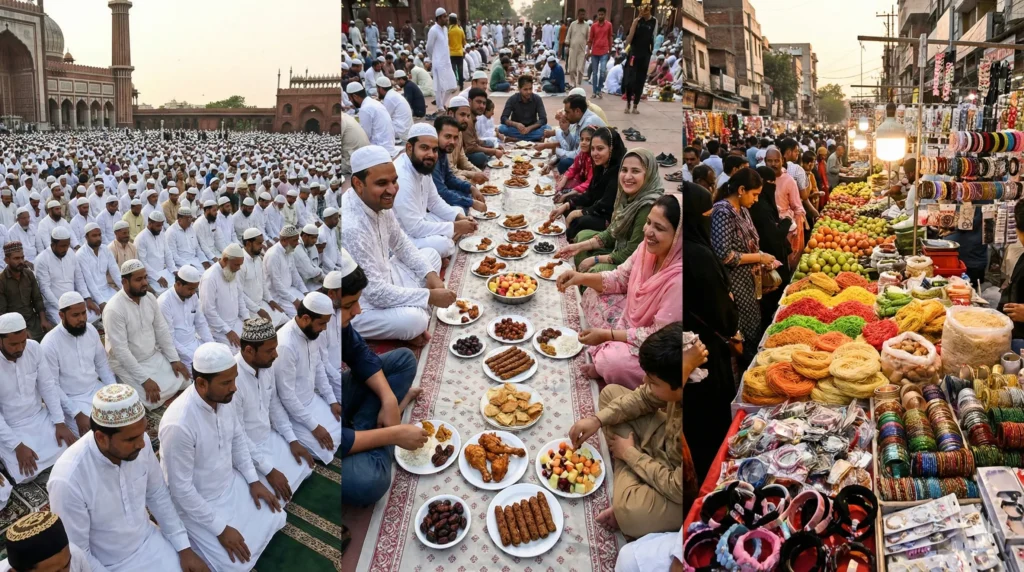
12. Eid-ul-Fitr & Eid-ul-Adha
- Best Place to Celebrate: Old Delhi (Jama Masjid) or Hyderabad.
- Expected Month: Varies (Lunar Calendar).
The Mythology & Significance:
- Eid-ul-Fitr: having the fasting of a full month at the end of holy Ramdan . It is about charity (Zakat) and gratitude.
- Eid-ul-Adha: The festival of sacrifice, honouring Prophet Ibrahim’s willingness to sacrifice his son as an act of obedience to God.
The Rituals:
- Prayers: Thousands gather at mosques for morning prayers.
- Feast: It is a meat-lover’s paradise.
🍽️ The Taste of Faith (Food):
- Must-Eat: Sheer Khurma (Vermicelli pudding with dates) and Haleem (Slow-cooked meat stew).
- Why: Dates are traditionally used to break the fast as they provide instant energy and regulate blood sugar.
🔬 The Ancient Science:
- Logic: The month of fasting (Ramadan) before Eid induces Autophagy, a biological process where the body cleans out damaged cells and regenerates new ones.
👗 Dress Like a Local:
- Attire: Men wear Pathani Suits or Sherwanis. Women wear elegant Shararas or Anarkali Suits.
13. Raksha Bandhan
- Best Place to Celebrate: Private Homes (All India).
- Expected Month: August.
The Mythology:
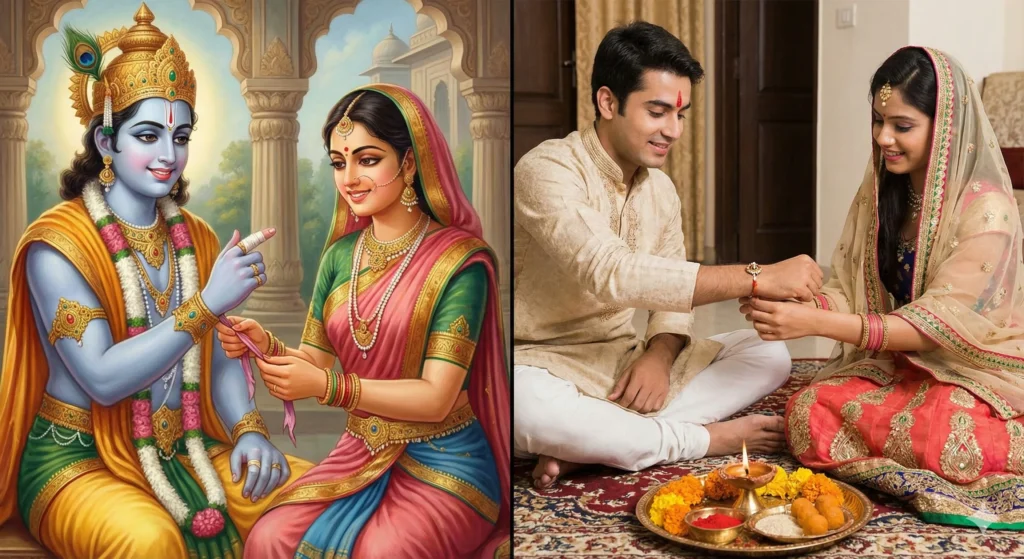
- Draupadi’s Vow: Legend says Draupadi tied a strip of her sari to Lord Krishna’s wounded finger, and he vowed to protect her forever.
The Rituals:
- The Thread: Sisters tie a sacred thread (Rakhi) on their brothers’ wrists. Brothers promise protection and offer gifts.
🍽️ The Taste of Faith (Food):
- Must-Eat: Ghevar (Honeycomb-shaped sweet).
- Why: Ghevar is rich in Ghee, which helps balance the acidic nature of the body during the monsoon season (Ayurveda).
🔬 The Ancient Science:
- Logic: Historically, this festival strengthened social bonds beyond immediate family, creating a “safety net” within the community where people looked out for each other.
👗 Dress Like a Local:
- Attire: It’s a family event. Semi-formal ethnic wear (Kurta/Saree) is appropriate.
Part 3: Harvest, Tribal & Nature-Based Festivals of India
Best for offbeat travellers, nature lovers, and photographers seeking the ‘real’ India.
14. Hornbill Festival – Festival of Festivals
- Best Place to Celebrate: Kisama Heritage Village, Nagaland.
- Dates: December 1st – 10th (Fixed).
The Significance:
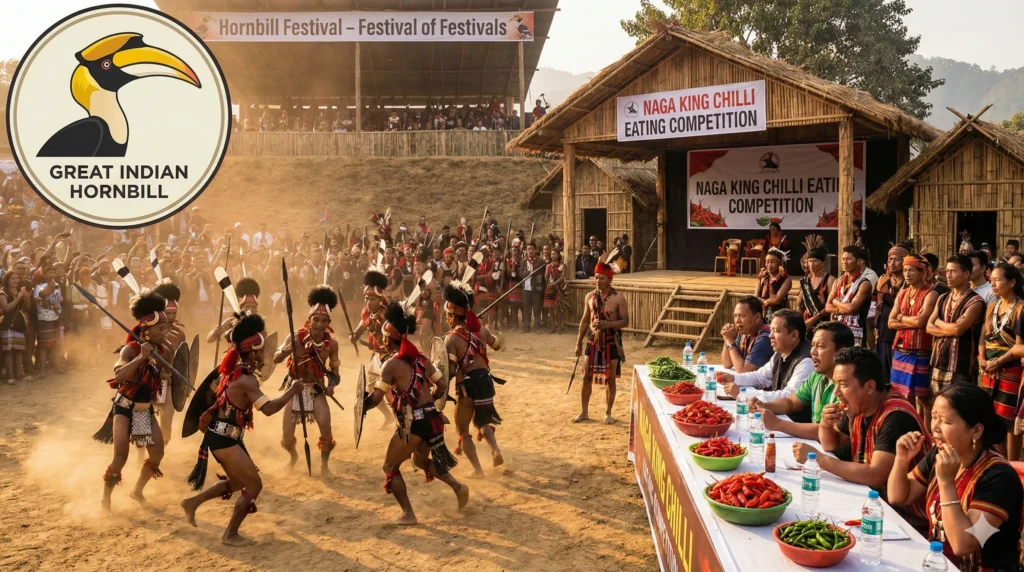
- Organised to encourage inter-tribal interaction and promote the heritage of Nagaland. Named after the revered Hornbill bird which features in the folklore of most tribes.
The Rituals:
- Tribal Showcases: Visit the traditional Morungs (huts) of the 16 major Naga tribes.
- Competitions: Witness the Naga King Chilli eating competition and traditional headhunting war dances.
The Traveller’s Experience: Stay in a homestay in Kohima. Try the local rice beer (Zutho).
🍽️ The Taste of Faith (Food):
- Must-Eat: Smoked Pork with Bamboo Shoot.
- Why: Fermented bamboo shoot is a staple pro-biotic for gut health in the tribal diet.
🔬 The Ancient Science:
- Logic: The festival timing (December) coincides with the end of the agricultural cycle, allowing farmers to rest and preserve their oral history through song before the next sowing season.
👗 Dress Like a Local:
- Attire: Each tribe has a specific Shawl pattern (e.g., Ao, Angami). Buying and wearing an authentic Naga shawl is a mark of respect (and it keeps you warm!).
15. Onam – The Harvest of Kerala
- Best Place to Celebrate: Alleppey or Trivandrum.
- Expected Month: August/September.
The Mythology:
- King Mahabali: Marks the annual spiritual homecoming of the benevolent mythical King Mahabali, whose reign was considered the golden era of Kerala.
The Rituals:
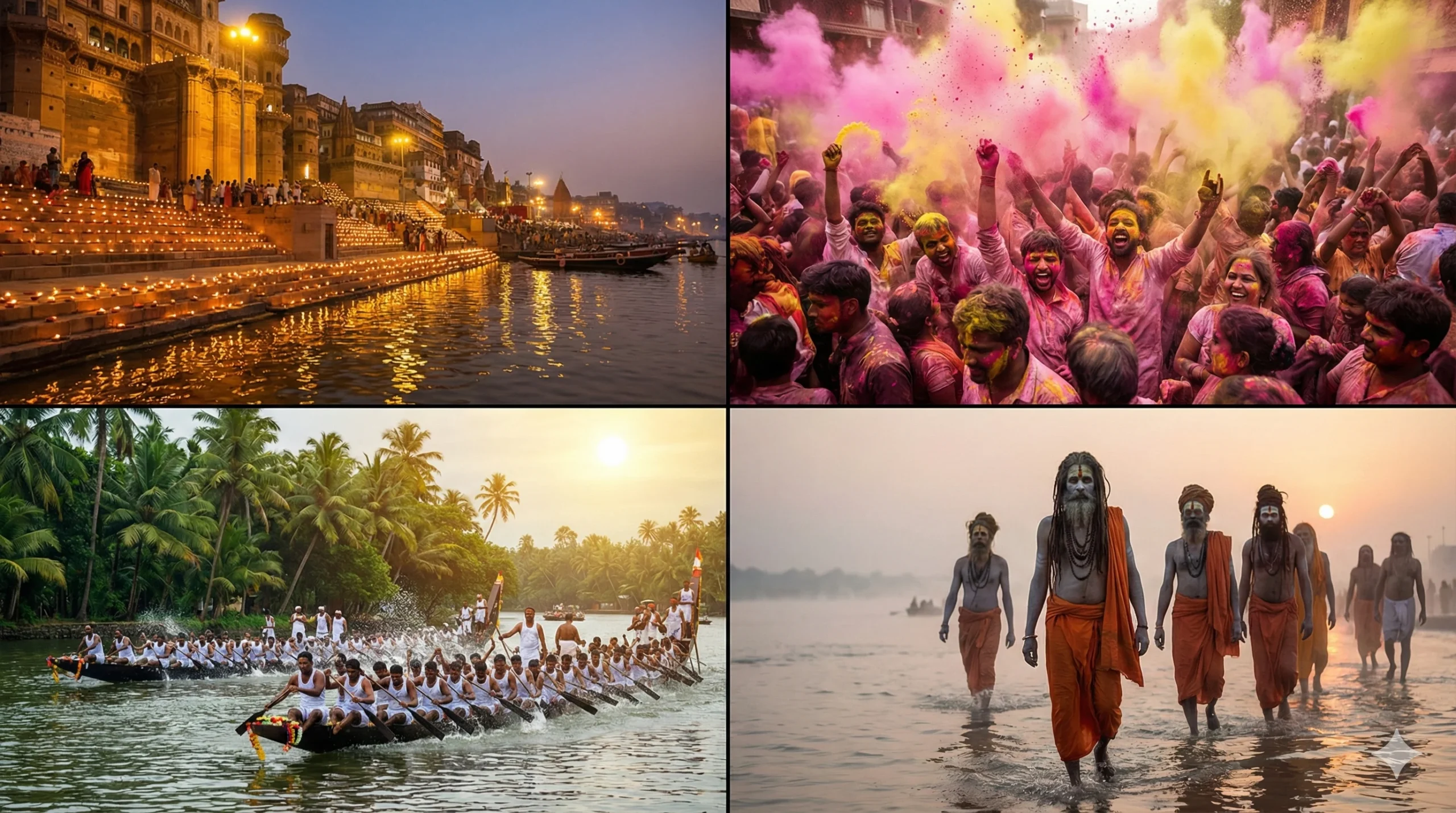
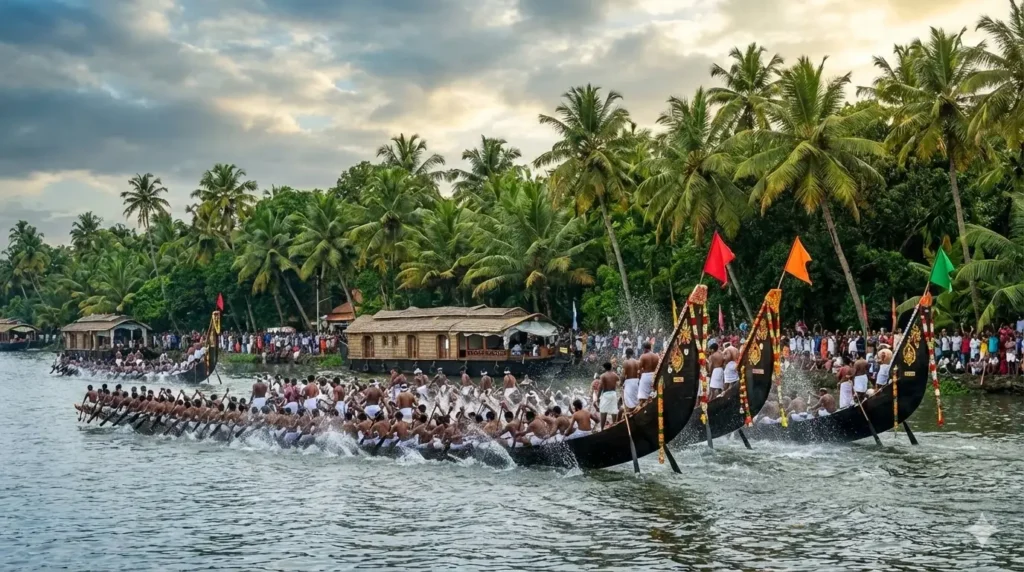
- Vallam Kali: The spectacular Snake Boat Races on the backwaters.
- Sadya: is an elaborate vegetarian banquet traditionally presented on a fresh banana leaf.”
- Pookkalam: Intricate floral carpets laid out on floors to welcome the King.
🍽️ The Taste of Faith (Food):
- Must-Eat: Onam Sadya.
- Why: A grand vegetarian feast of 26 dishes served on a banana leaf. It balances all 6 tastes (sweet, sour, salty, bitter, pungent, astringent) required by Ayurveda.
🔬 The Ancient Science:
- Logic: The vegetables used in Sadya are seasonal native produce (yam, gourd, pumpkin) that boost immunity specifically for the humid post-monsoon weather.
👗 Dress Like a Local:
- Attire: The Kasavu Saree/Mundu (Off-white cotton with a gold border). It reflects the simplicity and purity of the harvest.
16.Indian Festivals Calender 2026 Secred River & Pilgrimage Festivals
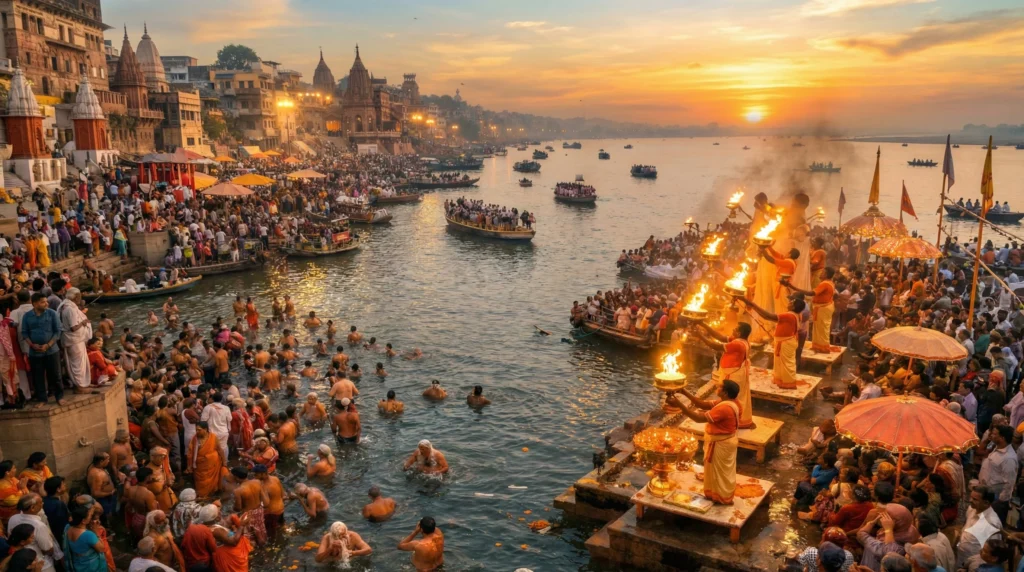
For the spiritual seeker, the River Ganges is not just water; she is a Goddess (‘Maa Ganga’). There is a specific circuit of festivals celebrated exclusively on her banks, believed to wash away lifetimes of karma.
The most significant of these involve the Holy Dip (Snan) at specific astrological timings.
| Festival | Frequency & Location | The “Big” Ritual | Expected Month |
| Maha Kumbh Mela | Every 12 Years. Rotates between Prayagraj, Haridwar, Nashik, & Ujjain. | Shahi Snan: The Royal Bath where Naga Sadhus (naked ascetics) charge into the water. The world’s largest gathering. | Jan – March |
| Ardh (Half) Kumbh | Every 6 Years. Held only at Haridwar and Prayagraj. | Similar to Maha Kumbh but slightly smaller in scale. A chance to see the ascetic orders. | Jan – March |
| Magh Mela | Annual (Every Year). Held at Prayagraj (Sangam). | Kalpavas: Devotees live in tents on the riverbank for a month, sleeping on the ground and eating one meal a day. | Jan – Feb |
| Ganga Dussehra | Annual. Varanasi, Haridwar, Rishikesh. | The Descent: Marks the day the River Ganga descended from heaven to earth. Devotees float thousands of lamps on the water. | June |
| Kartik Purnima | Annual. Varanasi (Dev Deepawali) & Haridwar. | The Divine Bath: Believed that Gods descend to bathe in the river on this full moon. | November |
Unique Aspects of the River Festivals:
🍽️ The Taste of Faith (Food):
- Must-Eat: Kalpavas Meal (Boiled rice and lentils/Khichdi without spices) and Allahabadi Amrood (Guava).
- Why: During Magh Mela/Kumbh, thousands practise an austere diet to detox the body. The local Red Guavas are famous for their sweetness.
🔬 The Ancient Science:
- The Mystery of the Water: Scientists have found that Ganges water contains unique viruses called Bacteriophages that eat bacteria, preventing the water from spoiling even when stored for years.
- Astrology & Water: These festivals are timed when Jupiter (Brihaspati) is in a specific alignment. It is believed that solar radiation changes the molecular structure of the water on these dates, giving it healing properties.
👗 Dress Like a Local:
- Attire: Unstitched Cotton. Men usually wear a Dhoti or Gamcha (towel), and women wear a Saree.
- Why: Stitched clothes are traditionally considered less conducive to conducting energy during the holy bath. Also, cotton dries fastest!
⚠️ Safety & Logistics Tip:
During Kumbh or Magh Mela, the government sets up a massive temporary “Tent City” on the riverbed.
Crowds: Avoid the main bathing ghats on the “Main Bathing Date” if you are claustrophobic. Watch from a boat or a distance.
Stay: Book a “Swiss Cottage Tent” for a comfortable stay with attached toilets.
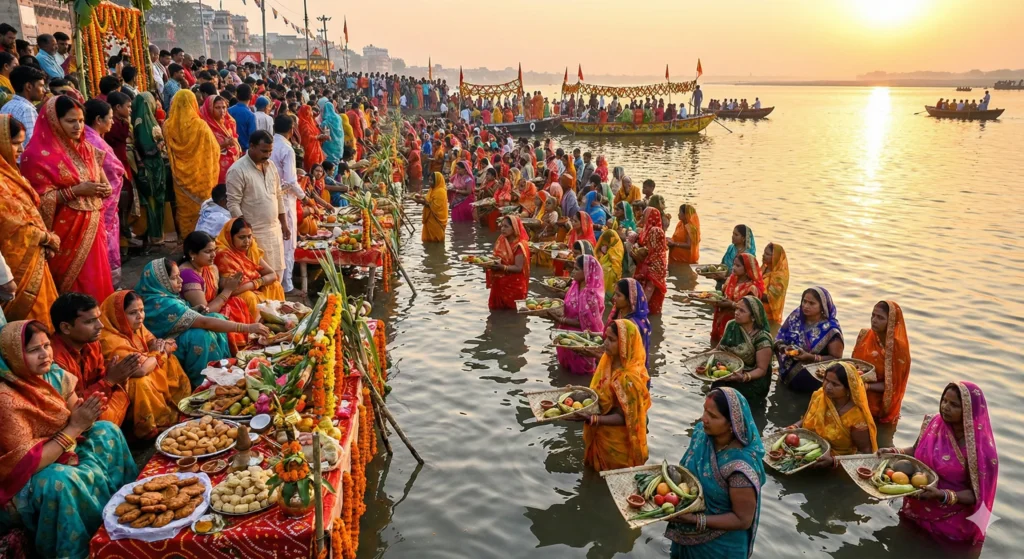
17. Chhath Puja – Worship of the Sun
- Best Place to Celebrate: Patna (Bihar) or Varanasi.
- Expected Month: November (6 days after Diwali).
The Mythology:
- The Sun God: Devotees thank Surya (Sun God) and Chhathi Maiya for bestowing the bounties of life on earth and curing diseases.
- Karna’s Devotion: It is believed Karna (from Mahabharata) performed this puja daily.
The Rituals:+
- Arghya: Devotees stand waist-deep in the river at sunset and sunrise to offer prayers. It involves a strict 36-hour waterless fast.
🍽️ The Taste of Faith (Food):
- Must-Eat: Thekua (A cookie made of wheat, jaggery, and ghee).
- Why: Wheat and jaggery provide immense heat and energy to the body to sustain the fast in the cold weather.
🔬 The Ancient Science:
- Logic: Exposure to the solar rays at sunrise and sunset (when UV is low) helps the body absorb Vitamin D and regulates the circadian rhythm for winter.
👗 Dress Like a Local:
- Attire: Unstitched Cotton Sarees or Dhotis. Synthetic fabric is strictly avoided to maintain purity and connection with nature.
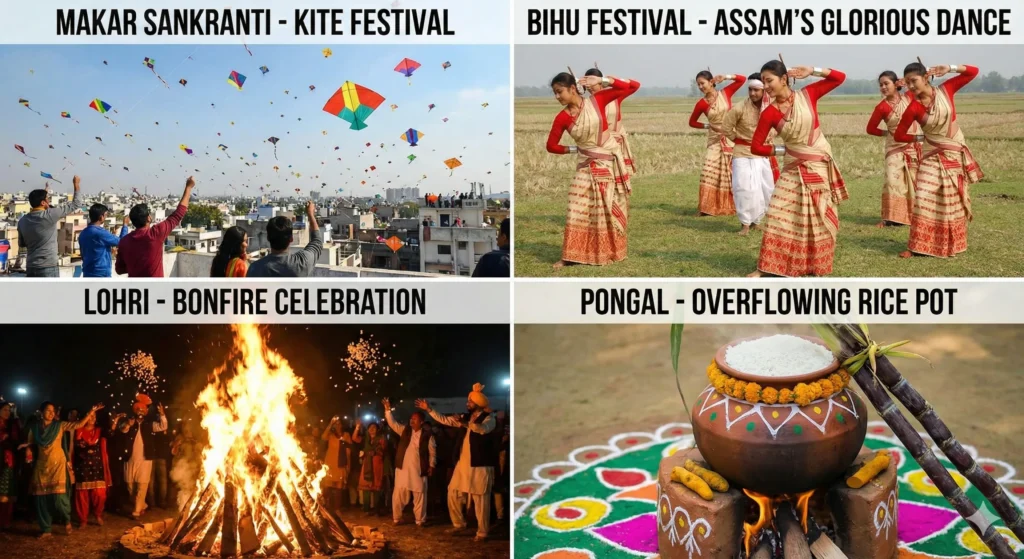
18. Pongal / Makar Sankranti / Lohri / Bihu
- Best Place to Celebrate: Tamil Nadu / Gujarat / Punjab / Assam.
- Expected Month: January 14-15.
The Mythology & Rituals: Celebrates the solar transition into Capricorn (Makar) and the winter harvest.
- Pongal (Tamil Nadu): Boiling rice in a pot until it overflows.
- Sankranti (up ,bihar, punjab,delhi ): Flying Kites to wake the gods.
- Lohri (Punjab): Lighting bonfires to thank the fire god.
- Bihu (Assam): Community feasts and building bamboo huts.
🍽️ The Taste of Faith (Food):
- Must-Eat: Til-Gud Ladoo (Sesame & Jaggery) or Sarson da Saag (Mustard greens).
- Why: Sesame keeps the body warm and lubricates joints during the peak of winter.
🔬 The Ancient Science:
- Logic: Kite flying in Gujarat wasn’t just a game; it was a way to make people stand in the sun for hours to get Vitamin D during the coldest month.
👗 Dress Like a Local:
- Attire:
- South: Kanjeevaram Silk.
- Assam: Muga Silk (Golden Silk).
- Punjab: Phulkari Dupattas (Embroidered scarves).
19.Sakat Chauth – The Guardian Fast
The Vibe: Maternal, Protective, Traditional. Best Place to Celebrate: Uttar Pradesh, Rajasthan, and Bihar. Expected Month: January or February (Magh Krishna Chaturthi).
The Mythology:
- Ganesha’s Wisdom: It celebrates Lord Ganesha. The legend says Ganesha circumambulated his parents (Shiva and Parvati) claiming they were his universe, proving that wisdom is greater than physical speed.
- The Potter’s Story: There is also a folk tale of a mother whose devotion to Ganesha saved her son from a potter’s kiln, establishing this as a fast for children’s safety.
The Rituals:
- Fasting for Offspring: Mothers observe a fast for the well-being and success of their children.
- Worship: In the evening, an offering of Sesame (Til) and Jaggery is made to Lord Ganesha and the Moon/Stars.
The Traveller’s Experience: This is an intimate, household festival. If you are staying at a homestay, you might see the grandmother or mother telling folk stories (Katha) to the children while roasting sesame seeds.
🍽️ The Taste of Faith (Food):
- Must-Eat: Til-Kut (Pounded Sesame and Jaggery) and Shakarkandi (Sweet Potato).
- Why: This festival falls in peak winter (Magh). Sesame (Til) and Jaggery (Gur) are heat-generating foods that protect the body from the biting cold and boost immunity.
🔬 The Ancient Science:
- Logic: The dietary focus is entirely on Calcium and Iron (from Sesame and Jaggery). This combination is essential for bone health during winter when sun exposure is low. The rituals ensure families consume these winter superfoods.
👗 Dress Like a Local:
Attire: Traditional Saree or Salwar Suit, preferably in Red or Yellow shades.
20.Basant Panchami – The Arrival of Spring
The Vibe: Joyful, Yellow-hued, Academic & Musical. Best Place to Celebrate: Shantiniketan (West Bengal) for culture, or the mustard fields of Punjab and Haryana. Expected Month: Late January or Early February (Magh Shukla Panchami).
The Mythology:
- Goddess of Wisdom: It marks the birthday of Goddess Saraswati, the deity of knowledge, music, and art. It is said that she blessed the universe with ‘Sound’ (Vaani) on this day.
- The God of Love: Historically, it was also celebrated as the festival of Kamadeva (God of Love), marking the season when nature begins to bloom.
The Rituals:
- Saraswati Puja: Students place their books, pens, and musical instruments before the Goddess to seek blessings. Toddlers are often taught to write their first letter on this day (Haate-Khori).
- The Colour Yellow: Everyone wears yellow to match the blooming mustard flowers (Sarson) in the fields. It symbolizes light and prosperity.
The Traveller’s Experience: It is a visual treat. Visit a local school or an ashram to see the ‘Vasant’ celebrations. In Punjab, looking at the sky filled with colourful kites is a mesmerizing experience.
🍽️ The Taste of Faith (Food):
- Must-Eat: Meethe Chawal (Sweet Yellow Rice) garnished with saffron and dry fruits, or Boondi Ladoo.
- Why: The yellow colour of the food represents the brilliance of the sun and the ripening crops. Saffron (Kesar) is used to keep the body warm as the season transitions.
🔬 The Ancient Science:
- Logic: This festival marks the end of winter lethargy. The colour yellow (associated with the planet Jupiter) is known to stimulate the intellect and brain functions. Psychologically, it prepares the mind for new learning as the days start getting longer and brighter.
👗 Dress Like a Local:
Attire: Yellow is the rule! Men can wear a Yellow Kurta or a scarf, and women drape beautiful Yellow Sarees or Dupattas.
21.Baisakhi – The Golden Harvest
The Vibe: Energetic, Agricultural, Community-centric. Best Place to Celebrate: Amritsar (Golden Temple) or the wheat fields of Punjab. Expected Month: April 13 or 14 (Fixed Solar Date).
The Mythology:
- Birth of the Khalsa: For Sikhs, this is a spiritual foundation day. In 1699, the 10th Guru, Guru Gobind Singh Ji, founded the ‘Khalsa Panth’ (the order of the pure) on this day.
- The Harvest: For farmers, it marks the exact time when the Rabi (winter) crop is ready for harvesting. It is a thanksgiving day to nature for the golden yield.
The Rituals:
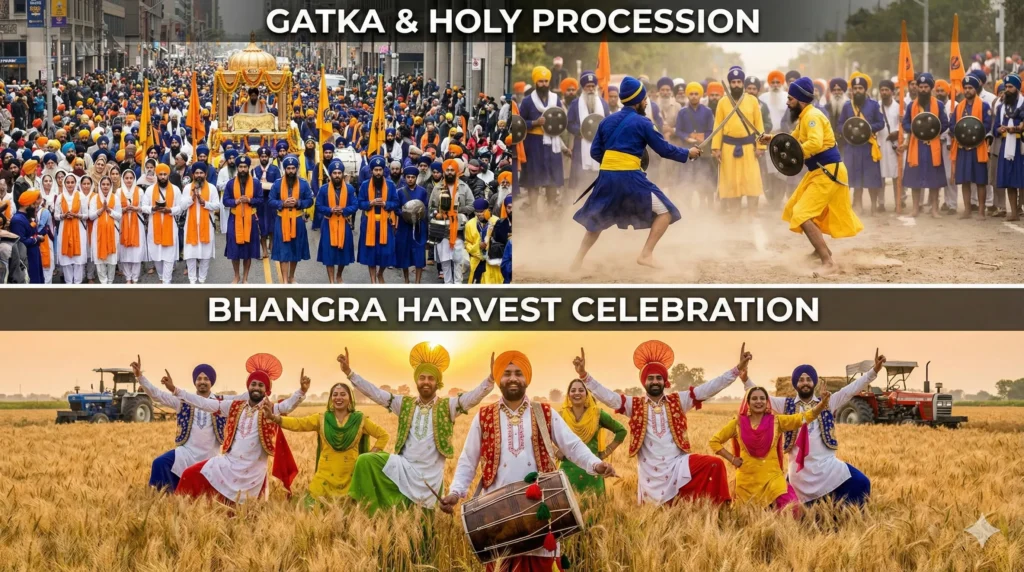
- Bhangra in the Fields: Farmers perform energetic folk dances (Bhangra and Giddha) to the beat of the Dhol in open fields to celebrate the harvest.
- Nagar Kirtan:In Amritsar, a massive holy procession passes through the streets with hymns and martial arts displays (Gatka).
The Traveller’s Experience: Visit a local farm in Punjab (farmstays are very popular now). Driving through the highway where endless fields of yellow mustard and golden wheat wave in the wind is a cinematic experience you won’t forget.
🍽️ The Taste of Faith (Food):
- Must-Eat: Lassi (Sweet yogurt drink) and Makki di Roti with Sarson da Saag.
- Why: Lassi creates a cooling lining in the stomach and provides hydration, which is crucial as the North Indian heat begins to peak in April.
🔬 The Ancient Science:
- Logic: The festival falls exactly when the sun enters the Mesh Rashi (Aries). The vigorous movement of Bhangra was traditionally a way for farmers to shake off the lethargy of winter (Kapha) and activate their metabolism for the hard physical labour of harvesting that follows.
👗 Dress Like a Local:
Attire: Bright colours are mandatory! Men wear vibrant Orange or Yellow Turbans (Pagri) and Kurta-Tehmat. Women wear bright Salwar Kameez.
22.Karwa Chauth – The Moonlit Prayer of Love
The Vibe: Romantic, Devotional, Fasting. Best Place to Celebrate: North India (Delhi, Punjab, Rajasthan, UP). Expected Month: October or November (Kartik Month).
The Mythology:
- The Legend of Savitri: While there are many stories (like Queen Veervati), the core sentiment mirrors the legend of Savitri, who fought with the God of Death (Yama) to bring her husband back to life. It represents the invincible bond of marriage.
The Rituals:
- Nirjala Vrat: Married women observe a strict dawn-to-moonrise fast without even drinking water, praying for the longevity of their husbands.
- Moon Sighting: The fast is broken only after sighting the moon through a sieve (Channi) and then looking at the husband’s face.
The Traveller’s Experience: Walk through local markets a day before to see women applying intricate Henna (Mehendi). On the festival night, seeing women dressed like brides on rooftops waiting for the moon is a scene straight out of a Bollywood movie.
🍽️ The Taste of Faith (Food):
- Must-Eat: Sargi (Pre-dawn meal) and Mathri (Fried flaky biscuit) with Fennel seeds.
- Why: Sargi usually contains pheni (vermicelli) and dry fruits, which are slow-digesting carbs to provide energy throughout the fasting day.
🔬 The Ancient Science:
- Logic: In Ayurveda, fasting is a way to detoxify the body. Timing this with the lunar cycle is significant because the moon influences the water element in the human body (and emotions). The ritual strengthens emotional bonding and willpower.
👗 Dress Like a Local:
Attire: This is the time to go grand. Women wear heavy ethnic wear, usually in Red or Maroon (symbolizing Suhag). Men typically wear Kurta-Pajama.
23. Guru Nanak Jayanti (Gurpurab)
- Best Place to Celebrate: Golden Temple, Amritsar.
- Expected Month: November.
The Mythology:
- The Founder: Marks the birth of Guru Nanak Dev Ji, the founder of Sikhism, who preached equality and service.
The Rituals:
- Langar: Enormous community kitchens feed hundreds of thousands of people for free, regardless of religion or caste.
- Nagar Kirtan: Holy processions with hymn singing.
🍽️ The Taste of Faith (Food):
- Must-Eat: Kada Prasad (Whole wheat flour halwa).
- Why: It is served warm and rich in ghee, symbolising the warmth of the Guru’s blessing and is highly nutritious.
🔬 The Ancient Science:
- Logic: The act of sitting cross-legged on the floor (Pangat) to eat aids digestion and keeps the spine flexible. The community aspect combats social isolation.
👗 Dress Like a Local:
- Attire: Men and women must cover their heads. A simple Scarf or Dupatta is mandatory. Modest, comfortable clothing is best for volunteering.
24. Ram Navami
- Best Place to Celebrate: Ayodhya.
- Expected Month: April.
The Mythology & Rituals:
- The Birth: Celebrates the birth of Lord Rama.
- Rituals: Chariot processions (Rath Yatra) and continuous reading of the Ramayana (Akhand Path).
🍽️ The Taste of Faith (Food):
- Must-Eat: Panakam (Jaggery water with pepper and cardamom).
- Why: It acts as a natural coolant and electrolyte balancer as the Indian summer begins in April.
🔬 The Ancient Science:
- Logic: The pepper in Panakam helps clear the throat and respiratory passages during the pollen season.
👗 Dress Like a Local:
- Attire: Saffron or Orange coloured Kurtas are popular to show devotion.

25. Buddha Purnima (Vesak)
- Best Place to Celebrate: Bodh Gaya (Bihar) or Sarnath (UP).
- Expected Month: May.
The Significance:
- Triple Blessing: Marks the birth, enlightenment, and death (Nirvana) of Gautama Buddha.
The Rituals:
- Prayer: Monks wear white robes, offer kheer (rice pudding) to the Bodhi tree, and light candles. Caged birds are often set free to symbolise compassion.
🍽️ The Taste of Faith (Food):
- Must-Eat: Kheer (Rice Pudding).
- Why: Legend says a maiden named Sujata offered Kheer to Buddha, ending his extreme fasting and helping him find the middle path.
🔬 The Ancient Science:
- Logic: Meditation practices highlighted during this festival lower cortisol (stress) levels and improve neuroplasticity.
👗 Dress Like a Local:
- Attire: White clothing is preferred as it symbolises purity and peace.
Part 4: The Year-End Grand Finale
As the year draws to a close, India transforms into a global party hub. The cool weather and the holiday spirit merge to create a week-long carnival from December 25th to January 1st.
26. Christmas – The Winter Carnival
The Vibe: Jovial, Illuminated, Nostalgic. Best Place to Celebrate: Goa (for a traditional Latin vibe) or Kolkata (Park Street for a carnival vibe). Expected Month: December 25 (Fixed Date).
The Mythology:
- The Divine Birth: Commemorates the birth of Jesus Christ in Bethlehem. It celebrates the message of peace, love, and redemption.
- The Three Kings: It also honours the journey of the Three Wise Men (Magi) who followed the Star of Bethlehem to bring gifts to the infant Jesus.
The Rituals:
- Midnight Mass: The most sacred event. Devotees gather in churches late at night (often starting at 11:30 PM) for prayers and carols.
- The Crib & Star: Homes and churches create intricate Nativity scenes (Cribs) depicting Jesus’ birth, and hang giant paper stars (lanterns) outside homes to guide the spirit of the season.
The Traveller’s Experience:
- In Goa: Head to the Basilica of Bom Jesus for the Midnight Mass. The sound of hymns echoing in a 400-year-old church is hauntingly beautiful. Afterward, join the community dances (balls).
- In Kolkata: Walk down Park Street. It is decorated with millions of fairy lights, and the energy rivals Times Square on New Year’s Eve.
🍽️ The Taste of Faith (Food):
- Must-Eat: Allahabadi Christmas Cake (made with petha/ash gourd and ghee) or Goan Bebinca (7-layered pudding).
- Why: The traditional Christmas fruit cake is loaded with dried fruits (raisins, dates) and nuts soaked in rum. These ingredients provide concentrated energy and warmth to the body during the coldest week of the year.
🔬 The Ancient Science:
- Logic: Christmas falls right after the Winter Solstice (the darkest phase of the year).
- Psychology: The tradition of lighting candles and hanging stars was historically a psychological remedy to combat the gloom of long winter nights (Seasonal Affective Disorder).
- Diet: The spices used in Christmas feasts—Cinnamon, Cloves, Nutmeg, and Ginger—are all “warming spices” that boost blood circulation and immunity against winter flu.
👗 Dress Like a Local:
- Attire: This is the time to dress up!
- Men: Western formals (Suits or crisp Shirts).
- Women: Western Party wear or Red/Green Silk Sarees (in South India). In Goa, smart casuals or dresses are the norm.
27.New Year’s Eve – Modern Celebration Across India
The Vibe: Electric, Hopeful, Cosmopolitan. Best Place to Celebrate: Goa (Beaches), Pondicherry (Peaceful), or Mumbai (Urban Nightlife). Expected Month: December 31 (Fixed Date).
The Mythology:
- Burning the Old Man: In many parts of India (like Fort Kochi and Mumbai), an effigy of an old man (representing the past year’s sorrows) is burned at midnight. It mythologically symbolizes the destruction of past gloom to make way for the new birth of time.
- Circle of Time: It marks the completion of Earth’s orbit, celebrated as a cosmic reset button—a moment where the slate is wiped clean.
The Rituals:
- The Countdown: Just like the rest of the world, crowds gather at beaches and city squares to count down the final 10 seconds.
- Beach Fire & Meditation: In Goa, people light bonfires on the sand. In spiritual hubs like Auroville (Pondicherry), people gather for a silent collective meditation at the stroke of midnight instead of partying.
The Traveller’s Experience:
- In Cochin (Kerala): Witness the Cochin Carnival, a massive street parade with elephants and costumes that ends with the burning of the giant ‘Pappanji’ (Old Man) effigy.
- In Himachal (Mountains): Spend the night around a bonfire in Manali or Kasol with travellers from around the world, watching the first sunrise of the year hit the snow-capped peaks.
🍽️ The Taste of Faith (Food):
- Must-Eat: Barbecue and Biryani.
- Why: Unlike the fasting food of religious festivals, New Year is about indulgence. Grilled meats (Barbecue) provide high protein and heat to combat the midnight chill of December, while Biryani is the ultimate communal celebratory dish in India.
🔬 The Ancient Science:
- Logic: This is the ‘Fresh Start Effect’ in psychology. The specific date acts as a ‘temporal landmark,’ motivating people to leave behind bad habits and set new goals (Resolutions), which triggers a dopamine release in the brain.
- Social Biology: The act of hugging strangers and dancing in groups at midnight releases Oxytocin (the bonding hormone), reducing social anxiety and creating a sense of global unity.
👗 Dress Like a Local:
Women: Sequin dresses, boots, and high fashion. If you are in the mountains, layer up with heavy woollens but keep it stylish.
Attire: Glitz and Glamour!
Men: Smart casuals, leather jackets (for the cold), or party shirts.
Official Refrences
Ministry of Tourism, Government of India
- Use for: Overall festivals, cultural tourism, official travel info
- Why: Highest authority tourism source in India
- Anchor text : official Indian tourism information
Incredible India (Official Tourism Portal
- Use for: Festival overviews, cultural experiences, travel inspiration
- Why: Internationally recognised government tourism brand
- Anchor text: Incredible India festival experiences
Related Posts
- 1️⃣ How to Travel Between Major Cities in India:CompleteTrain, Flight & Bus Guide
- Here you will aware which means of travel in india is best
- 👉 Read Guide → https://travelwiseguide.com/how-to-travel-between-major-cities-in-india/
- 2️⃣ Ayodhya Ram Janmabhoomi Darshan:Timings,Significance and Travel Guide
- The lang of Bhagwan Ram Janmbhumi Ayodhya celibrates many festivals experience them
- 👉 Read Guide → https://travelwiseguide.com/ayodhya-ram-janmabhoomi-darshan-guide/
- 3️⃣ Varanasi Travel Guide 2025 — Ghats, Ganga Aarti & 3-Day Itinerary
- The oldest civilisation on earth once feel the land of moksh( salvation )
- 👉 Read Guide →https://travelwiseguide.com/varanasi-travel-guide-2025/
- 4️⃣Magh Mela Prayagraj: Complete Guide to Rituals, Kalpvas and Spiritual Significance
- Snan on auspicious days rituals , mantras ,how to bathe all Daan , kalpwas , accomodation types ,food management
- 👉https://travelwiseguide.com/magh-mela-prayagraj-guide/
Conclusion: Experiencing Indian Festivals in 2026
In India, festivals go beyond occasions — they are deeply felt collective experiences. Whether you choose the silence of a monastery in Ladakh or the deafening drums of Mumbai, every celebration offers a story shaped by faith, community, and tradition.
To plan your journey beyond festival dates and understand the country more deeply, explore our complete India travel guide, covering regions, seasons, culture, and practical travel insights for first-time and returning visitors alike.
FAQs About Indian Festivals
What is the Indian Festivals Calendar 2026 and why should travellers use it?
The Indian Festivals Calendar 2026 is a comprehensive schedule of major cultural, religious, tribal, and harvest festivals across India, designed to help travellers plan their trips around key celebrations, dates, rituals, and experiences
Which are the major festivals listed in the Indian Festival Calendar 2026?
Major events in 2026 include Holi, Diwali, Navratri, Ganesh Chaturthi, Eid-ul-Fitr, Onam, Janmashtami, Raksha Bandhan, Chhath Puja, and regional celebrations such as the Hornbill Festival and Pongal.
When is Holi celebrated in India in 2026?
In 2026, Holi — the festival of colours — falls on 4 March 2026 and is celebrated nationwide with vibrant powders, water, music, and cultural rituals.
What is the best place to experience Diwali in India?
Iconic locations to experience Diwali include Ayodhya,Varanasi, Jaipur, Delhi, and many smaller towns, where streets light up with lamps, fireworks, and festive markets during early November.
Do Indian festival dates change every year?
Yes — many Indian festivals are based on the lunar calendar or regional lunar/solar systems, so dates like Holi, Eid, and Diwali can vary each year, unlike fixed national holidays such as Republic Day or Independence Day.
How can travellers plan visits around festival crowds and accommodations in 2026?
For popular festivals like Diwali and Holi, book hotels and travel at least 2–3 months in advance. Avoid peak days for large crowds and consider nearby regional dates when crowds are slightly smaller. (General best practice — based on travel/holiday behaviour)
What unique regional festivals should visitors know about in India 2026?
Apart from pan-India celebrations, explore regional events such as Hornbill Festival (Nagaland), Rann Utsav (Gujarat), Magh Mela (Prayagraj), and Snake Boat Races in Kerala for authentic cultural immersion
Which Indian festivals in 2026 offer the best cultural experiences for travellers?
Top immersive experiences include Holi for colour and community, Durga Puja for artistic pandals and rituals, Onam for cultural feasting and boat races, and Chhath Puja for sunrise prayers on river banks.