Indian Cuisine Travel Guide: Understanding Regional Food, Culture & Flavours
Last Updated on
4/03/2026
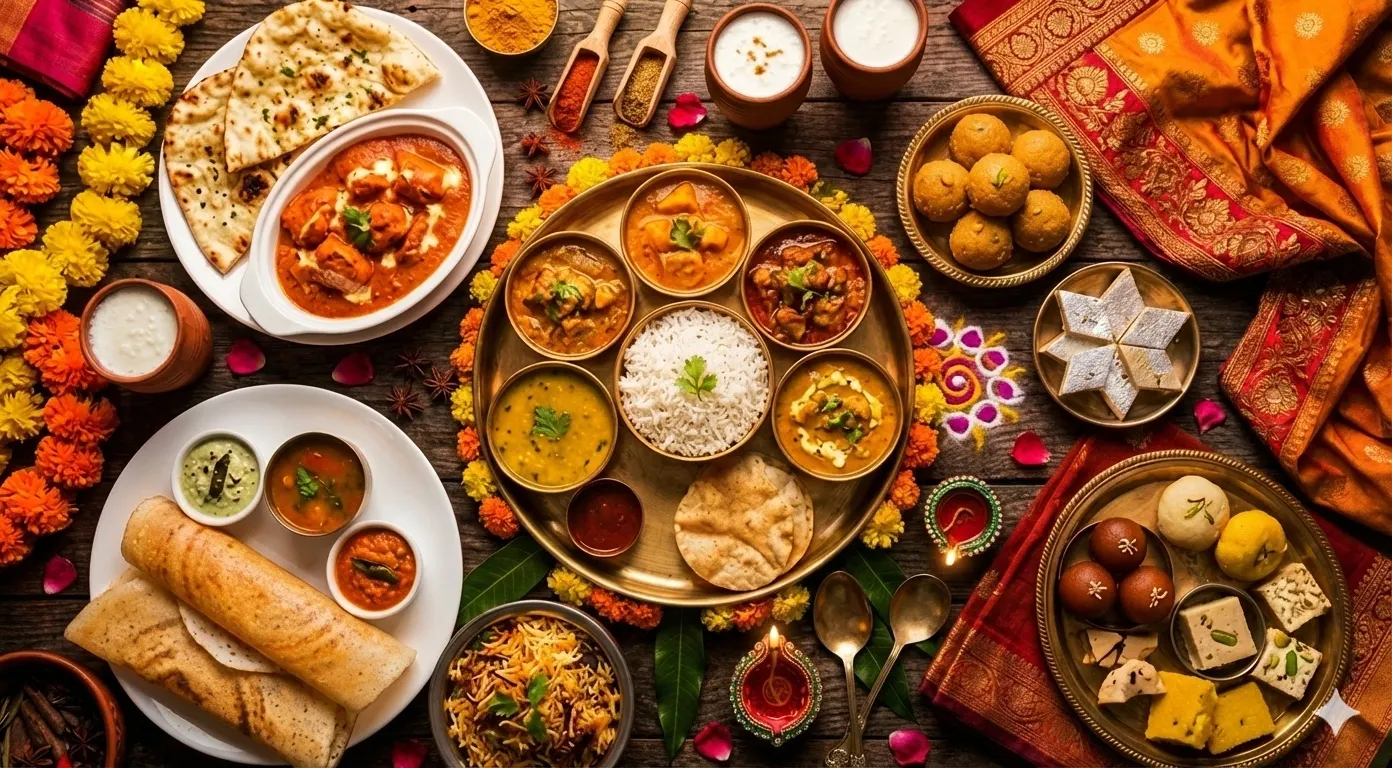
This Indian cuisine travel guide explores how food across India is shaped by climate, geography, agriculture, and culture, creating one of the most diverse culinary systems in the world.
Rather than being a single style of cooking, Indian cuisine is a collection of regional food traditions developed to suit local weather, crops, religious beliefs, and daily lifestyles.
From wheat- and dairy-based meals in the North to rice, coconut, and fermented foods in the South, millet-driven diets in arid regions, and fish- and rice-centred cuisines along rivers and coasts, every Indian region follows a food pattern that supports energy balance, digestion, hydration, and immunity.
For travellers, understanding Indian food becomes much easier when viewed through regional thalis, street food culture, seasonal drinks, and traditional cooking methods rather than individual dish names. This guide helps visitors decode what to eat, why it is eaten that way, and how Indian food reflects the land, climate, and people behind it.
In simple terms, Indian cuisine is best experienced as a journey across regions — not just a menu.
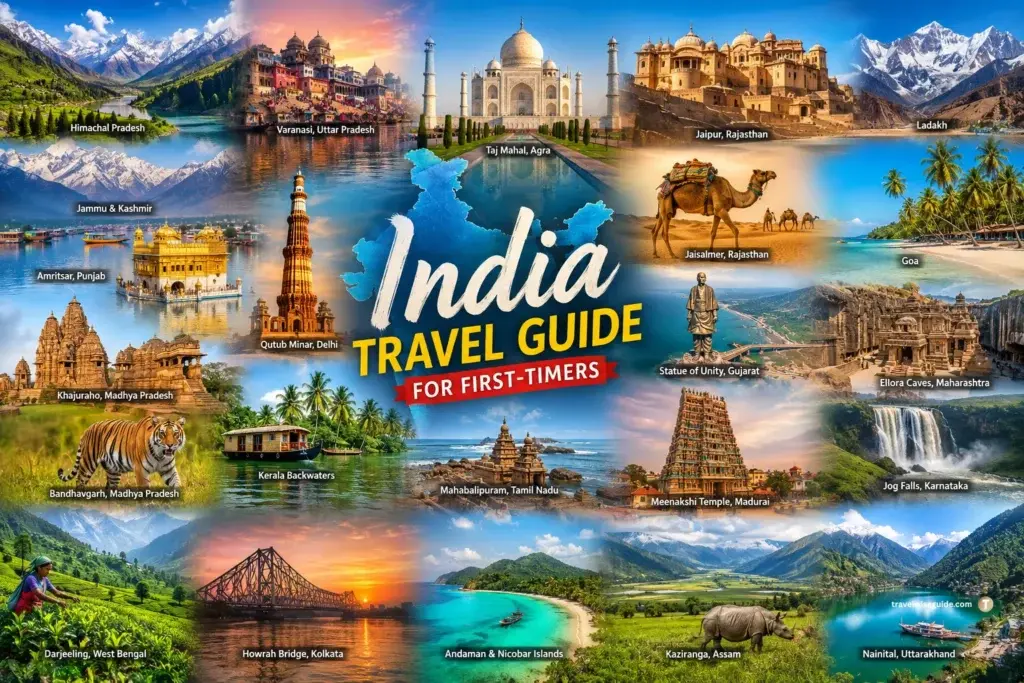
For broader context on destinations, traditions, seasons, and travel planning, explore our detailed guide to travelling across India before diving deeper into regional cuisine.
- Decoding Indian Food Culture and Regions: A Tourist Perspective
- Regional Influences: From Spice Routes to Ancient Traditions
- 1. Northern India: Exploring the Art of Tandoor & Dairy-Rich Foods
- 2. Southern India: The Science of Fermentation, Rice & Coconut
- 3. Western India: A Journey from Desert Millets to Coastal Seafood
- 4. Eastern India: Mustard Oil, Riverine Fish, and Sweet Treats
- Why the Regional Thali is the Best Way to Experience India
- Lesser- Known Regional Cuisines to Explore
- Indian Cooking Techniques: From Dum Pukht to Tandoor Roasted
- 🍔 Essential Indian Fast Food: Quick Bites for Every Traveler
- Pan-India Street Food Culture
- Dining Etiquette in India: Spice Levels, Hands, and Customs
- Conclusion: Understanding Indian Cuisine as a Travel Experience
- Official Reffrences
- Related Posts
- FAQs About Indian Cuisine Travel Guide
Decoding Indian Food Culture and Regions: A Tourist Perspective
India isn’t just a place to eat — it’s a recognised culinary destination on the world map. In late 2025, UNESCO officially designated Lucknow as a “Creative City of Gastronomy”, placing it among world food capitals and recognising its rich Awadhi culinary traditions. This honour follows Hyderabad’s earlier recognition and highlights the cultural depth, heritage recipes and community food practices of the region. Such Indian culinary heritage significantly enhances food tourism in India.
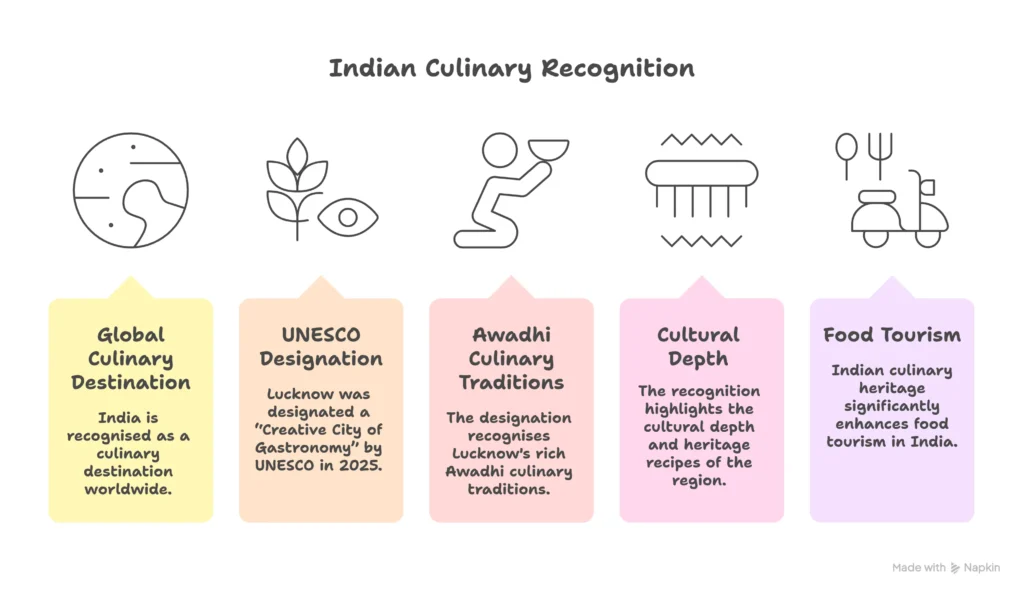
Global Culinary Recognition: Lucknow’s UNESCO Gastronomy Status
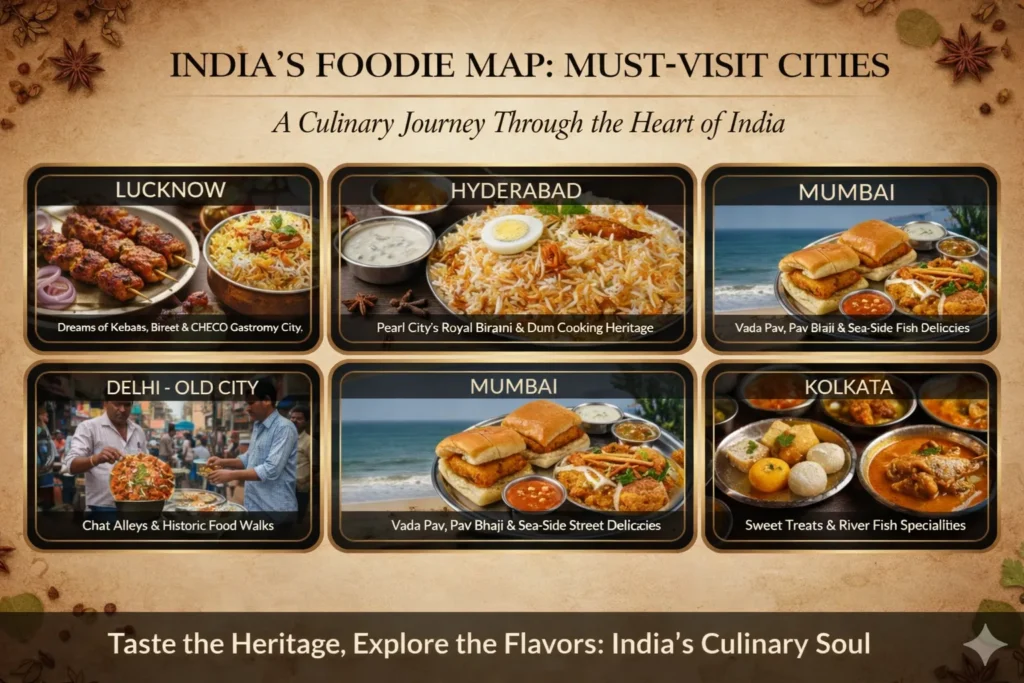
Many global travellers search “best food cities in India” or “where to eat local cuisine”. India has multiple food cities worth thematic exploration:
🗺️ Must-Visit Food Cities
- Lucknow: Dreams of kebabs, dum biryanis and street chaat — a UNESCO gastronomy city.
- Hyderabad: Pearl city with royal biryani and dum cooking heritage.
- Delhi–Old City: Chaat alleys and historic food walks.
- Mumbai: Vada pav, pav bhaji and sea-side street delicacies.
- Kolkata: Sweet treats and river fish specialties.
Regional Influences: From Spice Routes to Ancient Traditions
1. Geography & Climate — Food of the Land and Seasons
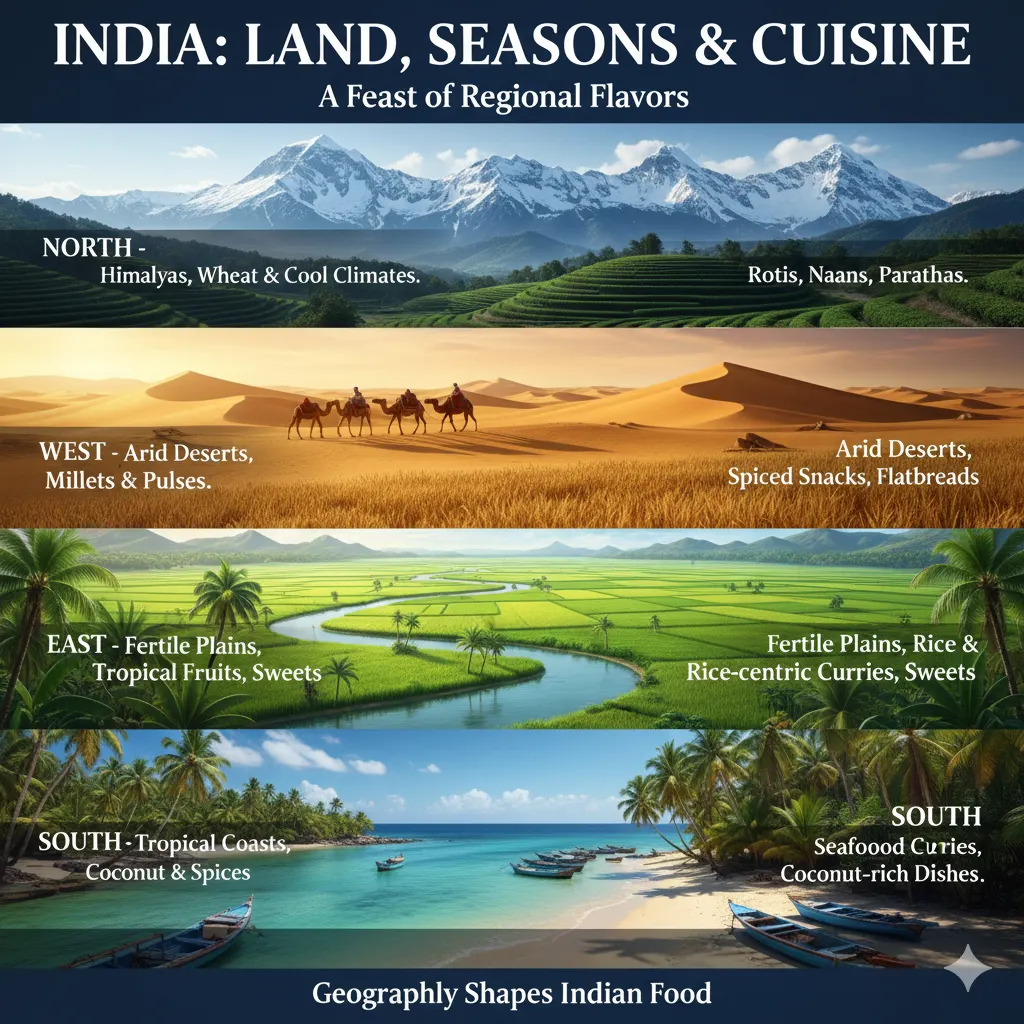
India’s vast landmass ranges from the snow-capped Himalayas in the north to arid deserts in the west, fertile river plains in the east and tropical coastlines in the south. These geographic zones produce entirely different crops:
- Rice thrives in wet and coastal areas, influencing the rice-centric foods of the east and south.
- Wheat grows in cooler, drier plains, forming the basis for rotis, naans and parathas in the north.
- Millets, corn and pulses are dominant in dry and semi-arid regions where water is scarce.
- Spices and tropical fruits flourish in humid coastal climates.Each region uses locally available produce not just out of convenience, but because culinary traditions evolved around what grew best there. This is why a tourist visiting Kerala’s coconut-rich fish curries will taste something completely different from Rajasthan’s millet flatbreads and spicy snacks. Long-tail search terms this answers: “Indian cuisine regional crop influences”, “how geography shapes Indian food”.
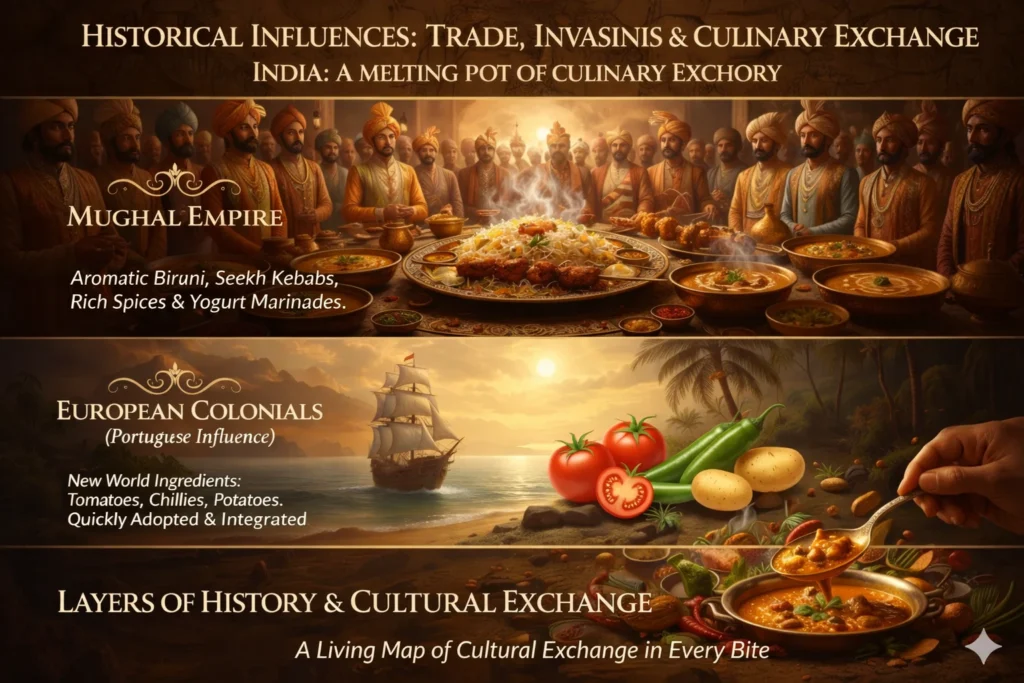
📜 2. Historical Influences — Trade, Invasions & Culinary Exchange
Over millennia, India was a hub of trade and empires, which brought new ingredients and cooking techniques from around the world into local kitchens:
- The Mughal Empire introduced aromatic rice dishes like biryani and slow-cooked kababs using yoghurt marinades and rich spices.European colonists — especially the Portuguese — brought ingredients like chillies, tomatoes and potatoes from the Americas. These were quickly adopted and became staples in many regional dishes.As a result, Indian cuisine has layers of history in every bite — ancient staples blend with medieval royal kitchens and global spice routes. For tourists, this means Indian food is not just tasty, it’s a living map of cultural exchange.
🛕 3.Cultural Beliefs and Rituals Behind Dietary Habits
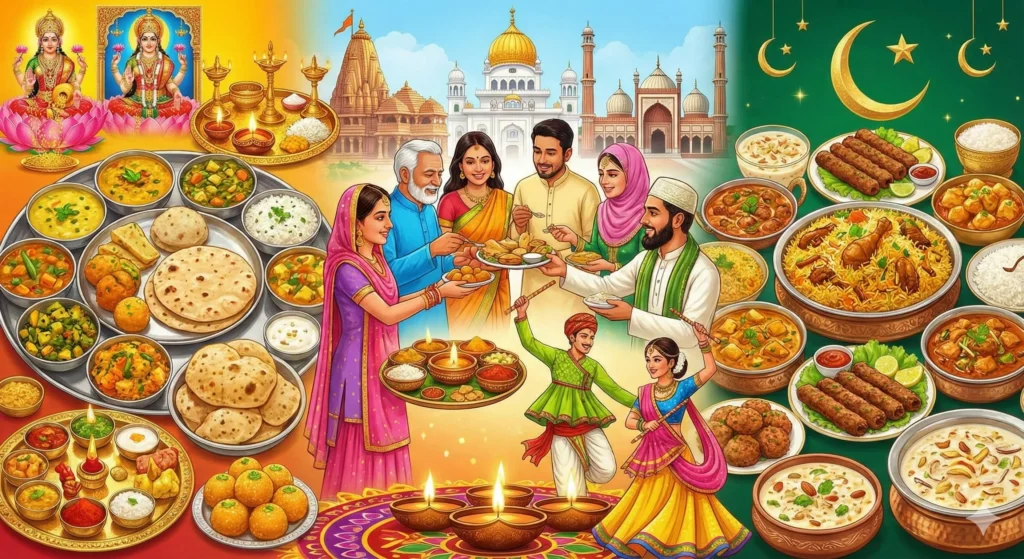
Religion has a profound effect on Indian food choices. India is home to many faiths — including Hinduism, Islam, Buddhism, Jainism and Sikhism — each with dietary practices that influence local cuisine.
- Vegetarian traditions are strong in many Hindu and Jain communities, especially in Gujarat, Rajasthan and parts of the South and West.
- Muslim culinary traditions contributed richly spiced meat dishes and rich gravies in regions like Awadh and Hyderabad.
- Religious festivals (like Diwali, Eid and Navratri) bring specific celebratory foods and sweets that tourists often seek out.
For a traveller, this means India’s food is deeply symbolic: it’s not just nourishment, but a reflection of spiritual identity and ritual.
🍛 4. How Local Communities Create Unique Flavours Across India’s Regions
India is home to thousands of ethnic groups, each with its own language, traditions, and food heritage. This cultural mosaic results in regional dishes that travellers can taste nowhere else, from the mustard-oil-rich fish curries of Bengal to the coconut-flavoured stews of Kerala and spice-packed street snacks of Maharashtra.Unlike many nations with more uniform food, Indian cuisine is nested regionality — meaning within a single state there can be multiple distinct food traditions. This larger cultural diversity means that a tourist visiting India on successive trips will encounter new flavours every time.
🌿 5. Seasonal Eating & Agricultural Cycles
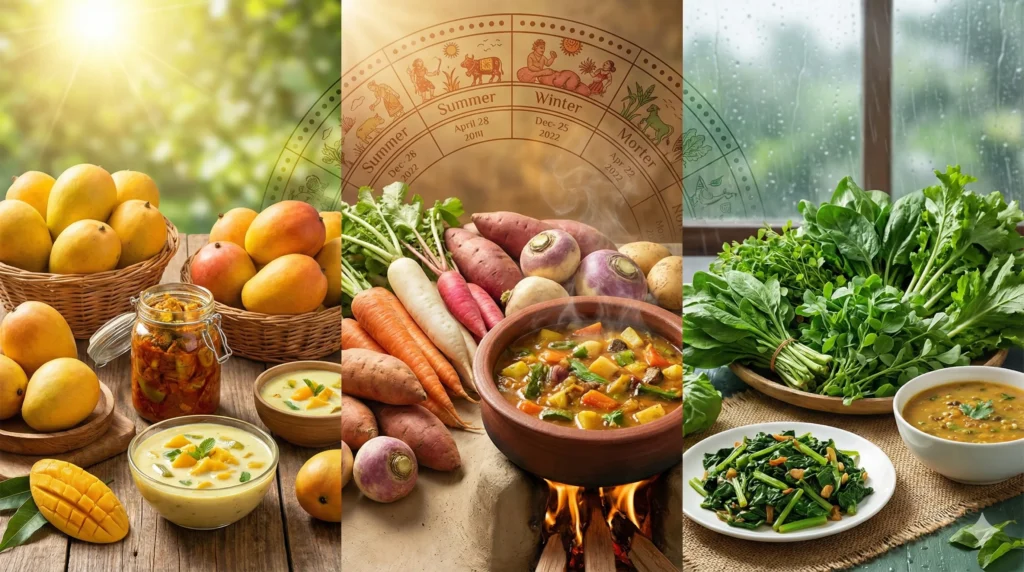
Traditionally, Indian food is also shaped by seasonal availability. Many dishes and food habits developed around what’s in season:
- Mangoes during summer lead to seasonal meals and pickles.
- Root vegetables in winter become part of hearty curries.
- Leafy greens in monsoon months become staple sides. This seasonal rhythm is part of the ancient understanding that fresh, in-season foods are more nutritious and flavourful — a concept rooted in traditional Indian food philosophy.
.
🧪 6. Spices & Culinary Techniques — A Signature of Indian Food
Spices in India do more than just add heat — they build layers of flavour and aroma, and many also historically served medicinal or preservative roles. From garam masala in the north to sambar powder in the south, spice blends are region-specific and often centuries old. Additionally, cooking techniques such as:
- Dum (slow sealed cooking)
- Tandoor oven baking
- Steaming (idli, dhokla)
1. Northern India: Exploring the Art of Tandoor & Dairy-Rich Foods
Geography & Ingredients
Northern India includes Punjab, Uttar Pradesh, Haryana, Himachal Pradesh & Jammu & Kashmir. The fertile plains and cooler climate favour wheat cultivation, dairy animals (cow/buffalo) and hearty crops. Dairy products like ghee, curd and paneer (Indian cottage cheese) are widely used. Spices like cumin, coriander, turmeric, garam masala add warmth and depth to foods.
🍽️ Signature Dishes
| State | Famous Main Dishes | Famous Fruits | Famous Mithai | Famous Chaat | Famous Achaar (Pickles) | Famous Drinks | Special Cooking Technique |
| Punjab | Sarson da Saag, Makki di Roti, Butter Chicken, Amritsari Kulcha | Kinnow, Guava, Pear | Pinni, Panjiri, Jalebi | Chole Kulche, Papad Chaat | Gobhi–Gajar–Shalgam, Aam Achaar | Lassi, Chaas | Tandoor cooking, high ghee usage (Maillard reaction) |
| Uttar Pradesh | Awadhi Biryani, Galouti Kebab, Bedmi Puri | Dasheri Mango, Guava, Jamun | Petha, Rabri, Malaiyo | Banarasi Chaat, Aloo Tikki, Tamatar Chaat | Aam Achaar, Mixed Veg Achaar | Thandai, LassiBail ka sharbat, aam ka panama,jaljeera | Dum Pukht (slow sealed cooking, steam retention) |
| Haryana | Bajra Roti, Kadhi, Besan Roti, Hara Cholia | Guava, Ber, Kinnow | Churma, Gajak, Ghewar | Aloo Chaat, Chana Chaat | Kachri Achaar, Aam Achaar | Raabdi, Chaas | Minimal spices, fermentation & roasting |
| Himachal Pradesh | Dham, Siddu, Madra, Chha Gosht | Apple, Plum, Apricot, Peach | Mittha, Sweet Babru | Siddu with chutney (local street food) | Lingri (fern) Achaar, Meetha Achaar | Lugdi / Chhaang, Herbal teas | Natural fermentation, yoghurt stabilisation |
| Jammu & Kashmir | Rogan Josh, Yakhni, Gushtaba, Dum Aloo | Apple, Cherry, Walnut, Almond | Phirni, Sheermal, Modur Pulao | Limited chaat culture | Haakh Achaar, Walnut Achaar | Kahwa, Noon Chai | Wazwan system, copper utensils |
Nutritional Highlights
- Carbohydrates: wheat flatbreads provide energy
- Protein: dairy and pulses
- Fats: from ghee and butter enhance richness
Three-Day Tourist Menu
Rather than focusing on individual dishes, this three-day menu reflects how food has evolved from the land itself. Variations in temperature, altitude, rainfall, and cropping systems determine whether wheat, rice, dairy, or seasonal vegetables dominate the plate, shaping everyday meals across these regions.
Day 1
- Breakfast: Parathas with curd & pickle (mild spice, carbs & probiotics)
- Lunch: Butter Chicken with naan (protein & fats)
- Dinner: Dal Makhani & jeera rice (plant protein)
- Evening Snack: Golgappa (very spicy water puri)
Day 2
- Breakfast: Bedmi Puri & aloo curry (spicy & savoury)
- Lunch: Lucknowi Biryani (aromatic spices & slow cooking)
- Dinner: Rogan Josh with steamed rice (rich protein)
- Evening Snack: Tunday Kebab roll
Day 3
- Breakfast: Nihari with khamiri roti (slow-cook savoury stew)
- Lunch: Sarson da Saag with makki roti (micronutrients)
- Dinner: Seekh Kebabs & green chutney (grilled, smoky)
- Evening Snack: Kulfi falooda (sweet, dairy)
———————————————————————————————————————
2. Southern India: The Science of Fermentation, Rice & Coconut
Geography & Ingredients
Across Tamil Nadu, Kerala, Karnataka, Andhra Pradesh, and Telangana, daily meals are shaped by warm temperatures and seasonal rainfall rather than by recipes alone. Flood-irrigated rice fields, pulse cultivation, and abundant marine catch define the food base, while ingredients like coconut and tamarind naturally dominate because they grow easily in coastal and semi-coastal landscapes.
🍽️ Signature Dishes
| State | Famous Main Dishes | Famous Fruits | Famous Mithai | Famous Chaat / Street Food | Famous Achaar (Pickles) | Famous Drinks | Special Cooking Method / Unique Feature |
| Tamil Nadu | Idli, Dosa, Sambar, Rasam, Pongal, Chettinad Chicken | Banana, Jackfruit, Mango | Mysore Pak, Adhirasam | Sundal, Murukku, Bhajji | Mango Pickle, Lemon Pickle, Gongura (border areas) | Filter Coffee, Panakam | Fermentation of rice–urad batter, spice tempering (tadka), Chettinad spice chemistry |
| Kerala | Sadya, Appam & Stew, Puttu–Kadala Curry, Fish Moilee | Coconut, Banana, Pineapple, Jackfruit | Palada Payasam, Unniyappam | Pazham Pori, Samosa (local style) | Tender Mango Pickle, Fish Pickle, Lime Pickle | Tender Coconut Water, Sulaimani Tea | Coconut oil dominance, steam cooking, high use of medium-chain fatty acids |
| Karnataka | Bisi Bele Bath, Ragi Mudde, Neer Dosa, Mangalorean Fish Curry | Mango, Banana, Sapota | Mysore Pak, Dharwad Peda, Obbattu | Maddur Vada, Churmuri | Mango Pickle, Lime Pickle | Filter Coffee, Majjige (buttermilk) | Millet-based nutrition, balanced spice–sweet profile |
| Andhra Pradesh | Andhra Meals, Pesarattu, Pulihora, Gongura Mutton | Mango, Papaya, Banana | Pootharekulu, Bobbatlu | Mirchi Bajji, Punugulu | Gongura Pickle, Avakaya (chilli–mustard oil) | Majjiga, Panakam | High capsaicin tolerance, intense chilli–acid balance |
| Telangana | Hyderabadi Biryani, Haleem, Sarva Pindi, Jonna Rotte | Mango, Custard Apple, Guava | Double ka Meetha, Qubani ka Meetha | Irani Chai with Osmania Biscuit | Mango Pickle, Red Chilli Pickle | Irani Chai, Lassi | Dum cooking, Persian–Deccan fusion |
🧪 Nutritional Highlights
Staple grains that release energy slowly form the base of many meals, while natural fermentation introduces beneficial microorganisms. Dishes such as idli and dosa support gut microbiota balance, improving digestion and nutrient absorption through probiotic activity.
3-Day Menu (South India)
This 3-day food menu highlights Tamil Nadu, Kerala, Karnataka, Andhra Pradesh, and Telangana, shaped by tropical climate and coastal agriculture. It focuses on rice-based complex carbohydrates, plant proteins, coconut fats, and fermented foods, prepared through steaming and slow cooking to support hydration, gut health, and balanced digestion.
Day 1
- Breakfast: Masala Dosa — fermented rice & lentil crepe (crispy & spicy)
- Lunch: Sambar & Rice with coconut chutney (tangy & aromatic)
- Evening Snack: Filter Coffee & Murukku (aromatic & savoury)
- Dinner: Kerala Fish Curry — coconut milk base (spicy & rich)
Day 2
- Breakfast: Idli with Coconut Chutney — steamed cakes (soft & mild)
- Lunch: Andhra Chicken Curry with rice (fiery spice)
- Evening Snack: Uttapam — thick pancake with veg toppings
- Dinner: Appam with Vegetable Stew — soft rice pancake with creamy stew
Day 3
- Breakfast: Breakfast: Chitranna (lemon-seasoned rice) — lightly spiced grains infused with citrus notes, offering a bright, savoury start to the day.
- Lunch: Chepala Pulusu (Tangy Fish Curry) (sour & spicy)
- Evening Snack: Banana Bajji — deep-fried banana fritters
- Dinner: Pongal — rice & lentils cooked to creamy comfort
3. Western India: A Journey from Desert Millets to Coastal Seafood
🌾 Geography & Ingredients
Includes Gujarat, Rajasthan, Maharashtra & Goa. Western India spans deserts to beaches, so foods range from millet-based breads and lentil dishes to seafood curries in Goa
| State | Famous Main Dishes | Famous Fruits | Famous Mithai | Famous Chaat / Street Food | Famous Achaar (Pickles) | Famous Drinks | Special Cooking Method / Unique Feature |
| Gujarat | Gujarati Thali, Undhiyu, Dhokla, Khandvi, Thepla | Mango (Kesar – Gir), Banana, Papaya | Mohanthal, Basundi, Shrikhand | Dabeli, Sev Khamani, Fafda–Jalebi | Chhundo (sweet mango pickle), Methia Keri | Chaas, Aam Ras | Steam cooking & fermentation, sweet–salt balance |
| Rajasthan | Dal Baati Churma, Gatte ki Sabzi, Ker Sangri, Laal Maas | Ber, Pomegranate, Khejri pods | Ghewar, Churma Ladoo, Malpua | Pyaz Kachori, Mirchi Vada | Ker–Sangri Pickle, Mango Pickle | Chhachh, Lassi | Water-conserving cooking, high fat for desert climate |
| Maharashtra | Vada Pav, Puran Poli, Misal Pav, Bharli Vangi | Alphonso Mango, Banana, Custard Apple | Modak, Shrikhand, Basundi | Sev Puri, Bhel Puri, Pav Bhaji | Raw Mango Pickle, Lemon Pickle | Sol Kadhi, Taak | Coconut–peanut lipid chemistry, fermented batters |
| Goa | Fish Curry Rice, Pork Vindaloo, Xacuti, Sorpotel | Cashew Apple, Coconut, Jackfruit | Bebinca, Dodol | Ros Omelette, Cutlet Pao | Prawn Pickle, Mango Pickle | Feni (cashew/coconut), Kokum Sherbet | Vinegar-based fermentation, Portuguese influence |
🧪Nutrition Snapshot
- Protein & fibre: lentil-based dishes and pulses.
- Iron: mustard greens (saag) are rich in iron and vitamins.
3-Day Menu (West India)
This 3-day food menu represents Gujarat, Rajasthan, Maharashtra, and Goa, shaped by arid, semi-arid, and coastal food systems.The menu combines slow-release starches, plant and marine protein sources, and locally used fats, supported by methods such as prolonged simmering, natural dehydration, and microbial fermentation. Together, these practices enhance taste development, conserve energy during cooking, and promote healthy digestion.
Day 1
- Breakfast: Khaman & Dhokla — gram flour snack (tangy & soft)
- Lunch: Gujarati Thali — variety of veg, dal and rice (spicy & sweet notes)
- Evening Snack: Fafda with Jalebi — crispy & sweet contrast
- Dinner: Goan Fish Curry with rice (spicy, sour & coastal)
Day 2
- Breakfast: Poha — gently cooked beaten rice tempered with spices, offering a light, savoury morning meal.
- Lunch: Misal Pav — a fiery sprouted-pulse gravy paired with soft bread rolls, delivering sharp heat and tangy flavours.
- Evening Snack: Sev Puri — puffed rice snack with chutney (spicy & tangy)
- Dinner: Dal Baati Churma — baked wheat balls & sweet crumb (savory + sweet)
Day 3
- Breakfast: Thepla with yoghurt — spiced flatbread (mild & savoury)
- Lunch: Kolhapuri Mutton Curry with rice (smoky, fiery)
- Evening Snack: Keema Pav — spiced minced meat & buns
- Dinner: Malvani Chicken — coconut & spice curry
4. Eastern India: Mustard Oil, Riverine Fish, and Sweet Treats
🌾 Geography & Ingredients
Across West Bengal, Odisha, Bihar, and Assam, nutrient-rich alluvial landscapes sustain grain cultivation, pulse farming, freshwater fisheries, and a wide range of seasonal vegetables.
Mustard oil cooking in india is a signature cooking medium.
| State | Famous Main Dishes | Famous Fruits | Famous Mithai | Famous Chaat / Street Food | Famous Achaar (Pickles) | Famous Drinks | Special Cooking Method / Unique Feature |
| West Bengal | Machher Jhol, Shorshe Ilish, Kosha Mangsho, Luchi–Aloor Dom | Mango, Jackfruit, Banana, Litchi | Rasgulla, Sandesh, Mishti Doi | Phuchka (Bengali pani puri), Jhal Muri | Kasundi (mustard sauce), Mango Pickle | Mishti Doi drink, Aam Pora Sharbat | Mustard oil chemistry, light spices, fish-based protein |
| Odisha | Pakhala Bhata, Dalma, Chuda Mix, Machha Besara | Banana, Coconut, Mango, Guava | Chhena Poda, Rasabali | Dahibara Aloodum | Mango Pickle, Tomato Khatta | Pakhala water, Bel Sherbet | Fermented rice cooling system, temple food science |
| Bihar | Litti–Chokha, Kadhi Bari, Sattu Paratha | Litchi (Muzaffarpur), Mango, Banana | Thekua, Khaja, Anarsa | Chaat culture limited; seasonal chana chaat | Raw Mango Pickle, Amla Pickle | Sattu Sharbat, Chaas | Dry roasting (litti), high fibre energy food |
| Assam | Khar, Masor Tenga, Duck Curry, Xaak Bhaji | Assam Orange, Pineapple, Banana, Guava | Pitha (Til Pitha, Narikol Pitha) | Singara, Ghugni | Bamboo Shoot Pickle, Elephant Apple Pickle | Black Tea, Rice Beer (Apong) | Alkaline cooking (khar), bamboo fermentation |
Nutritional Highlights
- Omega-3 fats: from river fish
- Protein & calcium: dairy and legume
3-Day Menu (East India)
This 3-day food menu represents, fish- based indian cooking shaped by riverine ecology and humid climate. It emphasises rice-based complex carbohydrates, freshwater fish proteins, seasonal vegetables, and mild fermentation, using slow cooking to preserve nutrients, support digestion, and maintain natural flavour balance.
Day 1
- Breakfast: Ghugni with Luchi — spiced peas with fried bread (savory & spicy)
- Lunch: Bengali Thali — rice, daal, fish & veg (balanced & mild)
- Evening Snack: Jhal Muri — spicy puffed rice (spicy & sour)
- Dinner: Masor Tenga — a delicately soured fish preparation, cooked to feel light on the stomach and refreshingly sharp in taste.
Day 2
- Breakfast: Chirer Pulao — flattened rice with veg (gentle spices)
- Lunch: Litti Chokha — roasted wheat balls with smoked veg (earthy & spicy)
- Evening Snack: Telebhaja — assorted deep-fried snacks
- Dinner: Dhuska — rice-lentil bread (savory & rich)
Day 3
- Breakfast: Pakhala / Panta Bhat — fermented rice water (cooling & soothing)
- Lunch: Chingri Malai Curry — prawns in coconut milk (rich & creamy)
- Evening Snack: Egg Roll / Kathi Roll
- Dinner:Shukto — a gently cooked vegetable medley with a mild bitter note,valued for its nourishing nature .
Why the Regional Thali is the Best Way to Experience India
In India, ordering a regional thali is the easiest way for travellers to taste the complete local cuisine in one meal. A thali offers a balanced selection of dishes from that region, making it more immersive than ordering individual items à la carte.
Across India, most traditional restaurants serve a regional thali or in the menu it is written as special Thali , deluxe Thali according to the price which represents local ingredients, cooking methods, and flavour balance. Instead of choosing separate dishes, a thali allows travellers to experience how the region eats daily — from staples and vegetables to dals, breads, rice, chutneys, and sweets.
Why Travellers Should Choose a Thali in india
- Complete regional flavour profile — sweet, spicy, sour, bitter, and savoury in one plate
- Culturally authentic — reflects everyday local eating habits
- Nutritionally balanced — combines carbohydrates, proteins, fats, fibre, and micronutrients
- Tourist-friendly — avoids confusion when unfamiliar with local dish names
🍽️ Common Types of Thali Served in Indian Restaurants
- North Indian Thali – roti, dal, paneer, sabzi, rice, curd
- South Indian Thali – rice, sambar, rasam, curd, vegetable curries
- Gujarati Thali – sweet–savory dishes, dal, kadhi, farsan
- Rajasthani Thali – baati, dal, gatte, dry sabzi
- Bengali Thali – rice, fish curry, dal, mustard flavours
- Maharashtrian Thali – bhakri/roti, usal, sabzi, rice
- Special / Festival Thali – Jain thali, satvik thali, seafood thali
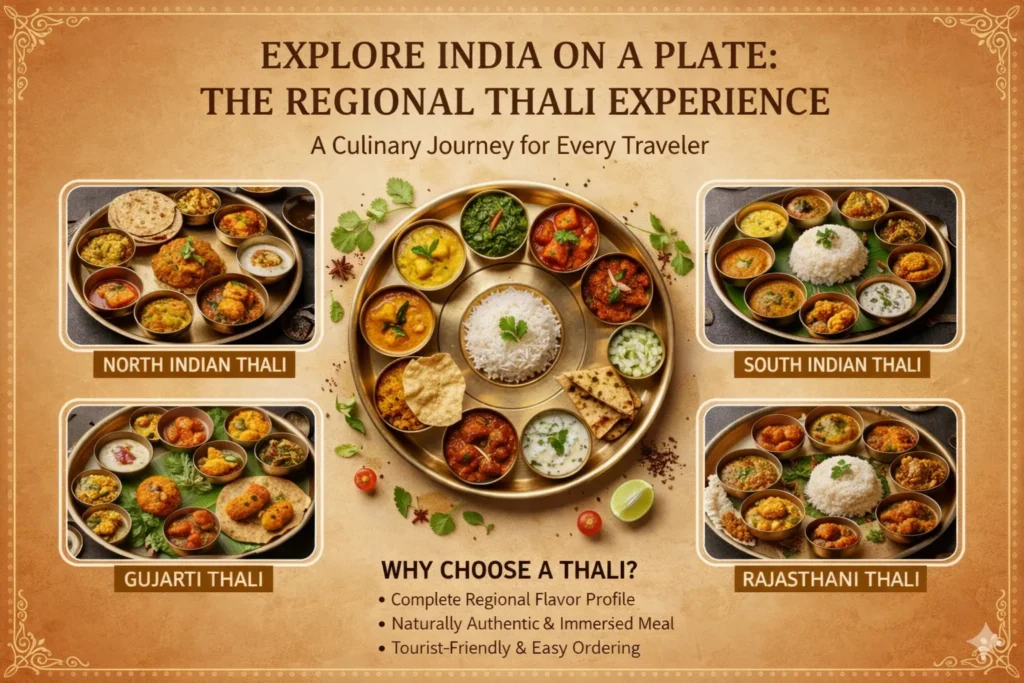
In almost every part of India — whether North, South, East, West, or Central — ordering the local thali is a reliable way to understand that region’s food culture in a single sitting.
Traditional Summer Drinks: Hydration Secrets for Travelers
Traditional Indian summer drinks are natural cooling beverages developed to combat extreme heat, support digestion, and restore hydration using local fruits, spices, and fermented ingredients. These drinks pair seamlessly with Indian food and reflect centuries of climatic adaptation and culinary wisdom.
India’s hot summers led communities to create refreshing beverages that cool the body internally, balance electrolytes, and soothe the digestive system. Whether paired with spicy chaat, hearty meals, or light snacks, these drinks are an essential part of the Indian food experience for travellers.
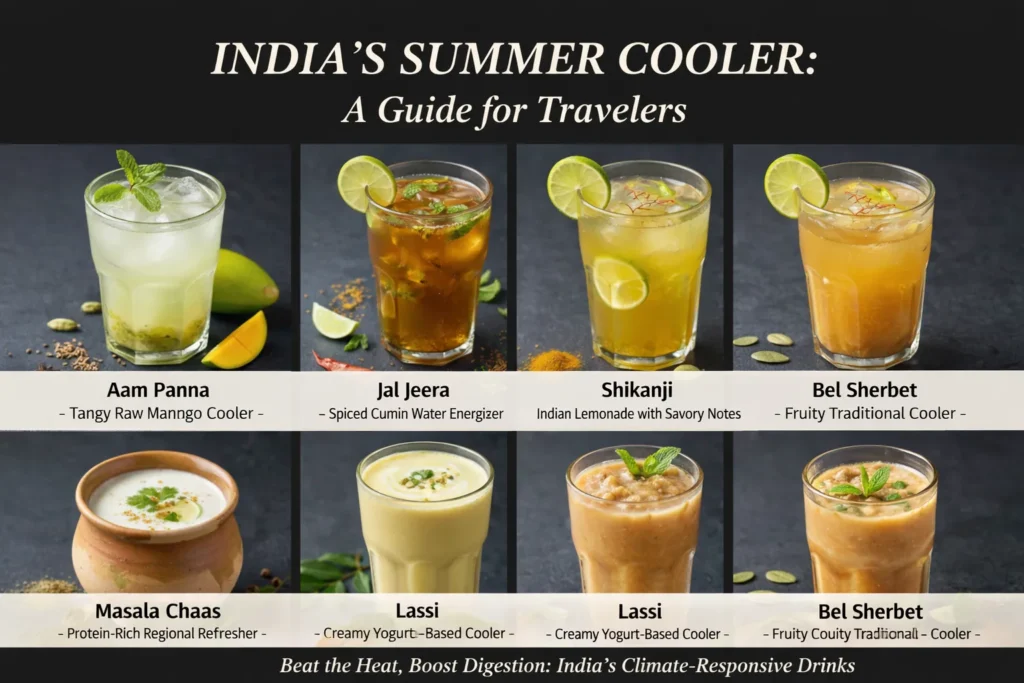
🍹 Aam Panna — Tangy Raw Mango Cooler
Aam Panna is prepared from raw green mangoes blended with cumin, black salt, and mint. Its tangy-sweet profile helps counter heat exhaustion and replenish lost minerals.
- Taste: Tangy, sweet, mildly spicy
- Best with: Light lunches, street snacks like pani puri or batata vada
- Why try it: Rapid cooling effect and electrolyte balance after long outdoor sightseeing
🧂 Jal Jeera — Spiced Cumin Water Energiser
Jal Jeera is a zesty drink made with cumin, mint, lemon, black salt, and roasted spices, traditionally served as a pre-meal refresher in North India.
- Taste: Spicy, zesty, cooling
- Best with: Mildly spicy chaat and fried snacks
- Why try it: Stimulates digestion while lowering body heat
🍋 Shikanji — Indian Lemonade with Savoury Notes
Shikanji blends fresh lemon juice with black salt, roasted cumin, mint, and sometimes saffron, creating a balanced sweet–sour refresher popular at roadside stalls.
- Taste: Tart, refreshing, lightly spiced
- Best with: Samosas and grilled snacks
- Why try it: Natural thirst quencher with a savoury twist
🥛 Masala Chaas — Spiced Buttermilk for Digestion
Masala Chaas is diluted yoghurt seasoned with cumin, salt, mint, or curry leaves and commonly consumed in hot regions.
- Taste: Mildly tangy, savoury
- Best with: Heavy curries and rice dishes
- Why try it: Enhances digestion and cools the gut after spicy meals
🍯 Lassi — Creamy Yogurt-Based Cooler
Lassi is a yoghurt-based drink served sweet or salted, often flavoured with cardamom or seasonal fruits like mango.
- Taste: Sweet or salty, rich and creamy
- Best with: Lunch or evening snacks
- Why try it: Provides probiotics, protein, and cooling nourishment
🌰 Sattu Sharbat — Protein-Rich Regional Refresher
Originating from Bihar and eastern India, Sattu Sharbat uses roasted gram flour mixed with water, lemon, and spices.
- Taste: Earthy, tangy, lightly spiced
- Best with: Midday meals or light snacks
- Why try it: Sustained energy, hydration, and satiety in summer heat
🍈 Bel (Wood Apple) Sherbet — Fruity Traditional Cooler
Bel Sherbet is made from wood apple pulp mixed with water and sugar, valued for its nutritional and digestive properties.
- Taste: Sweet, tangy, aromatic
- Best with: Light snacks and desserts
- Why try it: Supports digestion while offering a distinctive local flavour
🧠 How These Drinks Enhance the Indian Food Experience
Indian summer beverages are functional drinks, not just refreshments. They cool the body, support digestion, and complement spice-heavy foods. Including them in your journey — from street stalls to cafés — allows travellers to experience India’s climate-responsive food culture in its most authentic form.
Lesser- Known Regional Cuisines to Explore
Beyond India’s well-known food regions, many lesser-known local cuisines preserve unique cooking styles, ingredients, and cultural histories. These regional food traditions offer travellers authentic flavours shaped by geography, religion, and everyday rural life.
Across villages and smaller cultural zones, food practices evolved independently, resulting in distinctive tastes that are rarely found in mainstream restaurant menus.
Hidden Regional Cuisines of india is Worth Exploring
- Braj Cuisine — A dairy-focused food tradition linked to Krishna culture, featuring milk, curd, butter, and mildly spiced preparations.
- Maithil Cuisine — Known for its mustard oil base, seasonal vegetables, and the use of panchforan spice blends, reflecting eastern agrarian life.
- Bhojpuri Cuisine — Influenced by riverine landscapes, offering earthy flavours, grain-based meals, and distinctive savoury snacks and chaats.
- Chhattisgarhi Cuisine — Often called the rice bowl of India, this cuisine highlights rice varieties, forest produce, and tribal cooking methods.
Indian Cooking Techniques: From Dum Pukht to Tandoor Roasted
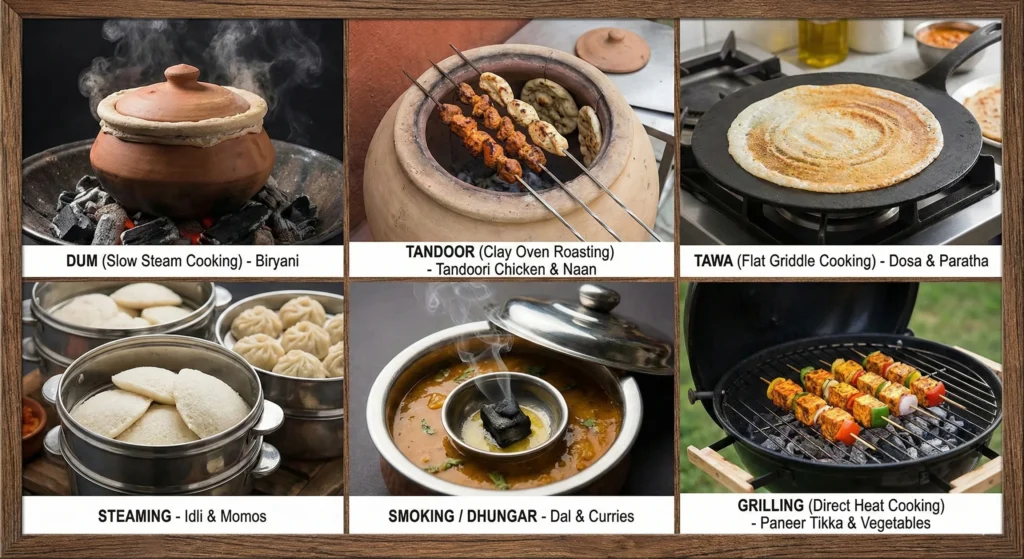
Indian cooking methods developed from climate, fuel availability, and social eating habits. Techniques like dum, tandoor, tawa cooking, steaming, and smoking shape flavour, texture, and nutrition by controlling heat, moisture, and aroma while preserving regional identity.
Indian Cooking Techniques Explained
Dum (Slow Steam Cooking)
Dum cooking method is sealed food in its own steam, allowing gradual heat transfer, flavour diffusion, and moisture retention. This method creates layered aromas and tender textures, commonly used in biryanis and kebabs.
Tandoor (Clay Oven Roasting)
The tandoor cooking uses intense radiant heat to cook food quickly, producing charred surfaces through the Maillard reaction while keeping the inside soft. It is ideal for naan, roti, and grilled meats.
Tawa (Flat Griddle Cooking)
Tawa cooking uses direct surface contact for rapid heat conduction, creating crisp exteriors in dosas, parathas, and street snacks. It reflects everyday urban and household cooking practices.
Steaming
Steaming cooks food using moist heat without added fat, preserving nutrients and promoting easy digestion. Idli and dumplings rely on this method for their soft texture and lightness.
Smoking / Dhungar
Dhungar infuses food with aromatic smoke using hot charcoal and fat, enhancing sensory depth without prolonged cooking. It is traditionally used to add richness to biryanis, dals, and curries.
Explaining why these methods developed (fuel availability, climate, texture preference) and how they change flavour and nutrition will appeal strongly to food enthusiasts and researchers.
Grilling is a cooking method in which food is placed over high direct heat, usually on a flame, charcoal or hot grill rack, so that the surface gets a smoky flavour and slight char, and this technique is very popular for dishes such as kebabs and tikka.”
🍔 Essential Indian Fast Food: Quick Bites for Every Traveler
Indian fast food refers to quick, affordable dishes prepared fresh and eaten on the go, combining local spices, regional ingredients, and fast cooking techniques. Unlike Western fast food, Indian quick bites are deeply rooted in street culture and reflect the flavours of the region they come from.
When most travellers think of Indian cuisine, they imagine rich curries and traditional thalis. However, India also has a vibrant fast food culture made up of popular street snacks and urban favourites that locals enjoy throughout the day. These foods are ideal for travellers seeking quick food options in india , flavourful meals while exploring cities, markets, and tourist sites.
🌟 Top Indian Fast Foods You Must Try
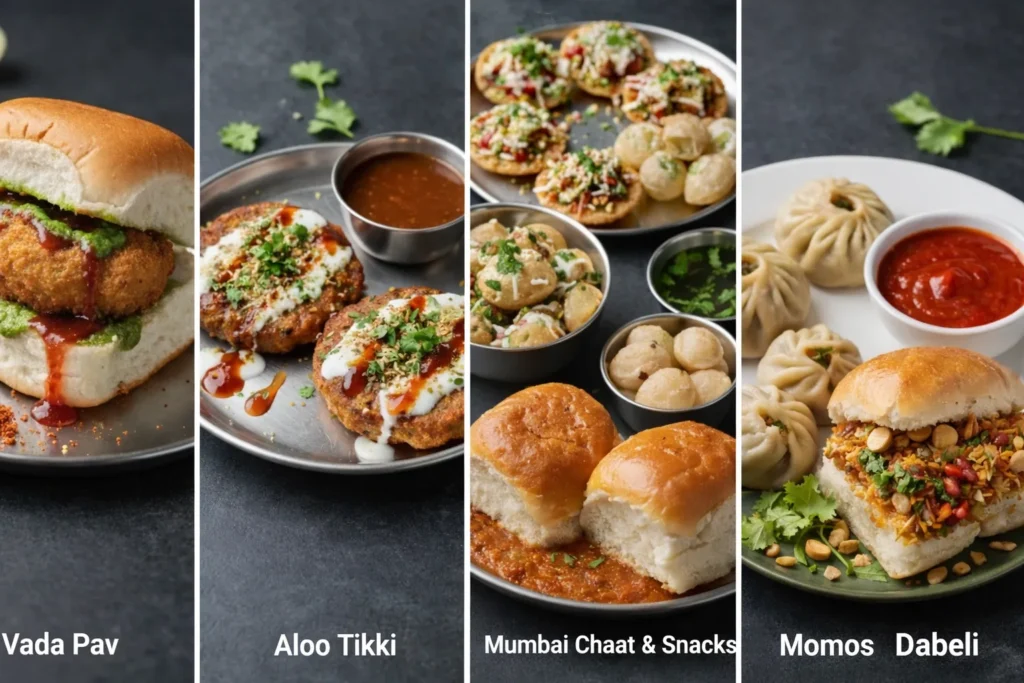
🔹 Vada Pav (Mumbai)
Often called India’s own version of a burger, Vada Pav is a crisp potato patty served inside a soft bun with chutneys and spices. It’s widely available from roadside stalls in Mumbai and is a must-try for travellers seeking a quick local bite.
🔹 Aloo Tikki
Aloo Tikki are spiced potato patties, shallow-fried until golden and crispy. They are often topped with chutneys, yoghurt and spices — making them a satisfying fast food snack across North India.
🔹 Samosa
A classic Indian fast food staple, samosas are triangular pastries filled with spiced potatoes, peas or meat, then deep-fried to crunchy perfection. They are eaten throughout India and pair wonderfully with mint chutney or tamarind sauce.
🔹 Pav Bhaji
Originating from Mumbai, Pav Bhaji is a spicy mashed vegetable curry served with buttery bread rolls. It’s a hearty, quick meal that’s both filling and flavourful.Chaat & Street Snacks
Many popular chaat items — such as Papdi Chaat, Dahi Puri, Golgappa (Pani Puri) and Bhelpuri — are classed in India as fast snacks because they’re quickly assembled and eaten on the go. These combine crispy elements with tangy chutneys, spice, yoghurt and herbs. 🔹
🔹Momos
Though originally from Tibetan and Nepali cuisine, momos have become a beloved fast food snack in many parts of India, particularly in the north. They are steamed or fried dumplings filled with vegetables or meat, served with spicy sauces.
🔹 Dabeli
A specialty from Gujarat, Dabeli is a spiced potato mixture served inside a soft bun and garnished with peanuts and chutneys — a delightful west-coast fast food experience.
🥤 Modern & Chain-Style Fast Food Options
In major cities like Delhi, Mumbai, Bengaluru and Chennai, you’ll also find a variety of modern fast food chains that serve both Indian-style quick meals and global favourites like burgers, wraps and pizzas adapted to Indian tastes. Many of the popular food chains in India — both international and homegrown — offer fast options for travellers who want familiar flavours or fusion styles alongside local quick eats.
🍽️ How to Enjoy Fast Food in India (Travel Tips)
✔ Seek busy stalls with locals lining up — high turnover means fresher preparation.
✔ Ask vendors to make dishes less spicy if you’re not used to intense heat.
✔ Try fast food as snacks between meals or when you’re on the move between sites.
🧠 What Makes Indian Fast Food Unique
Indian fast food is unique because it is prepared fresh to order using regional spices, local ingredients, and traditional techniques rather than industrial processing. This gives each snack a distinct flavour profile that reflects local culture, climate, and food habits.
Unlike many Western fast foods that rely on mass production and uniform taste, Indian fast foods — especially street snacks — vary from city to city. The same dish can taste different in Mumbai, Delhi, or Kolkata due to local spice blends, cooking styles, and ingredient choices.
In summary:
Whether it’s the iconic vada pav of Mumbai, the crispy aloo tikki of Delhi, the steamed momos in the north or the street-style chaats everywhere, India’s fast food scene gives travellers exciting, flavourful and affordable options that are perfect for exploration and quick taste adventures on the road.
Pan-India Street Food Culture
Pan-India street food refers to popular snacks found across multiple regions of India, enjoyed by people of all ages regardless of local cuisine differences. These foods are loved nationwide because they are affordable, flavour-packed, quick to serve, and culturally familiar.
Across cities, towns, and highways, certain street snacks appear everywhere, creating a shared food identity that connects India’s diverse regions.
Street Foods Loved Across India
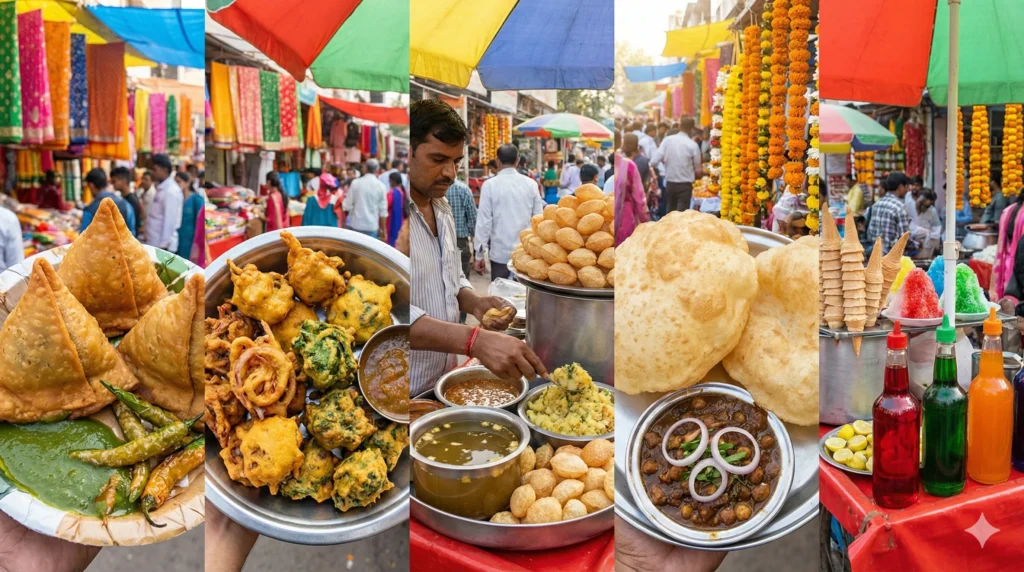
- Samosa (spicy) — deep-fried pastry filled with savoury potatoes or lentils
- Pakora (spicy) — vegetables coated in gram-flour batter and fried
- Pani Puri / Golgappa (very spicy) — crisp shells filled with tangy, spiced water
- Chole Bhature (spicy) —slow-cooked chickpeas in a robust spiced gravy, paired with deep-fried, airy wheat bread.
- Gola (sweet–sour) — shaved ice flavoured with syrups and citrus
🍽️Fast Food vs Street Food in india
In India, street food is freshly cooked local food sold in public spaces, while fast food refers to quick meals that are often pre-prepared or assembled rapidly. Both are popular with travellers, but they differ in preparation style, flavour profile, and cultural connection.
| Feature | Indian Street Food | Fast Food |
| Preparation | Cooked fresh on the spot, often in front of customers | Often pre-prepared and assembled quickly |
| Flavours | Bold, regional spice profiles and local chutneys | Global tastes, standardised or fusion flavours |
| Cultural Experience | Deeply rooted in local heritage and traditions | Modern, convenience-driven eating |
| Typical Cost | Very affordable | Variable, usually slightly higher |
Dining Etiquette in India: Spice Levels, Hands, and Customs
| Dining Etiquette in India: Spice Levels, Hands, and Customs |
Indian dining customs guide travellers on how to eat respectfully, order food comfortably, and follow basic etiquette while enjoying local cuisine. Although practices vary by region, a few common food habits apply across India and are helpful for international visitors to know.
How to Order Spice Levels in India
Indian food is not automatically very spicy — “spice” mainly refers to chilli heat, not flavour. Restaurants commonly adjust spice levels on request, especially for travellers.
- “No chilli” — extremely mild, no heat
- “Less spicy” — gentle heat, balanced flavour
- “Medium spicy” — standard local level
- “Spicy” — high chilli intensity
Most restaurants, particularly in cities and tourist areas, are happy to customise spice levels.
Eating with Hands — Cultural Meaning & Hygiene
Eating with the right hand is a traditional Indian practice believed to enhance sensory connection and digestion. It is common in homes, temples, and local eateries.
Basic hygiene rules:
- Wash hands before and after meals
- Use fingertips, not the full palm
- Never use the left hand for eating or serving
Cutlery is widely available, and travellers are never expected to eat with hands if they are uncomfortable.
Tipping Norms at Local Eateries
Tipping in India is optional, not mandatory. Expectations vary by establishment type.
- Local eateries & street stalls: small change or bill rounding is sufficient
- Mid-range restaurants: 5–10% tip is appreciated for good service
- Restaurants with service charge: extra tipping is optional
Where It’s Polite to Sit or Stand While Eating
Eating posture in India reflects social and cultural context.
- In homes and temples, meals are traditionally eaten seated on the floor
- Street food stalls: standing while eating is normal
- Community kitchens (langars): sitting on the floor symbolises equality
Conclusion: Understanding Indian Cuisine as a Travel Experience
Indian cuisine is not just food — it is a climate-responsive, region-specific, and culturally rooted food system.
Across India, geography, seasons, agriculture, religion, and local communities shape what people eat, how they cook, and when they eat.
From wheat- and dairy-based meals in the North, to rice, coconut, and fermented foods in the South, millet-rich desert diets in the West, and riverine fish and rice traditions in the East, every region offers a distinct nutritional and flavour profile. These patterns evolved naturally to support digestion, hydration, immunity, and energy balance in local climates.
For travellers, the best way to experience Indian food is by choosing regional thalis, drinking traditional summer beverages, and exploring local street food rather than ordering random dishes. This approach offers:
- A complete flavour spectrum (sweet, spicy, sour, bitter, savoury)
- Balanced nutrition (carbohydrates, proteins, fats, fibre, micronutrients)
- An authentic cultural experience in a single meal
Whether you are tasting Awadhi kebabs in Lucknow, fermented rice dishes in the South, mustard-flavoured fish in Bengal, or millet-based foods in Rajasthan, Indian cuisine tells the story of the land and its people.
In short, Indian food is best understood not as a single cuisine, but as a living map of India itself — one plate at a time.
To explore destinations, regional cultures, festivals, and travel essentials alongside food, see our complete India travel guide that brings together everything a first-time visitor needs to plan a meaningful journey across the country.
Official Reffrences
incredible India (Ministry of Tourism)
- Official Guide to Indian Cuisine & Culture
- 🔗 https://www.incredibleindia.gov.in/en
Eat Right India (FSSAI Initiative)
- Food Safety Standards in India (FSSAI)
🔗https://eatrightindia.gov.in/
IRCTC e-Catering (Food on Track)
- Official Railway Food Catering Service
- 🔗https://ecatering.irctc.co.in/
Related Posts
1️⃣Kerala Houseboat Food Menu 2026: Taste & Night Vibe
Complete food menue of houseboat, experience of sadya , can food menue be customised ? , cost of food menue
👉 Read Guide → https://travelwiseguide.com/kerala-houseboat-food-menu-experience/
2️⃣ Ladakh Culture: 15+ Rare Foods|Untold Secrets Revealed
Ladakh table 15 + food dishes you can’t miss
👉 Read Guide →https://travelwiseguide.com/ladakh-culture-food-local-life-guide/
3️⃣India e-Visa Rejection: Make It Stress-Free – 2025 Complete Guide
The most common rejection reasons, document errors, and approval-safe application tips.
👉 Read Guide →https://travelwiseguide.com/india-e-visa-rejection-guide-2025/
FAQs About Indian Cuisine Travel Guide
Is Indian food always very spicy for foreign travellers?
No. Indian cuisine offers a wide spice spectrum, from mild and aromatic dishes to hot preparations. Travellers can easily request low-chilli or mild spice levels, especially in restaurants. Spices like cumin, coriander, and cardamom are often used for digestion and aroma, not just heat.
Is it safe for tourists to eat Indian street food?
Yes, if chosen carefully. Tourists should eat freshly cooked food, prefer stalls with high local footfall, avoid untreated water, and choose hot foods over raw items. Many Indian street foods are safe when prepared hygienically and eaten fresh.
What should first-time visitors eat using an Indian cuisine travel guide?
A good Indian cuisine travel guide recommends starting with regional thalis, butter chicken, dosa, idli, dal, rice, and yoghurt-based dishes. These meals offer balanced macronutrients and gentle spice levels, helping foreign visitors adapt comfortably.
Are vegetarian and vegan options easily available in India?
Absolutely. India has one of the world’s largest vegetarian food cultures. Vegan dishes made with lentils, vegetables, rice, coconut, and spices are common, especially in South and West India. Dairy-free options are widely available and clearly understood.
Why does Indian food taste different in every region?
Indian cuisine is shaped by geography, climate, crops, and culture. Rice dominates humid regions, wheat thrives in dry plains, and coastal areas use coconut and seafood. These factors influence ingredients, cooking techniques, and flavour chemistry, creating strong regional identities.
Is eating with hands acceptable for foreigners in India?
Yes. Eating with hands is culturally normal and even considered beneficial for sensory feedback and digestion. Tourists are welcome to eat with cutlery if preferred. Proper hand hygiene before meals is always expected.
How does an Indian cuisine travel guide help tourists avoid food discomfort?
An Indian cuisine travel guide helps travellers understand spice tolerance, regional dishes, fermentation, and digestive foods like curd, buttermilk, and cumin water. This knowledge reduces food shock and improves overall travel comfort.