Kerala Houseboat Itinerary 2026: Alleppey vs. Kumarakom Route Guide
Last Updated on
26/01/2026
Planning your Kerala Houseboat Itinerary for 2026 and stuck between Alleppey and Kumarakom? I was there too, spreadsheets open, comparing routes late into the night. Then I did something slightly mad—I experienced both routes, tried different durations, and even took my mum on a repeat journey just to see it through fresh eyes. Let me save you the confusion and walk you through exactly what each route offers, because the choice you make will completely shape your backwater experience.

- Understanding the Kerala Houseboat Itinerary Landscape
- Alleppey vs Kumarakom Route: The Complete Breakdown
- Kerala Houseboat Itinerary Durations: From Quick Glimpses to Deep Dives
- The Backwater Village Tour Elements
- Choosing Your Perfect Kerala Houseboat Itinerary 2026
- Seasonal Planning for Your Kerala Houseboat Itinerary 2026
- Practical Details That Actually Matter
- My Final Verdict on the Alleppey vs Kumarakom Route
- Beyond Standard Options
- Official Reffrences
- Related Posts
- Creating Your 2026 Journey
- Frequently Asked Questions about Kerala Houseboat Route
Understanding the Kerala Houseboat Itinerary Landscape
The Kerala backwaters aren’t just one scenic canal—they’re a sprawling 900-kilometre network of lagoons, lakes, and waterways connecting dozens of villages. Your itinerary choice determines whether you’ll drift through narrow village canals where you can smell jasmine from someone’s garden, or glide across vast Vembanad Lake watching the horizon melt into water.
I thought all houseboats followed similar routes until my first trip proved me spectacularly wrong. The Alleppey round trip took me so close to village life I could hear mothers calling children home for lunch. The Kumarakom route opened into lake expanses so wide I felt like we’d sailed into the ocean.
Your Kerala houseboat itinerary essentially breaks down into route choice (Alleppey vs Kumarakom) and duration (quick cruise vs multi-day immersion). Both matter enormously.
Alleppey vs Kumarakom Route: The Complete Breakdown
Choosing between Alleppey and Kumarakom isn’t just about picking a starting point—it’s about deciding what kind of backwater experience speaks to your soul. Each route has its own personality, its own rhythm, and after experiencing both, I can tell you they’re as different as reading a novel versus watching an epic film. Let me walk you through what makes each route unique so you can choose the one that matches your travel dreams
The Alleppey Round Trip: Village Soul of Kerala
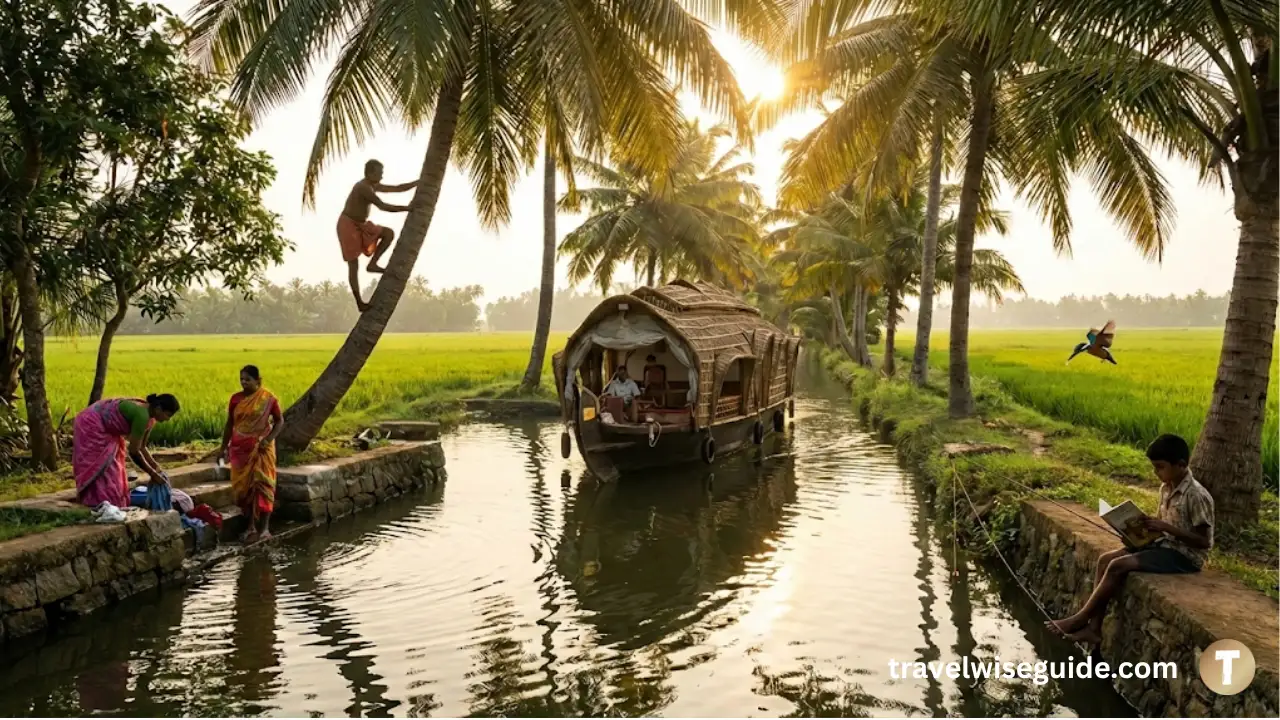
I boarded my first houseboat at Alleppey’s Finishing Point jetty on a December afternoon. The crew greeted me with tender coconut water, their smiles as warm as the sun on the deck. Within minutes, we’d slipped into a canal barely wider than our boat.
The Alleppey round trip covers roughly 35 to 40 kilometres over 20-odd hours, weaving through canals that are the actual highways of rural Kerala. Within the first hour, I’d seen three women washing clothes at canal steps, a man tapping a toddy from a coconut tree, and a small boy fishing with a line tied to his toe while he read a textbook.
What makes the Alleppey route special is its intimacy. We passed through Kainakary village where our boat anchored for the night. The canal was so narrow that palm fronds brushed our roof. As dusk fell, I watched a family sit down to dinner in their waterside home—their windows open, their conversation drifting across to where I sat on the deck.
The morning brought magic I hadn’t expected. Mist hung over the water as we cruised past Kuttanad’s below-sea-level paddy fields. Farmers were already working, knee-deep in water, planting rice in fields that sit lower than the canal itself. A kingfisher dive-bombed for fish right beside our boat, emerging victorious with breakfast wriggling in its beak.
Alleppey route highlights I personally loved: Punnamada Lake where the legendary snake boat races happen every August, narrow canals where village life unfolds on both banks, stops at coir-making units where women twist coconut fibre with lightning speed, Kuttanad’s agricultural landscape that defies logic and geography, and authentic, unhurried glimpses into how backwater communities actually live.
The Alleppey to Kumarakom Journey: Best of Both Worlds
When I took the Alleppey to Kumarakom route six months later, the experience started familiarly—same narrow canals, same village scenes—but then transformed entirely.
This route stretches 50 to 60 kilometres and needs the full overnight duration plus morning hours. We departed Alleppey around noon, spending the early afternoon in those intimate village canals I’d grown to love. But around 4:00 PM, everything changed.
The canal widened, then widened more, and suddenly we were on Vembanad Lake—India’s longest lake—and the world became enormous. The banks receded to distant green lines. Other houseboats dotted the water like scattered toys. The sky dominated everything.
That sunset deserves its own paragraph because it rewrote my understanding of colour. The sky went through shades I didn’t have names for—orange melting into pink, pink bleeding into purple, purple darkening to indigo. We anchored in the middle of the lake, gently rocking with waves that felt oceanic. That night, lying on the upper deck under impossible stars, I understood why people obsess over the backwaters.
Morning brought us to Kumarakom, greener and more lush than Alleppey. The Kumarakom Bird Sanctuary spread along the shore—I spotted what looked like a heron and definitely saw cormorants drying their wings. The water seemed clearer here, reflecting the sky like polished glass.
This route delivers the cultural immersion of Alleppey’s village canals, the grand scale and beauty of Vembanad Lake, spectacular sunset and sunrise on open water, two distinct landscapes in one journey, and arrival in upscale Kumarakom with its resort atmosphere.
Kumarakom Round Trip: The Quieter Choice
I haven’t personally done the full Kumarakom round trip overnight, but I spent a day cruise exploring these waters and talked extensively with travellers who chose this route.
Kumarakom starts quieter—fewer jetties, fewer houseboats jostling for position. The route focuses more on Vembanad Lake and the bird sanctuary surroundings. Friends who picked this told me they loved the tranquillity and the fact that they saw maybe half the tourist boats they would’ve encountered in Alleppey.
The landscape feels more manicured, more resort-like. If you prioritize peace and nature over cultural village experiences, Kumarakom round trip makes sense. It’s also slightly more expensive, probably because of the upscale Kumarakom reputation.
Kerala Houseboat Itinerary Durations: From Quick Glimpses to Deep Dives
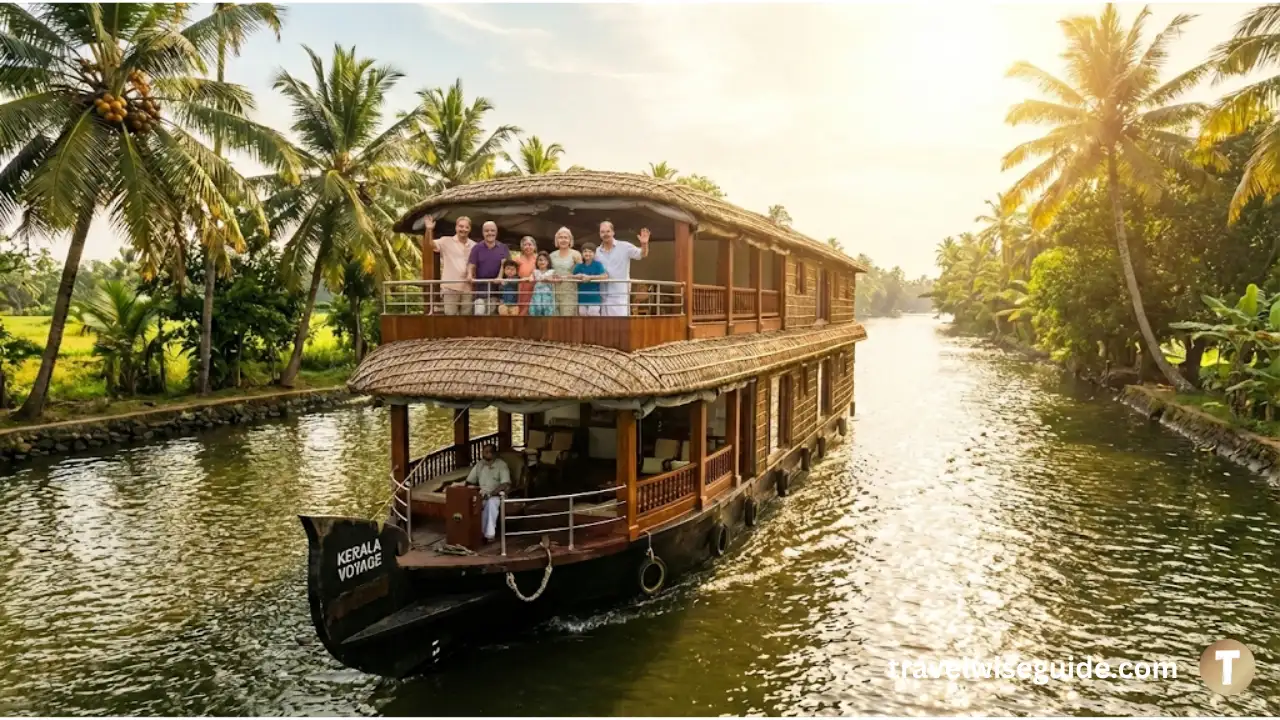
Time is probably your biggest constraint when planning your Kerala houseboat itinerary, and I completely understand. But here’s what I learned after trying everything from a rushed two-hour cruise to a luxurious three-day journey—the duration you choose changes everything. It’s not just about seeing more; it’s about feeling different. Let me break down each option so you can match your available time to the experience you’re craving
The 2-3 Hour Express: When Time is Impossibly Short
Let me be honest—I tried this only because my cousin visited Kochi for literally one afternoon and begged for “at least a taste” of the backwaters.
These express cruises run either 10:00 AM to 1:00 PM or 2:00 PM to 5:00 PM from Alleppey or Kumarakom. They cover maybe 10 to 15 kilometres of the prettier main canals, moving faster than standard cruises.
We saw paddy fields, fishing nets, and village houses. The crew served chai and banana chips. It was pleasant enough but felt like watching a film trailer when you actually want the full movie. No proper meal, no village stops, no time to absorb the rhythm of backwater life.
Who should book this: Genuinely time-strapped travellers, people testing if they like boat travel, families with very young children who can’t sit still longer. Costs around 1,500 to 3,000 rupees per person.
Skip it if you can possibly spare half a day or more. You’ll leave frustrated, wanting what you couldn’t have.
The Day Cruise: Alleppey Day Cruise Timings Explained
I did this on a separate trip when schedules were tight but I had one free day. The typical Alleppey day cruise timings run 10:30 AM to 5:30 PM—a solid seven hours on the water.
10:30 AM: Boarding and welcome drinks (usually fresh lime juice or coconut water). 11:00 AM: Cruise begins through the main canals. 1:00 PM: Proper Kerala lunch—rice, sambar, fish curry, vegetables, papad. 2:00 PM to 4:30 PM: Continued cruising with possible village stop. 5:00 PM: Return journey starts. 5:30 PM: Back at the jetty.
The route follows similar paths to the overnight cruise but obviously skips the magical evening, night, and morning experiences. You miss the sunset, the quiet of an anchored boat under stars, and that ethereal morning mist that transforms the backwaters into something otherworldly.
I’ll be straight—if you can swing overnight, do it. But if you absolutely cannot, a day cruise beats no cruise by miles. You’ll still see village life, taste Kerala cuisine, and understand why people rave about these waterways. Costs run 4,000 to 8,000 rupees per person including lunch.
The 1 Night Houseboat Cruise Plan: The Classic Experience
This is what most people do, what I recommend for first-timers, and what offers the best value for time and money.
Day One: Around 12:30 PM, you board. After settling into your bedroom (yes, proper bed, attached bathroom with hot water), lunch appears—Kerala-style fish curry, rice, vegetables, maybe prawns. The food alone justifies the trip.
The afternoon cruise moves slowly, deliberately. The houseboat putters along at maybe 5 kilometres per hour. I spent this time on the front deck, book in lap but unread, watching life unfold on the banks. A woman in a purple sari washed dishes at the canal edge. Ducks scattered as we passed. A man paddled a tiny canoe loaded impossibly high with coconuts.
Around 5:30 PM, the boat anchors—government rules prohibit movement after 6:00 PM. This is when magic happens. Sunset paints the sky, birds come home to roost, silence descends like a blanket. The crew prepares dinner—more Kerala feast—while you sit on the deck watching darkness claim the canals.
Day Two: I woke naturally at 6:00 AM to the sound of the engine starting. Morning tea was already steaming in a cup on the deck table. As we moved through mist-wrapped canals, I watched the world wake up. A fisherman cast his net in practiced arcs. Smoke rose from village kitchens. Everything felt freshly created.
Breakfast came around 8:00 AM—appam with vegetable stew, fresh fruit, strong coffee. By 9:30 AM, we were back at the jetty, the journey complete but somehow still continuing in my head.
This 1 night houseboat cruise plan gives you roughly 20 to 22 hours on water—enough to genuinely disconnect and absorb the backwaters, but not so long you feel restless. Costs range from 8,000 to 25,000 rupees for a couple depending on boat quality and season.
The 2 Nights/3 Days: Deep Immersion
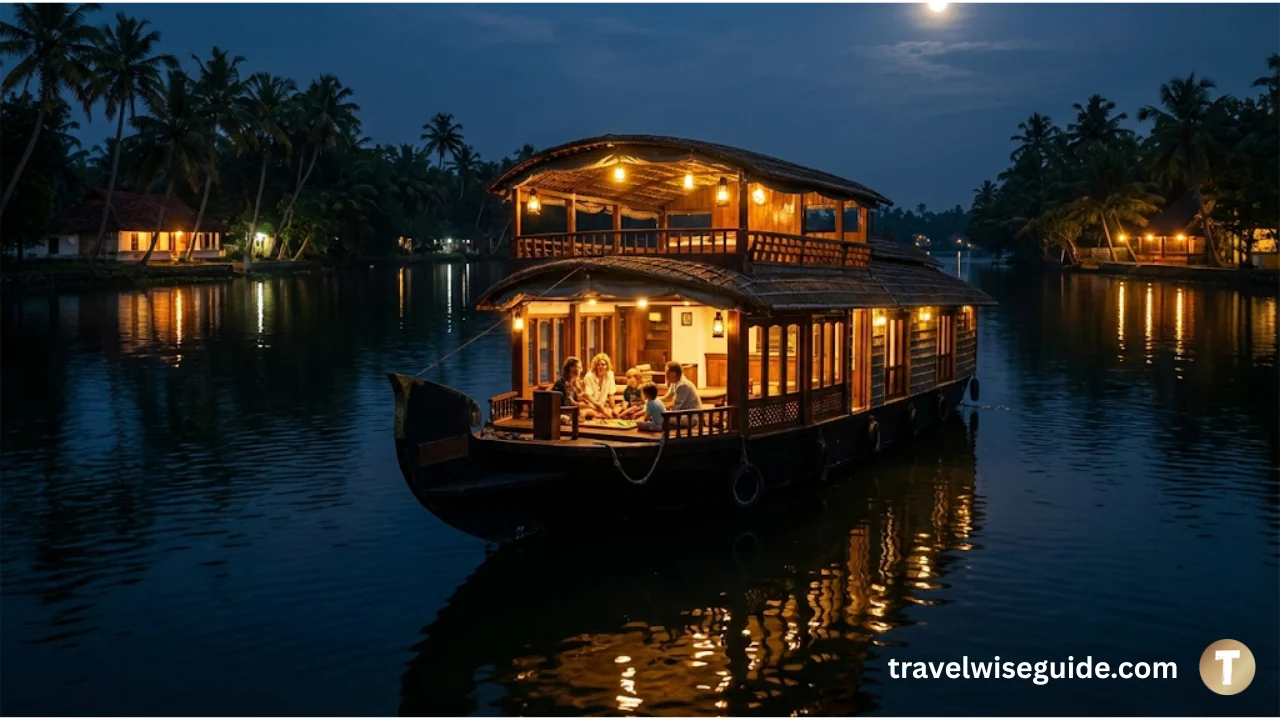
This is my personal favourite after trying it last year on the Alleppey to Kumarakom extended route.
Day One followed the standard pattern—afternoon boarding, canal cruising, sunset, dinner, anchoring. But the crew’s pace was noticeably more relaxed. We had time.
Around 3:00 PM, we stopped at Nedumudi village for two full hours. Not a quick photo stop—an actual village exploration. The guide walked me to a small temple, a toddy shop where old men played cards and laughed at jokes I didn’t understand, and a brass lamp workshop. I watched a craftsman hammer intricate floral patterns for half an hour, completely absorbed.
Day Two was pure gold—a full day with nowhere to be. After sunrise and breakfast, we spent the morning on Vembanad Lake near the bird sanctuary. I spotted three kingfisher species (the captain identified them), a darter drying wings on a post, and several egrets stalking the shallows.
Around 11:00 AM, we entered the Meenachil River tributaries—canals so narrow that coconut fronds brushed our roof. Village children waved from tiny bridges. A woman looked up from washing clothes, smiled, and returned to scrubbing.
Lunch was served while anchored near a coir cooperative. Afterward, we got off the boat and spent an hour learning how coconut husks become rope. My attempts at twisting fibres made the workers laugh good-naturedly.
The afternoon brought us past Chinese fishing nets, those massive wooden structures that have worked the same way for 600 years. We watched fishermen lower and raise the nets, the whole contraption balanced by counterweights and physics.
Day Three was a leisurely morning cruise through yet more canals—the route deliberately varied to show new scenery. By 9:30 AM, we docked in Kumarakom, and I was genuinely sad to leave.
What this duration offers: complete immersion, multiple village stops, varied routes showing different ecosystems, genuine relaxation (by day two you’ve actually unwound), and enough time for seasonal activities. Costs run 18,000 to 40,000 rupees but the per-day value often beats two separate trips.
The Backwater Village Tour Elements
These unscheduled village stops became my favourite memories. When the boat anchored and the crew said “you can explore the village for an hour,” I discovered the real soul of the backwaters.
In Kainakary, I walked narrow paths between houses built right at the water’s edge. Children played cricket in a courtyard the size of my bedroom. An elderly woman demonstrated coir-making, her hands moving with decades of muscle memory. She didn’t speak English but her smile needed no translation.
Another village specialized in toddy tapping. The tapper showed me how he climbs coconut trees using just a rope—terrifying to watch, completely routine for him. He offered fresh toddy, sweet and fizzy, nothing like the fermented version sold in shops.
These backwater village tours aren’t always advertised but most operators include them on overnight and longer trips. Some villages have tiny shops selling spices or handmade items. I bought a handwoven floor mat that still sits in my living room, a daily reminder of those peaceful hours.
Village tour tips from experience: Always ask before photographing people—a smile and camera gesture usually communicates the question. Dress modestly (shoulders and knees covered) out of respect and sun protection. Bring small bills if you want to buy anything. Learn basic Malayalam: “Nanni” (thank you) goes a long way. Don’t rush—these moments are the entire point.
Choosing Your Perfect Kerala Houseboat Itinerary 2026
Now that you’ve seen all the options, let’s make this decision simple. Your perfect Kerala houseboat itinerary for 2026 depends on three things: what you value most, how much time you have, and what kind of traveller you are. I’ve matched each route and duration to specific travel styles so you can stop second-guessing and start booking with confidence.
Pick Alleppey round trip if you want authentic village-focused cultural experiences, narrow canals with close-up daily life views, more budget-friendly options, the classic Kerala backwaters everyone photographs, and easy access from Cochin (85 kilometres, 2.5 hours).
Pick Alleppey to Kumarakom if you want the best of both—intimate canals plus vast lake scenery, spectacular sunset and sunrise on open water, a longer, more comprehensive journey, and the most varied landscape in one trip.
Pick Kumarakom round trip if you want quieter less crowded waters, nature and birdwatching focus, more upscale resort-style surroundings, and peaceful atmosphere over cultural immersion.
Duration choice: 2-3 hours only if impossibly time-constrained. Day cruise for one free day wanting overview experience. 1 night for first-timers, classic experience, good value. 2 nights for deep immersion, cultural connection, full relaxation. 3+ nights for slow travellers, remote area access, serious photography.
Seasonal Planning for Your Kerala Houseboat Itinerary 2026
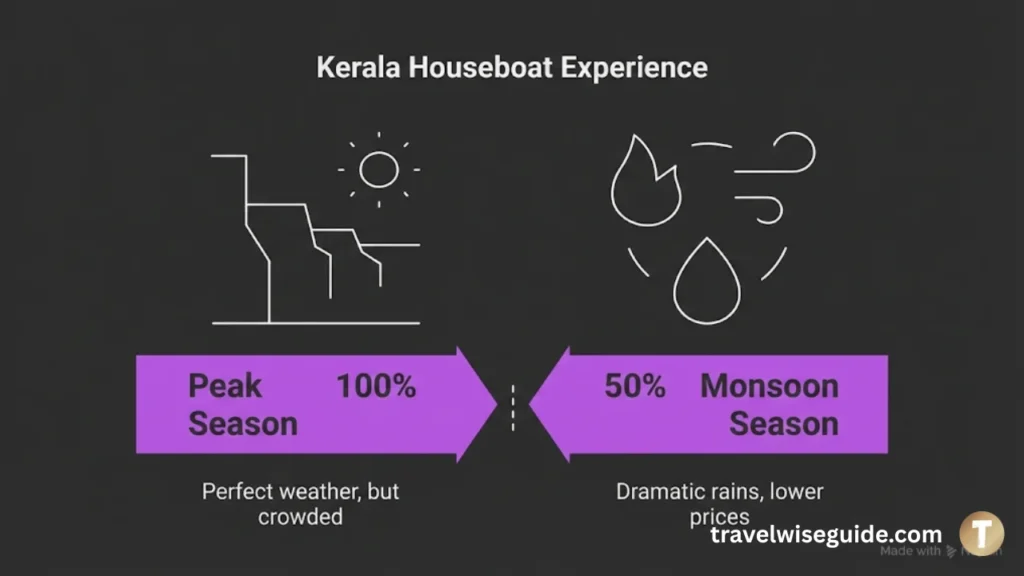
Kerala’s backwaters change personality with the seasons, and picking the right time for your 2026 trip matters more than you might think. I’ve cruised in both peak winter and monsoon months, and the experience was completely different—not better or worse, just different. Here’s what each season brings to your Kerala houseboat itinerary so you can time your journey perfectly
December to February is the peak season with perfect weather—cool mornings, warm days, pleasant evenings. I took my first trip in December. The downside? Crowds and peak pricing. Book two months ahead for 2026.
March to May brings hot and humid conditions but not unbearable water. Fewer tourists mean better prices and a more exclusive feel. I actually preferred April’s quieter vibe despite the heat.
June to August is monsoon season when Kerala explodes green. The rains are dramatic, prices drop significantly, and you stay dry under the roof. Some love the romance of rain on water; others find it limiting.
September to November offers a post-monsoon sweet spot. Backwaters swell with fresh rainwater, everything’s lush, weather cools, crowds are moderate, prices reasonable. Possibly the best balance.
Practical Details That Actually Matter
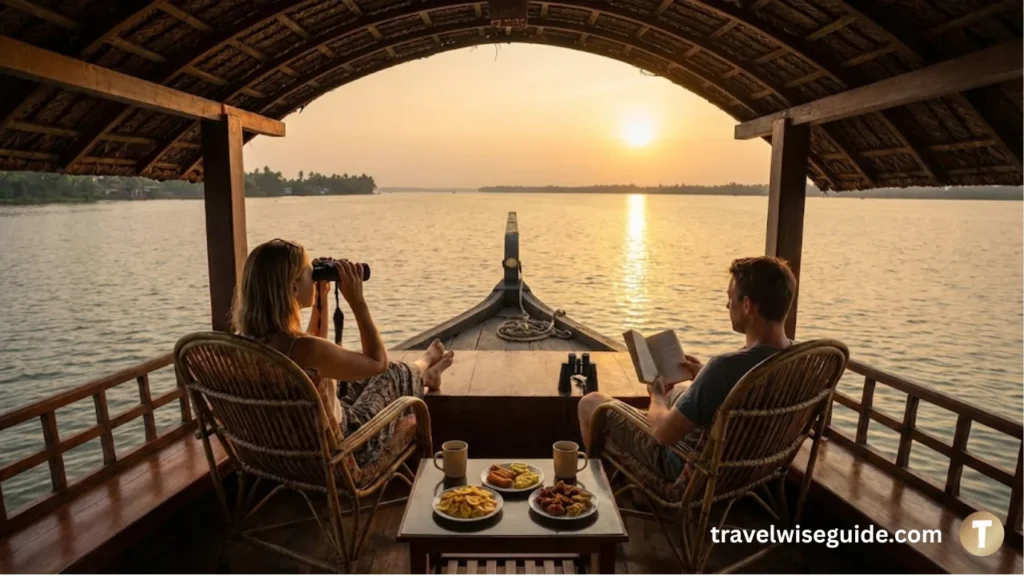
Before you book your Kerala houseboat itinerary, let’s talk about the practical stuff nobody tells you until you’re already onboard. I’m sharing the details that genuinely affected my experience—what the boats are actually like, what you’ll eat, what to pack, and what it really costs beyond the advertised price. These are the things I wish someone had told me before my first cruise.
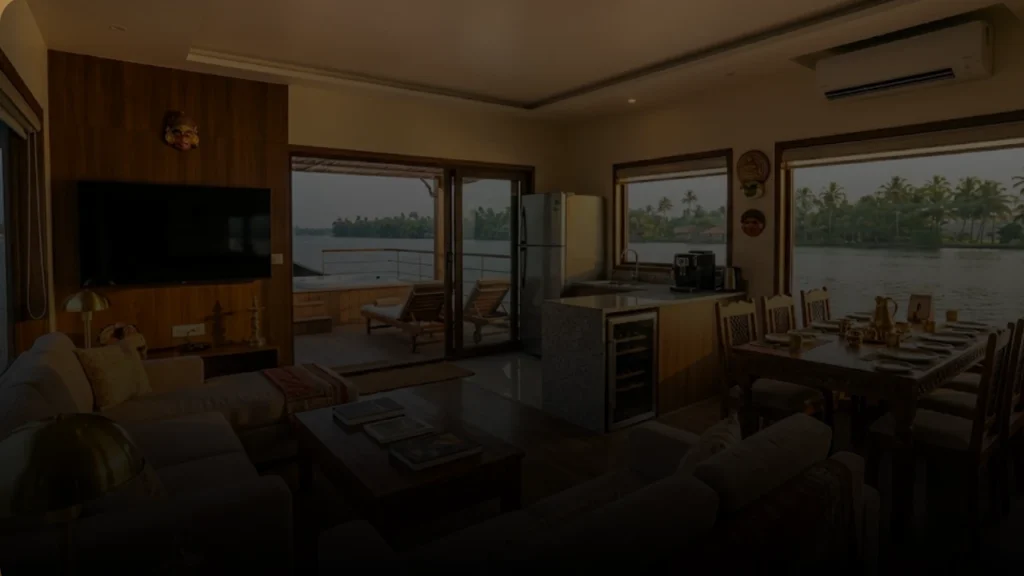
Onboard Reality: Your houseboat has one to three bedrooms (depending on booking), each with an attached bathroom—Western toilet, hot and cold shower. Nothing luxurious but everything functional.
The front deck becomes your world—living room, dining room, observation platform. I spent 80 per cent of my time there. Some boats have upper decks perfect for sunset watching.
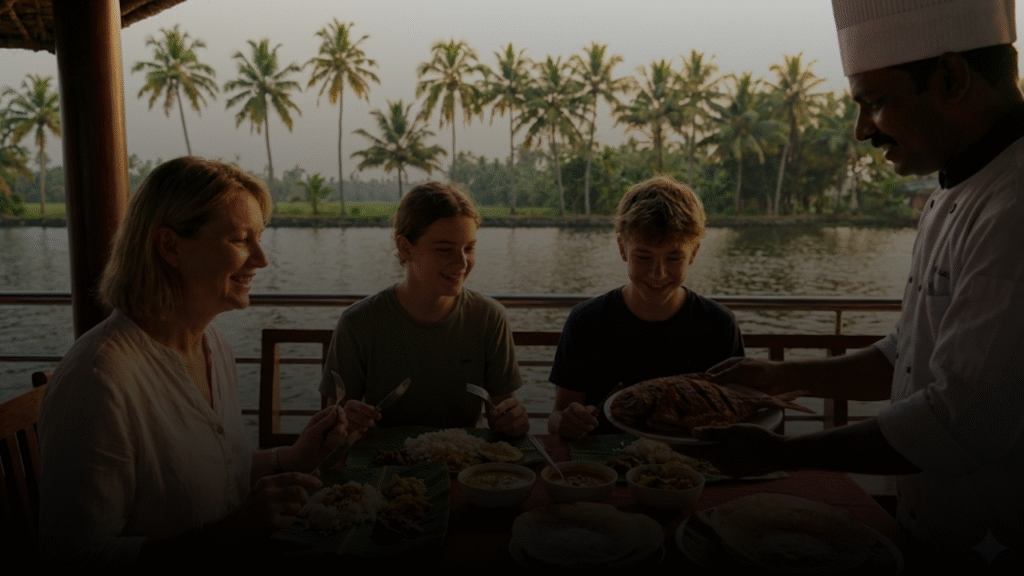
Meals are highlights. Breakfast offers dosa, idli, appam, or eggs. Lunch and dinner feature rice, sambar, fish curry (the karimeen is divine), vegetables, sometimes chicken or prawns. Everything’s freshly prepared onboard, and they’ll adjust spice levels.
There’s no WiFi, mobile signals are patchy—honestly a blessing. I brought a book, journal, and camera. That was plenty.
Booking and Costs: 2-3 hour express runs 1,500 to 3,000 rupees per person. Day cruise costs 4,000 to 8,000 rupees per person with lunch. 1 night runs 8,000 to 25,000 rupees per couple. 2 nights costs 18,000 to 40,000 rupees per couple. 3+ nights runs 25,000 to 60,000 rupees per couple.
Book directly with operators or through Kerala Tourism Development Corporation. For peak season 2026, start looking in early December 2025. Otherwise, two to four weeks ahead works.
Getting There: Alleppey sits 85 kilometres from Cochin (2 to 2.5 hours by taxi or train). Kumarakom is closer at 70 kilometres. Most operators arrange pickup from Cochin for a fee.
What to Pack: Light cotton clothing, hat and sunscreen (water reflection intensifies UV), sunglasses, light shawl for evening, mosquito repellent (though I encountered fewer than expected), phone and camera with charger, any needed medications, book or journal, and binoculars for birdwatching.
My Final Verdict on the Alleppey vs Kumarakom Route
After experiencing both routes multiple times, here’s my honest recommendation for your Kerala houseboat itinerary. This isn’t about which route is objectively better—it’s about which one matches your travel personality and what you’re hoping to feel when you return home. Let me help you make the choice that’ll leave you with stories you’ll tell for years.
For first-timers, the Alleppey round trip delivers the quintessential backwaters experience—culturally rich, affordable, exactly what you’ve seen in photographs.
The Alleppey to Kumarakom route suits those wanting something more expansive. The combination of intimate canals and vast lakes provides incredible variety. If budget allows and you want the deluxe experience, this is it.
Kumarakom round trip works for peace-seekers over culture-hunters, nature enthusiasts, and those who prefer fewer crowds.
As for duration, overnight beats day cruise by miles. The sunset, quiet night, and misty morning aren’t optional extras—they’re the soul of the experience.
If you can manage two nights, do it. That’s where the backwaters really get under your skin, where you stop being a tourist watching scenery and become someone living temporarily in rhythm with these ancient waterways.
Beyond Standard Options
Heritage kettuvallam boats offer authentic rice barge experiences with traditional wooden construction. I tried one— a smaller bathroom, less polished, but incredible character. The 80-year-old wood creaking felt like a connection to history.
Luxury houseboats provide air-conditioning, deck Jacuzzis, gourmet chefs. Pricey but worthwhile for special celebrations.
Theme cruises occasionally run—photography-focused trips, ayurvedic wellness cruises, cooking experiences. Rare but fantastic for combining backwaters with specific interests.
Official Reffrences
- 1. Kerala Tourism (Official Website)
Accredited Operators (Gold/Silver Star rating),Safety Guidelines,Complaints ..
Website Link: www.keralatourism.org - 2. DTPC Alappuzha (District Tourism Promotion Council)
Houseboat Prepaid Counter Rates: Route Maps Cruise Timings:
.
Website Link: www.dtpcalappuzha.com
Related Posts
- 1.India Travel Budget Guide 2025 Daily Costs &Real Examples
Food cost travel cost accommodation cost
https://travelwiseguide.com/india-travel-budget-guide-daily-costs/ - 2.How to Travel Between Major Cities in India:CompleteTrain, Flight & Bus Guide
Travel guide for travellers
https://travelwiseguide.com/how-to-travel-between-major-cities-in-india/
Creating Your 2026 Journey
Planning your Kerala houseboat itinerary for 2026 isn’t about finding the objectively best option—it’s matching route and duration to what you value.
Want cultural immersion? Alleppey round trip. Want grand landscapes? Alleppey to Kumarakom. Want peace? Kumarakom calls.
The 1 night houseboat cruise plan offers the fullest experience for most travellers, but if time permits, those two nights transform everything.
Don’t skip the backwater village tour stops—these unscheduled moments of genuine connection often become your treasured memories.
As I write this, I’m already planning my next trip. Maybe the multi-night option this time, venturing into less-travelled canals, spending more time with village communities. The backwaters have this way of calling you back.
Whatever you choose, you’re in for something special. There’s a particular peace that settles when you’re drifting slowly through ancient waterways, when the modern world falls away and life simplifies to sunlight on water, wind in palms, and the gentle rhythm of a houseboat carrying you through God’s Own Country.
Book your Kerala houseboat itinerary for 2026 with confidence. The backwaters will be waiting, timeless and welcoming, ready to show you a Kerala that lives on the water, moves with tides, and measures time in sunrises and fishing nets rather than clocks and calendars.