Ayodhya Ram Janmabhoomi Darshan:Timings,Significance and Travel Guide
Last Updated on
26 March 2026

A Sacred Beginning in the City of Ram
Ayodhya Ram Janmabhoomi darshan begins not at the temple gates, but in the quiet stillness of Ayodhya itself. As early light touches the banks of the sacred Sarayu River, the sound of temple bells and devotional chants gently fills the air. Pilgrims move slowly, unhurried, as if time itself follows a different rhythm here. Ayodhya is not a place one simply visits; it is a city that invites reflection, patience, and reverence. For countless devotees, reaching Ram Janmabhoomi is the fulfilment of a deeply personal spiritual calling, shaped by faith, tradition, and generations of shared belief rather than modern travel routines.
Those planning a broader spiritual journey may also find it helpful to explore our India pilgrimage and sacred travel guide to understand how faith, geography, and culture are interconnected across the country.
- A Sacred Beginning in the City of Ram
- Ayodhya Ram Janmabhoomi: Location and Sacred Setting
- Religious and Scriptural Significance
- Darshan, Rituals and Sacred Practices
- Best Time to Visit Ayodhya Ram Janmabhoomi
- Festivals Celebrated in Ayodhya Throughout the Year
- Ram mandir Ayodhya Darshan Timings and Daily Schedule
- How to Reach Ayodhya Ram Janmabhoomi
- Ayodhya Ram mandir Entry Rules, Dress Code and Security
- Time Required and Accessibility
- Sacred Atmosphere and On-Site Experience
- Safety, Crowd Awareness and Responsible Pilgrimage
- Useful Travel Connections
- How to Reach your Destinations
- Official and Credible Information Sources
- A Reflective Closing
- Official Reffrences
- Related Posts
Ayodhya Ram Janmabhoomi: Location and Sacred Setting
Ayodhya is located in the Ayodhya district of Uttar Pradesh, in the historic Awadh region of northern India. The city lies along the Sarayu River, a water body considered sacred in Hindu tradition and closely associated with rituals and pilgrimage activities.
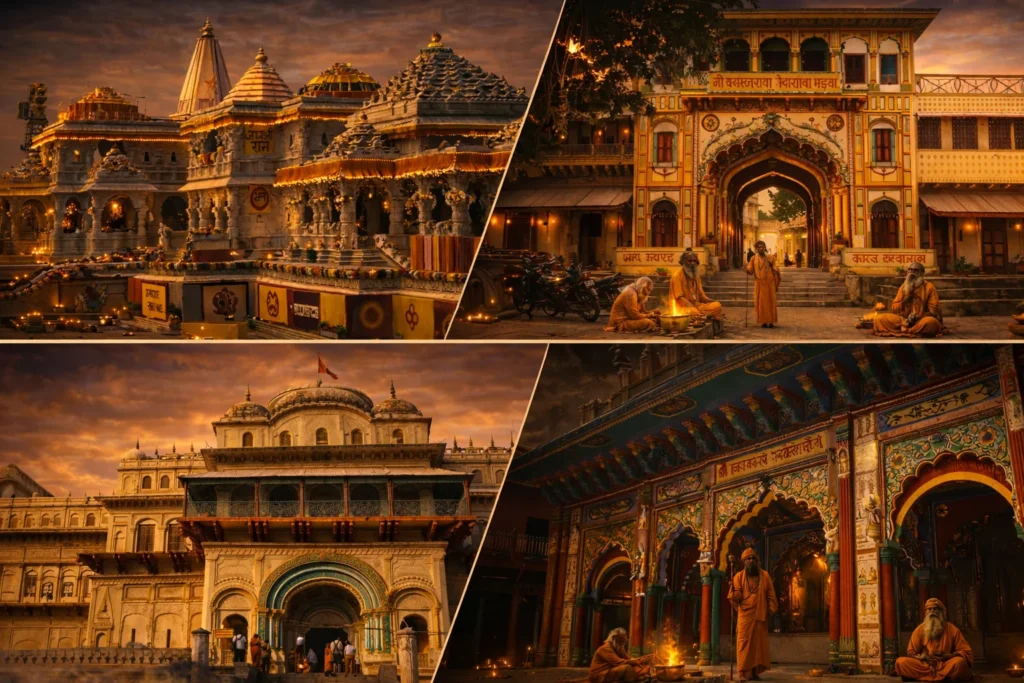
Ram Janmabhoomi is situated within the central sacred zone of Ayodhya, close to other important religious sites such as Hanuman Garhi, Kanak Bhawan, and Dashrath Mahal. Together, these places form a spiritually connected pilgrimage landscape rather than isolated attractions.
Administratively and spiritually, the temple complex is managed by the Shri Ram Janmabhoomi Teerth Kshetra Trust, ensuring organised darshan systems, crowd control, and official pilgrim guidelines.
Religious and Scriptural Significance
Ram Janmabhoomi is traditionally believed to be the birthplace of Lord Rama, a central figure of the Ramayana, one of India’s most influential epics. Lord Rama represents ideals of righteousness, duty, compassion, and moral conduct, which is why Ayodhya is often described as the embodiment of Ram Rajya—a society guided by ethical values.
References to Ayodhya appear consistently in ancient texts, devotional literature, and oral traditions. Over centuries, the city has remained a focal point of Hindu spiritual life, shaping festivals, rituals, and cultural practices across northern India. For devotees, visiting Ram Janmabhoomi is not about historical verification alone, but about reconnecting with a shared spiritual identity rooted in faith and tradition.
Darshan, Rituals and Sacred Practices
Darshan at Ram Janmabhoomi follows a structured and regulated process designed to maintain order and safety while preserving the sanctity of the temple environment.
Daily worship includes:
- Morning rituals and prayers
- Regular darshan hours for pilgrims
- Special aarti sessions during auspicious times
- Enhanced religious observances during festivals such as Ram Navami and Diwali
Pilgrims are expected to maintain silence or speak softly, follow queue systems, and respect instructions issued by temple authorities. Rituals are conducted with simplicity and discipline, reinforcing the spiritual seriousness of the site.
Best Time to Visit Ayodhya Ram Janmabhoomi
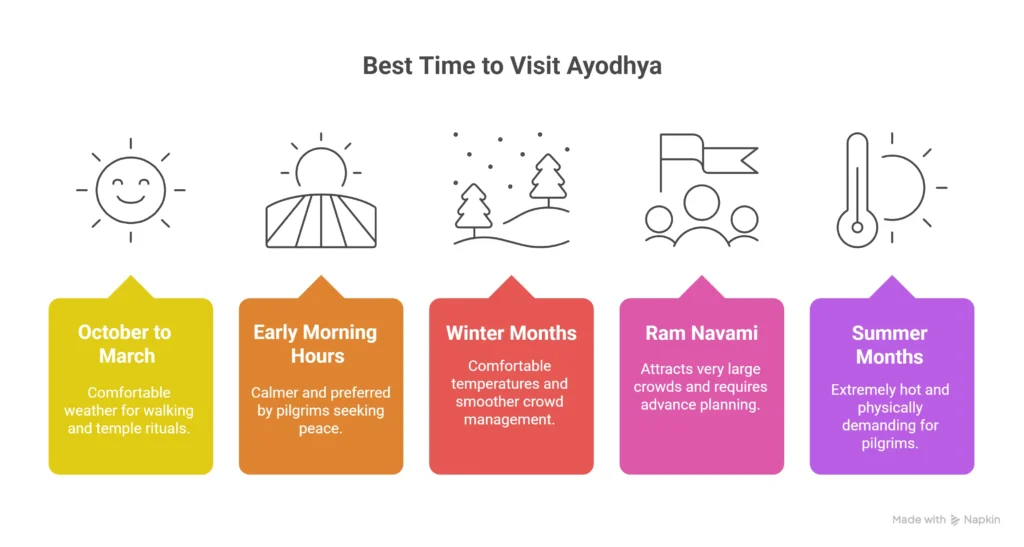
The best time to visit Ayodhya Ram Janmabhoomi is from October to March, when weather conditions remain comfortable for walking, waiting during darshan, and attending temple rituals. Early morning hours are generally calmer and preferred by pilgrims seeking a more peaceful experience.
The best time to visit Ayodhya is between October and March, when the weather remains pleasant and suitable for walking and waiting during darshan.
- Winter months offer comfortable temperatures and smoother crowd management.
- Festivals, especially Ram Navami, attract very large crowds and require advance planning.
- Summer months can be extremely hot and physically demanding for pilgrims.
For a calmer experience, early morning hours are generally preferred.
Festivals Celebrated in Ayodhya Throughout the Year
Ayodhya celebrates several important Hindu festivals throughout the year, deeply connected with the life of Lord Rama and Vaishnav traditions. From Ram Navami and Deepotsav to Parikrama Melas and sacred river observances, these festivals shape the city’s spiritual calendar and attract pilgrims from across India.
🛕 Major festivals celebrated in Ayodhya
| No. | Festival name | Hindu calendar date | Key highlights / main features |
|---|---|---|---|
| 1 | Ram Navami | Chaitra Shukla Navami | Birth anniversary of Lord Rama, grand processions, ritual bathing in the Sarayu River, special prayers at Ram Temple |
| 2 | Deepotsav (Ayodhya Diwali) | Kartik Amavasya | Lighting of millions of oil lamps on the Sarayu riverbank, world records, celebration of Lord Rama’s return to Ayodhya |
| 3 | Dussehra (Vijayadashami) | Ashwin Shukla Dashami | Dramatic enactment of Rama–Ravana battle, victory of dharma over adharma |
| 4 | Shravan Jhula Mela | Entire month of Shravan | Decorative swings for Rama and Sita, devotional singing (bhajans), temple decorations |
| 5 | Parikrama Mela | Kartik Purnima | Panchkosi and Chaudahkosi circumambulation, long-distance pilgrimage on foot |
| 6 | Makar Sankranti | Paush Shukla Pratipada (14 January) | Sacred bath in Sarayu River, charity, solar worship marking seasonal transition |
| 7 | Basant Panchami | Magh Shukla Panchami | Festival of knowledge and seasonal change, yellow clothing, worship of Goddess Saraswati |
| 8 | Holi (Phag Festival) | Phalguna Purnima | Devotional folk songs dedicated to Rama, flower Holi celebrations |
| 9 | Janmashtami | Bhadrapada Krishna Ashtami | Birth celebration of Lord Krishna, temple tableaux and Ras Leela performances |
| 10 | Kartik Purnima | Kartik Purnima | Lamp offerings, holy bathing in Ganga and Sarayu rivers, important Vaishnav festival |
| 11 | Gupt Navratri | Magh and Ashadha months | Esoteric Shakti worship, tantric spiritual practices |
| 12 | Ram Vivah Utsav | Margashirsha Shukla Panchami | Dramatic re-enactment of Rama–Sita wedding, cultural programmes |
| 13 | Sarayu Jayanti | Vaishakh month | Worship of the Sarayu River, message of environmental awareness and water conservation |
| 14 | Hanuman Jayanti | Chaitra Purnima | Grand offerings and community feasts at Hanuman Garhi, celebration of strength and devotion |
Festival dates may vary slightly each year based on the Hindu lunar calendar and official temple announcements.

Ram mandir Ayodhya Darshan Timings and Daily Schedule
Darshan at Ayodhya Ram Janmabhoomi generally begins early in the morning and continues until late evening, with short pauses during ritual offerings and aarti ceremonies. Temple opening hours and darshan schedules may vary by season and festival days, so pilgrims should rely only on official announcements issued by the Shri Ram Janmabhoomi Teerth Kshetra Trust
.
🕉️ Ram Janmabhoomi – Daily Aarti & Ritual Timings
| Aarti / Ritual Name | Approximate Time | Description |
|---|---|---|
| Mangala Aarti | 04:30 – 05:00 AM | Early morning awakening ritual of the deity |
| Shringar Aarti | 06:30 – 07:00 AM | Morning decoration and ceremonial worship |
| Mandir Opens for Darshan | ~07:00 AM | General darshan begins for devotees |
| Bhog / Rajbhog Aarti | ~12:00 PM | Midday food offering to the deity |
| Sandhya Aarti | 07:00 – 07:30 PM | Evening lamp aarti and prayers |
| Shayan Aarti | 09:30 – 10:00 PM | Night ritual before temple closure |
| Mandir Closes | After Shayan Aarti | Closing time varies slightly by season |
Aarti timings are subject to minor seasonal adjustments, especially during winter months and major festivals such as Ram Navami and Diwali. Pilgrims are strongly advised to follow only official updates released by the temple trust.
- Darshan begins early in the morning
- Midday hours may see brief pauses for rituals
- Evening darshan resumes with aarti and prayers
Typically:
Only official communication from the temple trust should be relied upon for updated schedules.

How to Reach Ayodhya Ram Janmabhoomi
Ayodhya Ram Janmabhoomi is accessible by air, rail, and road. The city is served by Maharishi Valmiki International Airport, Ayodhya Junction and Ayodhya Cantt railway stations, along with regular road connectivity from Lucknow, Prayagraj, and Varanasi.
Ayodhya is well connected by air, rail, and road.
- By Air: The nearest airport is Maharishi Valmiki International Airport, Ayodhya, with increasing domestic connectivity.
- By Rail: Ayodhya Junction and Ayodhya Cantt Railway Station connect the city with major Indian towns.
- By Road: Regular buses and taxis operate from Lucknow, Prayagraj, and Varanasi.
Local transport options are available for short distances within the city.
Ayodhya Ram mandir Entry Rules, Dress Code and Security
There is no entry fee for darshan at Ayodhya Ram Janmabhoomi, but strict security protocols apply. Modest traditional clothing is recommended, electronic items are restricted, and all visitors must undergo mandatory security screening.
Pilgrims should note:
- Modest and traditional clothing is strongly recommended
- Electronic items, bags, and sharp objects are restricted
- Security checks are mandatory for all visitors
Photography inside the temple premises is generally restricted and subject to official rules.
Time Required and Accessibility
Most pilgrims spend half a day to one full day at Ram Janmabhoomi, depending on crowd levels and participation in rituals.
Accessibility considerations:
- Walking and standing may be required for extended periods
- Elderly pilgrims should plan rest breaks
- Assistance is available at designated points, but advance preparation is advisable
Sacred Atmosphere and On-Site Experience
The spiritual environment around Ram Janmabhoomi is shaped by simplicity rather than spectacle. The rhythmic movement of pilgrims, sound of devotional chants, and the presence of volunteers create a sense of collective devotion. Early mornings feel contemplative, while evenings carry a softer, ceremonial calm.
Rather than overwhelming visitors, the space encourages patience and reflection.
Safety, Crowd Awareness and Responsible Pilgrimage
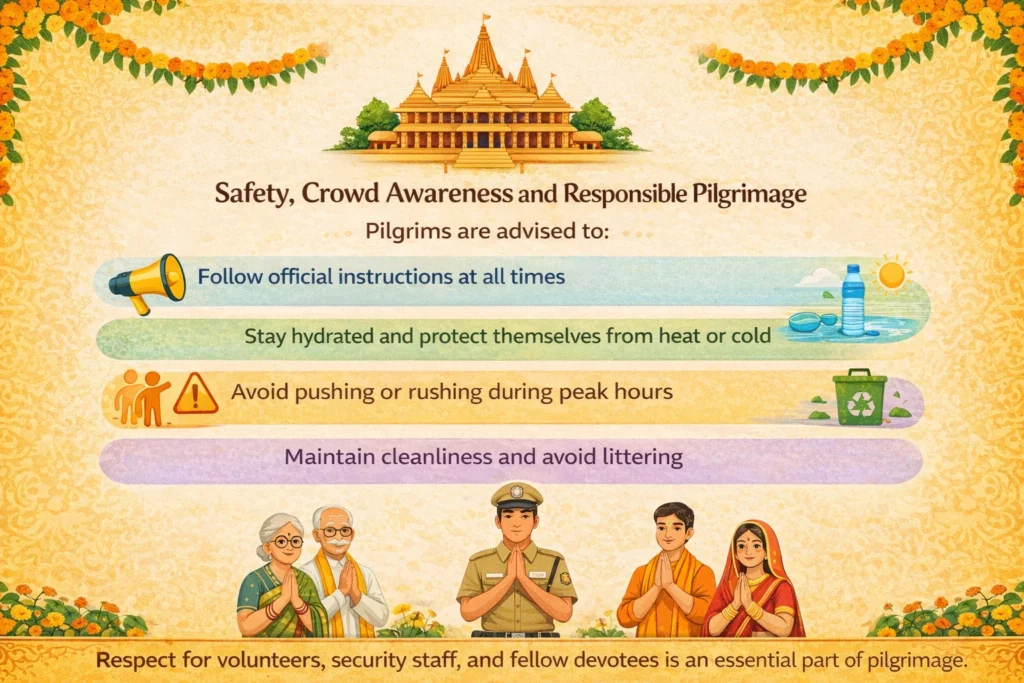
To maintain the darshan system according to the hindu rituals Ayodhya Ram mandir safty guidlines and crowed management Pilgrims are advised to:
- Follow official instructions at all times
- Stay hydrated and protect themselves from heat or cold
- Avoid pushing or rushing during peak hours
- Maintain cleanliness and avoid littering
Respect for volunteers, security staff, and fellow devotees is an essential part of responsible pilgrimage.
Useful Travel Connections
Pilgrims often combine Ayodhya with visits to:
- Chitrakoot
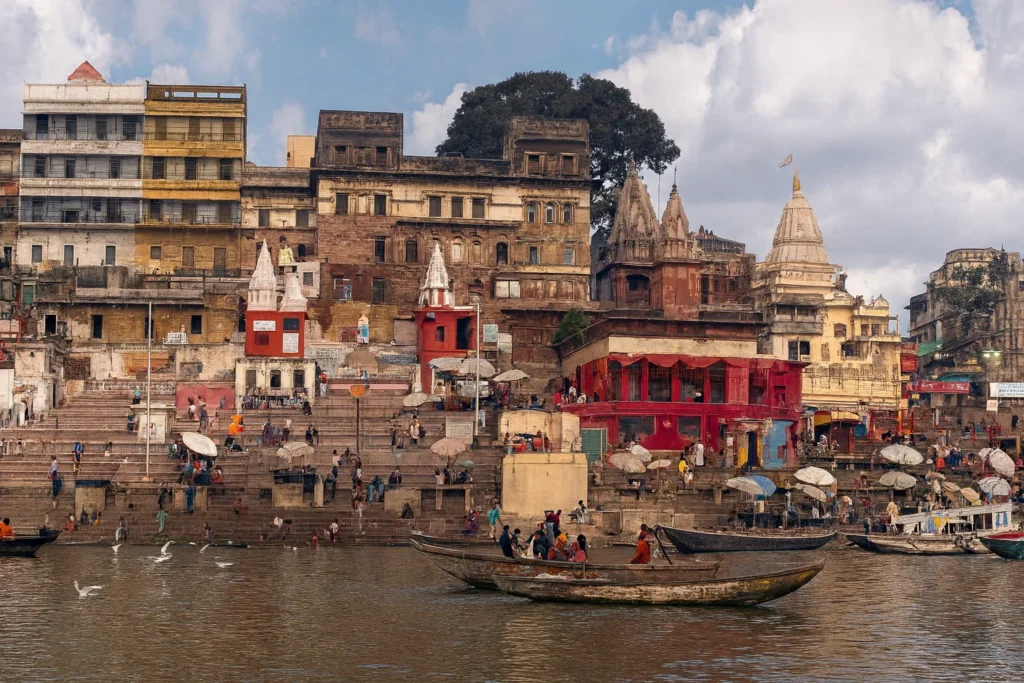
- varanasi :- Kashi is the oldest hindu city now if you wish to feel the soul of hidu culture must visit the land of Bhagwan Shankar no need to go anywhere read our Varanasi Travel Guide 2025 — Ghats, Ganga Aarti & 3-Day Itinerary
- Prayagraj
Linking Ayodhya with nearby sacred destinations allows for a more complete spiritual journey across northern India.
How to Reach your Destinations
Official and Credible Information Sources
Factual accuracy and visitor guidelines are based on information provided by:
- Shri Ram Janmabhoomi Teerth Kshetra Trust
- Uttar Pradesh Tourism Department
- Incredible India (Government of India)
Pilgrims should always rely on official updates for timings and regulations.
A Reflective Closing
A visit to Ayodhya Ram Janmabhoomi is not measured by how quickly darshan is completed, but by the stillness one carries away afterwards. Rooted in faith, discipline, and tradition, the site continues to guide pilgrims toward reflection rather than spectacle. Approached with patience and respect, Ayodhya offers not just a destination, but a moment of spiritual grounding that stays long after the journey ends.Pilgrims planning a wider spiritual journey across the country may find it useful to explore our India pilgrimage and sacred travel guide, which explains how faith, geography, and tradition are interconnected across different regions.
Official Reffrences
Shri Ram Janmabhoomi Teerth Kshetra Trust
- Darshan timings and ritual schedules are issued by the Shri Ram Janmabhoomi Teerth Kshetra Trust and may change during festivals or seasonal transitions.
- 🔗 https://srjbtkshetra.org/
Uttar Pradesh Tourism Department
- Seasonal visitor advisories and crowd-management updates are also published by the Uttar Pradesh Tourism Department for pilgrims planning their visit to Ayodhya.
🔗https://www.uptourism.gov.in/en
Related Posts
1️⃣Varanasi Travel Guide 2025 – Famous Ghats & Ganga Aarti
spiritual capital of india , legacy of varanasi , ghats, secred temples of varanasi , Ganga arti timings .
👉 Read Guide → https://travelwiseguide.com/varanasi-travel-guide-2025/
2️⃣ Allahabad Travel Guide 2026: Sangam, Kumbh Mela & Hidden Gems
Ganga ghat rituals ,sangam rituals , bathing protocalls.
👉 Read Guide → https://travelwiseguide.com/prayagraj-travel-guide-2026/
3️⃣India e-Visa Rejection: Make It Stress-Free – 2025 Complete Guide
The most common rejection reasons, document errors, and approval-safe application tips.
👉 Read Guide →https://travelwiseguide.com/india-e-visa-rejection-guide-2025/
What are the Ayodhya Ram Mandir darshan timings?
Darshan at Ayodhya Ram Mandir darshan timings usually begins early in the morning and continues until late evening. There may be short pauses during ritual offerings and aarti ceremonies. Darshan timings can change during festivals or seasonal transitions, so pilgrims should always check official updates before planning their visit.
What are the Ram Janmabhoomi aarti timings throughout the day?
Ram Janmabhoomi follows a daily aarti schedule that includes Mangala Aarti in the early morning, Shringar Aarti, midday Bhog Aarti, evening Sandhya Aarti, and night Shayan Aarti. Exact timings may vary slightly by season and during major religious festivals.
Do darshan timings change during festivals or seasonal conditions?
Yes, darshan and aarti timings at Ayodhya Ram Janmabhoomi may change during major festivals such as Ram Navami and Diwali, as well as between summer and winter seasons. Crowd management measures and special rituals can also affect daily schedules, which is why official notices should always be followed.
Is there any entry fee for darshan at Ayodhya Ram Janmabhoomi?
No, there is no entry fee for darshan at Ayodhya Ram Janmabhoomi. Darshan is free for all devotees. However, visitors must follow security protocols, queue systems, and temple guidelines issued by the managing authorities to ensure safety and orderly movement.
What is the dress code for visiting Ayodhya Ram Janmabhoomi?
Visitors are strongly advised to wear modest and traditional clothing while visiting Ayodhya Ram Janmabhoomi. Clothes covering shoulders and knees are recommended. This dress code helps maintain the sanctity of the temple environment and ensures respectful participation in religious rituals.
How much time is required for darshan at Ram Janmabhoomi?
Most pilgrims require between half a day to one full day for darshan at Ram Janmabhoomi, depending on crowd levels and festival periods. Waiting time may increase during peak hours, while early morning darshan generally offers a smoother and calmer experience.
Is photography allowed inside the Ram Janmabhoomi temple complex?
Photography is generally restricted inside the Ram Janmabhoomi temple premises. Mobile phones, cameras, and electronic devices may not be permitted beyond security checkpoints. Visitors should follow the latest instructions issued by Ram mandir temple authorities regarding permitted items.
Are senior citizens provided assistance during darshan at Ayodhya Ram Mandir?
Yes, assistance facilities are available for senior citizens at Ayodhya Ram Mandir, although walking and standing may still be required. Elderly pilgrims are advised to visit during non-peak hours and make use of designated help points within the temple compound where available.
What are the major festivals celebrated in Ayodhya throughout the year?
Ayodhya celebrates several important Hindu festivals throughout the year, with Ram Navami and Deepotsav being the most significant. Other major celebrations include Dussehra, Shravan Jhula Mela, Kartik Purnima, Parikrama Melas, Hanuman Jayanti, and Ram Vivah Utsav, all closely linked to the city’s Vaishnav and Ram-centric traditions.
When is the best festival time to visit Ayodhya for pilgrims?
The best festival time to visit Ayodhya is during Ram Navami in the Chaitra month and Deepotsav around Kartik Amavasya, when the city witnesses its grandest religious celebrations. Pilgrims visiting during these periods should plan in advance, as crowds are significantly higher and darshan schedules may change.